
Review · PARIS
Paris: French Wine Tasting Class with Sommelier
French wine makes more sense once you stop treating the label like a puzzle. In this two-hour cellar class near the Louvre, you taste six wines while learning how grapes, soil, place, and French naming rules shape what ends up in your glass. I like the clear trip through six wine regions, and I like that the sommelier explains practical skills such as swirling, smelling, tasting, and ordering from a restaurant menu.
The 17th-century cellar gives the lesson a fitting setting, and the 5pm start works well as a pre-dinner activity. The main caution is the group size, which can reach about 25 people. It remains social and fun, but a noisy table or a seat at the back can make questions and explanations harder to follow.
Key points at a glance
- Six French samples in two hours: You taste one Champagne and five wines from different French regions.
- A lesson you can use later: Learn how to read labels, spot regional differences, understand tannins, and taste with purpose.
- A historic central setting: The class meets at 68 Rue Jean-Jacques Rousseau, about a six-minute walk from the Louvre.
- An English-speaking sommelier: Guides such as Laury, Felicity, Paul, Clement, Jasmina, and Lily have led sessions, with a mix of humor and instruction.
- Cheese is optional: Add a cheese or charcuterie platter for €15 on site. Several people preferred the cheese plate.
- Best for curious beginners: Wine drinkers with little French wine experience will get the most from the regional overview.
A French wine lesson that starts with the glass
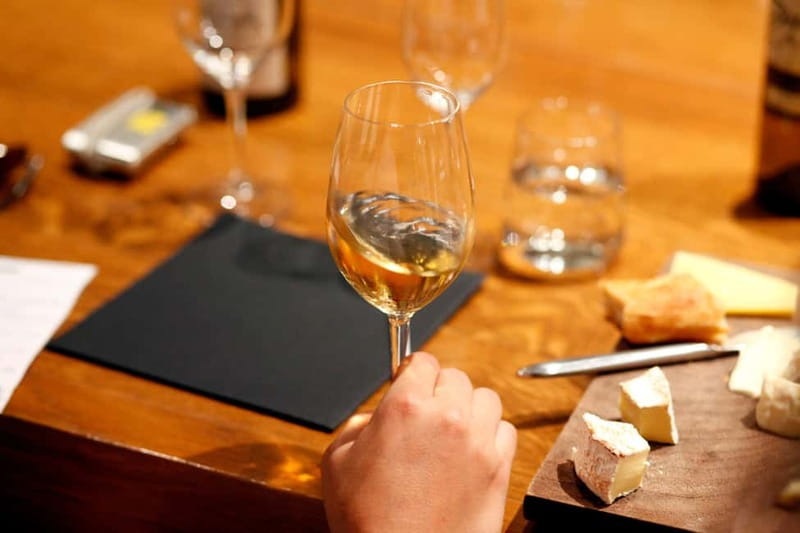
This is not simply a parade of pours. The sommelier uses the wines as examples, showing you how to look at color, smell the wine, taste it, and describe what you notice. You do not need a trained palate. The point is to build a useful vocabulary and a little confidence.
The class begins with Champagne and then moves through five additional French wines. The exact bottles can vary, so you should think of the session as a guided tour of French wine styles rather than a fixed tasting menu. You learn how Champagne is made, how grapes differ by region, and why two wines made from different places can taste so unlike one another.
The teaching aims at both the head and the dinner table. You learn what tannins do, how sweetness and acidity affect a wine, and why some wines pair better with certain foods. You also get a chance to ask the questions that come up when you are standing in front of a French wine list: Which grape is this? Is it dry? What should I serve with it? How do I read this label?
That practical focus is the strongest reason to book. You leave with more than a pleasant evening and a mild glow. You have a better chance of choosing a bottle in Paris without pointing at the cheapest or most familiar name.
More Wine Tasting Tours in France
- Montmartre Hill French Gourmet Food and Wine Tasting Walking Tour
★ 5.0 · 2,588 reviews - From Paris: Loire Valley Castles Day Trip With Wine Tasting
★ 4.6 · 1,727 reviews - Paris: Les Caves du Louvre Guided Tour with Wine Tastings
★ 4.7 · 932 reviews
Entering the 17th-century cellar near the Louvre
The meeting point is 68 Rue Jean-Jacques Rousseau in the 1st arrondissement. From the Louvre-Rivoli station on Line 1 or Étienne Marcel on Line 4, allow about six minutes on foot. The location makes this easy to fit between sightseeing and dinner.
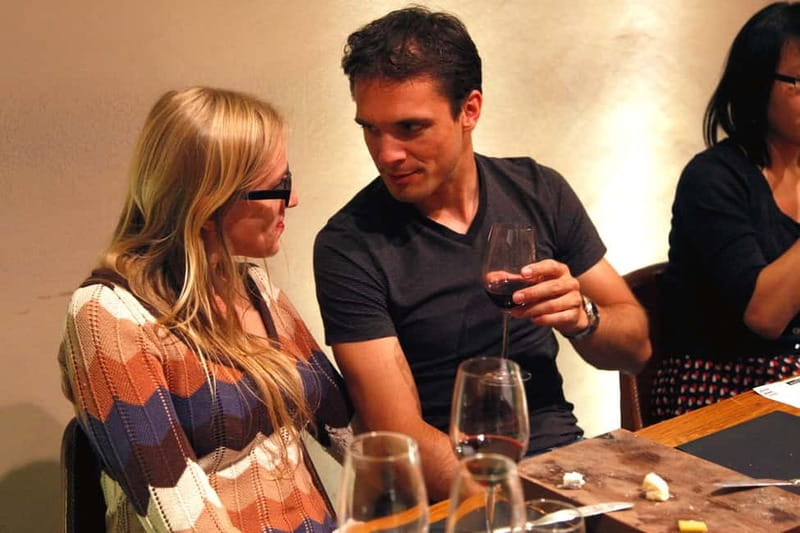
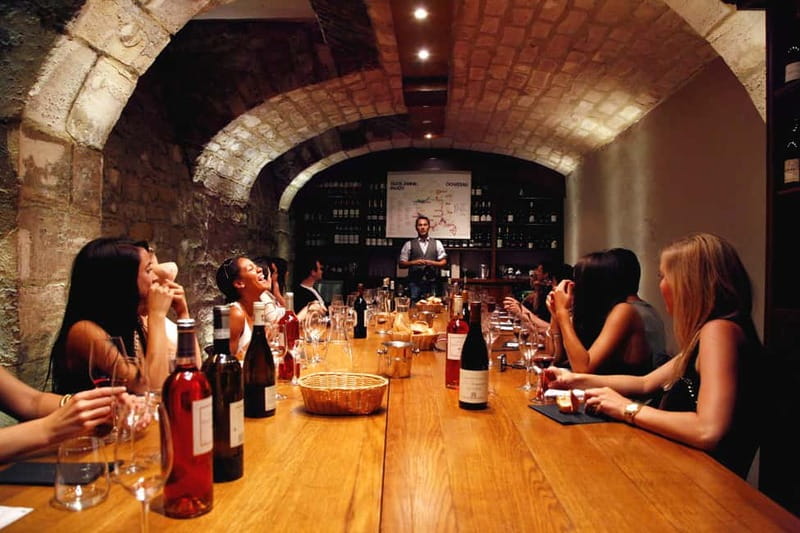
At 5pm, you enter the wine cellar and find a prepared table with glasses, bread, and still water. The cellar supplies atmosphere without turning the evening into a theatrical performance. It feels like the right place to talk about French wine, especially after a day spent around the Louvre.
The room can become warm, particularly in summer, so light clothing is sensible. The atmosphere is generally social, and you may chat with people from different countries around the table. That is part of the charm, although it comes with one trade-off: a lively group can sometimes talk while the sommelier is presenting.
If you want to get the most from the class, sit where you can clearly hear the guide and do not be shy about asking questions early. A large group can discourage quieter participants from speaking up, particularly from the back of the room.
Six glasses, six French regions
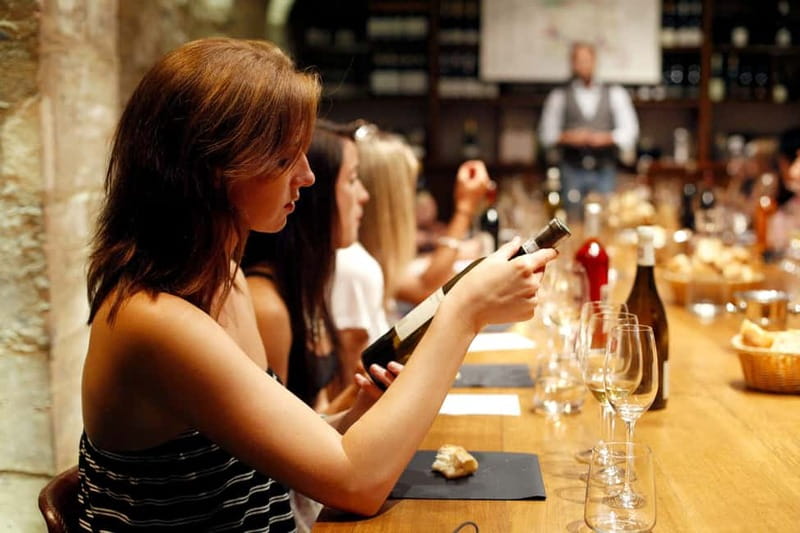
The tasting gives you a broad introduction rather than an in-depth study of one appellation. You sample one Champagne and five French wines connected to five other regions. The sommelier explains the grapes used, the style associated with each place, and the way local conditions affect the wine.
This is where the word terroir becomes useful rather than mysterious. The term refers to the combination of place, soil, climate, and local growing conditions that helps shape a wine. You do not need to memorize a technical definition. The useful lesson is that French wine often identifies itself by place, while wine from other countries may put the grape name front and center.
You also learn about appellation. In France, an appellation can set rules about where grapes are grown, which grapes may be used, and how the wine is produced. Once you understand that system, French labels become less intimidating. The name on the bottle may tell you more about the region and legal category than about the grape itself.
The six-wine format works well for comparison. You can notice how a fresh white differs from a fuller red, or how Champagne has a texture and method unlike still wine. The purpose is not to declare one bottle the winner. It is to help you connect a taste to a place, grape, and style.
How the tasting actually works
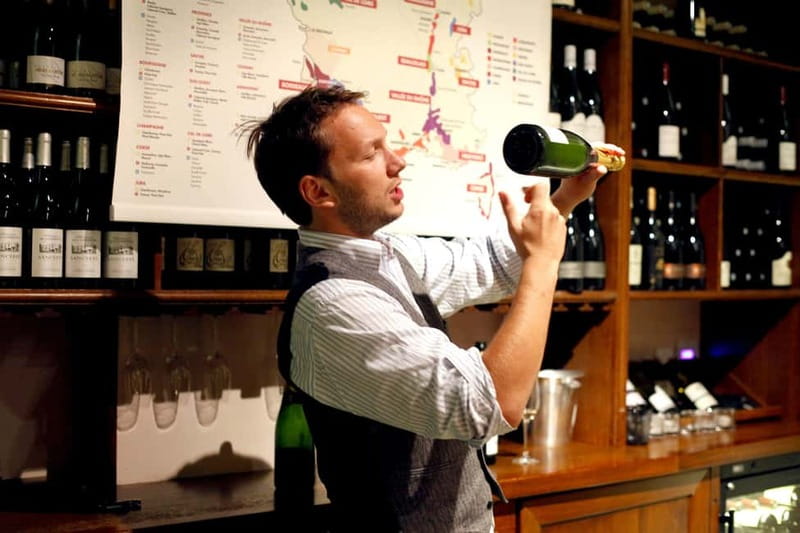
The sommelier leads you through the basic steps of tasting. First, you look at the wine. Color can offer clues about age, grape, or style, although the guide keeps the exercise accessible rather than turning it into an exam.
Next comes the smell. You swirl the glass, smell it, and think about what you detect. You might not identify every aroma, and that is fine. The lesson is to slow down and notice more than sweetness or strength.
Then you taste. The sommelier explains how acidity, tannin, body, alcohol, and sweetness affect the experience. The group can compare reactions, which helps you see that tasting is not about producing one approved answer.
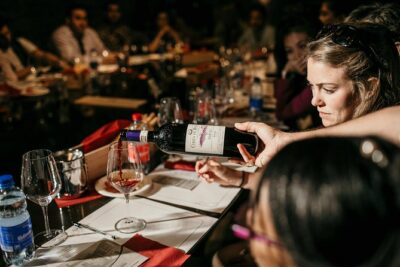
The bread and water help keep the palate comfortable through the tasting. The pours are described in the feedback as healthy, so you should not expect six tiny symbolic drops. This also means you should plan your evening sensibly. By the end of two hours, you may feel pleasantly tipsy, especially if you add food and do not eat beforehand.
More Wine Tasting Tours in Paris
- Cheese & Wine Tasting in Montmartre with Local Cheesemonger
★ 5.0 · 470 reviews - Paris: Food and Wine Tasting Walking Tour in Le Marais
★ 4.9 · 446 reviews - Paris Art of Pairing Cheese and Wine Tasting in a Cheese Cellar
★ 5.0 · 386 reviews - Paris: Wine Tasting Experience with 6 Wines and Cheese Board
★ 4.9 · 80 reviews
Champagne first, labels next
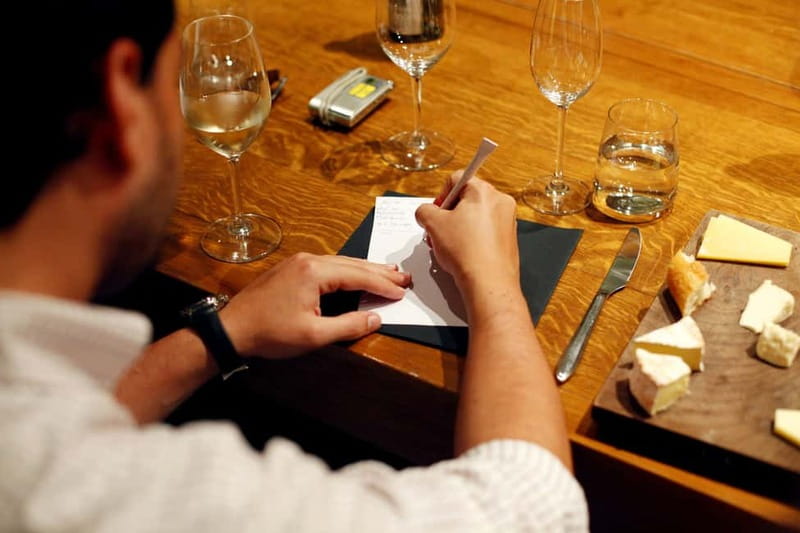
The Champagne portion is a useful opening because it introduces both production and terminology. You learn how Champagne is made before moving into the still wines, giving you a clearer sense of why sparkling wine is different in texture and production.
The guide then turns to French labels. This is one of the most valuable parts for anyone planning to buy wine in France. Instead of relying only on a grape name, you learn to pay attention to the region, producer, appellation, and other information printed on the bottle.
The class cannot turn every French label into an open book in one evening. French wine law and regional naming can be complex. But it gives you a starting system, which is much more useful than memorizing a few famous bottles.
You also get to ask about current wine trends, grape-growing areas, and how to order French wine in restaurants. One guide, Kim, was especially noted for adjusting the lesson to what people wanted to learn, including advice for people more familiar with California or Italian wines. That flexibility makes the class approachable for an international audience.
Add cheese, charcuterie, or just bread
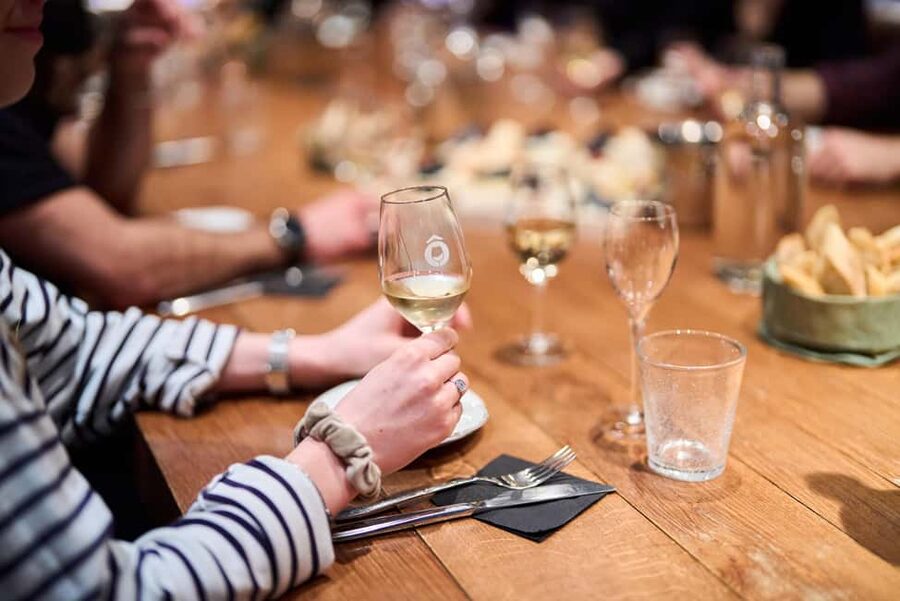
Bread and water are included. Cheese and charcuterie are not part of the base price, despite some confusion in the wording of the experience description. You can add a platter on site for €15.
I would seriously consider the cheese option if you have not eaten before the tasting. It gives the food-pairing discussion a practical edge, and several detailed accounts singled out the cheese as a worthwhile addition. A cheese platter may also be the better choice if you want to focus on how different textures and flavors affect wine.
Charcuterie offers another route, but the choice depends on your appetite and taste. The important point is to budget for the add-on rather than assuming food comes with the ticket.
Food pairing here is not treated as a rigid rulebook. You learn why acidity can work well with rich food, why tannin behaves differently with protein, and how salt, fat, and sweetness change the way wine tastes. You can use those ideas later at a Paris restaurant, even if you forget the technical terms.
The sommeliers make the difference
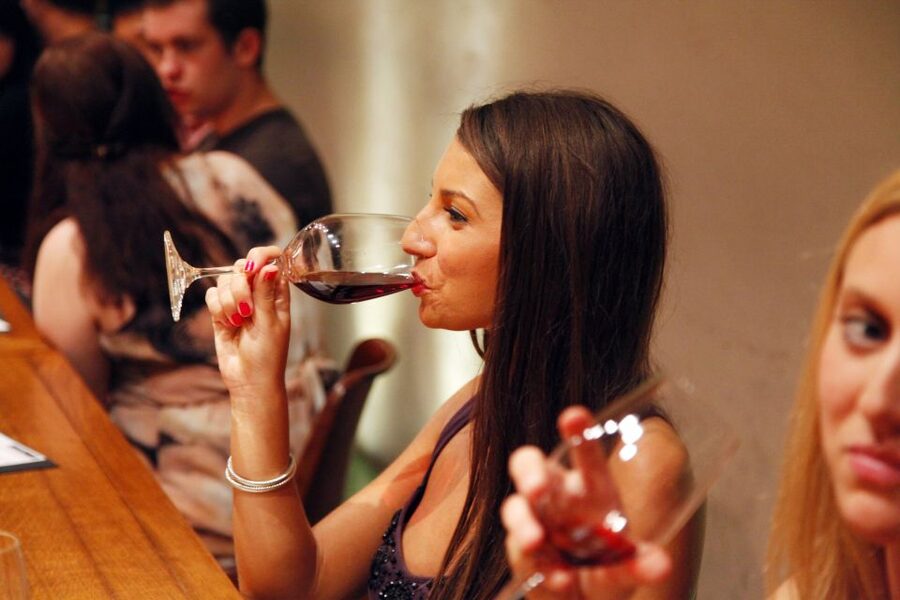
The quality of the evening depends heavily on the person leading your table. Named guides connected with these sessions include Laury, Felicity, Paul, Lily, Kim, Clement, Jasmina, Jasmine, Pierre, Preston, Charlotte, and Gerard.
The strongest pattern is clear: the good guides balance instruction with humor. Felicity has been praised for making beginners feel at ease. Paul has led both informative and enjoyable tastings. Clement is known for bringing energy and detailed explanations, while Laury has been singled out for a good mix of humor and useful information.
You should not expect every session to feel identical. Different sommeliers have different styles, and the group affects the pace. Still, the format gives the guide room to answer questions rather than simply reciting a script.
The class suits beginners because no one is expected to know French regions in advance. If you already drink wine regularly, you may still appreciate the label lesson and regional comparisons, though serious wine students may want a longer, more technical course.
Group size, pace, and atmosphere
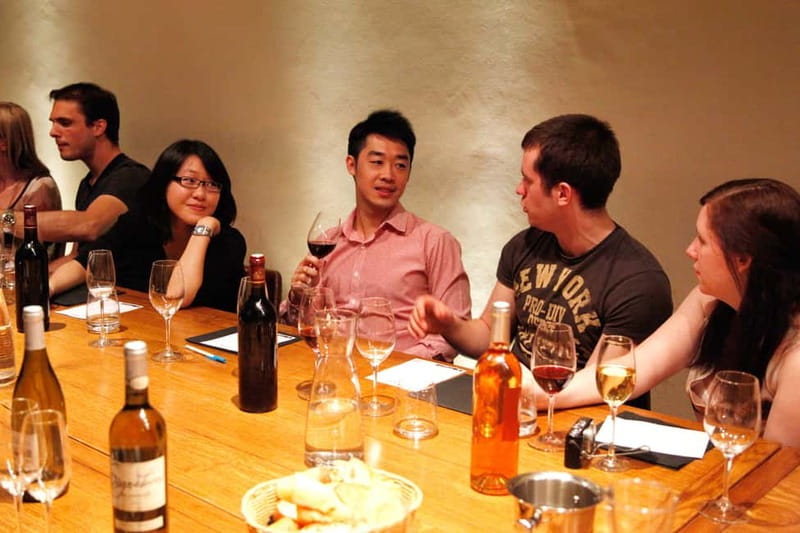
A two-hour class moves at a comfortable pace. You have time to taste each wine, hear the explanation, and ask questions, but you will not receive a full course on every major French appellation.
The social setup is part of the experience. You sit at a shared table, meet other people, and compare impressions. Couples, families with adult children, and solo visitors can all fit naturally into the format.
The same setup can be its weak point. A group of roughly 25 people may feel too large if you want a quiet, intimate lesson. Side conversations have occasionally made it harder to hear the guide, and people seated farther away may hesitate to join in.
I would choose this class for its friendly energy, not for private instruction. If you want one-on-one advice about collecting wine or a detailed technical study, look for a smaller specialist tasting. If you want an easy introduction before dinner, the larger social format is a fair trade.
Is $88 a fair price?
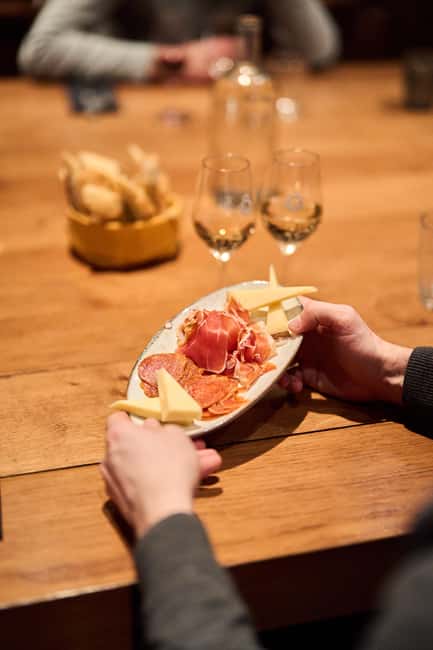
At $88 per person, this is not a bargain wine flight. You are paying for six French tastings, an English-speaking sommelier, the instruction, the cellar setting, bread, water, and a structured evening near one of Paris’s biggest sights.
The value improves if you use the lesson. Learning how to read a French label can save you from poor choices later, and understanding food pairing can make your restaurant meals more enjoyable. The central location also means you are paying for a convenient activity that fits neatly into a sightseeing day.
The wine quality may vary by session and personal taste. One assessment found the wines decent rather than remarkable, while many others found the selection delicious or outstanding. That is a useful distinction: book this for the teaching and comparison, not as a guarantee of six rare or expensive bottles.
Cheese or charcuterie costs another €15. Add that only if you want food with the tasting. Since you can buy the wines after the class, you may also find a bottle you want to take back to your hotel or enjoy during the rest of your stay. Ask the sommelier for recommendations rather than buying on impulse.
Free cancellation up to 24 hours before the start and a reserve-now, pay-later option make the booking easier to fit into a changing Paris schedule.
Who should book this French wine class?
I would recommend it most strongly to:
- First-time visitors who want a taste of French culture beyond museums and monuments
- Beginners who feel lost when facing a French wine menu
- Couples looking for a relaxed pre-dinner activity
- Families with adult children who enjoy learning together
- Wine drinkers who want a regional overview rather than a single-producer tasting
- People who want an English-language class in a central Paris location
You may want something else if you dislike group activities, prefer very small tastings, or already have advanced knowledge of French wine. The two-hour lesson gives you a strong introduction, not specialist certification.
Should you book it?
Book this class if you want to understand French wine well enough to make better choices during your trip. The Champagne lesson, regional comparison, label guidance, and food-pairing advice give the evening a practical purpose, while the cellar and shared table keep it relaxed.
I would book the cheese add-on if you have not eaten, arrive early enough to settle in, and choose a seat where you can hear the sommelier. Keep your expectations aimed at a lively, educational tasting rather than a private masterclass or a parade of luxury bottles. For most curious visitors, the location, useful instruction, and six-wine format make it a strong Paris evening.
FAQ
Where does the French wine tasting take place?
The class meets at 68 Rue Jean-Jacques Rousseau in Paris’s 1st arrondissement, in a 17th-century wine cellar about a six-minute walk from the Louvre.
How long does the experience last?
The wine class lasts two hours, beginning at 5pm and ending at about 7pm.
How many wines do I taste?
You taste six samples in total: one Champagne and five French wines from five different regions.
Is the class offered in English?
Yes. The experience includes a live English-speaking sommelier.
What will I learn during the class?
You learn how to taste wine, how Champagne is made, how to read French wine and Champagne labels, and how terroir, appellation, grapes, tannins, and food pairing affect wine.
Is food included?
Bread and still water are included. Cheese or charcuterie is optional and costs €15 on site.
Can I buy the wines after the tasting?
Yes. The wines tasted during the class, along with additional bottles, are available to buy. Ask your sommelier for help choosing.
Can I cancel my booking?
You can cancel up to 24 hours in advance for a full refund. A reserve-now, pay-later option is also available.
More Wine Tastings in Paris
- Paris: Loire Valley Chambord Castle, Wine Tasting & Lunch
★ 4.7 · 69 reviews - Paris: French wine tasting with cheeses and charcuterie
★ 4.8 · 41 reviews - From Porto: Douro Valley w/ Boat Tour, Wine Tasting & Lunch
★ 4.7 · 19,061 reviews - Complete Douro Valley Wine Tour with Lunch, Wine Tastings and River Cruise
★ 5.0 · 12,920 reviews
More Wine Tasting Classes in Paris
- Paris: Wine and Cheese Tasting with a Chef Sommelier
★ 4.7 · 277 reviews - Paris: Cheese and Wine Class in a 17th Century Cellar
★ 4.8 · 91 reviews - Paris: Champagne Cellars Tour and Tastings with a Sommelier
★ 4.9 · 74 reviews - Porto: Douro Valley Wine Tour with a Sommelier & Boat Trip
★ 5.0 · 463 reviews
Just added around Paris
- Top Private Cruises in Paris with Champagne + more surprises★ 5.0 · 309 reviews
- Paris: Walking Food Tour with Cheese, Wine and Delicacies★ 4.7 · 323 reviews
- Private tour of Paris by Night with Champagne★ 4.7 · 323 reviews
- Paris: Wine and Cheese Tasting★ 4.6 · 91 reviews
- Paris: Wine Tasting Experience with 6 Wines and Cheese Board★ 4.9 · 80 reviews
- Paris: Seine River Champagne Dinner Cruise with Live Music★ 4.4 · 287 reviews
- Paris : Scenic Cruise on the Seine River with Champagne★ 4.0 · 81 reviews
- Paris: Tasting of 3 Wine and 3 Cheese★ 5.0 · 74 reviews
Wine Tasting Classes, compared.
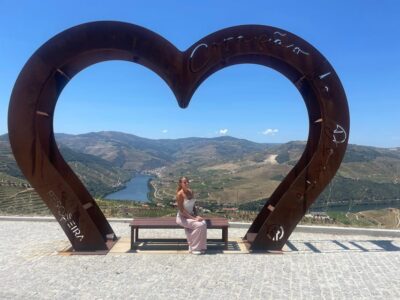
Douro Valley Wine Tour with a Sommelier & Boat Trip
Read our review →
Port Wine class with 3 or 5 Port tasting and pairings
Read our review →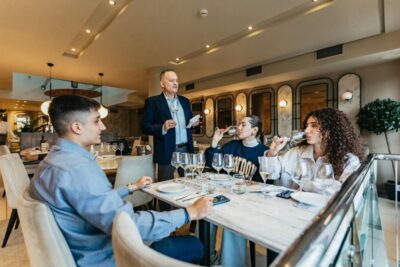
Wine Tasting with a Sommelier under the Acropolis
Read our review →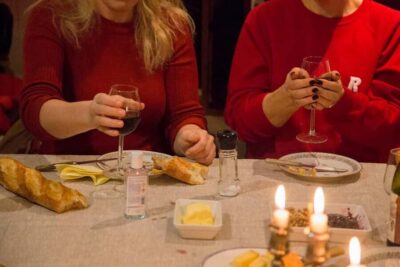
Barolo & Barbaresco Wine Tour with a Sommelier
Read our review →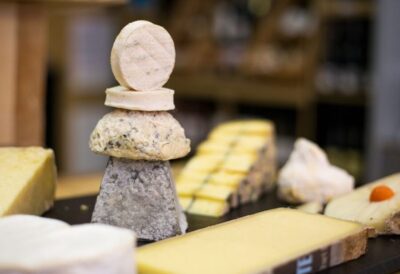
Browse the lists this tour appears in