
Review · GERMANY
Trier: Guided City Walk with Wine Tasting
Trier’s Roman past and Moselle wine culture come together neatly on this two-hour walk from the Porta Nigra to the Forum Baths. Guide Simon, a Trier native, links each tasting to a building or place along the route, so you learn why the city matters while sampling what the surrounding vineyards produce.
I like the careful wine-to-site connections and the fact that you cover major sights without climbing steps. I also like the practical extras: water, breadsticks, and a voucher for a glass of wine with a main course at Weinwirtschaft Friedrich-Wilhelm. The main consideration is that this is a street-side tasting walk, not a seated winery visit, and busy areas can make it hard to hear.
Key points to know before you book
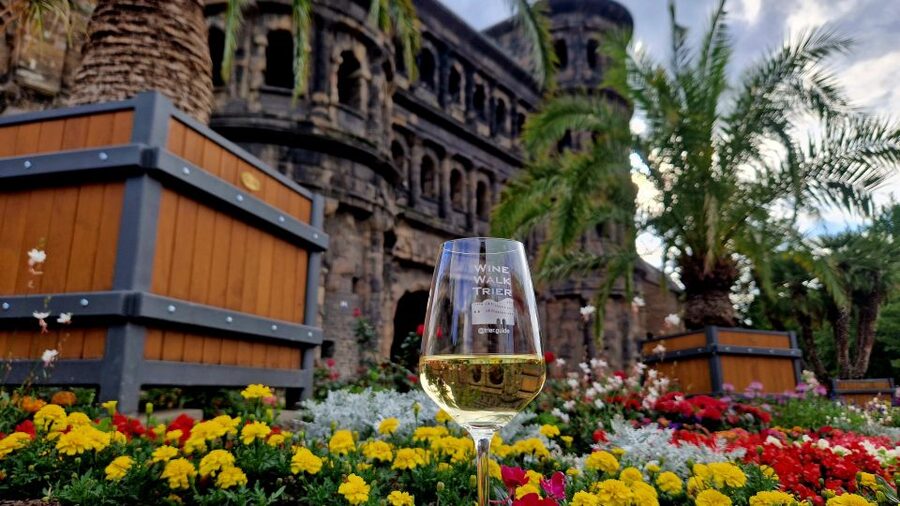
- Five regional wines in warmer months: The tasting focuses on local wines, with Riesling frequently praised in particular.
- Four mulled wines in winter: From mid-November through January, the seasonal version uses local Glühwein when at least six people register.
- Simon brings Trier to life: His local knowledge, humor, and wine expertise are central to the experience.
- A smart route through the old center: The walk connects the Porta Nigra, cathedral, churches, palace, Roman baths, and market square.
- Fully barrier-free: You do not need to climb steps, and the tour is wheelchair accessible.
- Useful after-tour bonus: Your booking includes a voucher for one glass of wine with a main course at Weinwirtschaft Friedrich-Wilhelm.
Why this walk works so well in Trier
Trier can feel like several cities at once. Roman gates and baths sit beside Christian churches, medieval streets, grand 18th-century buildings, and modern shops. A short walk can take you across centuries, but without context, the remains may look like unrelated stones.
This tour gives those sights a connecting thread. You start at the Porta Nigra, move through the central market and cathedral area, then continue toward the Electoral Palace and Roman baths. Along the way, the wine is not just a drink handed out at random. Each bottle is tied to a location, a period, or a local story.
That approach suits you if you want more than a quick photo stop but do not want a full museum-heavy day. The tasting also gives the walk a relaxed rhythm. You pause, listen, sip, and then move on.
Simon receives repeated praise for his clear explanations, humor, patience, and strong grasp of both Trier and Moselle wine. Several people particularly valued the small details that do not always appear in guidebooks. He also answers questions readily, which matters when you are trying to make sense of a city with such a long timeline.
More Wine Tasting Tours in Germany
- Heidelberg and Rhine Valley Day Trip With Wine Tasting and Dinner from Frankfurt
★ 3.5 · 101 reviews - Rhine Valley Wine Tasting Tour from Frankfurt and Mainz
★ 5.0 · 87 reviews - Reil, Mosel: Guided organic wine tasting and cellar tour
★ 4.8 · 84 reviews
Starting at the Porta Nigra
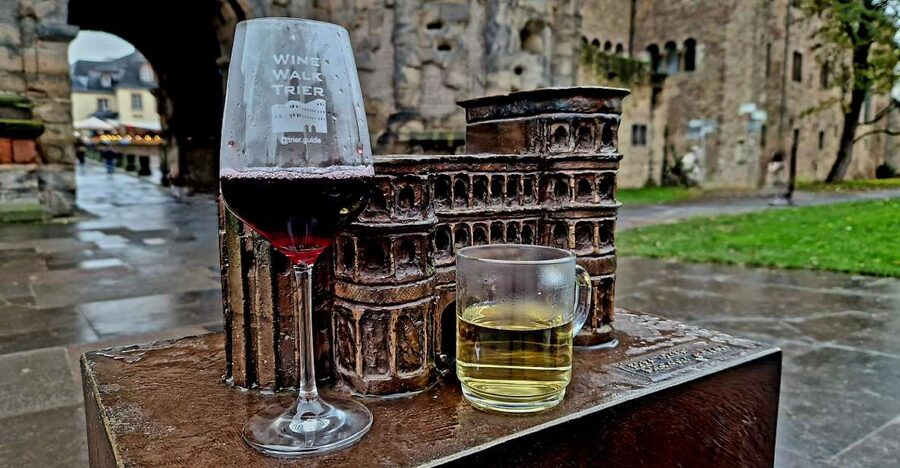
Meet on the left side of the Tourist Information office, in front of the city model near the flags. The tour is operated by Trier.Guide, not by the Tourist Information itself, so look for the independent guide rather than assuming the office staff will lead the walk.
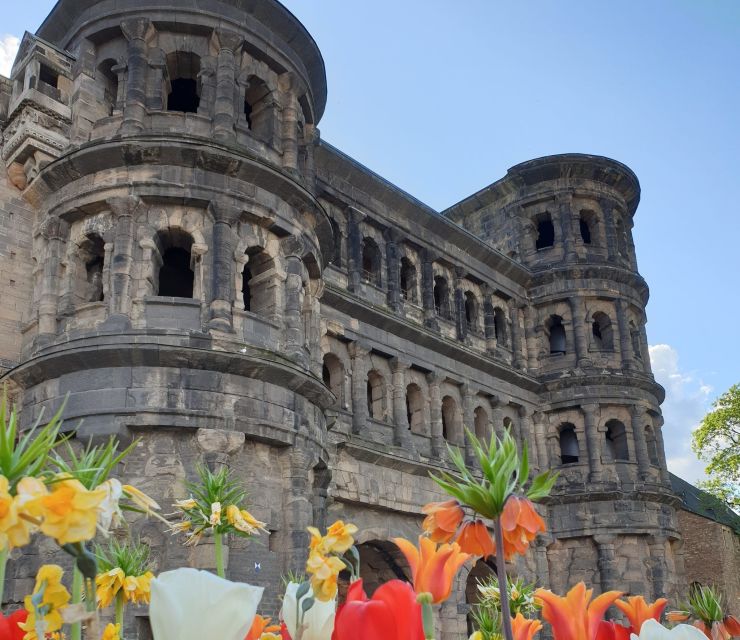
The Porta Nigra is an excellent starting point. This dark Roman gate once formed part of the city’s defensive system, and it gives you an immediate sense of Trier’s age and scale. You get time for photos and an opening explanation before setting off.
The first tasting takes place around this section of the walk. The setting helps frame the Moselle connection: Trier is not only an archaeological destination, but also a base for one of Germany’s best-known wine regions.
One practical point: a past participant arrived about three minutes late and was still welcomed warmly, but you should not count on that. Arrive early, especially if you are coming from the train station or trying to find the correct side of the Tourist Information building.
Market Cross and the central square
From the Porta Nigra, the route heads into the central streets and toward the Market Cross on the main market. This is one of the best places to watch Trier shift from Roman military center to medieval trading town.
The square gives the guide a useful setting for explaining the city’s commercial life and later development. You will have a short photo stop and another wine connection, rather than a long pause for independent shopping or browsing.
The main market can be lively, and background noise is the one drawback worth keeping in mind. One participant found it occasionally difficult to hear during busy moments. Stay close to the guide and ask him to repeat anything you miss. This is especially important if you have hearing difficulties.
Breadsticks and water are included. They are modest extras, but they make a difference when you are tasting several wines while walking. You are not left to manage five drinks on an empty stomach.
Trier Cathedral and Liebfrauenkirche
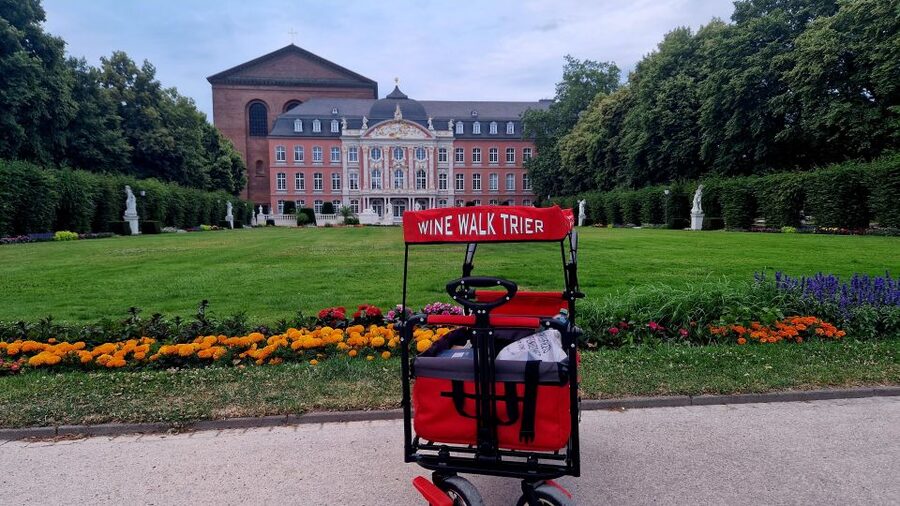
The route continues to Trier Cathedral, one of the city’s major Christian landmarks, then to the neighboring Liebfrauenkirche. Together, these churches show how strongly Christianity shaped Trier after its Roman period.
The cathedral stop is mainly about the exterior and the story attached to the place. Liebfrauenkirche receives a wine tasting as well as a guided explanation. The pairing of architecture, religious history, and regional wine gives the tour its distinctive character.
You should not expect a full interior tour of every building. The walk allows time for photos and, according to the experience details, may give you chances to look inside some locations yourself. Still, the main purpose is orientation and storytelling, not a detailed architectural inspection.
That is a fair trade for a two-hour tour. You see the key sites, learn what makes them important, and can return later to the places that catch your eye. If you want to study the cathedral or church interiors at length, plan a separate visit.
More Wine Tastings in Germany:
- Berlin: Wine on Canvas – Paint Workshop and Wine Tasting
★ 4.7 · 59 reviews - Stuttgart: Stuttgart Wine Museum Wine Tasting
★ 4.7 · 55 reviews - Lieser: Covered wagon ride, the rolling wine tasting with picnic basket
★ 4.7 · 51 reviews - Kröv, Mosel: Covered wagon ride through the vineyards with wine tasting
★ 4.8 · 46 reviews
Aula Palatina and the Electoral Palace
The Aula Palatina, also known as the Basilica of Constantine, brings the Roman story back into focus. Its scale helps you understand that Trier was not a minor outpost. It was an important imperial center.
Next comes the Electoral Palace, one of the city’s most striking later buildings. Its ornate appearance contrasts sharply with the plain mass of the Roman basilica nearby. The tour uses this contrast well, showing how Trier’s rulers changed the city over time.
A wine tasting is connected with the Electoral Palace stop. This is where the tour’s format feels most effective: you are not simply standing in front of a building while hearing dates. You are given a regional wine and a reason to connect it to the place around you.
The exact wines can vary, but the warm-season format includes five regional wines. Reviews frequently single out Rieslings as especially good, and the guide is able to explain the wines as well as the city. Expect an introduction to local styles rather than a formal sommelier lesson.
Kaiserthermen and the Forum Baths
The final part of the route reaches the Kaiserthermen, or Imperial Baths, before ending at the Forum Baths on Viehmarkt Square. These ruins show the Roman taste for large public bathing complexes and give the walk a strong finish.
The Kaiserthermen stop is mainly a guided explanation and photo opportunity. The Forum Baths are the final stop, with the tour ending outside the ruins. You should plan your next activity from Viehmarkt Square rather than the Porta Nigra, since you will not be returning to the starting point.
The route is useful for a first visit because it covers a broad sweep of central Trier without making you work through a maze of disconnected attractions. You finish with a clearer mental map and can decide which sites deserve a longer return visit.
What the wine tasting is really like
In the warmer season, you taste five different regional wines. The wine is served along the walk, with water and breadsticks included. This is a social, informal tasting, not a winery cellar visit with a table, printed tasting notes, and a long technical presentation.
The strongest feature is the story behind each pour. The guide connects the wine to a building or place in the city center, giving each sample a reason to remember it. That method helps you retain both the wine and the history.
From the middle of November through the end of January, the plan changes to four local mulled wines when at least six people register. The winter version has a different mood. Instead of chilled Riesling on a warm day, you get spiced Glühwein while walking through Trier’s old center.
If six or more people do not register for the winter format, the experience uses five different wines as in summer. If you prefer grape juice, four different grape juices can be arranged by email. Contact the provider before booking if this matters to you.
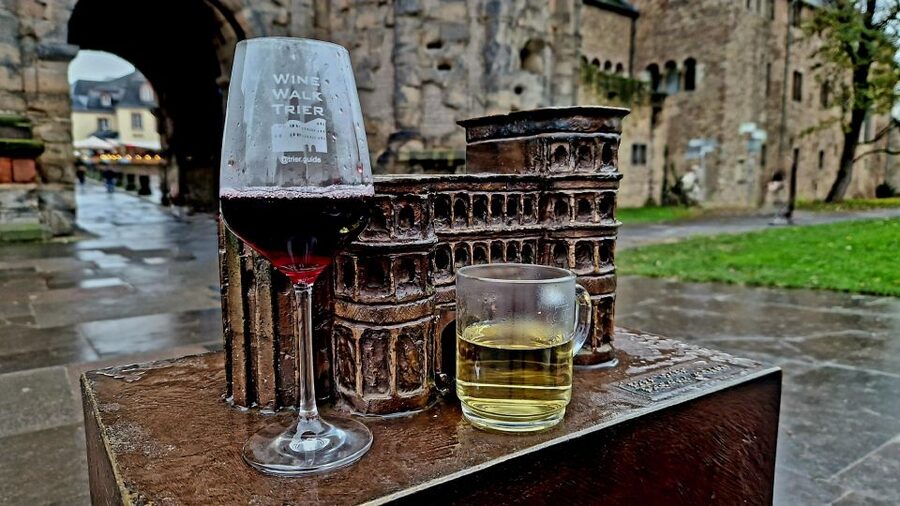
You will need a glass for the tasting. A glass can be purchased afterward for 6 euros, and a wine-glass holder is available for 3 euros. These costs are separate from the tour price, so budget for them if you want to keep the equipment.
Is 43 dollars good value?
At $43 per person, the tour is priced above a basic free city walk but includes a two-hour guide, five wine samples in the main season, or four winter mulled wines, plus water and breadsticks. It also includes a voucher for one glass of wine with a main course at Weinwirtschaft Friedrich-Wilhelm near the Basilica.
That voucher adds real value if you plan to eat there. It is not the same as receiving a full meal, since the main course is not included, but it can soften the cost of lunch or dinner.
You are also paying for a route that combines two activities you might otherwise book separately: a city orientation and a wine introduction. If you already know Trier well and only want a serious wine tasting, this may feel less focused than visiting a winery. If you are new to the city, the combination makes better financial sense.
The tour is especially useful for a day trip. One participant used it while traveling by train from Luxembourg and found the meeting point easy to reach. The walk gives you a solid overview in two hours, leaving time for a museum, cathedral interior, meal, or independent exploration afterward.
Weather, pace, and access
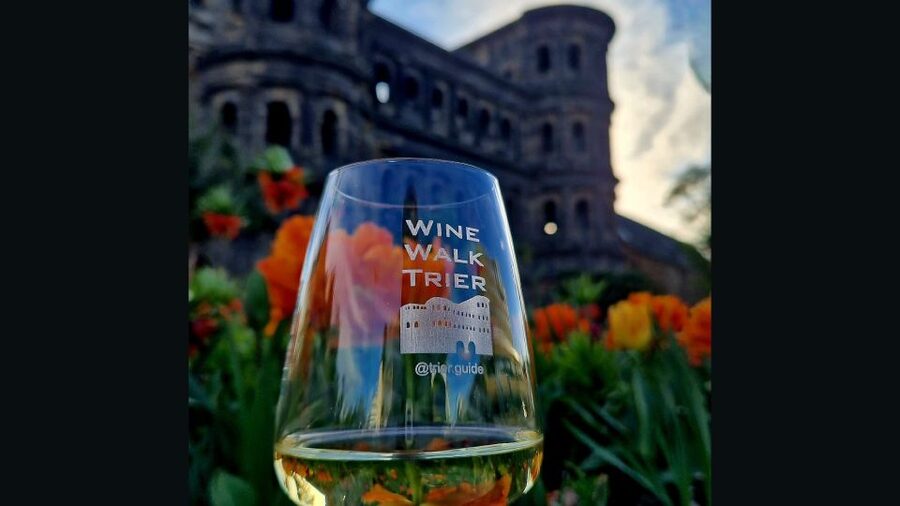
The tour runs rain or shine. Bring suitable clothing, since the tasting takes place outdoors as you move between city sights. In winter, the mulled wine format is a welcome seasonal touch, but warm shoes and a rain layer still matter.
The walk does not require steps and is completely barrier-free. It is wheelchair accessible, which makes it more practical than many historic-city tours that rely on uneven stairways or difficult entrances.
The listed duration is two hours, though the exact starting time depends on availability. The route is not described as strenuous, but you will be standing and walking for the full session. Breadsticks and water help, but this is not a sit-down tasting.
The guide speaks German and English. If you are booking for a mixed-language group, confirm your preferred language at the time of booking.
Who should book it?
I would choose this tour if you are visiting Trier for the first time, enjoy local wine, and want the city’s major sights explained in a compact format. It also suits couples, small groups, and day trippers who want a memorable activity without giving up the rest of the afternoon.
It is a particularly good fit for people who like history in manageable portions. You get Roman ruins, medieval and religious landmarks, later royal architecture, and local wine, but you are not committed to a four-hour lecture.
Families and non-drinkers can also consider it, since grape juice is available by email arrangement. The standard experience is built around alcohol, however, so make that request before the day of the tour.
I would hesitate only if you need a quiet, seated tasting or want extended time inside each monument. The route is lively and social, and parts of central Trier can be noisy. Keep close to Simon, and treat the walk as an introduction rather than a complete archaeological tour.
Should you book the Trier wine walk?
Yes, if you want a fast but meaningful introduction to Trier. The strongest part is the way Simon connects each regional wine with the city around you. That turns a standard sightseeing route into something easier to remember.
Book it early in your visit so you can use the guide’s orientation for the rest of your stay. Afterward, return to the cathedral, churches, or Roman ruins that deserve more time, then use the wine voucher at Weinwirtschaft Friedrich-Wilhelm if it fits your plans.
The tour is not the right choice for a winery-only outing or a long museum visit. For most first-time visitors, though, $43 buys a useful mix of local flavor, major sights, and a guide who clearly cares about his hometown.
FAQ
How long does the Trier guided city walk with wine tasting last?
The tour lasts two hours.
Where does the tour meet?
Meet on the left side of the Tourist Information office, in front of the city model near the flags. The tour is provided by Trier.Guide, not by the Tourist Information.
Where does the tour finish?
The tour ends outside the Forum Baths on Viehmarkt Square.
How many wines are included?
The warm-season tour includes five regional wines. From the middle of November through the end of January, it includes four local mulled wines when at least six people register.
Can I choose non-alcoholic drinks?
Yes. Four different grape juices can be arranged by email.
Is the tour wheelchair accessible?
Yes. The tour is completely barrier-free and does not require climbing steps.
What happens if it rains?
The tour runs rain or shine, so you should dress for the weather.
Is anything included after the walking tour?
Yes. You receive a voucher for one glass of wine with a main course at Weinwirtschaft Friedrich-Wilhelm near the Basilica. A tasting glass can be purchased for 6 euros, and a wine-glass holder costs 3 euros.
More Walking Tours in Germany
- Hamburg: St. Pauli Breweries Walking Tour with Tastings
★ 4.7 · 205 reviews - Munich: Guided Food Walking Tour with Beer Tasting
★ 4.7 · 183 reviews - Cologne: 3 Old Town Breweries Guided Walking Tour
★ 4.8 · 120 reviews - Cologne: Old Town Walking Tour with 1 Brewery Visit & 1 Beer
★ 4.7 · 87 reviews
Just added around Germany
- Food tasting tour in Berlin of HIDDEN GEMS (Small Groups)★ 4.5 · 60 reviews
- Alternative Berlin Pub Crawl★ 4.0 · 86 reviews
- Stuttgart: Stuttgart Wine Museum Wine Tasting★ 4.7 · 55 reviews
- Stuttgart: Guided Vineyards Tour★ 4.3 · 146 reviews
- Hamburg Pub Crawl – 4 Locations, Shots & Club Entry★ 4.6 · 302 reviews
- Informative and fun brewery tour in German, public★ 4.9 · 47 reviews
- Nuremberg: Private 1.5-Hour Tour with Beer Tasting★ 4.6 · 111 reviews
- Nuremberg: Castle and Old Town Tour – incl. Tickets and red beer tasting★ 4.9 · 68 reviews
Wine Tasting Tours, compared.
Douro Valley w/ Boat Tour, Wine Tasting & Lunch
Read our review →
Complete Douro Valley Wine Tour with Lunch, Wine Tastings and River Cruise
Read our review →
Small-Group Wine Tasting Experience in the Tuscan Countryside
Read our review →
SMALL-GROUP Wine Safaris: Tuscan Wine Tasting Tours from Florence
Read our review →
San Gimignano, Siena, Monteriggioni, Chianti Day Trip with Lunch & Wine Tasting
Read our review →
Cálem Cellar Tour, Interactive Museum & Wine Tasting
Read our review →
Browse the lists this tour appears in