
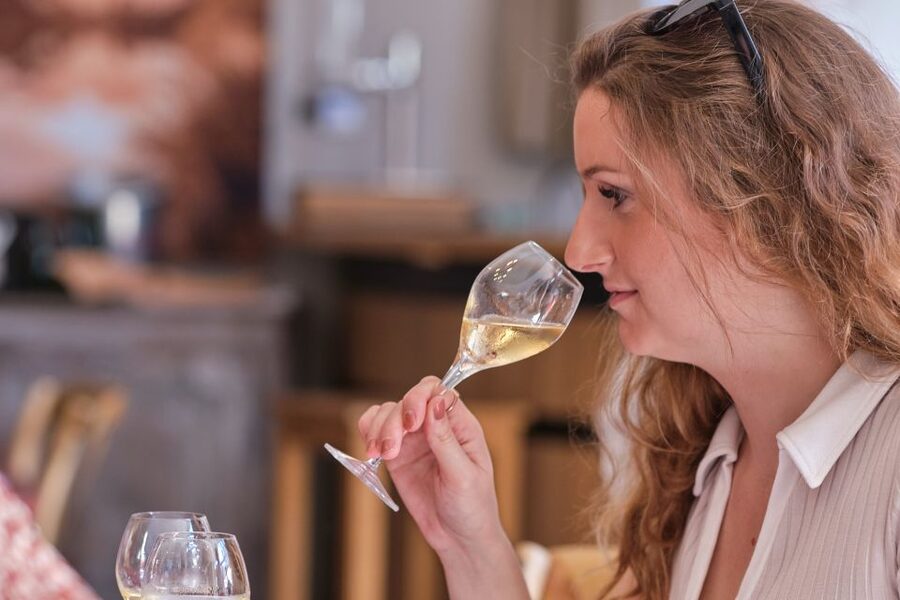
Review · FRANCE
Champagne: Champagne Tasting Class with Lunch
The best part of this Aÿ-Champagne experience is that it turns tasting into a hands-on lesson. You visit 1850s cellars, examine a traditional press, train your nose with an aroma workshop, then test yourself against three Champagnes before sitting down to lunch.
I like the intimate family-house setting and the generous regional meal, with dishes such as pâté en croûte, Langres cheese, and pink biscuit cake. I also like that the tasting goes beyond Champagne to include Côteaux Champenois red wine and Ratafia, two local drinks many first-time visitors miss.
The main consideration is timing. A three-hour visit can run longer in feel if the session is presented in both French and English, and the cellar sits at about 10°C, so bring a jacket. This is a tasting class with food, not a quick sip-and-go stop.
Key points at a glance
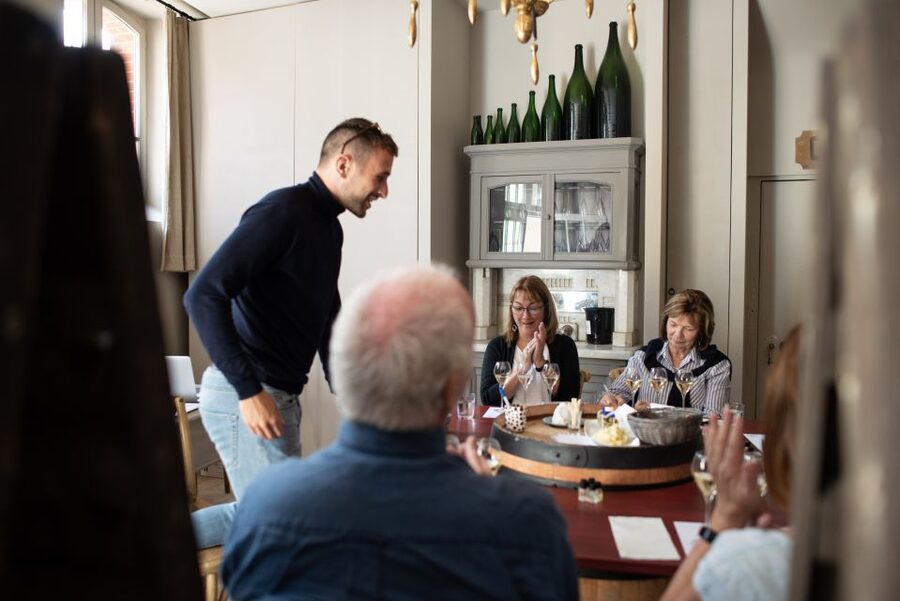
- A family Champagne house: Le Clos Corbier gives you a more personal look at production than a large branded cellar.
- Three Champagne styles to compare: Blind tasting turns the lesson into a friendly test of your new skills.
- Aroma training included: You practice identifying scents and flavors before judging the wines.
- A proper regional lunch: Homemade specialties are served with Champagne and other local drinks.
- Aÿ location: You meet at the Clos Corbier sign in the Champagne vineyards, near Epernay.
- Useful for beginners: The class explains grapes, production, and tasting in clear, accessible steps.
A small family house in Aÿ-Champagne
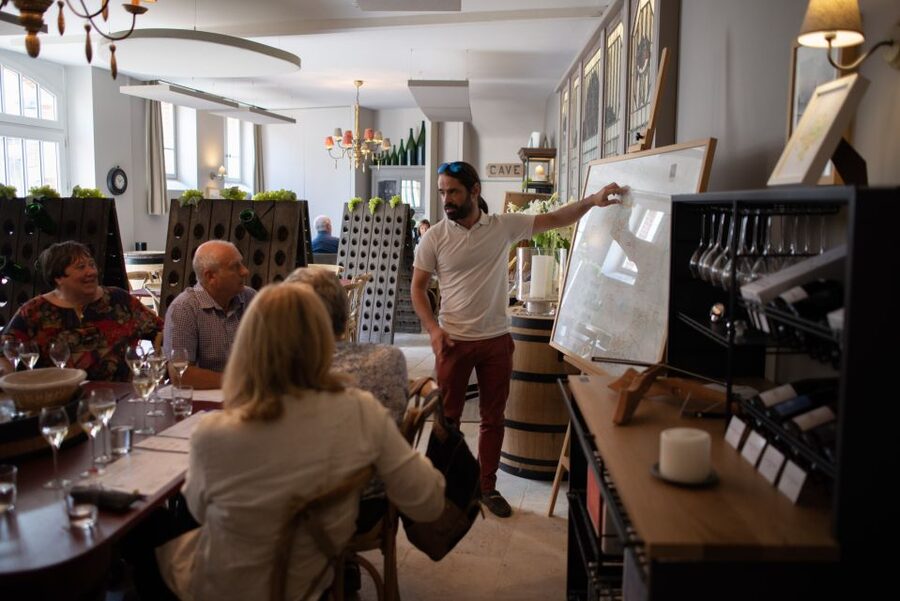
Le Clos Corbier sits in Aÿ-Champagne, one of the best-known villages in the Champagne area. The experience takes place at a family domain rather than a major commercial Champagne brand, which changes the mood from the start.
You look for the Clos Corbier sign and ring the doorbell. There is no need to arrive expecting a grand corporate visitor center. The appeal is the house itself, its family story, its cellar, and the chance to ask questions in a relaxed setting.
That personal scale matters. A large Champagne house can explain production with polished displays and carefully staged rooms. Here, you get a closer connection to the people and place behind the bottles. The owner may join the group and answer questions, adding a human side to the lesson.
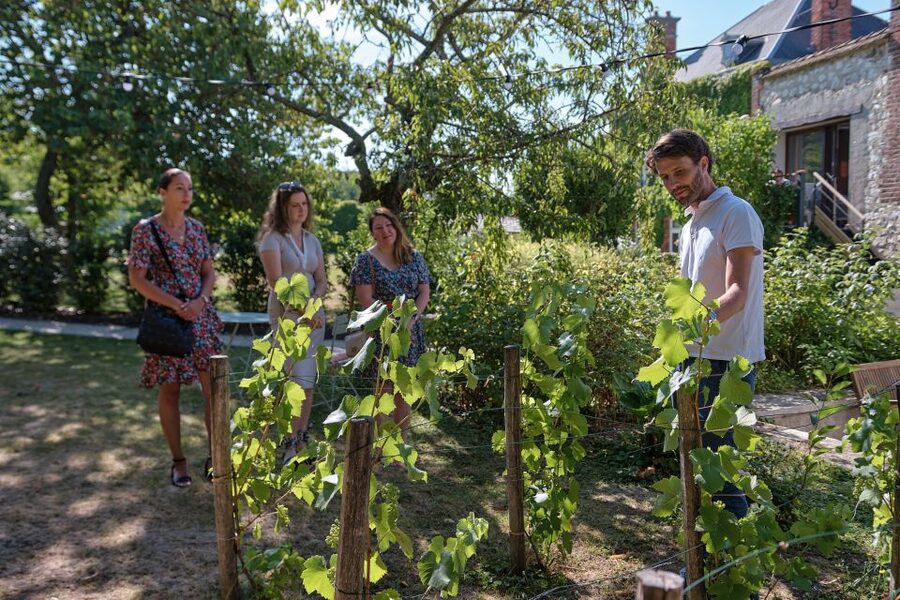
The property has also been described as a pleasant house and garden, though the main attraction is below ground and at the tasting table. You should not expect a long vineyard walk. The experience focuses on the Champagne house, cellar, tasting class, and meal.
More Champagne Tours in France
- Paris: Moulin Rouge Cabaret Show Ticket with Champagne
★ 4.7 · 16,088 reviews - Paris: Paradis Latin Cabaret Show with Optional Champagne
★ 4.6 · 2,231 reviews - Paris 3-Courses Gourmet Dinner Seine River Cruise with Champagne
★ 4.0 · 1,659 reviews
What you learn in the old cellars
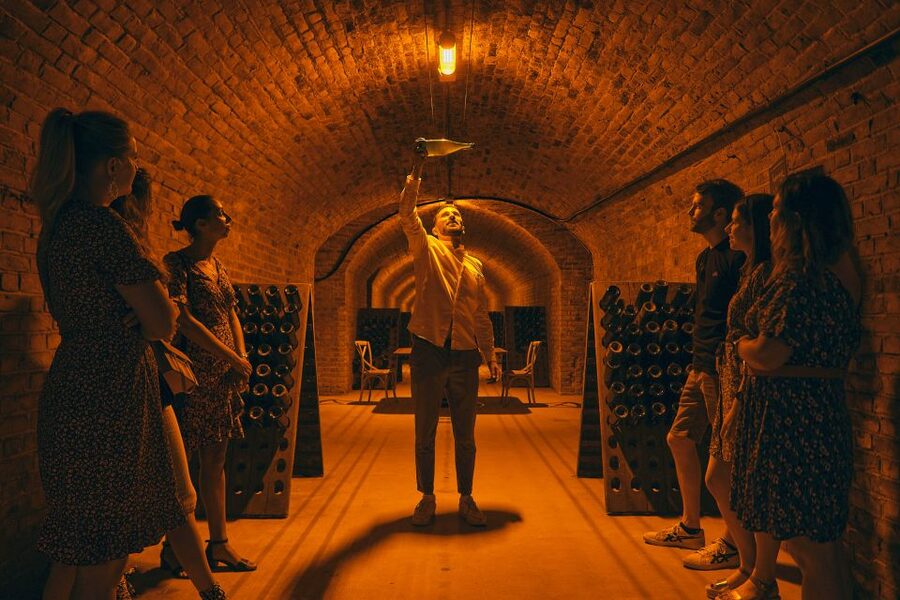
The tour begins with the Champagne-making process. You see cellars dug in the 1850s and a traditional press, then hear how the grapes move from vineyard to finished bottle.
This is useful background even if you already know the basics. Champagne involves more than sparkling wine poured into a flute. The class covers the grapes and production methods that shape the drink, giving you a framework for understanding the bottles you taste later.
The cellar temperature averages 10°C. That is comfortable for wine storage, but cool enough to catch you off guard after arriving from a warm afternoon. Bring a jacket or light sweater. Comfortable shoes are sensible, since you are visiting an old cellar rather than simply sitting in a tasting room.
The cellar portion is not presented as a museum visit with endless displays. It works as a practical introduction to what happens at a working family domain. If your main goal is to see enormous underground tunnels, a major Reims or Epernay house may offer a larger-scale visit. If you want to connect the wine to a family producer, Le Clos Corbier makes more sense.
The tasting class turns your nose into a tool
After the cellar visit, you sit down for the tasting class and Champagne quiz. The quiz adds a little friendly competition without turning the session into a formal exam.
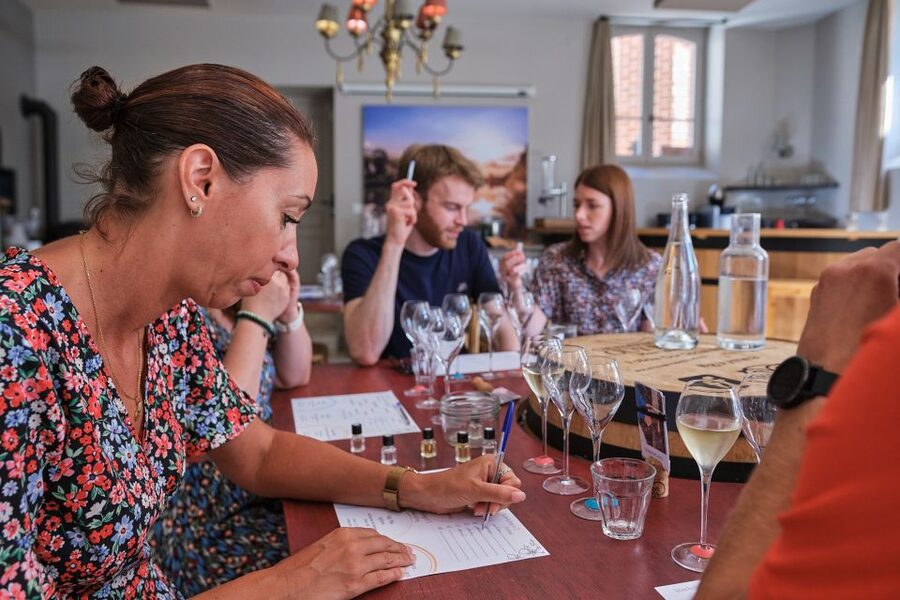
The aroma workshop is one of the strongest parts of the experience. You train your nose to pick out different scents and flavors found in Champagne, then apply those skills to the wines in your glass. This is especially helpful if you normally describe wine with vague words such as good, dry, or sweet.
I like this format because it gives you something to do. You are not just listening to a guide explain tasting notes. You smell, compare, guess, and then talk through the result. The lesson becomes easier to remember because you connect the information to an activity.
Guides have included Emma, Charlotte, Marie, Amanda, Alvaro, Thomas, and Estelle at different sessions. The strongest guide experiences have come from hosts who explain technical points in plain language and keep the group involved. English and French are offered, and some sessions are bilingual. That can be useful for mixed-language groups, though it may make the explanations feel longer.
The class suits beginners particularly well. You do not need prior wine training, and you will have plenty of chances to ask basic questions. If you already work in wine, the class may feel introductory, but the blind comparison and local red wine still add interest.
Three Champagnes and a blind test
The central tasting compares three Champagnes from different small wineries. The wines are presented blind, so you judge them without relying on a producer name or label.
This is a smart choice for a Champagne tour. Famous labels can shape your expectations before you taste a drop. Blind tasting forces you to pay attention to texture, aroma, sweetness, acidity, and finish instead.
The purpose is not to prove that one bottle is objectively best. It is to show how different Champagnes can taste, even when they come from the same broad region. You may find yourself guessing incorrectly, which is part of the fun. The quiz and tasting games keep the mood social rather than stuffy.
Local snacks accompany the tasting. They give you something to eat while you compare the wines and help prepare you for lunch. The pours have been described as generous, so pace yourself. This is a three-hour session with several drinks, not a place to rush through the glasses.
The included tasting total is listed as six wine tastings. The experience includes the three Champagne comparisons, along with later pours of Côteaux Champenois and Ratafia. The exact distribution can vary with the meal and session, but you should expect more than three drinks overall.
Same town, a different glass:
- Loire Valley Castles Day Trip from Paris with Complementary Wine
★ 4.5 · 3,907 reviews - Bordeaux: Cité du Vin Entry Ticket and Wine Tasting
★ 4.6 · 3,885 reviews - Bordeaux: River Garonne Cruise with Glass of Wine and Canelé
★ 4.5 · 3,630 reviews - Normandy D-Day Small-Group Day Trip with Omaha Beach, Cemetery & Cider Tasting
★ 5.0 · 2,786 reviews
Lunch is a major part of the value
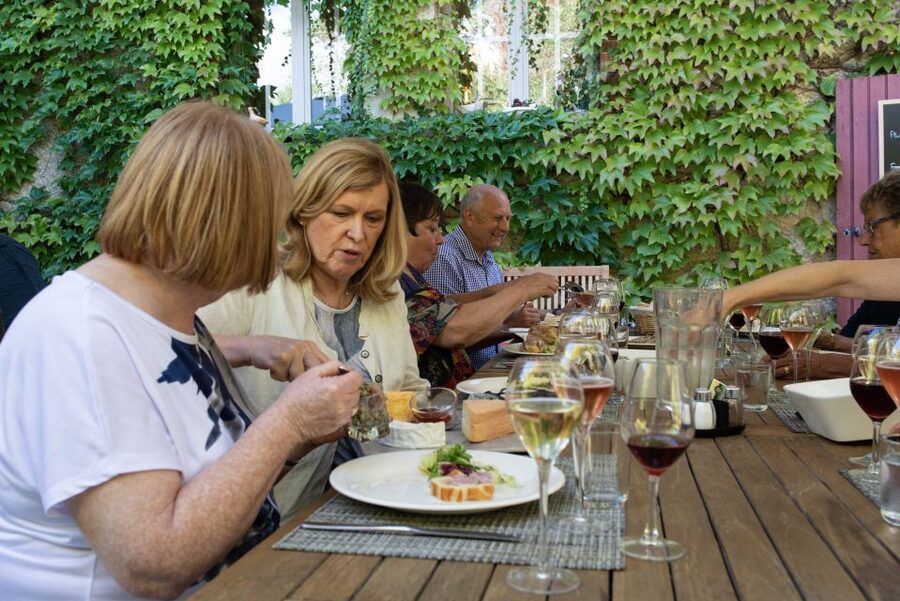
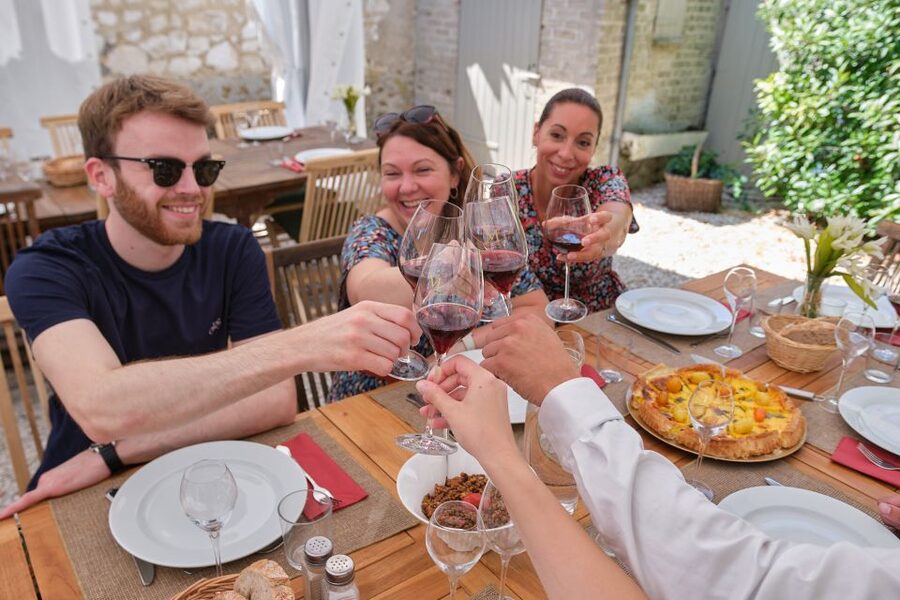
The meal is not an afterthought. It is a proper lunch of homemade regional specialties served at the Champagne house.
Possible dishes include pâté en croûte, a meat-filled pastry; Langres cheese, a soft cheese from the region; and pink biscuit cake for dessert. The meal can be adapted for allergies or specific diets, but tell the provider in advance so the kitchen can prepare appropriately.
This food gives the tasting a local purpose. Champagne is often treated as a party drink, but it also works at the table. The meal shows how the wine fits with savory pastry, cheese, and dessert rather than leaving you with a few isolated sips.
Lunch may be served indoors or outside, depending on the conditions. A sunny meal in the garden can make the visit feel especially leisurely, but the outdoor setting is not guaranteed. Weather will shape that part of the experience.
The meal is also where the price begins to make sense. At $106 per person, you are paying for a cellar visit, a guided lesson, several tastings, snacks, and lunch. A short tasting alone would not offer the same value. If you do not want a full meal or prefer to visit several producers in one day, you may find this format too long and food-focused.
Do not overlook the local red wine and Ratafia
After the Champagne tasting and lunch, the experience broadens to two regional drinks.
Côteaux Champenois is a still wine from the Champagne region. Tasting it beside sparkling Champagne helps you think about the grapes and local wine culture in a wider way. It is a useful reminder that the region produces more than one style of wine.
Ratafia is a regional liquor served as a final taste. It provides a different finish from the sparkling wines and gives you another piece of local drinking culture to take home in your memory.
These additions help separate the class from a standard Champagne flight. You are not only comparing three bottles of fizz. You are sampling a small range of what the area produces and drinks.
Because alcohol is served throughout the visit, plan your transport sensibly. Transportation is not included, and the meeting point is at the Clos Corbier sign. The experience ends in the early afternoon, but you should still avoid driving after the tasting.
How the three hours feel
The experience has a clear rhythm:
- You arrive at Le Clos Corbier and enter the family domain.
- You tour the old cellars and see the traditional press.
- You attend a Champagne lesson with a quiz.
- You practice aromas and flavors in the nose workshop.
- You blind taste three Champagnes with local snacks.
- You sit down to a regional lunch.
- You taste Côteaux Champenois and Ratafia before finishing.
That is a lot to fit into three hours, but the food breaks up the instruction. You are not standing for the whole visit, and the tasting class gives you time to settle in.
A small-group atmosphere makes the interactive parts work best. You can compare guesses with the people at your table and ask questions without feeling lost in a crowd. The exact group size is not fixed in the information provided, so do not book expecting a guaranteed private tour.
The biggest pacing issue comes with bilingual explanations. A French and English presentation can be welcoming and clear, but it naturally takes more time. If you want a rapid technical tour, this is not the right style. If you want a sociable morning with time for food and conversation, the slower rhythm is a plus.
Practical details before you book
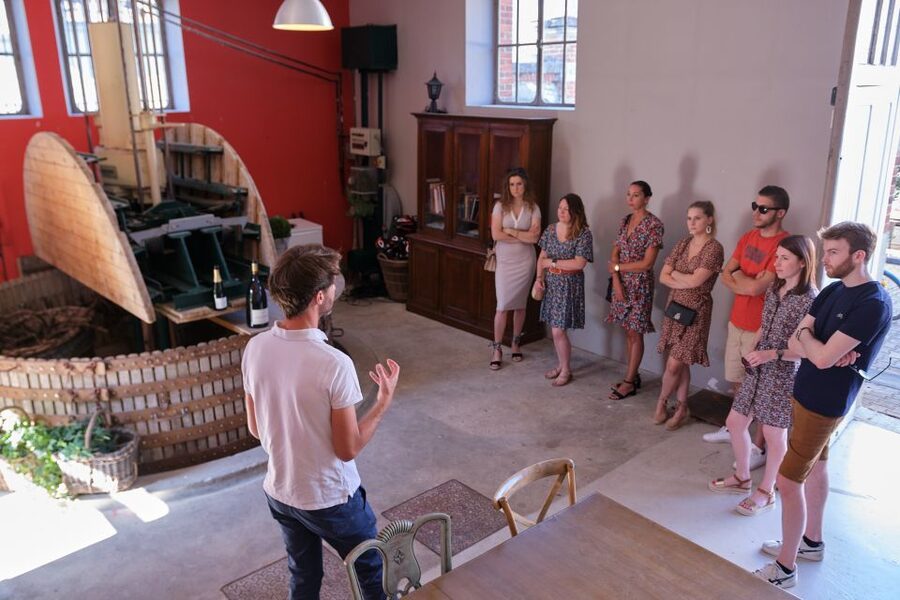
The meeting point is simple: look for the Clos Corbier sign and ring the doorbell. Transportation is not included, so arrange your own way to Aÿ-Champagne.
The activity is wheelchair accessible, and the host or greeter speaks English and French. Children under 18 cannot drink alcohol, and the supplied information does not present this as a children’s activity. Pets are not allowed, although assistance dogs are permitted.
Free cancellation is available up to 24 hours before the start time, and you can reserve now and pay later. Starting times vary, so check availability for the date you want.
Bring:
- A jacket for the 10°C cellar
- Any allergy or dietary information to share before the meal
- A plan for getting back after several tastings
The experience has received a 4.9 rating from 384 bookings, with repeated praise for the guides, lunch, generous pours, and interactive teaching. I would put the guide at the center of the decision. Emma, Charlotte, Marie, Amanda, and the other named hosts have each been praised for making technical material easy to follow, but the exact guide depends on your date.
Who should book this Champagne class?
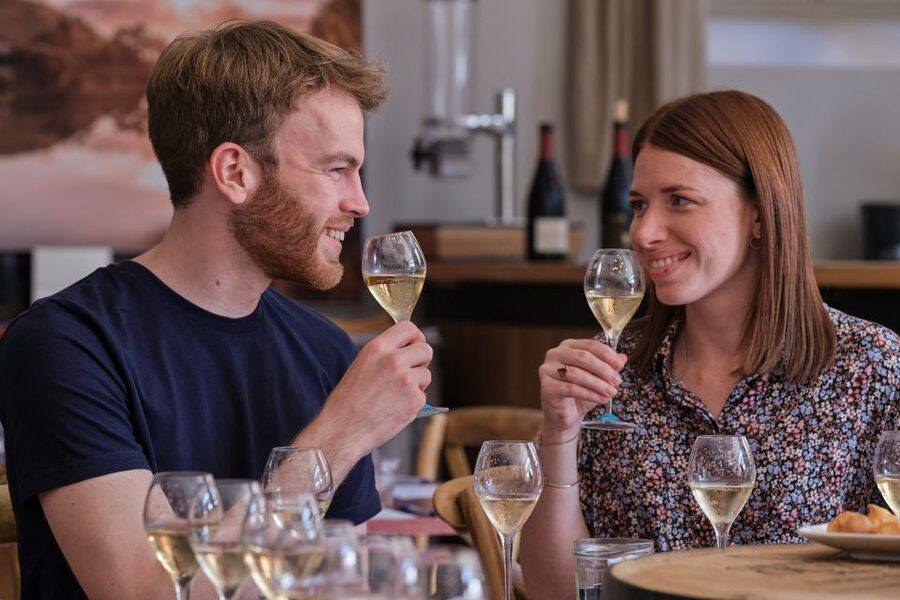
I would choose this for a first visit to the Champagne region, especially if you want more than a quick tasting. The teaching gives you useful vocabulary and a basic understanding of production, while the lunch makes the outing feel like a regional experience rather than a sales appointment.
It also suits couples, food lovers, and small groups looking for a relaxed half-day. The blind test adds enough playfulness for people who are not serious wine experts, and the meal gives non-wine companions a stronger reason to come along.
You may want a different outing if your priority is a large famous house, a long walk through extensive underground tunnels, or a full-day vineyard tour. You may also prefer something shorter if you want to visit several producers in one day.
Should you book Le Clos Corbier?
Yes, if you want a personal, educational Champagne visit with a real meal. The combination of old cellars, aroma training, blind tasting, regional dishes, Côteaux Champenois, and Ratafia gives you far more range than a basic three-glass tasting.
At $106 per person, the value is strongest when you count the lunch and six wine tastings along with the guide and cellar visit. Bring a jacket, allow the bilingual presentation to take its time, and make a sensible transport plan. If that sounds like your kind of morning, Le Clos Corbier is an easy choice in Aÿ.
FAQ
Where does the Champagne tasting class take place?
It takes place at Le Clos Corbier, a family Champagne domain in Aÿ-Champagne in France’s Grand Est region. Look for the Clos Corbier sign and ring the doorbell.
How long does the experience last?
The stated duration is three hours, and the experience finishes after lunch in the early afternoon. Check the available starting times when booking.
What is included in the price?
The $106 per person price includes a local guide, winery entry fees, the winery tour, six wine tastings, local snacks, and lunch.
How many Champagnes will I taste?
You compare three different Champagnes from small wineries during a blind tasting. The full experience includes six wine tastings in total, including other regional drinks served with or after lunch.
What food is served at lunch?
The meal features homemade regional specialties. Possible dishes include pâté en croûte, Langres cheese, and pink biscuit cake. Lunch can be adapted for allergies or specific diets.
Is the tour offered in English?
Yes. The host or greeter can speak English or French. Some sessions may be presented in both languages.
Should I bring a jacket?
Yes. The cellars average about 10°C, so a jacket is important even on a warm day.
Can children attend the experience?
Children under 18 are not allowed to drink alcohol. The activity is designed around wine tasting, so check the provider’s current requirements before booking for anyone under 18.
Is transportation included?
No. You need to arrange your own transportation to and from Le Clos Corbier. Personal expenses are also not included.
More Workshops in France
- Paris: French Wine Tasting Class with Sommelier
★ 4.8 · 550 reviews - Aÿ-Champagne: Champagne House Tour and Tasting Class
★ 4.9 · 209 reviews - Wine Tasting Class: Tour de France in Nice City Centre
★ 5.0 · 201 reviews - Bordeaux Super Saver Wine Tasting class and St Emilion region
★ 5.0 · 184 reviews
More Lunch Experiences in France
- From Paris: Day Trip to Champagne with 8 Tastings & Lunch
★ 4.8 · 1,501 reviews - Saint-Emilion Electric Bike Day Tour with Wine Tastings & Lunch
★ 5.0 · 696 reviews - Paris: Wine and Cheese Lunch
★ 4.9 · 596 reviews - St-Emilion & Médoc Wine Day Tour: Chateaus, Tastings and Lunch
★ 5.0 · 430 reviews
Just added around France
- Saint Emilion Full Day Wine and Bike Tour★ 5.0 · 167 reviews
- Professional – Bordeaux Wine and Cheese Tasting with a walking tour★ 5.0 · 218 reviews
- Bordeaux Wine and Trade Museum Admission Ticket with Wine Tasting★ 4.5 · 599 reviews
- Medoc Afternoon Wine Tour – 2 Wineries, tastings & delicacies★ 4.5 · 74 reviews
- Bordeaux Wine Masterclass: Blending workshop with appetizer★ 5.0 · 113 reviews
- Saint-Emilion Small-Group Electric Bike Wine Tour Tastings & Lunch from Bordeaux★ 5.0 · 383 reviews
- Discovery of the Bordeaux vineyard in 3 wines★ 5.0 · 133 reviews
- Saint-Emilion Winery Morning Tour with Local Guide★ 5.0 · 67 reviews
Champagne Tours, compared.
Paris 3-Courses Gourmet Dinner Seine River Cruise with Champagne
Read our review →
Top Private Cruises in Paris with French Champagne and surprises
Read our review →
Day Trip to Champagne with 8 Tastings & Lunch
Read our review →
First Show Moulin Rouge with Champagne & Seine Cruise
Read our review →
Private Boat Ride in Miami with Experienced Captain and Champagne
Read our review →
Browse the lists this tour appears in