
Review · BORDEAUX
Bordeaux Wine Masterclass: Blending workshop with appetizer
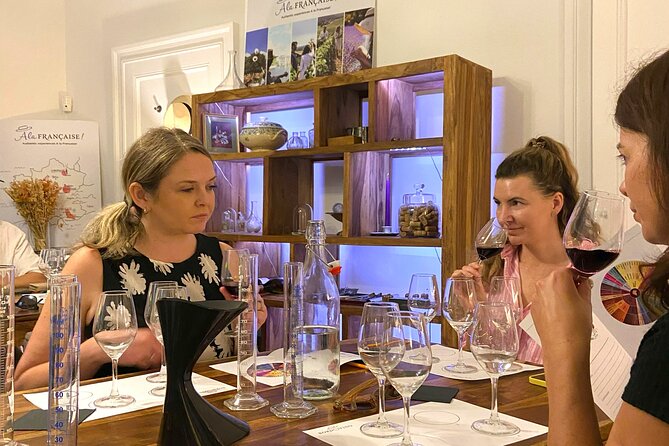
Bordeaux is a fine place to learn that French wine is not just about one famous region. This seated workshop moves from Burgundy and the Loire Valley to Côtes du Rhône and Bordeaux, then lets you make your own blend from Merlot and Cabernet Sauvignon. I like the mix of useful wine theory and hands-on tasting. The small group, capped at 12, also gives you room to ask questions.
I especially like that you learn how to read a French label and describe what you smell and taste, rather than simply being handed a series of glasses. The cheese, cured meat, bread, and chocolate make the lesson feel social. The main consideration is that this is a classroom tasting, not a visit to a vineyard, and the food is more of an appetizer plate than a meal.
Key points at a glance
- Make your own Bordeaux blend: Compare Merlot and Cabernet Sauvignon, then use both to create a personal mixture.
- Taste across France: Sample at least seven wines, with the full workshop description referring to eight wines from areas including Burgundy, Bordeaux, the Loire Valley, and Côtes du Rhône.
- Learn practical wine skills: Study aromas, flavors, color, terminology, French labels, and the appellation system.
- Keep the group small: The maximum is 12 people, making it easier to ask questions and take part in the exercises.
- Enjoy a French-style snack: Cheese, charcuterie, fresh bread, and chocolate accompany the tasting.
- Start your Bordeaux day early: The session begins at 10:30 a.m. at 3 Rue d’Enghien and lasts about 90 minutes.
Why the blending exercise is the heart of the class
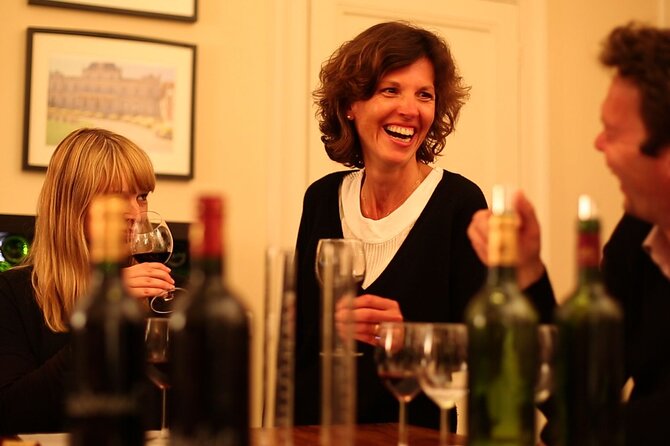
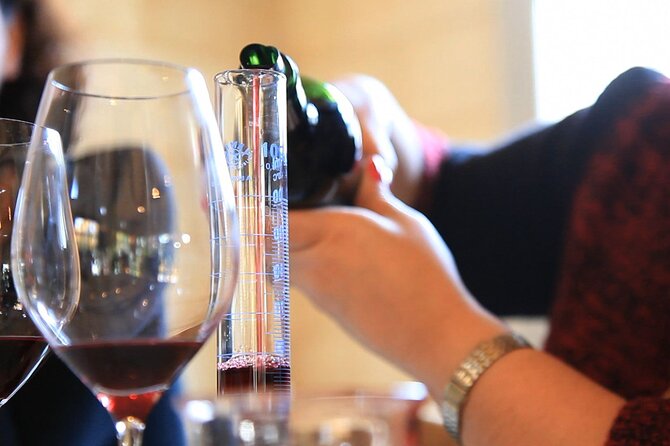
Many wine tastings ask you to sip, nod, and move on. This one gives you a job. Near the end, you combine Merlot and Cabernet Sauvignon to see how each grape changes the final wine.
That practical step is useful because Bordeaux wine is often built around blends rather than a single grape. Merlot can bring a softer, rounder feel, while Cabernet Sauvignon can add structure and a firmer edge. The class does not simply tell you this. It lets you compare the components and see how the mixture changes in your glass.
You do not need prior wine training. The workshop is designed for beginners, but it also has enough detail for people who already know their way around a wine list. One especially worthwhile lesson is the comparison between different Bordeaux styles, including the way blends can differ between the Left Bank and Right Bank. That contrast helps explain why two bottles from the same broad region can taste quite different.
The blending activity also gives you something to talk about after the class. You can begin to understand why winemakers do not just pick one grape and stop there. The exercise is simple, but it turns an abstract idea into something you can taste.
A few more tastings around Bordeaux worth a look
- Bordeaux Super Saver Wine Tasting class and St Emilion region
★ 5.0 · 184 reviews - Guided Bordeaux Wine Tasting Class with 6 Wines and pairings
★ 4.9 · 181 reviews - Workshop Bordeaux wine tasting: 4 reds & charcuterie pairing
★ 5.0 · 72 reviews
Starting with French wine regions and terminology
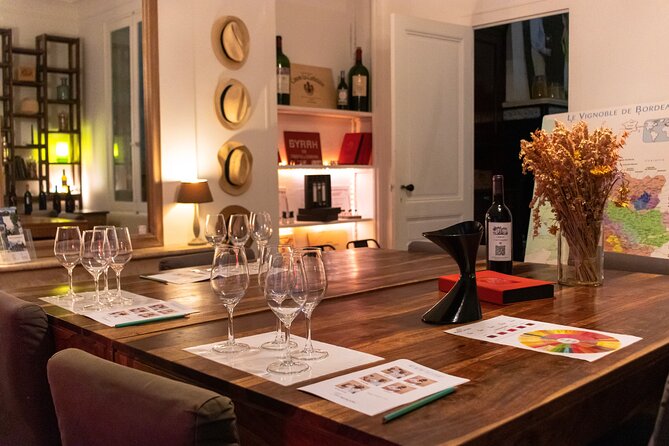
The class opens with an introduction to French wine regions. You will taste examples connected with Bordeaux, Burgundy, Côtes du Rhône, and the Loire Valley, so the lesson is broader than Bordeaux alone.
That point matters. Someone expecting only local Bordeaux bottles may be surprised by the wider selection, but the range makes the class more useful. You can compare how grapes, climate, soil, and local rules shape a wine. The goal is not to memorize every French region. It is to give you a working map for future restaurant menus and wine shops.
You will also hear terms such as terroir and appellation. These words can sound grand until you understand how they affect what is in the bottle. The guide explains the French classification system and shows you how to use a label for clues about origin and style.
The label lesson is one of the most practical parts for visitors. French bottles do not always feature the grape name in large type, so knowing how to read the region and appellation can help you make a better choice. You will leave with a clearer idea of what information a French label gives you, and what it leaves for you to work out.
Learning to smell, taste, and describe wine
The tasting is not just a line of pours. You will look at color, identify aromas, consider flavor, and learn vocabulary for describing what is in the glass.
This is helpful because many people know what they like but struggle to explain it. Do you prefer a lighter red or a fuller one? Do you enjoy fruit-forward wines, earthy notes, more structure, or a softer finish? The exercises give you a way to answer those questions without needing a professional vocabulary.
A smelling exercise adds a playful element. It gives you a chance to test your nose before the labels and regional information influence your expectations. You might not identify every scent correctly, and that is part of the fun. The point is to become more alert to what you are tasting, not to pass an exam.
The professional guides are a major part of the experience. Past sessions have been led by people including Gabriel, Victoire, Fabien, Chloé, Dorian, Carol, Hugo, Rémi, Hector, and others. The consistent strength is their ability to explain technical material in a relaxed way, answer questions, and keep the group involved. Guide assignments can change, so you should not book expecting one particular person unless the provider confirms it.
Seven or more wines, with a useful bit of food
The tasting includes at least seven French wines, while the full description refers to eight wines during the workshop. The exact count is best treated as seven or more rather than a promise of one fixed number, since the supplied details use both figures.
The selection includes wines from several French regions, with a focus on Bordeaux and its blending traditions. That makes the tasting more educational than a single-region flight. You get to compare different styles and think about how place and grape affect the result.
The food is a French appetizer platter with cheese, cured meats, fresh bread, and chocolate. It is a welcome addition, especially during a morning tasting, and it lets you notice how food changes the wine. Salty charcuterie, creamy cheese, bread, and sweet chocolate each create a different pairing effect.
Do not arrive expecting lunch. One participant found the amount of food limited, and that is a fair way to view it. The platter supports the lesson rather than replacing a meal. If you need a substantial breakfast or lunch, eat separately before or after the class.
The tasting takes place while seated, which makes the 90-minute session easy to follow. You are not walking between cellars or standing at a crowded bar. That format suits anyone who wants a focused introduction without committing to a full day in the countryside.
Same town, a different glass:
- Bordeaux: Cité du Vin Entry Ticket and Wine Tasting
★ 4.6 · 3,885 reviews - Bordeaux: River Garonne Cruise with Glass of Wine and Canelé
★ 4.5 · 3,630 reviews - From Bordeaux: Afternoon Saint-Emilion Wine Tasting & snack
★ 4.8 · 1,581 reviews - Medoc or Saint Emilion Wine Tasting and Chateau from Bordeaux
★ 5.0 · 1,415 reviews
What the 10:30 a.m. start means for your day
The workshop begins at 10:30 a.m. at 3 Rue d’Enghien, 33000 Bordeaux. It ends back at the same meeting point, and no hotel pickup or drop-off is included.
That timing works well as a first activity in Bordeaux. You can learn the basics before visiting a wine bar, ordering a bottle with lunch, or heading out to a château later in your trip. Several people have used the class as a starting point before vineyard visits, which makes sense. You will have a better grasp of the language and questions to ask once you reach the estates.
The session lasts about an hour and a half, although the description also refers to a two-hour workshop. Plan for roughly 90 minutes, but avoid scheduling something immediately afterward. The group format includes questions and discussion, and a little flexibility is sensible.
The meeting point is central to the experience, but the supplied details do not include directions from your hotel or the nearest transport stop. Check the location before leaving, and arrive with enough time to find 3 Rue d’Enghien. You receive a mobile ticket, and confirmation is provided when you book.
Small group, informal teaching, and guide quality
With a maximum of 12 people, this is small enough to feel like a class rather than a lecture. You will have a chance to answer questions, compare impressions, and take part in the blending exercise.
The group size also affects the tone. This is a social activity, so you may share the table with couples, friends, solo visitors, or a celebration group. A hen’s party has used it successfully, but the format is not limited to special occasions. It works best when you enjoy meeting people and are willing to participate.
The teaching style is generally informal. Guides have been praised for making complex subjects clear, staying patient with questions, and keeping the mood light. Some sessions have included guides fluent in both French and English, but the advertised language for this experience is English. French-language instruction is not included.
One small caution: the experience is promoted with a professional sommelier guide, but one participant felt the instructor did not match that description. That appears to be an isolated concern rather than the main pattern, yet it is worth noting if formal credentials matter more to you than teaching style. The strongest reason to book is the class format and the practical content, not the title attached to the guide.
Who will get the most from this Bordeaux wine class
This is a good choice if you are new to French wine and want a clear introduction before spending money on bottles or vineyard tours. You will learn enough to recognize common terms, ask better questions, and describe your own preferences.
It also suits experienced wine drinkers. The blind-smelling exercise, regional comparisons, and blending work give you something to think about beyond a standard tasting flight. People with prior experience may enjoy testing their assumptions and seeing how Merlot and Cabernet Sauvignon behave on their own and together.
I would particularly recommend it for:
- Couples planning a wine-focused visit to Bordeaux
- Solo visitors who want a social indoor activity
- Small groups and celebratory gatherings
- People visiting vineyards later in the trip
- Wine drinkers who want more structure than a casual bar tasting
- Anyone curious about French labels and appellations
It is less suitable if you want a château tour, vineyard views, cellar access, or a full meal. Nothing in the experience includes transport into the countryside or a visit to a working estate. This is a city-based lesson with wine, food, and discussion.
Is $54.42 good value?
At $54.42 per person, the price is reasonable if you use the class as an education session rather than simply paying for drinks. You receive guidance from a wine professional, at least seven wines, an appetizer platter, and a hands-on blending activity. The small maximum group also gives the session more personal attention than a large commercial tasting.
The real value is the knowledge you can reuse. Afterward, you should be better prepared to read a French label, compare regions, explain what you like, and understand why a Bordeaux blend tastes the way it does. That can save you from ordering blindly during the rest of your trip.
The food is modest, and the class is short. If you judge the price only by the amount of cheese and wine served, you may find it less compelling. If you count the instruction and the chance to blend your own wine, it makes more sense.
Free cancellation is available if you cancel at least 24 hours before the start time. Cancellations or changes made later are not refunded or accepted. The activity also requires a minimum number of participants, and if that minimum is not reached, you are offered another date, another experience, or a full refund.
Final verdict: book it if you want skills, not scenery
I would book this Bordeaux wine masterclass if you want a compact, friendly introduction to French wine with enough substance to remain useful after you leave. The Merlot and Cabernet Sauvignon blending exercise is the feature that sets it apart from a basic tasting, and the regional comparisons give the session more range than its Bordeaux title might suggest.
Book it early if your schedule is tight, since it is commonly reserved well ahead of the date. Choose it before a vineyard excursion if you want the vocabulary and context first. Skip it if your priority is a château, vineyard walk, or large meal. For an indoor Bordeaux activity that combines tasting, instruction, and a little hands-on wine making, it is a strong value.
FAQ
Where does the Bordeaux wine masterclass begin?
It begins at 3 Rue d’Enghien, 33000 Bordeaux, France.
Where does the experience end?
The activity ends back at the meeting point.
What time does the workshop start?
The start time is 10:30 a.m.
How long does the wine class last?
The tour information gives an approximate duration of 90 minutes, while the detailed description refers to a two-hour workshop. Allow extra time beyond 90 minutes in case discussion runs longer.
How many wines are included?
The included information states seven different wines, while the detailed description says you will sample eight. Plan on at least seven wines.
What food is provided?
The experience includes a French appetizer platter with cheese, cured meat, fresh bread, and chocolate.
Is the workshop offered in English?
Yes. The experience is offered in English. French-language instruction is not included.
What is the minimum drinking age?
The minimum drinking age is 18.
Can I cancel for a full refund?
Yes, if you cancel at least 24 hours before the experience start time. Cancellations made less than 24 hours in advance are not refunded.
Just added around Bordeaux
- Saint Emilion Full Day Wine and Bike Tour★ 5.0 · 167 reviews
- Professional – Bordeaux Wine and Cheese Tasting with a walking tour★ 5.0 · 218 reviews
- Bordeaux Wine and Trade Museum Admission Ticket with Wine Tasting★ 4.5 · 599 reviews
- Medoc Afternoon Wine Tour – 2 Wineries, tastings & delicacies★ 4.5 · 74 reviews
- Saint-Emilion Small-Group Electric Bike Wine Tour Tastings & Lunch from Bordeaux★ 5.0 · 383 reviews
- Discovery of the Bordeaux vineyard in 3 wines★ 5.0 · 133 reviews
- Essential Wine Tour with Tasting & Chateau Visits from Bordeaux★ 5.0 · 133 reviews
- Saint-Emilion Winery Morning Tour with Local Guide★ 5.0 · 67 reviews
Drinks Tours, compared.
Unlimited Prosecco, Beer and Aperol Spritz Cruise
Read our review →
Evening Cruise with Optional Wine and Snacks
Read our review →
Douro Valley w/ Boat Tour, Wine Tasting & Lunch
Read our review →
Chichen Itza, Cenote & Valladolid Tour with Tequila and Lunch
Read our review →
Complete Douro Valley Wine Tour with Lunch, Wine Tastings and River Cruise
Read our review →
Small-Group Wine Tasting Experience in the Tuscan Countryside
Read our review →
Douro Valley with Winery Lunch, Tastings & Cruise
Read our review →Browse the lists this tour appears in