
Review · TOKYO
Tokyo: Sushi Cooking Class with Sake Tasting
Tokyo: Sushi Cooking Class with Sake Tasting
The best part of this Tokyo food class happens before you touch a knife. You shop in a local supermarket with your guide, learn how Japanese cooks choose fish, vegetables, seasonings, and other staples, then carry those ingredients to a professional kitchen. I love that the class teaches useful home cooking, not just a single sushi trick. I also like the small group size, limited to seven people, which gives you room to ask questions and work with your hands.
The four sake samples add a pleasant reason to slow down over lunch, and the recipes let you repeat the dishes at home. The main consideration is timing: the class lasts four hours, starts promptly, and includes some places that are not suitable for wheelchairs or strollers. Finding the correct FamilyMart at Iriya Station also takes care, since there are two nearby.
Key points to know before booking
- Start in a real Tokyo supermarket: Learn how to select ingredients and see the everyday side of Japanese food shopping.
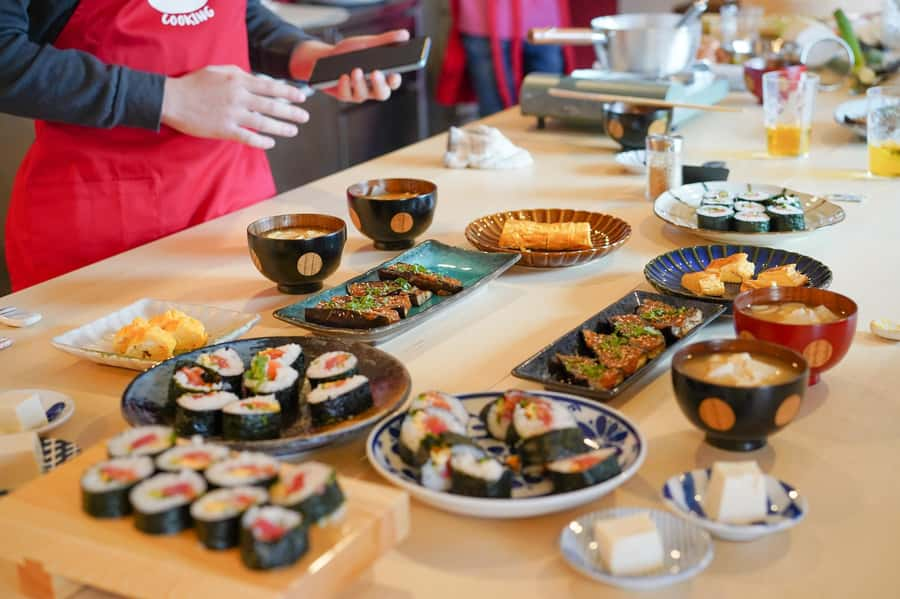
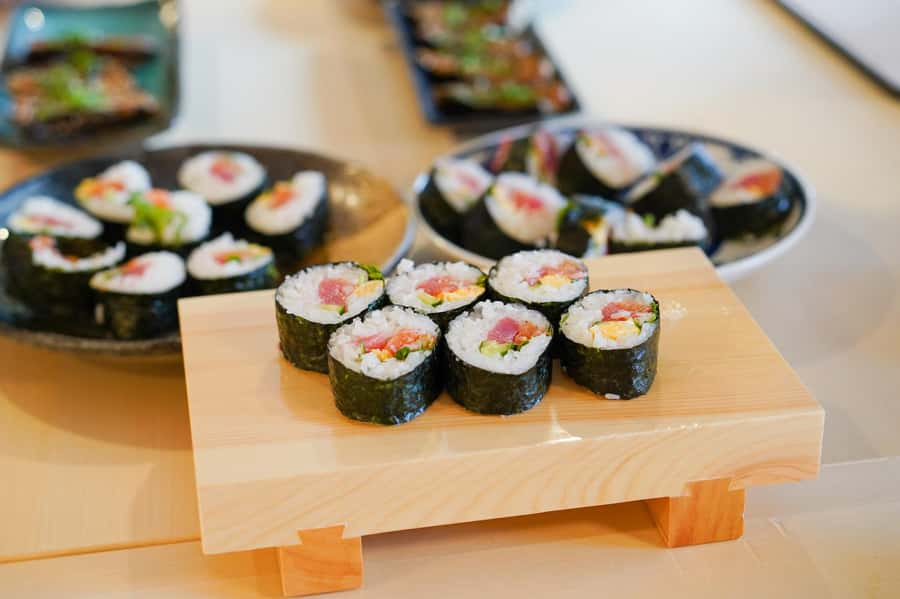
- Cook more than sushi: Prepare sushi rice, rolls, dashi-based miso soup, eggplant dengaku, and dashimaki tamago.
- Taste four kinds of sake: Pair your samples with the meal you make, with tea also provided.
- Keep the group personal: The class accepts no more than seven participants, with English instruction.
- Bring the family: All ages can join, and a kids playroom is available for little ones.
- Plan your route carefully: Meet at the FamilyMart beside Gindako and Doutor near Iriya Station Exit 2, then return there at the end.
Why the supermarket visit matters
Many cooking classes hand you premeasured ingredients. This one begins with shopping, which makes the lesson more useful once you leave Tokyo.
Your guide helps you look at the products Japanese cooks use every day. You may compare fish, vegetables, meats, seasonings, and prepared items while learning what to look for when choosing fresh ingredients. The point is not simply to fill a basket. It is to understand how Japanese home cooks make decisions in a supermarket full of unfamiliar labels and products.
That first stop also gives you a look at ordinary Tokyo life. The class takes place in the Kanto region, but the food-shopping lesson is grounded in daily routines rather than restaurant theater. If you are curious about Japanese ingredients but would not know where to begin, this is one of the most useful parts of the morning.
Do not expect a long market tour or a sightseeing walk through every aisle. The supermarket visit supports the cooking lesson. You will spend enough time selecting what you need, then move on to the kitchen.
More Sake Tastings in Japan:
- 1-Day Snow Monkeys, Zenko-ji Temple & Sake in Nagano
★ 5.0 · 1,020 reviews - 3-Hour Kyoto Insider Sake Brewery Tour with Tastings & Pairings
★ 5.0 · 917 reviews - Nagano: Snow Monkeys, Zenkoji Temple & Sake Day Trip
★ 4.9 · 833 reviews
From Iriya Station to the cooking studio
The meeting point is in front of the FamilyMart next to Gindako, the takoyaki shop, near Iriya Station Exit 2. Doutor Coffee is another landmark. This detail matters because two FamilyMart stores are near Iriya Station, and going to the wrong one could make a punctual start difficult.
Give yourself extra time to leave the station, check the shop signs, and confirm that you are at the branch beside Gindako and Doutor. The class cannot wait for late arrivals, and missing the group means no refund or rescheduled visit. That is a firm rule, so do not treat the meeting time as an approximate suggestion.
After shopping, you continue to a professional kitchen studio in the Asakusa and Kappabashi area. Kappabashi is well known for restaurant equipment and kitchen goods, making it a natural setting for a lesson about Japanese cooking. The activity ends back at the original meeting point, not at the studio.
The first knife lesson, then the building blocks
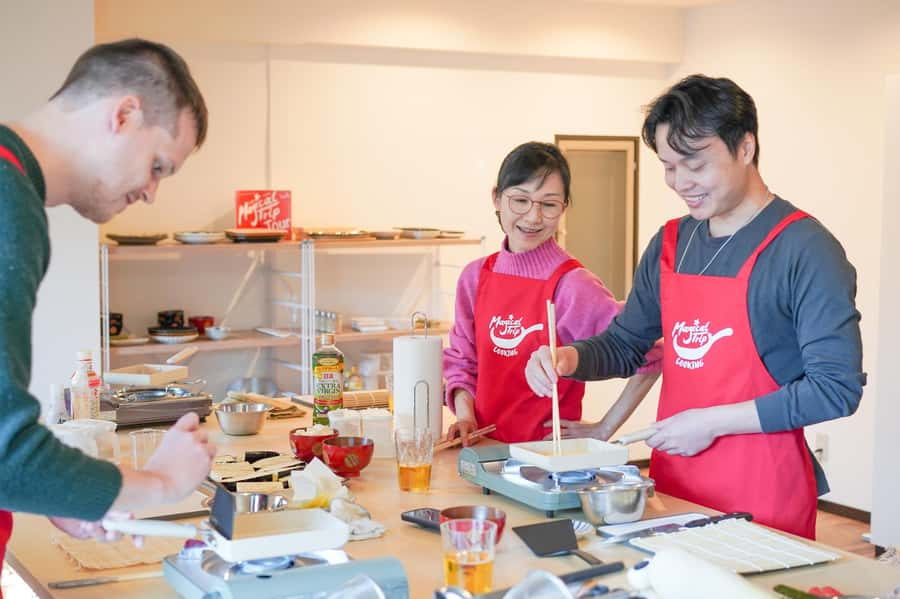
The cooking session starts at the beginning. You learn how to hold a Japanese kitchen knife correctly before moving into preparation. That makes the class suitable for beginners, including people who enjoy Japanese food but have little cooking experience.
The class focuses on techniques you can use again. You work with sushi rice seasoned with vinegar and learn the basic handling needed to make sushi rolls. You also prepare dashi, the stock used for miso soup, rather than treating soup as an instant side dish.
This approach is valuable because Japanese home cooking often depends on small details. The balance of seasoned rice, the texture of an egg roll, and the flavor of dashi can change the whole meal. The guide explains each stage and gives you time to take part, rather than rushing through a demonstration.
The class is taught in English. The individual instructors vary, with Taka, Fuji, Mihori, Mahori, Sho, Suzy, and Takahito among the guides praised for clear teaching, patience, humor, and friendly help. The tone is hands-on and social, but you still receive direct instruction when a technique needs correction.
Sushi is only one part of lunch
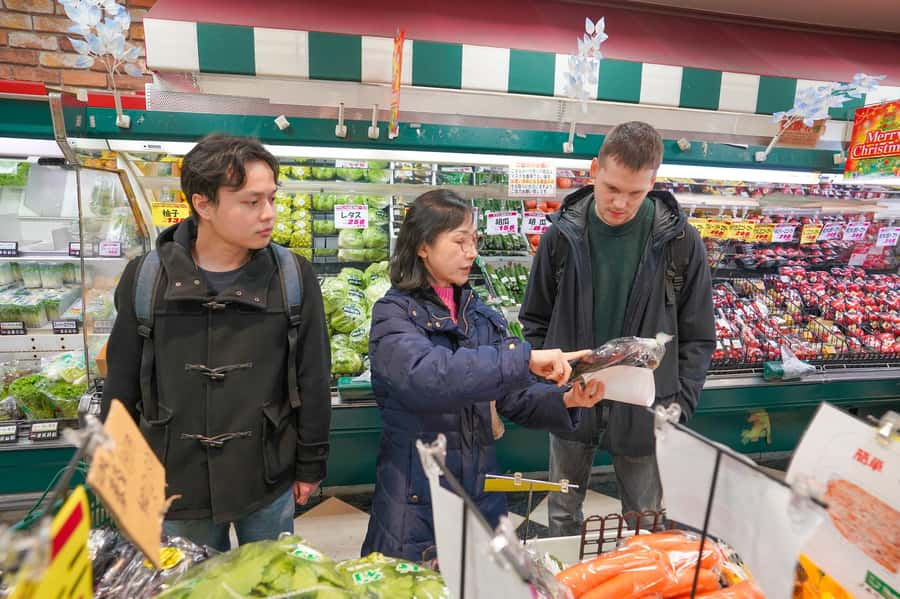
Sushi gets top billing, but the menu reaches beyond rolls. You prepare several Japanese dishes, including:
- Sushi rolls with vinegar-seasoned rice
- Miso soup made with dashi
- Eggplant dengaku
- Dashimaki tamago, a rolled Japanese omelet
- Small traditional side dishes
That range is one of the class’s strongest features. You learn how a Japanese meal is put together, with rice, soup, vegetables, egg, and small dishes sharing the table. The eggplant dengaku introduces a different flavor and texture from sushi, while dashimaki tamago teaches a technique that can be tricky for first-time cooks.
The menu also makes this a better choice for someone who already knows how to roll sushi and wants more context. You will not spend four hours repeating one task. Instead, you get a compact introduction to several parts of Japanese home cooking.
Recipes are provided after the activity. That turns the class into something you can use later, though you may need to find suitable Japanese ingredients at home. The supermarket visit helps by showing you what those ingredients look like in their original setting.
More Cooking Classes in Japan:
- Osaka Sake Tasting with Takoyaki Cooking
★ 5.0 · 156 reviews - Tokyo: Sushi and Ramen Cooking Class with Sake Pairing Set
★ 5.0 · 81 reviews - Rome: Pasta Making Class with Wine, Limoncello, and Dessert
★ 4.9 · 3,177 reviews - Rome Cooking Class: Make Pasta and 3 Spritz Cocktails
★ 5.0 · 2,937 reviews
Four sake samples with the meal
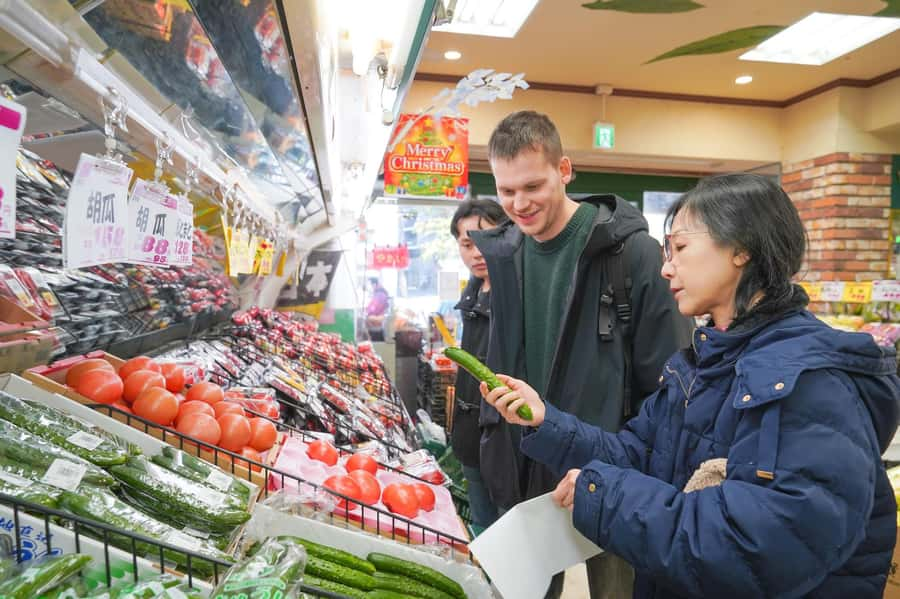
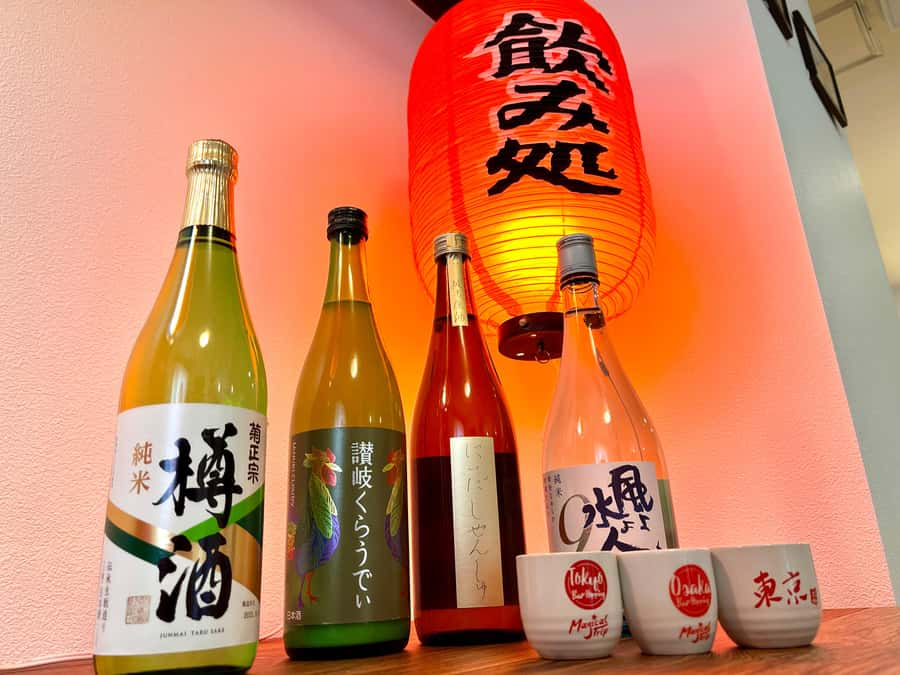
Sake tasting is included, with four kinds to choose from. You sample the sake alongside sushi and the other dishes you prepare, so the tasting is tied to food rather than treated as a separate drinking stop.
This pairing matters. Sake can taste different with salty, sweet, rich, or delicate foods, and a meal gives you a practical way to notice those changes. The format is also more approachable than a formal tasting focused only on technical terms. You can compare the four varieties and choose a favorite as lunch progresses.
Tea is included as well. That is useful for anyone who wants a nonalcoholic drink between sake samples. The activity is still centered on cooking and eating, not heavy drinking, but you should tell the guide if you prefer not to drink alcohol.
The description does not specify the exact brands or styles served, so do not book this expecting a particular bottle. The strength is the chance to compare four types with Japanese food in a guided setting.
A small class that works for families
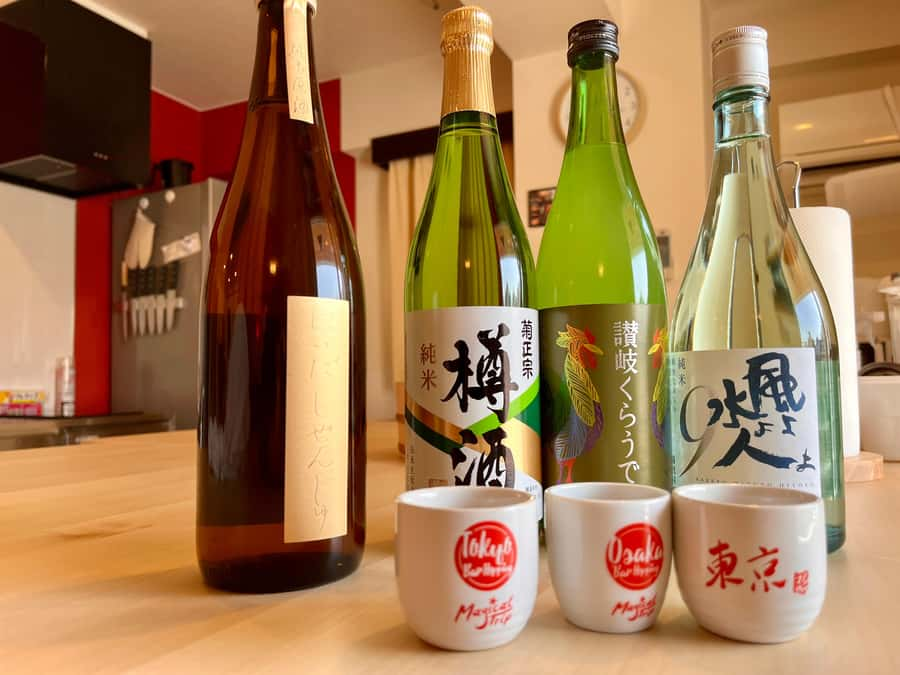
With a maximum of seven participants, the group is small enough for the guide to keep an eye on each person’s preparation. That is especially helpful when you are learning knife handling, rolling sushi, or making dashimaki tamago.
Families can join. A kids playroom is available for little ones, and the class is open to all ages. The activity can work well for children who enjoy practical tasks, though parents should still consider the knife work and the four-hour length. The class includes time to eat, but it is not a quick drop-in activity.
The instructors are accustomed to helping different age groups and skill levels. Mahori, for example, was praised for making the class enjoyable for adults and a young child without rushing the instruction. Fuji was also noted for patiently guiding two boys through the cooking. These details suggest that children can take part rather than simply watch from the side.
Still, the kitchen setting requires attention. Very young children may prefer the playroom for part of the session, while older children may enjoy preparing the food themselves.
Vegetarian, vegan, and allergy notes
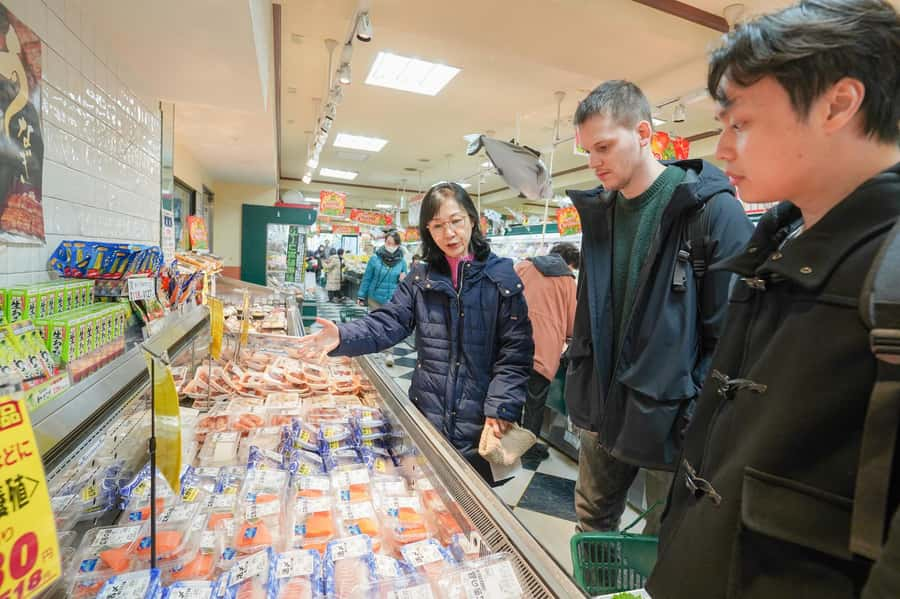
Vegetarian and vegan participants are welcome, and the cooking process and ingredients can be adjusted for those diets. You should state your requirements when booking so the team has time to arrange the meal.
Allergy planning is less certain. The kitchen is not operated by MagicalTrip, and an entirely allergy-free meal cannot be guaranteed. Substitutions may not be possible at every stop, although the team will try to make up for restrictions at other parts of the meal.
If you have a serious allergy, contact the provider before paying. Do not assume that a requested substitution will be available on the day. This is a normal concern for a class using shared kitchen facilities, but it deserves attention before you book.
The value of four hours and $112
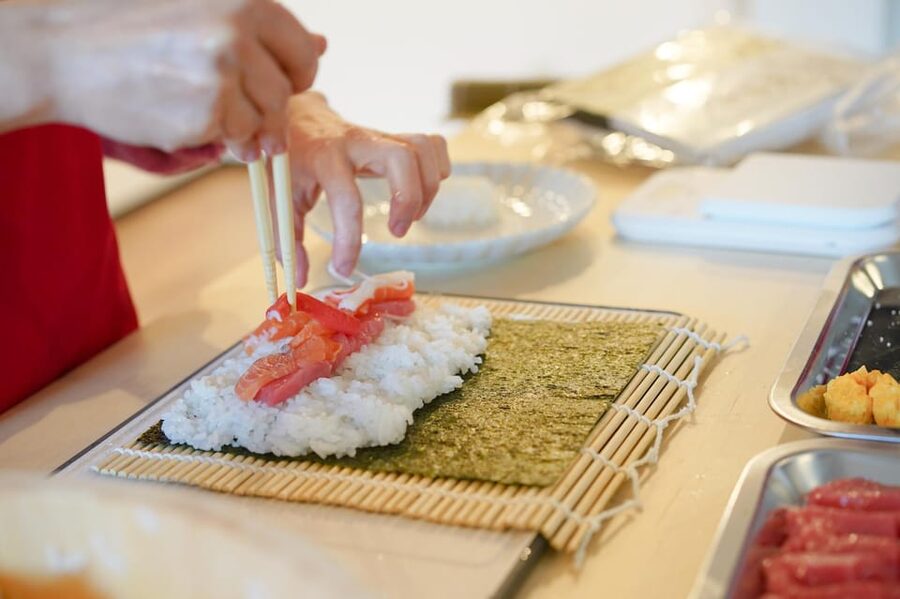
At $112 per person, this is not the cheapest way to eat sushi in Tokyo. You are paying for more than lunch, though. The price includes a four-hour English-language activity, supermarket guidance, all ingredients, cooking instruction, lunch, four sake tastings, tea, photographs, and recipes.
The small group helps justify the price. You are not standing at the back of a large demonstration while someone else handles the food. You take part in the preparation and have a better chance to ask about ingredients, techniques, and Japanese cooking customs.
The value is strongest if you want skills and cultural context. If you only want a sushi meal, a restaurant will cost less and take less time. If you want to understand how the meal comes together and recreate parts of it at home, the class offers more for your money.
The supermarket stop also adds value that is easy to miss when comparing prices. You get guidance that can help during the rest of your Japan trip, especially if you plan to shop for snacks, seasonings, or ingredients on your own.
What to do after the class
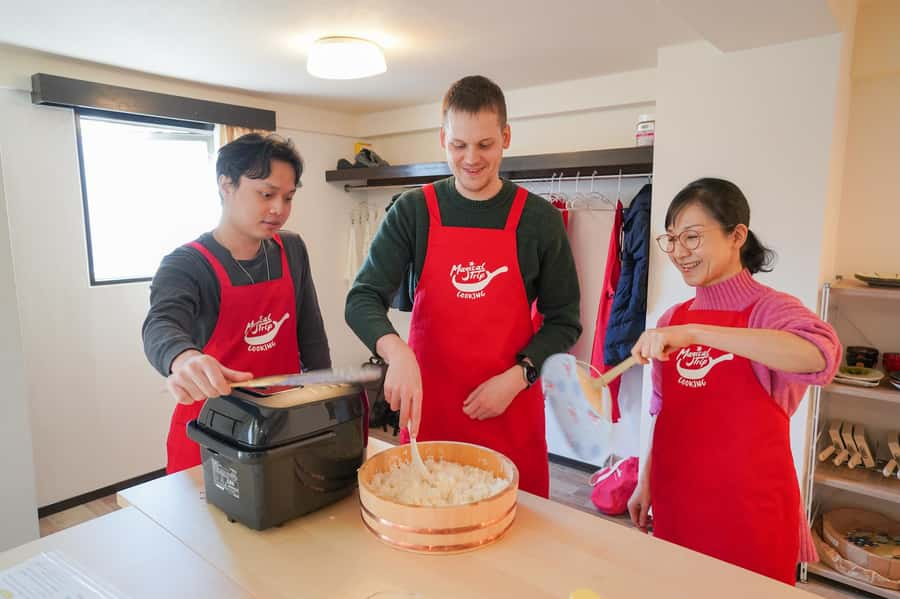
The cooking studio is in the Asakusa and Kappabashi shopping district. After lunch, you are invited to explore Asakusa for sightseeing and shopping.
The activity itself returns to the Iriya meeting point, so check the timing before planning your afternoon. The class description allows time for Asakusa after the cooking session, but it does not promise a separate guided sightseeing tour. Think of this as a useful chance to continue exploring nearby areas, not as an included temple tour.
Kappabashi is a natural place to browse for kitchen items and cooking tools after learning how to prepare Japanese food. If you enjoy the class, you may find the shopping district a fun extension of the lesson.
Heat, walking, and practical comfort
Tokyo summers are hot and humid. Bring water and wear a hat, especially during the supermarket transfer and any time you spend outdoors before or after the class.
Some parts of the route are not accessible to wheelchairs or strollers. The information provided does not specify which locations present the difficulty, so contact the operator before booking if step-free access is essential.
Wear comfortable clothing suitable for cooking. The class includes knife work, food preparation, and lunch, so you will be more comfortable in clothes that allow easy movement. The exact kitchen dress rules are not provided, so ask ahead if you have a concern about aprons or footwear.
Who will enjoy this class most
I would choose this for a first-time visitor who wants a useful food activity rather than a passive tasting. It is also a strong match for home cooks, families with older children, and anyone curious about supermarket ingredients but unsure how to use them.
It suits solo participants and couples because the small group encourages conversation without making the activity feel like a private lesson. The English-speaking guides also make it easier to ask about unfamiliar foods and cooking methods.
I would hesitate if your main goal is a relaxed meal with no instruction. Four hours is a serious block of time, and the class begins with shopping before the cooking starts. People with severe allergies, mobility limits, or a dislike of sake should confirm the details carefully before booking.
FAQ
How long does the Tokyo sushi cooking class last?
The activity lasts four hours. Starting times vary, so check availability when selecting your date.
What is included in the price?
The price includes the cooking experience, lunch, ingredients, four sake tastings, tea, photos taken during the activity, and an English-speaking local guide.
Where does the activity start?
Meet in front of the FamilyMart next to the Gindako takoyaki shop and Doutor Coffee near Iriya Station Exit 2.
How do I find the correct FamilyMart?
There are two FamilyMart stores near Iriya Station. Use the one beside Gindako and Doutor Coffee, near Exit 2.
Where does the activity finish?
The activity ends back at the original meeting point near Iriya Station.
Can children join the cooking class?
Yes. All ages can join, and a kids playroom is available for little ones.
Are vegan and vegetarian options available?
Yes. Vegan and vegetarian participants are welcome, and the ingredients and cooking process can be arranged for those diets.
Can the class guarantee an allergy-free meal?
No. The kitchens do not belong to MagicalTrip, and an allergy-free meal cannot be guaranteed. Substitutions may not be possible at every stop, so contact the provider before booking if you have a serious allergy.
Should you book this Tokyo cooking class?
Book it if you want to do more than eat sushi. The supermarket visit, several home-style dishes, four sake samples, and take-home recipes create a useful four-hour lesson in Japanese food.
The strongest reason to choose it is the teaching. Guides such as Taka, Fuji, Mihori, Mahori, Sho, Suzy, and Takahito are set up to explain each step and let you participate. The main tradeoffs are the firm start time, possible access problems, and limited allergy guarantees.
At $112, I see this as good value for a hands-on food experience, especially for families and curious home cooks. Arrive early at the correct FamilyMart, bring water in hot weather, and come ready to make lunch rather than simply watch it being made.
More Workshops in Japan
- Barcelona Paella Cooking Class with Market Visit, Tapas & Sangria
★ 5.0 · 2,531 reviews - Fettuccine & Tiramisù: Cooking Class with Wine & Limoncello
★ 4.9 · 2,103 reviews - Pasta Cooking Class Near the Colosseum with 3 Spritz Cocktails
★ 5.0 · 1,686 reviews - Sorrento: Pizza Lesson, Wine, and Limoncello at a Local Farm
★ 5.0 · 1,513 reviews
Just added around Japan
- Tokyo: Shinjuku Izakaya and Golden Gai Bar Hopping Tour (2h)★ 4.9 · 67 reviews
- Tokyo: Shinjuku Bar Hopping & Night Walking Tour★ 4.6 · 137 reviews
- Tokyo: Sushi and Ramen Cooking Class with Sake Pairing Set★ 5.0 · 81 reviews
- Tokyo: Ramen Tasting Tour with 6 Mini Bowls of Ramen★ 4.9 · 432 reviews
- Takayama: Authentic Sake Tasting at a Historic Brewery★ 4.8 · 50 reviews
- Shibuya Meltdown Night Tour: All-You-Can-Drink Bar Hopping★ 4.8 · 183 reviews
- Tsukiji: Unlimited Sake Tasting Experience★ 4.9 · 67 reviews
- Osaka: Mind & Spirit Balance Temple Reiki Healing★ 5.0 · 41 reviews
Sake Tastings, compared.

3-Hour Kyoto Insider Sake Brewery Tour with Tastings & Pairings
Read our review →
Insider Sake Brewery Tour with Sake and Food Pairing
Read our review →
Düsseldorf: Sushi, Sake & Japanese Lifestyle Tour
Read our review →
Insider Sake Experience with 7 Tastings and Snacks
Read our review →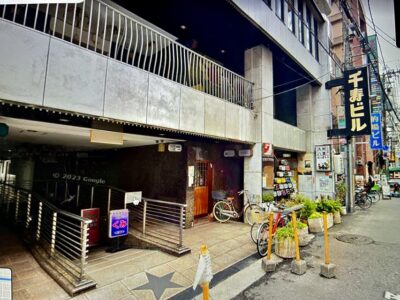
KOBE Sake Tasting Tour at Breweries (tasting fee included)
Read our review →
Sushi and Ramen Cooking Class with Sake Pairing Set
Read our review →Browse the lists this tour appears in