
Review · KYOTO
Kyoto: Insider Sake Experience with 7 Tastings and Snacks
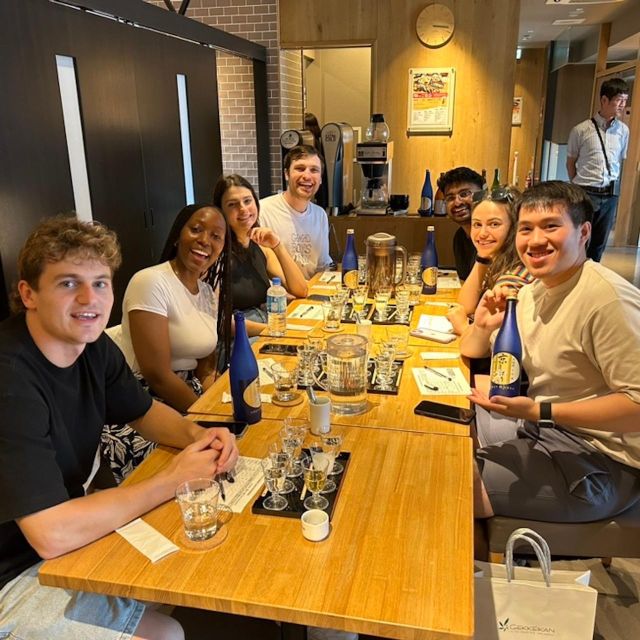
Kyoto’s sake scene makes much more sense once you stop treating every bottle as a mystery. This 90-minute tasting teaches you how rice polishing, brewing methods, sweetness, dryness, and serving temperature shape the drink. You taste several styles side by side, then try them with Japanese snacks to see how food changes the flavor.
I like two things especially. First, the session gives you useful skills for the rest of your Japan trip, including how to read a sake label and order from a menu. Second, the instructors make the class lively and easy to follow. Mayo, Kotaro, Kiyomi, Greg, and others are praised for clear explanations, humor, and patience. The main drawback is that this is a tasting, not a meal, so eat something beforehand if alcohol affects you quickly.
What makes this Kyoto sake class worth your time
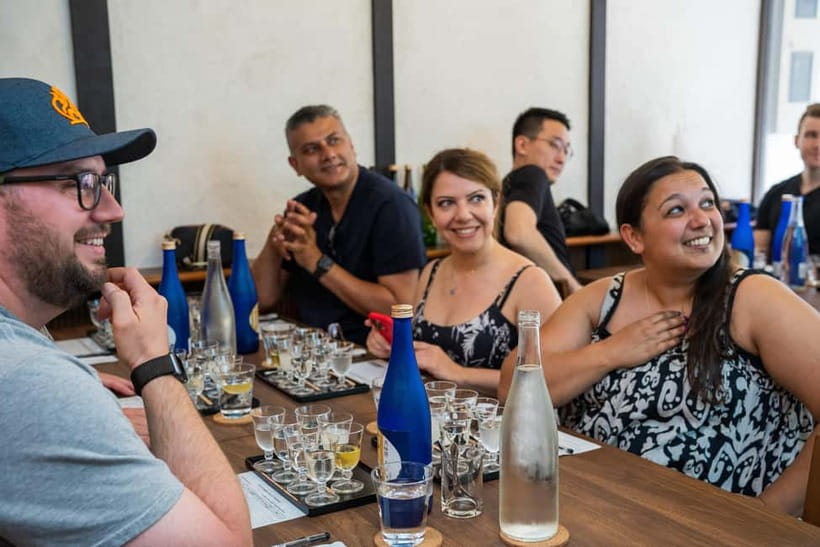
- Seven generous tasting pours let you compare dry, sweet, crisp, fruity, and other sake styles.
- Bottle-reading practice helps you choose sake in shops and restaurants after the class.
- Food pairing changes the lesson as otsumami can make a sake taste softer, sharper, sweeter, or more balanced.
- Rice polishing becomes easier to understand when you can connect production details with flavor.
- A small, dedicated tasting room creates a calm setting for questions and discussion.
- The practical cheat sheet gives you something useful to carry into your next meal or bottle shop.
A clear introduction to sake, not just a flight of drinks

Many visitors want to try sake but face a wall of unfamiliar labels. Terms such as junmai, ginjo, daiginjo, nama, nigori, and nihonshu can make a menu feel harder than it needs to be. This experience starts by giving you a simple framework before asking you to taste.
That order matters. You first learn what sake is, how it is made, and which choices affect its taste. Then the pours have a purpose. You are not simply sipping seven unrelated drinks. You are comparing them and looking for patterns in aroma, body, sweetness, acidity, and finish.
The English-speaking guide leads the session in a relaxed teaching style. Names of instructors vary, but the teaching is consistently described as friendly and clear. Mayo is praised for her humor and enthusiasm, while Kotaro is noted for his patient explanations and warm manner. Kiyomi, Greg, Shogo, Rieko, and other instructors also lead sessions, so the exact personality of your class will depend on the date.
More Sake Tastings in Japan:
- 1-Day Snow Monkeys, Zenko-ji Temple & Sake in Nagano
★ 5.0 · 1,020 reviews - 3-Hour Kyoto Insider Sake Brewery Tour with Tastings & Pairings
★ 5.0 · 917 reviews - Nagano: Snow Monkeys, Zenkoji Temple & Sake Day Trip
★ 4.9 · 833 reviews
The tasting room and meeting point
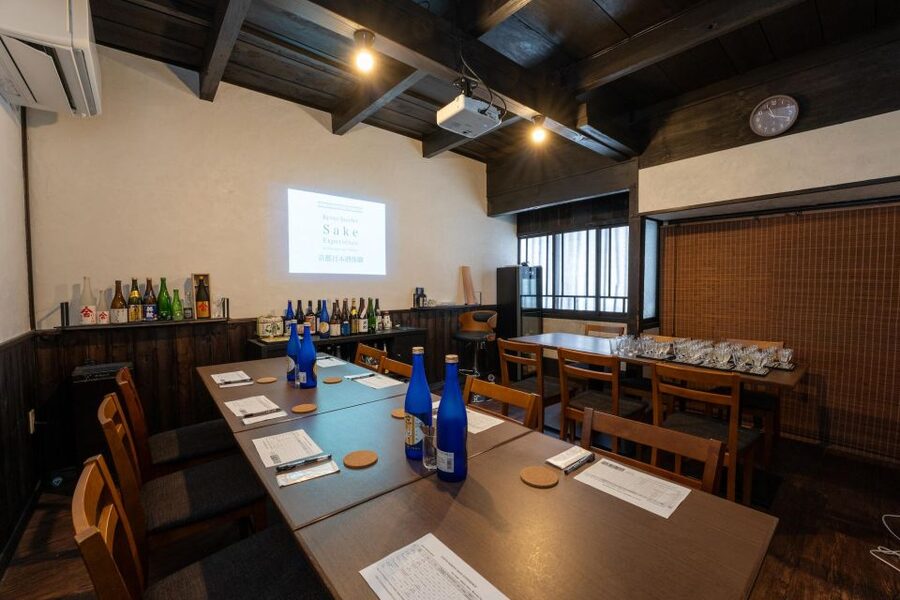
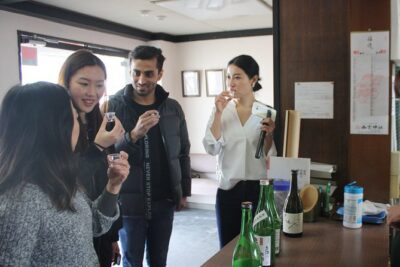
You meet the staff at the counter when you arrive, then continue into the dedicated tasting room. The space is described as warm, intimate, and easy to find when you follow the directions provided with your booking.
That setting suits the subject. A sake class works better when you can focus on the glass, the guide, and the people at your table instead of trying to follow a lecture in a noisy bar. A small group can also make it easier to ask basic questions without feeling out of place.
You need to arrive on time. If you are more than 20 minutes late, the booking is canceled, and you cannot count on joining partway through. Do not arrive by car or bicycle if you want to drink. For safety and legal reasons, alcohol will not be served to people who arrive by either one, and there is no refund if that prevents you from taking part.
Strong fragrances are not allowed. This is a sensible rule for a tasting, since perfume can interfere with the aromas you are trying to notice.
Seven tastings that show how sake changes
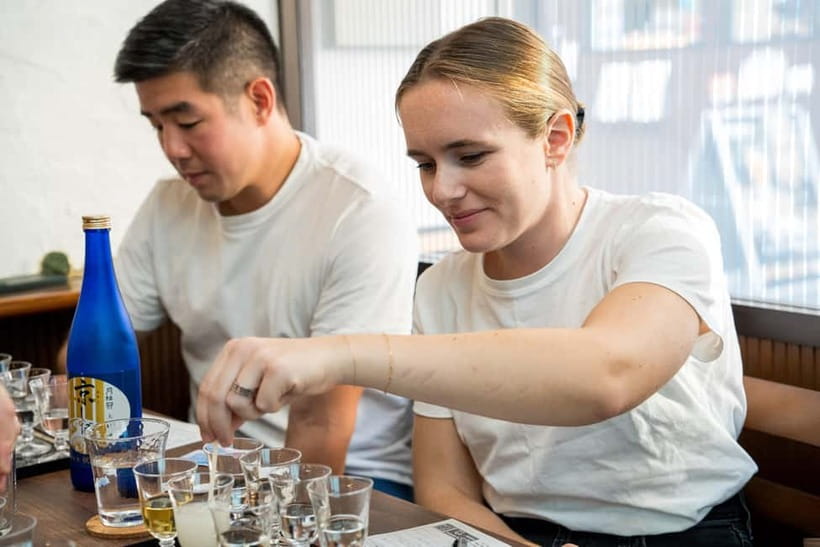
The heart of the session is the comparison flight. You can expect seven tasting pours, described as generous in size, with the broader selection drawn from more than 10 types chosen by a certified sake sommelier.
The exact bottles can change, but the goal is to show a useful range. You might compare a dry, clean sake with one that feels rounder or fruitier. You may notice that some bottles smell more floral, while others seem earthy, sharp, creamy, or subtle. You do not need a trained palate. The guide gives you words and reference points, then lets you decide what you enjoy.
This is where the class earns its price. Sake is not one single flavor. Two bottles can both be called sake yet taste quite different because of rice variety, polishing, brewing choices, region, and storage. Tasting them in sequence makes those differences easier to grasp than reading a paragraph about them.
The class also helps you separate personal taste from quality. You may prefer a simple, fresh sake over a more polished bottle, and that is useful information. The point is not to declare one style best. The point is to find the style you are most likely to enjoy with dinner.
Rice polishing and the brewing process
One of the more useful teaching points is rice polishing. The rice used for sake is milled before brewing, and the amount removed affects the category and often the flavor. A more highly polished rice can produce a lighter, more fragrant style, while less polished rice can retain more weight and grain character.
You are not expected to memorize technical figures. The guide connects the idea to the bottles in front of you and, in some sessions, shows physical examples of rice at different levels of refinement. That hands-on part helps turn an abstract production detail into something you can understand.
The brewing explanation also covers the ingredients and basic process. You learn why water, rice, yeast, koji, temperature, and polishing matter. The lesson stays practical rather than becoming a long technical lecture. One useful feature is the logical progression: first the production basics, then the tasting, then the food pairing.
For a first sake class, that balance is right. You get enough background to taste with purpose, but the 90-minute schedule does not leave you sitting through a formal seminar before the drinks arrive.
A few more tastings around Japan worth a look
- Tokyo Bar Hopping Tour in Shinjuku (All-You-Can-Drink + Dinner)
★ 5.0 · 3,587 reviews - Shibuya Meltdown Nightlife Tour: All-You-Can-Drink Bar Hopping
★ 5.0 · 1,058 reviews - Osaka Bar Hopping Night Walking Tour in Namba (3 bars, 6 tastes)
★ 5.0 · 958 reviews - Tokyo: Pub Crawl and Bar Tour
★ 4.5 · 951 reviews
Otsumami pairing shows why context matters
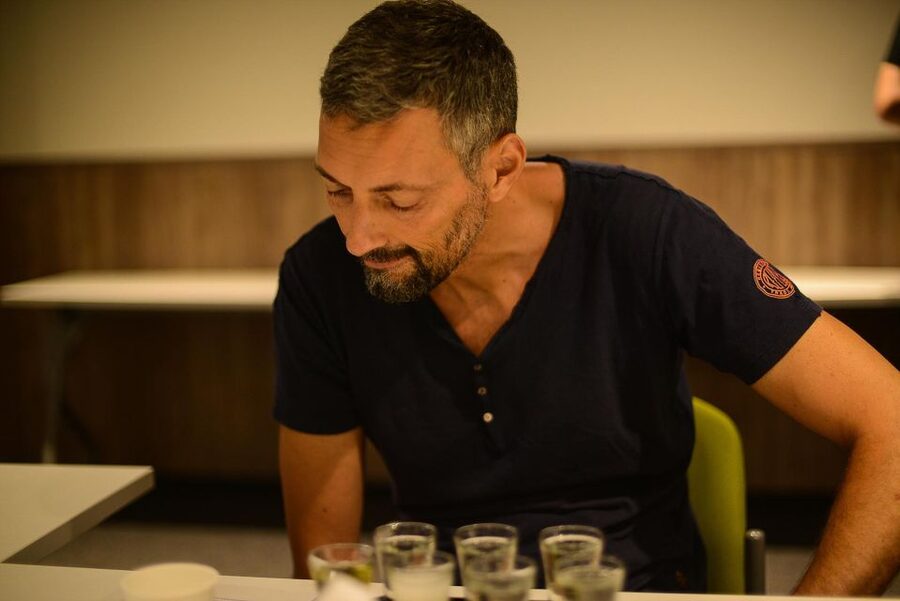
The Japanese snacks, or otsumami, are more than something to nibble between pours. They demonstrate one of sake’s most important lessons: a drink can taste different once you eat.
You first taste sake on its own. Then you try it with the food pairing. A sake that seems too sharp or plain by itself may become more rounded with a savory bite. Another may feel sweeter, brighter, or more balanced. One particularly useful part of the session is seeing how a pour you did not care for alone can work much better alongside food.
The snacks are small tasting portions, not lunch. That distinction matters. Eat beforehand if you need a proper meal, but avoid arriving overly full if you want to notice the pairings.
Vegetarian substitutions can be requested at the site, and the vegetarian pairing has been well received. You should tell the guide about food preferences or allergies when you arrive. The information provided does not promise every dietary request can be met, so be specific and ask before accepting a dish.
Learning hot, cold, and food-friendly sake
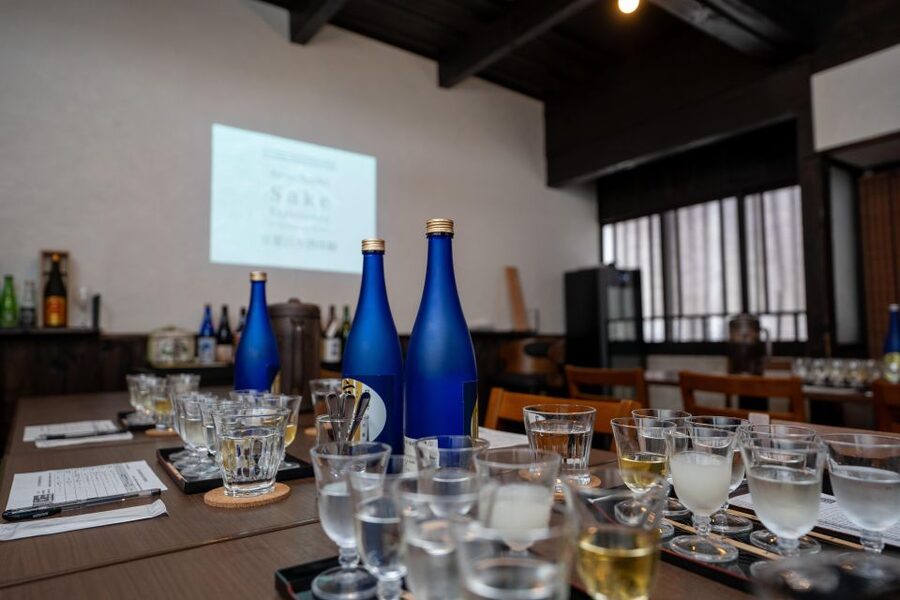
Sake is often served cold outside Japan, but temperature is not a simple quality ranking. Some types are best enjoyed chilled, while others can work well warm. The session explains when and how to serve different styles, including the basic logic behind hot and cold sake.
You also learn about pairing sake with Japanese food. Sushi is one focus, but the wider point is to match the drink with the character of the dish. Salty, oily, grilled, delicate, and savory foods can bring out different qualities in the same sake.
This advice is useful at restaurants because it gives you a way to order beyond pointing at the most expensive bottle. You can tell the server what you like, such as dry and crisp or soft and fruity, then ask for a suitable recommendation.
Bottle reading is the most practical takeaway
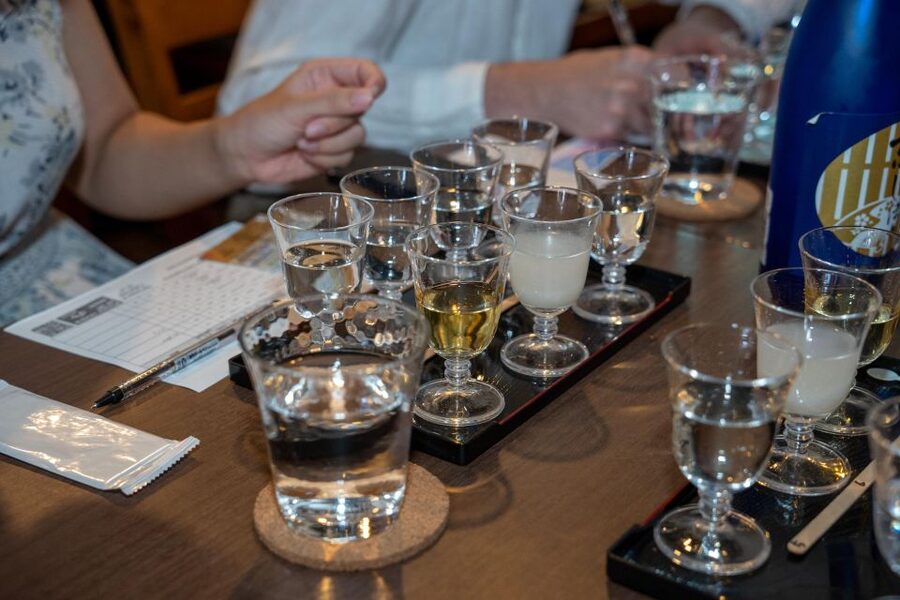
For many people, the strongest part of the experience comes after the drinking. You handle a sake bottle and learn where to find the information that matters.
The class explains how to read labels and menus, including clues about polishing, sweetness, serving style, and regional identity. You receive a sake cheat sheet and tasting notes, which give you a quick reference when you are standing in front of a refrigerator full of unfamiliar bottles.
That handout is especially useful because sake labels can be difficult to decode during a busy dinner. You do not need to remember every Japanese term. You only need enough information to describe your preferences and avoid ordering blindly.
The class also helps you record which styles you liked. By the end, you can have a clearer answer to a simple but important question: do you prefer dry and clean, sweet and fragrant, full-bodied, light, or something in between?
How much value do you get for $66?
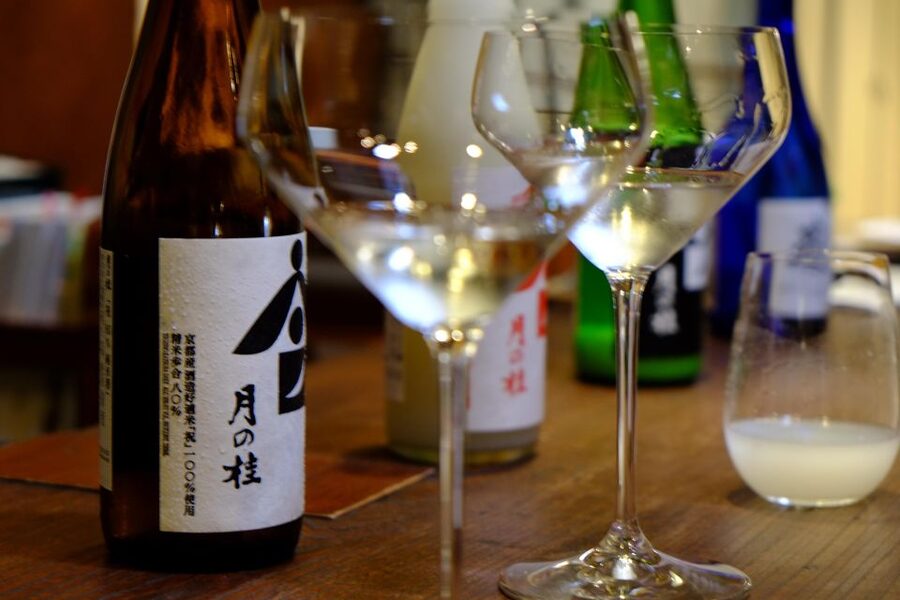
At $66 per person, the experience is not the cheapest way to drink sake in Kyoto. You could buy a bottle or several small pours for less. That comparison misses the main value, though.
You are paying for a guided tasting, seven substantial pours, food pairings, instruction on brewing, bottle-reading practice, and a printed reference to use later. You also avoid wasting money on a bottle chosen only because the label looked attractive or the price seemed high.
The value is strongest if you expect to eat at izakaya, sushi restaurants, or other Japanese dining spots during your trip. A single good ordering decision later can make the class feel worthwhile. It is also a reasonable choice for couples, families with adult children, and first-time sake drinkers who want an organized introduction.
The value is weaker if you already know sake well or simply want a quick drink without instruction. The session is designed for beginners and curious drinkers, not for people seeking a rare-bottle tasting or a technical professional course.
Who should book this experience?
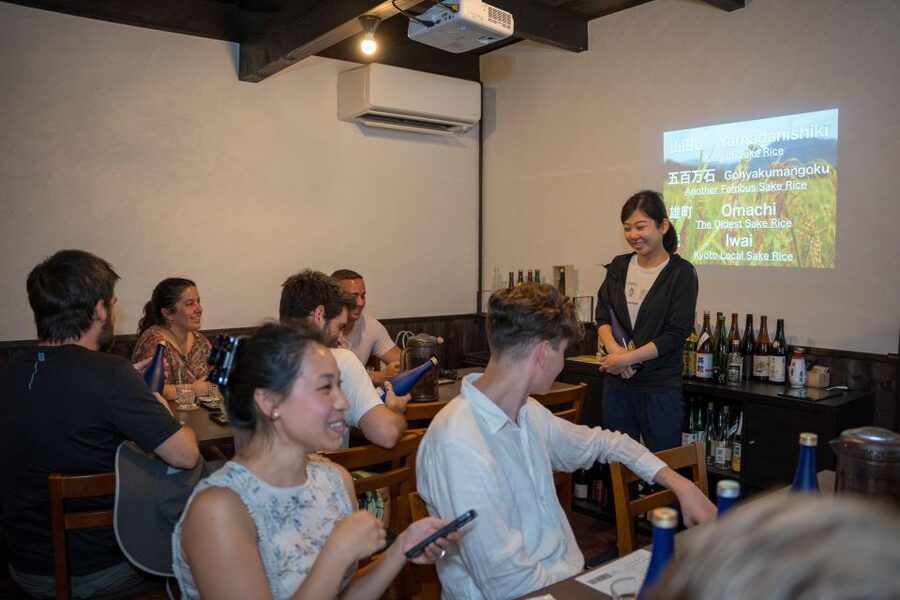
I would recommend it to you if sake has always seemed confusing. You will get the most from it if you enjoy learning through comparison and want practical advice you can use immediately.
It also suits people who do not currently drink sake. The range of styles makes it likely that you will find at least one approach you prefer, and the instructor explains the basics without assuming prior knowledge.
Couples and small groups should enjoy the easy conversation and shared tasting. Solo visitors can also fit in well because the class naturally gives you questions to discuss with the guide and others at the table.
This is not suitable for children under three, pregnant women, or people under 19 according to the activity rules. Japan’s legal drinking age is 20, and anyone under 20 receives only non-alcoholic drinks. Children and non-drinkers still need reservations, and people without a reservation cannot join.
Timing, cancellations, and small practical details
The class lasts 90 minutes, with starting times depending on availability. English is the listed tour language, and a certified sake expert leads the tasting.
Transportation is not included, and there is no hotel pickup or drop-off. Plan your route to the meeting point in advance, then speak with the staff at the counter when you arrive.
You can cancel up to seven days before the experience for a full refund. Since late arrival can result in cancellation, leave enough time to find the room and settle in before the first explanation begins.
Should you book the Kyoto Insider Sake Experience?
Book it if you want more than a few random sips. The best reason to go is the combination of tasting and practical education: you compare seven styles, see how food changes them, learn how rice polishing affects flavor, and leave better prepared to read a menu.
Skip it if you dislike structured tastings, need a full meal, or already feel comfortable choosing sake by label and style. For most first-time drinkers, though, $66 buys a useful lesson as well as a pleasant evening activity. Bring an open mind, eat a little beforehand, and let your own taste decide which bottle deserves a second glass.
FAQ
How long does the Kyoto sake experience last?
The experience lasts 90 minutes.
How much does the sake tasting cost?
The listed price is $66 per person.
How many sake samples will I taste?
The tasting is presented as seven tasting pours. The wider selection includes more than 10 types chosen by a certified sake sommelier.
Is the guide available in English?
Yes. The experience has a live English-speaking guide.
What food is included?
Traditional Japanese otsumami, or small appetizers, are included for food pairing.
Is this a full meal?
No. The snacks are tasting portions, so eat beforehand if you need a proper meal.
Can I request vegetarian food?
You should tell the guide at the site about food preferences or allergies. Vegetarian substitutions have been accommodated.
Can children join the experience?
The activity is not recommended for children. Guests without reservations cannot join, people under 19 are not suitable for the activity, and anyone under 20 receives only non-alcoholic drinks.
Can I participate if I arrive by car or bicycle?
Alcohol will not be served to anyone who arrives by car or bicycle. Non-alcoholic drinks are available, but there is no refund if you cannot take part in the sake tasting.
What happens if I arrive late?
If you are more than 20 minutes late, your booking will be canceled.
Can I cancel for a full refund?
Yes. You can cancel up to seven days in advance for a full refund.
Where do I go when I arrive?
Speak with the staff at the counter when you arrive. The tasting takes place in a dedicated tasting room.
Just added around Japan
- Tokyo: Shinjuku Izakaya and Golden Gai Bar Hopping Tour (2h)★ 4.9 · 67 reviews
- Tokyo: Sushi Cooking Class with Sake Tasting★ 4.8 · 55 reviews
- Tokyo: Shinjuku Bar Hopping & Night Walking Tour★ 4.6 · 137 reviews
- Tokyo: Sushi and Ramen Cooking Class with Sake Pairing Set★ 5.0 · 81 reviews
- Tokyo: Ramen Tasting Tour with 6 Mini Bowls of Ramen★ 4.9 · 432 reviews
- Takayama: Authentic Sake Tasting at a Historic Brewery★ 4.8 · 50 reviews
- Shibuya Meltdown Night Tour: All-You-Can-Drink Bar Hopping★ 4.8 · 183 reviews
- Tsukiji: Unlimited Sake Tasting Experience★ 4.9 · 67 reviews
Sake Tastings, compared.

3-Hour Kyoto Insider Sake Brewery Tour with Tastings & Pairings
Read our review →
Insider Sake Brewery Tour with Sake and Food Pairing
Read our review →
Düsseldorf: Sushi, Sake & Japanese Lifestyle Tour
Read our review →
KOBE Sake Tasting Tour at Breweries (tasting fee included)
Read our review →
Sushi and Ramen Cooking Class with Sake Pairing Set
Read our review →
Browse the lists this tour appears in