
Review · KYOTO
Kyoto: Gion Evening Walk with Hidden Gems, Geisha & Sake
Gion changes character after sunset. The tour leads you from Shijo Kiyamachi into lantern-lit lanes, past wooden tea houses and quiet shrines, with a cup of local sake along the way. The best part is the mix of famous Kyoto sights and smaller streets where you can pause and listen.
I like the compact route and the small group limit of 10. I also like the guide-led photo help, since it lets you enjoy the walk instead of fumbling with your phone at every stop. The main drawback is the pace: 90 minutes gives you a good introduction, but not time for long visits or detailed temple exploration.
Key points to know before you book
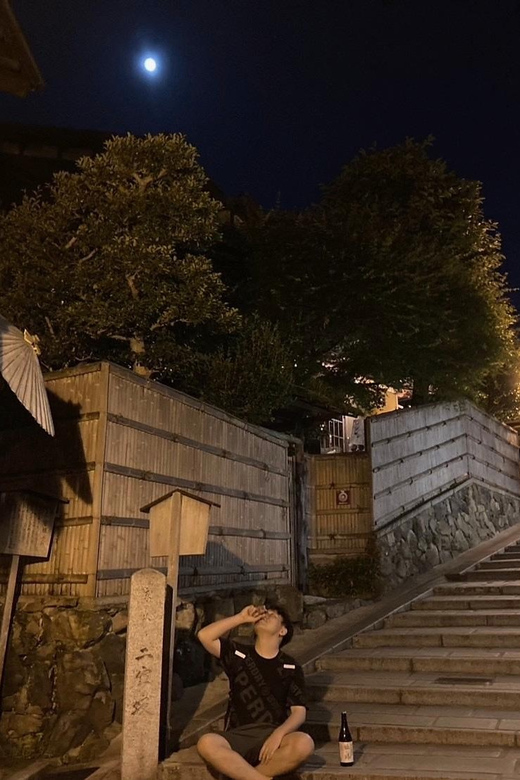
- Gion after dark: Lantern light and quieter lanes give the district a calmer mood than daytime sightseeing.
- Five major stops: The route includes Hanamikoji Street, Yasui Kompira-gū Shrine, Yasaka Pagoda, Ninenzaka, and Yasaka Shrine.
- Local sake included: You can sip sake as you walk, but you should still drink responsibly and respect sacred and residential areas.
- Small groups of up to 10: The format makes it easier to ask about geiko, maiko, food, anime, or local customs.
- English-speaking guides: Guides including Shumpei and Nick have been praised for friendly conversation and clear explanations.
- Prompt start required: Meet the Otatrip Guide between McDonald’s and Kikunoi Roan on Kiyamachi Street, and arrive early.
Why Gion works best after sunset
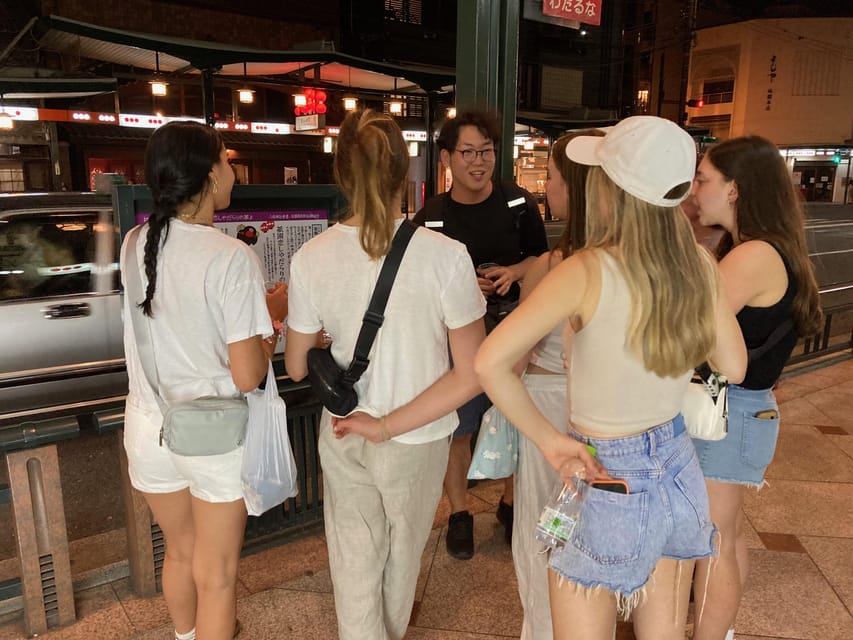
Gion is one of Kyoto’s most famous districts, but fame can work against it during the day. Streets near Hanamikoji and Yasaka Pagoda can feel crowded, especially when visitors stop for photos. At night, the same lanes take on a softer, quieter mood.
That is the central idea behind this walk. You are not rushing through a long list of attractions. You are moving through a small part of eastern Kyoto at a relaxed pace, hearing how the neighborhood works and why geiko and maiko traditions remain such an important part of its identity.
The walk begins at 90-3 Shinchō, with the meeting point described as Shijo Kiyamachi. Look for a guide holding an Otatrip Guide sign between McDonald’s and the Japanese restaurant Kikunoi Roan, a little south along Kiyamachi Street. This is a busy area, so give yourself time to find the exact spot.
The tour starts promptly. That matters here because a small group can move away quickly once the guide begins. If you arrive late, you may have trouble catching up.
More Sake Tastings in Japan:
- 1-Day Snow Monkeys, Zenko-ji Temple & Sake in Nagano
★ 5.0 · 1,020 reviews - 3-Hour Kyoto Insider Sake Brewery Tour with Tastings & Pairings
★ 5.0 · 917 reviews - Nagano: Snow Monkeys, Zenkoji Temple & Sake Day Trip
★ 4.9 · 833 reviews
Hanamikoji Street, Kyoto’s classic geisha district
The first major part of the walk takes you into Gion, including Hanamikoji Street. This is the Kyoto many people picture before arriving: narrow streets, wooden townhouses, traditional tea houses, and discreet entrances that hint at a world most visitors do not enter.
Your guide explains the difference between geiko and maiko and gives context for the district’s customs. In Kyoto, geiko is the local term for a professional entertainer trained in traditional arts, while maiko are apprentices. That distinction is useful because casual visitors often use the broad word geisha without understanding the stages of training or the Kyoto terminology.
Do not expect a guaranteed meeting with a geiko or maiko. One participant happened to see two during a spring tour, but sightings depend on timing, location, and luck. The respectful approach is to admire the setting, avoid blocking doorways, and never treat working performers as photo props.
This is also where the small group helps. With no more than 10 people, the guide can stop for questions rather than giving a long speech and moving on. Shumpei has been singled out for making people comfortable and answering questions that ranged from Kyoto history to favorite anime. That gives you a good sense of the tone: informative, but not stiff.
Yasui Kompira-gū and the power stone
The route continues to Yasui Kompira-gū Shrine, a compact and unusual stop. It is known for a power stone associated with cutting bad ties and building good ones. People visit with personal hopes, including the wish to leave behind an unhealthy connection or strengthen a positive one.
The shrine adds a different layer to the evening. Gion is not only about tea houses and traditional performers. It is also a living religious area, where Shinto practices remain part of everyday life. Your guide explains the shrine in plain English, which helps you understand what you are seeing instead of treating it as just another photogenic stop.
At night, the shrine can feel especially quiet. That said, this is still an active sacred place, not a stage set. Keep your voice low, follow local signs, and avoid handling or photographing anything that appears private or restricted.
The stop lasts about 10 minutes. That is enough for an explanation and a few photos, but not enough for a long religious visit. If you want to study shrine architecture or rituals in detail, you would need to return on your own.
Yasaka Pagoda and the short walk through Ninenzaka

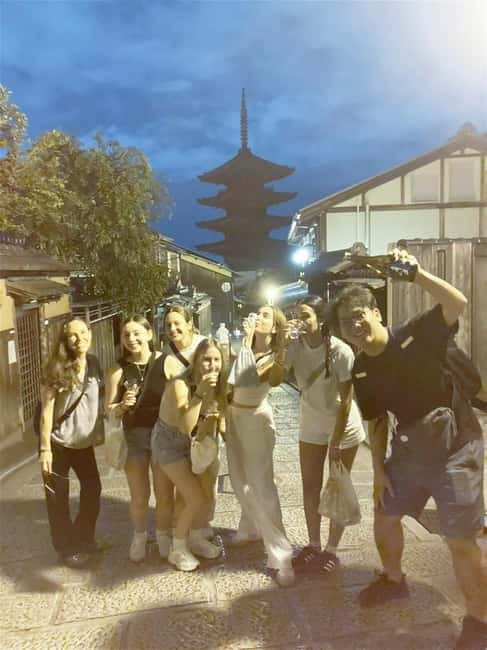
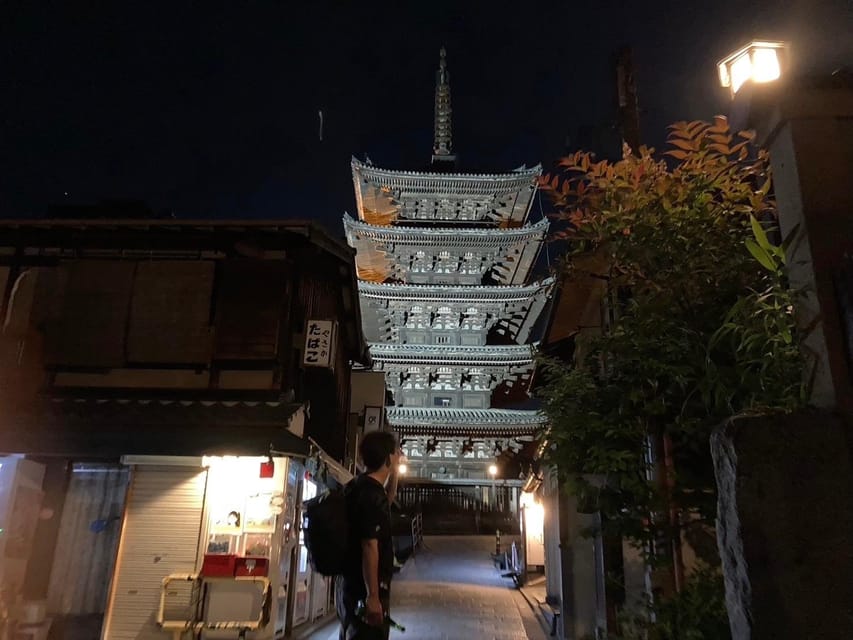
Hōkan-ji Temple, better known for its Yasaka Pagoda, is one of the strongest photo stops on the route. The five-story pagoda is beautifully lit at night, and the evening setting can make it easier to appreciate its shape without the daytime crowd pressing around you.
The tour visits the pagoda from the outside. The schedule allows about 10 minutes, so you should think of this as a viewing and photography stop rather than a full temple visit. Your guide can help with framing and take photos for you, a practical touch if you are traveling alone or want a picture with the pagoda behind you.
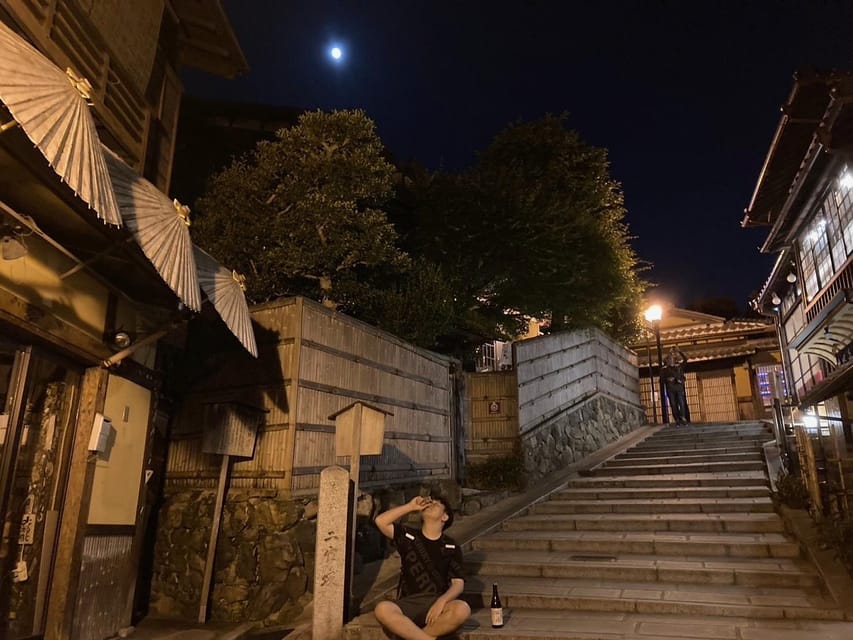
From there, the route reaches Ninenzaka, a sloping cobblestone street lined with traditional wooden buildings. In daylight, this area is packed with shops and photo hunters. At night, it can feel more like an old neighborhood, although conditions will vary with the evening and season.
The slope is part of the appeal, but it also explains why comfortable shoes are listed as essential. Cobblestones and inclines are not ideal for flimsy sandals. The experience is not suitable for people with back problems, and anyone who finds uneven ground difficult should take that seriously.
Rain can change the scene. A wet evening may make the stones slippery, but it can also quiet the streets and deepen the reflections from lanterns. Bring practical footwear and avoid treating the sake as the only thing keeping you warm.
More Walking Tours in Japan:
- Osaka Bar Hopping Night Walking Tour in Namba (3 bars, 6 tastes)
★ 5.0 · 958 reviews - Kyoto Sake Brewery & Tasting Walking Tour
★ 5.0 · 623 reviews - Tokyo: Shinjuku Bar Hopping & Night Walking Tour
★ 4.6 · 137 reviews - Madrid Tapas & Wine Tasting Walking Tour – Small Group Local Bars
★ 5.0 · 3,644 reviews
Finishing at Yasaka Shrine
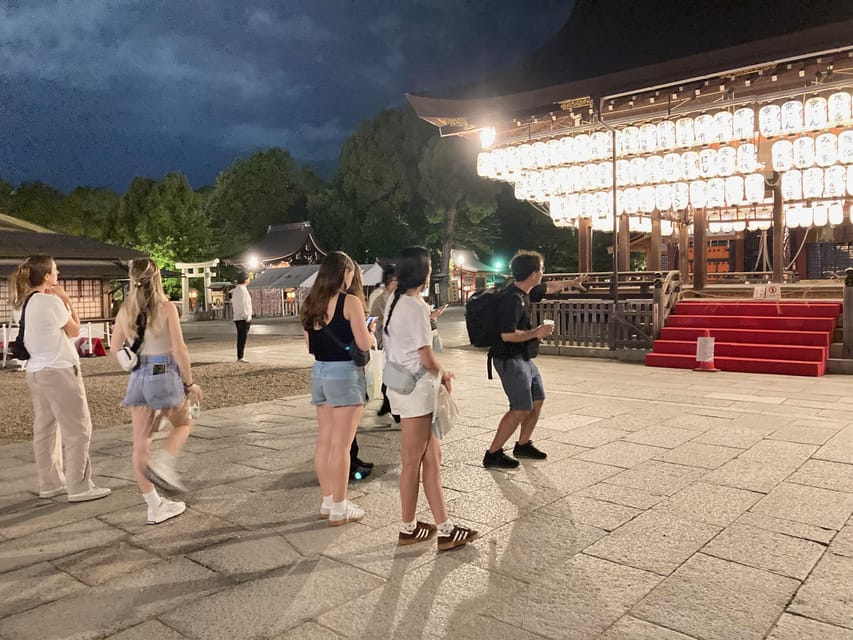
The walk finishes at Yasaka Shrine, a major spiritual landmark associated with Gion. The shrine has watched over the area for more than 1,300 years, giving the final stop a sense of scale after the narrow lanes and small shrines earlier in the route.
This ending works well because Yasaka Shrine is both historic and easy to connect with the modern city around it. You can finish the tour with a better idea of how religious sites, entertainment districts, shops, and residential lanes fit together in eastern Kyoto.
The scheduled stops add up to about 45 minutes, while the full walk lasts 70 to 90 minutes. The difference allows for moving between locations, questions, photographs, and the natural pauses that come with a small group. The route is compact, but it is not a museum visit. You will see key exteriors and hear the stories that give them meaning.
The sake stop, and how much it adds
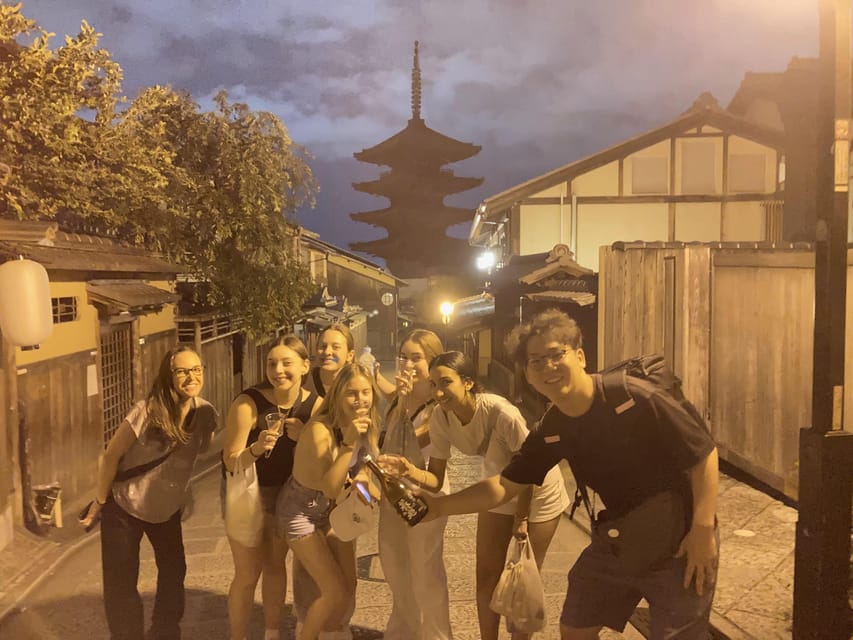
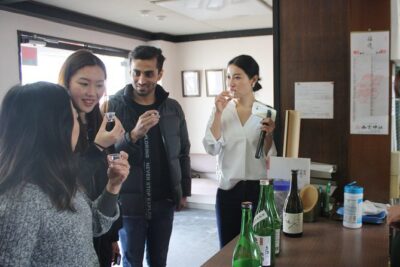
A cup of local sake is included. It is a simple addition, but it changes the social feel of the walk. Instead of standing silently at each landmark, you have a shared drink and an easy reason to chat with the guide and other people in the group.
The sake is served as you stroll, so use common sense. This is still a walking tour through sacred and residential areas. Keep your voice down, do not smoke, and drink responsibly. The point is to sample a local drink, not to turn the evening into a pub crawl.
The amount and style of sake may vary by guide or evening. Participants have specifically praised the taste and generous serving, but you should not book this expecting a formal tasting with detailed brewing instruction. The value is in the combination of drink, conversation, and setting.
If you do not drink alcohol, the supplied details do not state whether a substitute is available. Ask before booking if that matters to you.
A guide-led walk, not a formal lecture
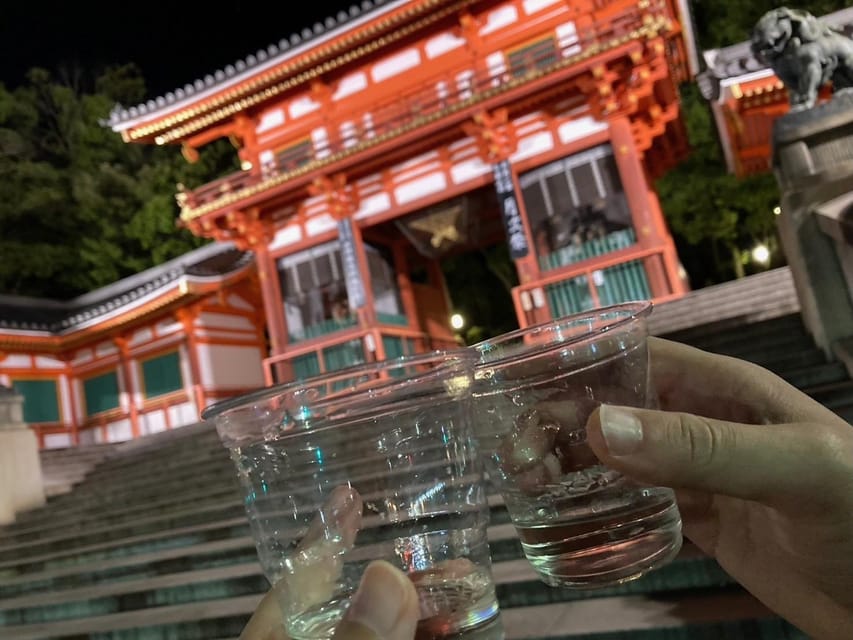
The guide is the heart of this activity. The format is intentionally conversational, and the small group gives you a chance to shape the discussion. You can ask about geiko and maiko customs, Shinto and Buddhist traditions, places to eat, what to see next, or even local anime preferences.
Shumpei is named repeatedly in the supplied feedback as a friendly and entertaining guide. Nick is also described as warm, organized, and willing to help people feel more at ease about entering local places. The guide assigned to your departure may be different, but the activity is designed around a local English-speaking host rather than a recorded audio track.
That distinction matters. If you want a tightly scripted history tour with exact dates at every stop, this may feel informal. If you prefer to ask questions and get practical Kyoto advice, the style should suit you well.
The photo assistance is another small but useful feature. At Yasaka Pagoda, Ninenzaka, and other scenic points, your guide can help with pictures. It will not turn the walk into a professional photography session, but it can spare you from asking strangers or leaving someone out of every group shot.
What the $32 price buys you
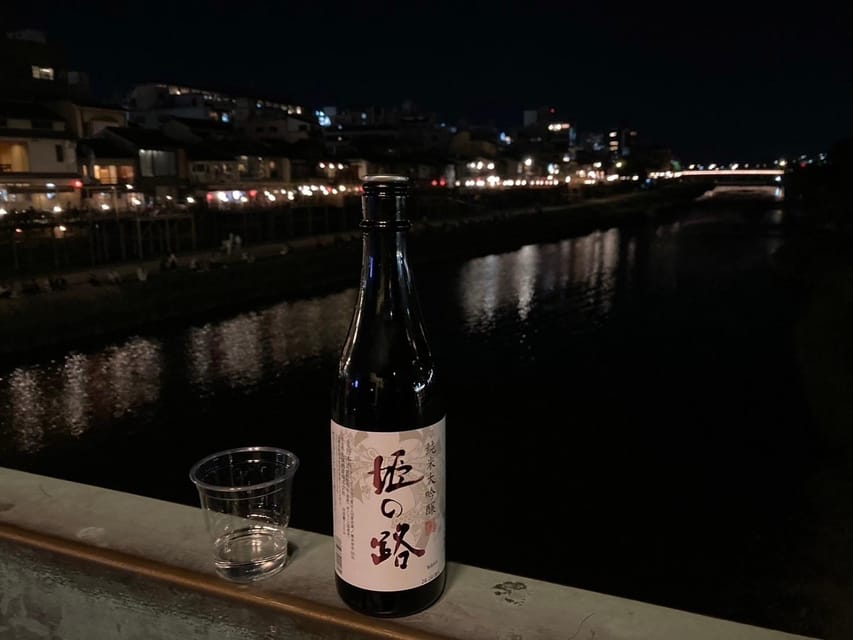
At $32 per person, the cost is reasonable for a 90-minute small-group walk in one of Kyoto’s most sought-after areas. You are paying for an English-speaking guide, a planned route, photo assistance, and included sake. The group limit of 10 is important because a cheaper large-group walk can feel less personal in narrow streets.
The value is strongest if this is your first evening in Gion. You get orientation, cultural context, and several useful landmarks in one outing. You also finish at Yasaka Shrine, where you can continue exploring independently if you still have energy.
The value is weaker if you already know Gion well or plan to spend hours inside the temples and shrines. This is an introduction, not a full guided tour of every site. You will not have long free time at each stop, and the tour does not include a meal.
The late-night scheduling can be useful. One person specifically valued being able to choose a later time slot after fitting in other sightseeing. Check the available departure times for your date, since the activity page says starting times vary.
Who should book this Gion walk
I would recommend it to first-time Kyoto visitors who want a gentle introduction to Gion without committing to a long evening activity. It also suits solo visitors, couples, and small groups who appreciate help with photos and a guide who can answer questions on the spot.
It is a good choice if you want:
- A short evening activity after a day of temples and museums
- A small group rather than a large flag-following crowd
- Plain-English explanations of geiko, maiko, Shinto, and Buddhist customs
- A few landmark photos without arranging a private photographer
- A social way to sample sake while walking
- Advice about what to see or eat next
I would be more cautious if you have back problems, dislike uneven streets, or want a long temple visit. You should also avoid it if you need a fully private itinerary, since the normal format is a group of up to 10, even though some departures may happen to have only one or a few people.
Practical advice for a smoother evening
Wear shoes with a firm sole. Ninenzaka is sloped and cobbled, and the route involves continuous walking rather than a series of vehicle transfers.
Arrive early at Shijo Kiyamachi. The exact meeting point is between McDonald’s and Kikunoi Roan on Kiyamachi Street, with an Otatrip Guide sign. Do not assume the group will wait if you are delayed.
Keep your voice low in residential lanes and sacred spaces. Gion is not simply an attraction. People live and work there, and respectful behavior makes the evening better for everyone.
Smoking is not allowed on the activity. If rain is forecast, prepare for wet streets and bring suitable clothing. A rainy evening may make the district quieter, but footing can be less secure.
Free cancellation is available up to 24 hours in advance for a full refund, and you can reserve now and pay later. Those terms are useful if your Kyoto schedule is still changing.
Should you book the Gion Evening Walk?
Book it if you want a friendly, well-paced introduction to Gion after the daytime crowds thin out. The combination of Hanamikoji Street, Yasaka Pagoda, Ninenzaka, Yasaka Shrine, local sake, and an English-speaking guide gives you a lot in 90 minutes.
Skip it if you want extensive temple interiors, a guaranteed geiko sighting, or a serious sake-tasting lesson. For most first-time visitors, though, the $32 price buys useful context and a pleasant evening walk, with enough flexibility to continue exploring after the group ends.
FAQ
How long does the Gion evening walk last?
The activity is scheduled for 90 minutes, with the walking portion described as lasting about 70 to 90 minutes.
What language is the tour conducted in?
The tour is conducted in English with a live guide.
How large is the group?
The tour is limited to 10 participants.
Where is the meeting point?
Meet at Shijo Kiyamachi. The guide waits between McDonald’s and the Japanese restaurant Kikunoi Roan, a little south along Kiyamachi Street, holding an Otatrip Guide sign.
What landmarks does the route visit?
The route includes Gion, Yasui Kompira-gū Shrine, Hōkan-ji Temple and Yasaka Pagoda, Ninenzaka, and Yasaka Shrine.
Is sake included?
Yes. A cup of local sake is included and is enjoyed during the walk.
Will I definitely see a geiko or maiko?
No. The tour explains geiko and maiko culture, but an actual sighting is not guaranteed.
What should I bring?
Bring comfortable shoes suitable for walking on streets that include a slope and cobblestones.
Can I cancel the booking?
You can cancel up to 24 hours before the activity for a full refund. The reserve-now, pay-later option is also available.
More Evening Experiences in Japan
- Kyoto Bar Hopping Night Tour
★ 5.0 · 613 reviews - Shibuya Meltdown Night Tour: All-You-Can-Drink Bar Hopping
★ 4.8 · 183 reviews - Osaka: Bar-Hopping Night Tour in Namba
★ 4.7 · 117 reviews - Amsterdam: Evening Cruise with Optional Wine and Snacks
★ 4.4 · 22,178 reviews
Just added around Japan
- Tokyo: Shinjuku Izakaya and Golden Gai Bar Hopping Tour (2h)★ 4.9 · 67 reviews
- Tokyo: Sushi Cooking Class with Sake Tasting★ 4.8 · 55 reviews
- Tokyo: Shinjuku Bar Hopping & Night Walking Tour★ 4.6 · 137 reviews
- Tokyo: Sushi and Ramen Cooking Class with Sake Pairing Set★ 5.0 · 81 reviews
- Tokyo: Ramen Tasting Tour with 6 Mini Bowls of Ramen★ 4.9 · 432 reviews
- Takayama: Authentic Sake Tasting at a Historic Brewery★ 4.8 · 50 reviews
- Shibuya Meltdown Night Tour: All-You-Can-Drink Bar Hopping★ 4.8 · 183 reviews
- Tsukiji: Unlimited Sake Tasting Experience★ 4.9 · 67 reviews
Sake Tastings, compared.

3-Hour Kyoto Insider Sake Brewery Tour with Tastings & Pairings
Read our review →
Insider Sake Brewery Tour with Sake and Food Pairing
Read our review →
Düsseldorf: Sushi, Sake & Japanese Lifestyle Tour
Read our review →
Insider Sake Experience with 7 Tastings and Snacks
Read our review →
KOBE Sake Tasting Tour at Breweries (tasting fee included)
Read our review →
Sushi and Ramen Cooking Class with Sake Pairing Set
Read our review →Browse the lists this tour appears in