
Review · BORDEAUX
Workshop Bordeaux wine tasting: 4 reds & charcuterie pairing
Bordeaux can feel like a wine code written for insiders. This tasting makes the subject friendly, using four red wines, an aroma game, and charcuterie to explain grape varieties, blends, and the difference between the Left and Right Banks. I especially like the six-person limit and the chance to learn with Cécilia or Mathilde, guides trained at the Université du Vin.
I also like the practical mix of tasting and teaching. You do not just sip and hear names. You compare Merlot with Cabernet Sauvignon, look at how blending changes a wine, and try a mature Bordeaux beside younger examples. The main consideration is time: one hour goes quickly, so this is an introduction rather than a full wine course. People with mobility impairments should also check suitability before booking.
Key points at a glance
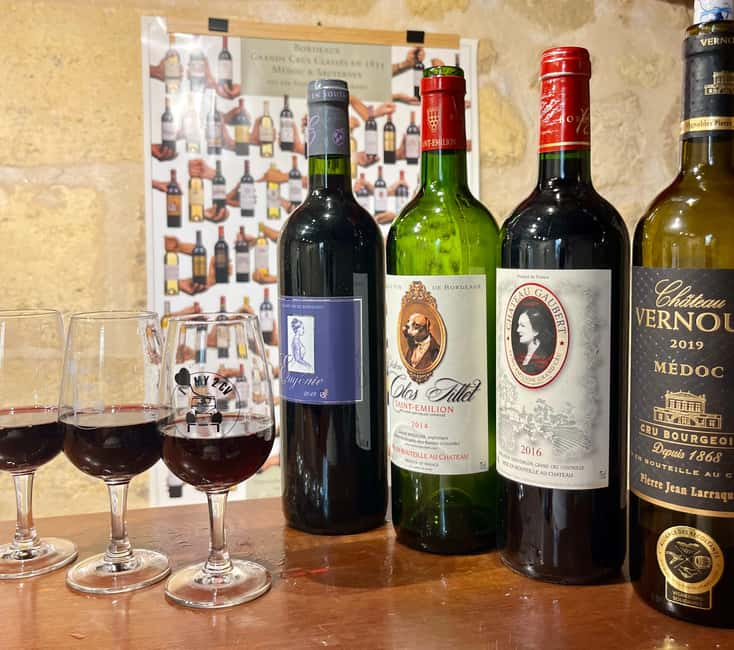
- Four Bordeaux reds and a mystery glass: Taste several styles, including single-variety wines, blends, prestigious Grand Crus, and a mature wine.
- A useful Left Bank and Right Bank lesson: Learn why Cabernet Sauvignon often brings structure while Merlot can feel softer and more fruit-led.
- Charcuterie with a purpose: Pairings help you see how food changes the taste and texture of wine.
- Aroma game included: Use scent recognition to build confidence instead of simply guessing at tasting notes.
- Small, conversational setting: The group is limited to six, with English, French, and Spanish available.
- Easy central meeting point: The room is at 25 Avenue Thiers, about 100 meters from tram A at Stalingrad.
Why this one-hour Bordeaux tasting works
I like wine experiences that give you a few useful ideas you can carry into the rest of your trip. This one focuses on the building blocks of Bordeaux: where a wine comes from, which grapes it uses, how those grapes are blended, and what time does to the final bottle.
That focus matters because Bordeaux is not one single style. A Cabernet Sauvignon-led wine from the Médoc can be firm, structured, and built to age. A Merlot-led wine from Saint-Émilion may feel rounder and more approachable in its youth. The tasting sets up those differences in a way you can experience in the glass, not just read on a map.
Cécilia and Mathilde lead the sessions. Both are certified wine experts trained at the Université du Vin, and their approach is designed for curious beginners as well as people who already know a few French appellations. The strongest part of the format is the conversation. You get room to ask why a wine smells or feels a certain way instead of sitting through a long formal lecture.
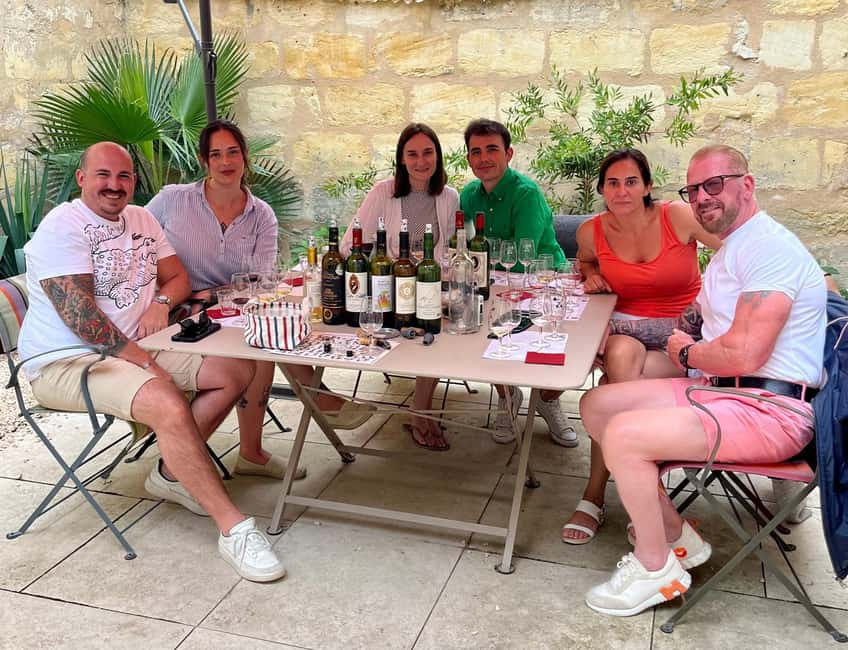
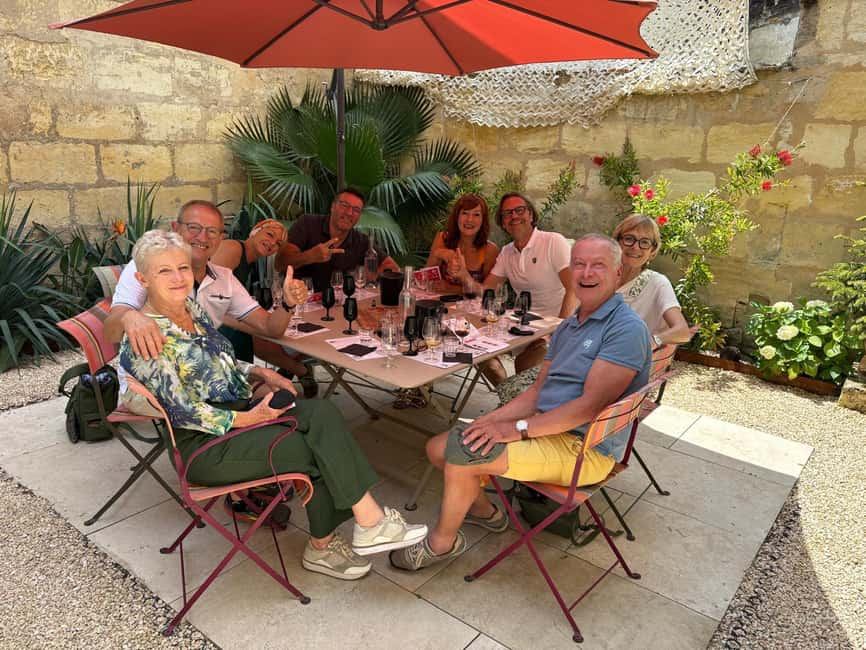
The group size helps here. With no more than six participants, you can ask a basic question without feeling out of place. You can also hear how other people describe the same wine, which is one of the quickest ways to realize that tasting notes are not a test with one correct answer.
More Wine Tasting Tours in Bordeaux
- Bordeaux: Cité du Vin Entry Ticket and Wine Tasting
★ 4.6 · 3,885 reviews - From Bordeaux: Afternoon Saint-Emilion Wine Tasting & snack
★ 4.8 · 1,581 reviews - Medoc or Saint Emilion Wine Tasting and Chateau from Bordeaux
★ 5.0 · 1,415 reviews
Finding the tasting room at 25 Avenue Thiers
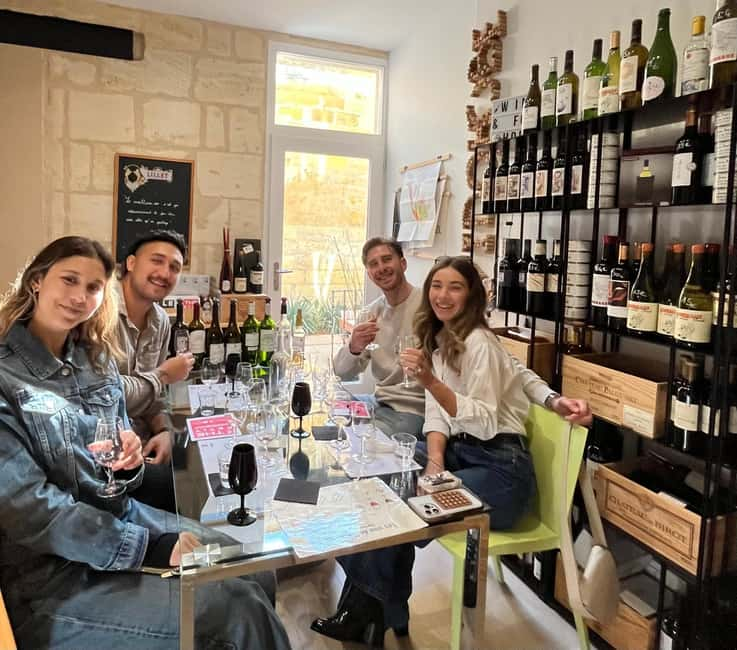
The meeting point is 25 Avenue Thiers in Bordeaux, close to the Stalingrad stop on tram A. The room is about 100 meters from the stop, but it is not presented as a prominent street-front shop.
Look for the Guy Hoquet panel. The tasting room is behind the building, through a gray door next to the panel. The bell is marked I ♥️ TASTING. That detail is worth noting because it saves you from wandering around the block looking for a wine bar sign.
The direct tram access makes this a practical activity to fit into a day in Bordeaux. There is no hotel pickup or drop-off, so you need to make your own way there. I would allow a few extra minutes for locating the door, particularly if you are arriving close to the start time.
The setting changes with the season. You may taste in a stone-built room, a private courtyard, or an underground cellar. The cellar setting can add a pleasing sense of place, while the courtyard may feel lighter and more relaxed. Since the exact room is seasonal, do not book this expecting one guaranteed backdrop.
Four red wines, one useful lesson at a time
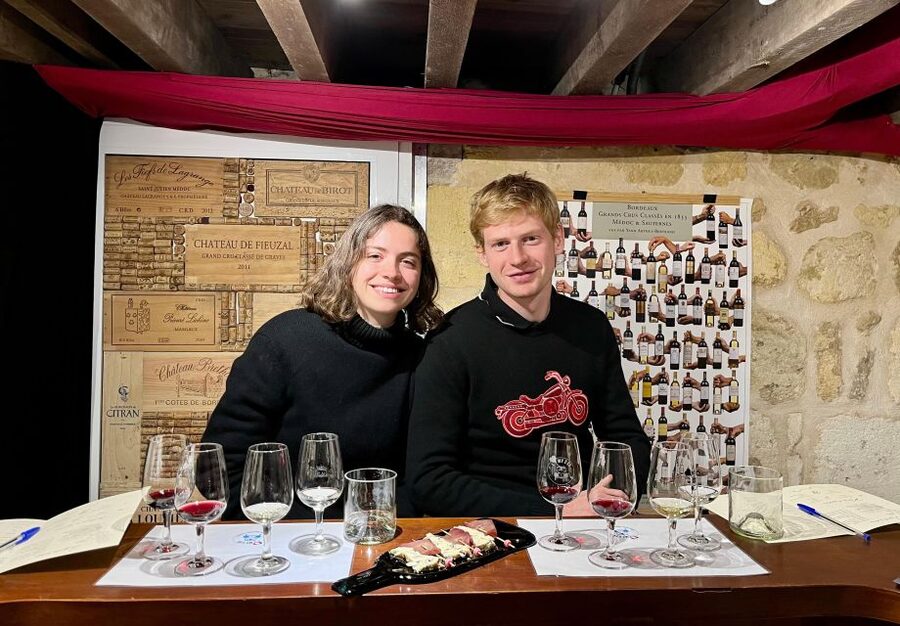
The central tasting includes four Bordeaux red wines. The selection is meant to show several sides of the region rather than repeat one house style.
You may encounter a single-variety wine that lets Merlot or Cabernet Sauvignon speak clearly. These wines are useful teaching tools because you can focus on the grape’s character without a complicated blend getting in the way. You may also taste blends from family-run organic estates, along with more prestigious Grand Cru examples.
One of the most valuable inclusions is a mature wine. Younger Bordeaux can be full of fruit, tannin, and firm edges. With age, those elements can soften and the wine can take on a different balance. Tasting an older bottle helps you understand why people store Bordeaux and why a wine’s price is not based only on how strong its fruit tastes on the first sip.
The session also looks at winemaking choices. You learn how grape variety, soil and location, fermentation choices, and ageing affect aroma, texture, and the ability to develop over time. The aim is not to turn you into a professional. It is to give you a working vocabulary for making sense of a wine list or a bottle shop shelf.
The supplied details also refer to a mystery glass. The included section lists four Bordeaux red wine glasses, while the fuller experience description mentions four selected wines plus one mystery glass. If the mystery pour is especially important to you, confirm the exact number of glasses when booking. It is a small point, but the wording is worth clarifying.
Left Bank and Right Bank without the usual wine jargon
Bordeaux is often discussed in terms of two broad areas divided by the Gironde estuary and its rivers. The Left Bank is associated with areas such as the Médoc and with Cabernet Sauvignon-led blends. These wines often bring more structure and ageing potential.
The Right Bank includes Saint-Émilion, where Merlot plays a larger role in many wines. The style can be softer and more fruit-forward, though the region contains plenty of serious, long-lived bottles too. A short tasting cannot explain every appellation, but it can give you a useful first map.
I like this comparison because it gives you something concrete to notice. You can ask yourself: Does this wine feel firmer or rounder? Is the fruit brighter or darker? Does the finish feel dry and tannic, or smooth and easy? Those questions are more helpful than trying to memorize a long list of château names.
The session also helps explain why blends matter. Bordeaux wines are often made from several permitted grape varieties, and the final character depends on how those varieties are combined. Comparing a single-variety wine with a blend makes that idea much easier to understand.
More Wine Tasting Tours in France
- Saint Emilion Day Trip with Sightseeing Tour & Wine Tastings from Bordeaux
★ 5.0 · 1,120 reviews - Saint Emilion Half-Day Trip with Wine Tasting & Winery Visit from Bordeaux
★ 4.5 · 1,034 reviews - From Bordeaux: Half-Day Saint-Émilion Tour and Wine Tasting
★ 4.7 · 699 reviews - Saint-Emilion Electric Bike Day Tour with Wine Tastings & Lunch
★ 5.0 · 696 reviews
The aroma game makes tasting less intimidating
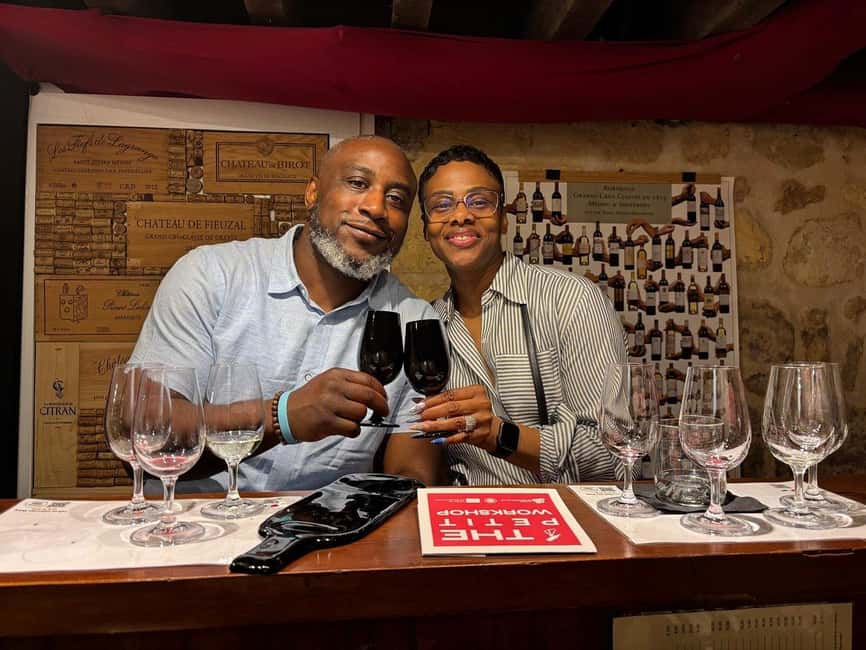
Many people worry that they are not good at wine tasting because they cannot identify blackberry, cedar, violet, or spice in a glass. The aroma game gives you a more relaxed way to practice.
You smell, think, and compare rather than chase a perfect answer. The exercise can help you separate fruit aromas from earthy or woody notes, and it gives you language for describing what you notice. You do not need an unusually sensitive nose to take part.
This is also where a small group helps. The host can explain why one person detects a scent that another person misses. The session becomes a conversation, not a competition.
I would especially recommend this part to first-time tasters. It gives you permission to trust your own senses while still learning from the guide. You leave with a method you can use at dinner or during another winery visit.
Charcuterie that shows how pairing changes wine
The food pairing is not just a snack placed beside the glasses. Artisanal charcuterie is selected to go with the wines, giving you a simple way to see how food alters the experience.
A wine that seems firm or dry on its own may feel different with salty, fatty food. Fruit can seem more pronounced, tannins may feel less sharp, and the finish can change. You do not need to memorize pairing rules. You simply taste the wine, try the food, and taste again.
That hands-on comparison is useful because pairing advice can sound abstract. Instead of hearing that a wine needs protein or salt, you can observe the effect for yourself. The charcuterie also makes the hour feel more social and relaxed.
If you are visiting with someone who prefers white wine, tell the provider ahead of time. A white Bordeaux tasting can be arranged. That is a useful option for mixed groups, though it should be requested in advance rather than assumed on arrival.
What you take home beyond the wine
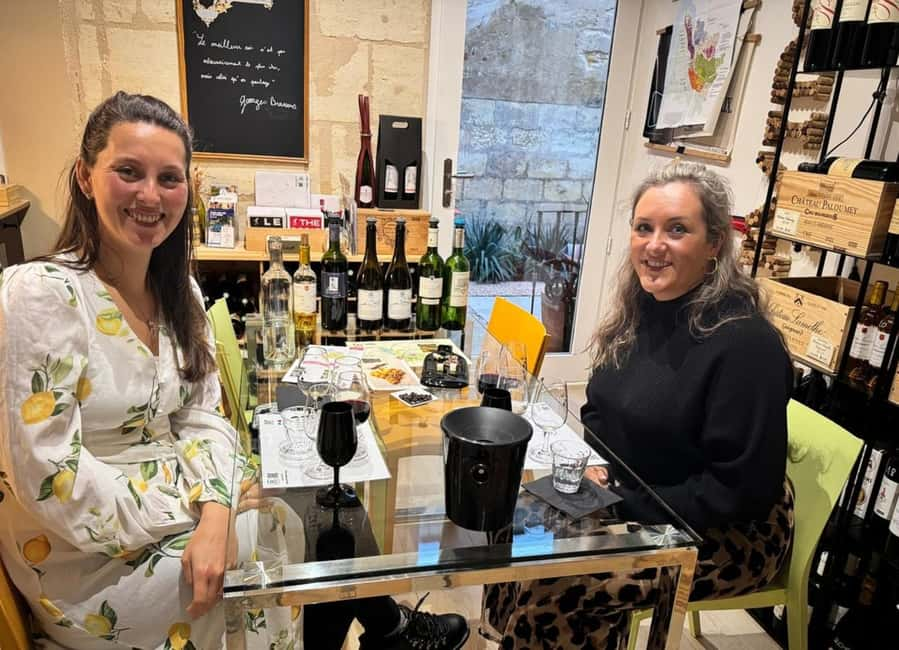
Each participant receives a personal booklet covering Bordeaux wines and the tasting method. This gives the experience some value after the glasses are empty.
I would use it as a quick reference during the rest of your stay. If you visit Médoc or Saint-Émilion later, the terms will be easier to place. You can also refer to the tasting steps when choosing a bottle at a restaurant or local shop.
The booklet is not a replacement for a full wine guide, but that is not its job. It gives you a compact record of the main ideas from the class, including how to look at a wine, smell it, taste it, and think about its finish.
Wines tasted during the session are available to buy on site. This can be convenient if one bottle catches your attention, but I would avoid treating the purchase as part of the activity. Taste first, make notes, and decide later. The booklet should help you remember what you liked.
Is $46 fair for one hour?
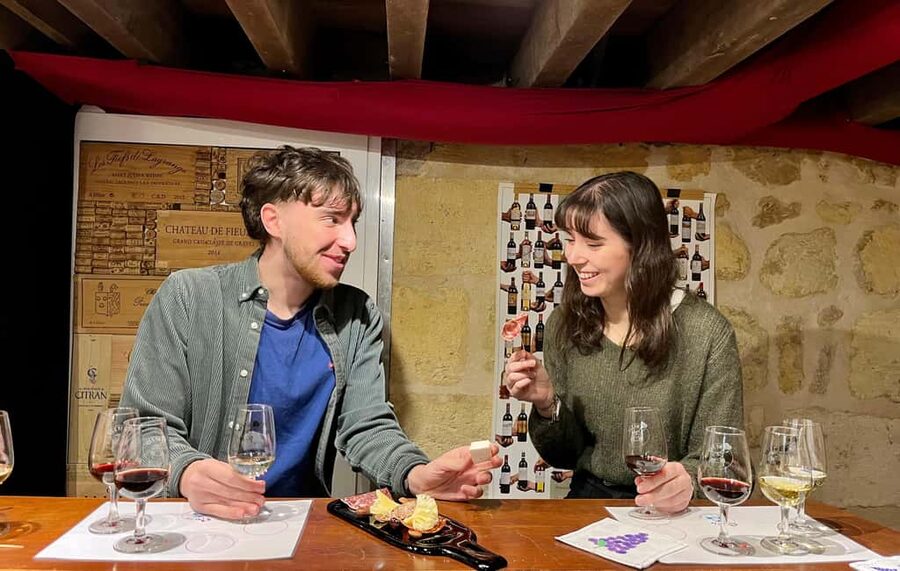
At $46 per person, this is not the cheapest way to drink four glasses of wine in Bordeaux. It is also not priced as simple wine sampling. You are paying for instruction, a small group, charcuterie, an aroma activity, a tasting booklet, and access to wines selected to show different Bordeaux styles.
For me, the value depends on your goal. If you want a quick introduction before choosing restaurants or visiting wine country, the price is reasonable. The compact length is useful on a busy city break, and the small group makes the teaching more personal than a large commercial tasting.
If you are already comfortable with Bordeaux appellations and can identify the main grape varieties, you may want a longer or more specialized class instead. One hour cannot cover every subregion, vintage, classification, and production choice.
The value is strongest for beginners, couples, and small groups who want structure without committing to a half-day excursion. It can also be a smart first step before a trip to Médoc or Saint-Émilion, since you will arrive with a basic sense of what to look for.
Who should book, and who should think twice
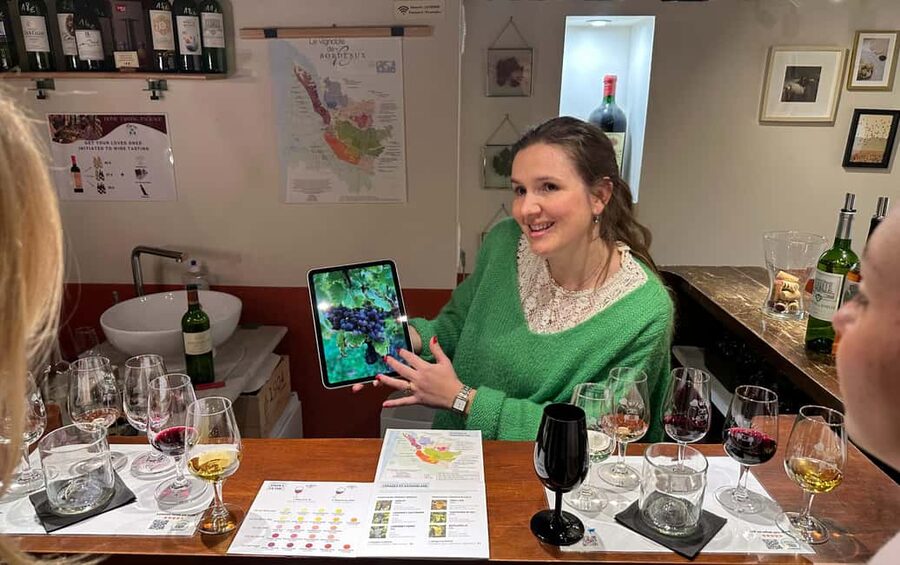
I would book this experience if you want to understand Bordeaux rather than simply drink Bordeaux. It suits people who enjoy conversation, guided comparison, and practical explanations.
It is especially good for:
- First-time wine tasters who want a friendly introduction
- Visitors with only an hour to spare
- Couples or friends who prefer a small group
- Wine lovers who want to compare Left Bank and Right Bank styles
- People who want food pairing guidance they can use later
- Groups with different wine preferences, if a white tasting is requested ahead of time
I would think twice if you want a full-day vineyard visit, extensive château touring, or a large number of appellations. This is an indoor tasting class in Bordeaux, not a countryside excursion.
The experience is also not suitable for people with mobility impairments according to the stated activity information. Ask before booking if access is a concern, especially since the venue may be in a cellar or another changing seasonal space.
Cancellation is flexible up to 24 hours before the start for a full refund, and you can reserve now and pay later. Starting times vary, so check availability for the day you want.
My take on the Bordeaux wine workshop
I like this tasting because it gives Bordeaux a clear shape in a short amount of time. You compare grape varieties, blends, regions, age, and food, then leave with a booklet and a better way to taste.
The guides are the heart of the experience. Cécilia and Mathilde bring formal training, but the format remains relaxed and conversational. That balance matters. Wine should offer discovery, not homework.
Book it if you want a warm introduction to Bordeaux reds, practical pairing ideas, and a setting where you can ask questions freely. Skip it if your priority is visiting vineyards in the countryside or spending several hours on advanced wine study. For most curious visitors staying in Bordeaux, $46 buys a useful and enjoyable hour, especially with a group capped at six.
FAQ
How long does the Bordeaux wine tasting last?
The tasting lasts one hour. Check the available starting times when booking.
How many people are in each group?
The experience is limited to six participants.
Which wines are included?
You taste four Bordeaux red wines. The detailed experience description also mentions a mystery glass, so confirm the exact glass count if that point matters to you.
Is food included?
Yes. The tasting includes a charcuterie pairing selected to go with the wines.
Which languages are available?
The live guide can lead the experience in English, French, or Spanish.
Where is the meeting point?
The tasting takes place at 25 Avenue Thiers, 33100 Bordeaux, about 100 meters from tram A at Stalingrad. Look for the Guy Hoquet panel and the gray door beside it. The bell is marked I ♥️ TASTING.
Can people who prefer white wine join?
Yes. A white Bordeaux tasting can be arranged, but you should tell the provider in advance.
More Workshops in Bordeaux
- Bordeaux Super Saver Wine Tasting class and St Emilion region
★ 5.0 · 184 reviews - Guided Bordeaux Wine Tasting Class with 6 Wines and pairings
★ 4.9 · 181 reviews - Bordeaux Wine Masterclass: Blending workshop with appetizer
★ 5.0 · 113 reviews - Rome: Pasta Making Class with Wine, Limoncello, and Dessert
★ 4.9 · 3,177 reviews
More Wine Tastings in Bordeaux
- Bordeaux Wine and Trade Museum Admission Ticket with Wine Tasting
★ 4.5 · 599 reviews - Bordeaux: Vineyards Wine Tasting Half-Day Trip
★ 4.2 · 470 reviews - From Bordeaux: Saint-Émilion Half-Day Tour with Wine Tasting
★ 4.9 · 389 reviews - Bordeaux: Half-Day Margaux Tour with Wine Tastings
★ 4.7 · 352 reviews
Just added around Bordeaux
- Saint Emilion Full Day Wine and Bike Tour★ 5.0 · 167 reviews
- Professional – Bordeaux Wine and Cheese Tasting with a walking tour★ 5.0 · 218 reviews
- Bordeaux Wine and Trade Museum Admission Ticket with Wine Tasting★ 4.5 · 599 reviews
- Medoc Afternoon Wine Tour – 2 Wineries, tastings & delicacies★ 4.5 · 74 reviews
- Bordeaux Wine Masterclass: Blending workshop with appetizer★ 5.0 · 113 reviews
- Saint-Emilion Small-Group Electric Bike Wine Tour Tastings & Lunch from Bordeaux★ 5.0 · 383 reviews
- Discovery of the Bordeaux vineyard in 3 wines★ 5.0 · 133 reviews
- Saint Emilion Wine Tour Tasting Half Day from Bordeaux★ 5.0 · 254 reviews
Wine Tasting Tours, compared.
Douro Valley w/ Boat Tour, Wine Tasting & Lunch
Read our review →
Complete Douro Valley Wine Tour with Lunch, Wine Tastings and River Cruise
Read our review →
Small-Group Wine Tasting Experience in the Tuscan Countryside
Read our review →
SMALL-GROUP Wine Safaris: Tuscan Wine Tasting Tours from Florence
Read our review →
San Gimignano, Siena, Monteriggioni, Chianti Day Trip with Lunch & Wine Tasting
Read our review →
Cálem Cellar Tour, Interactive Museum & Wine Tasting
Read our review →
Browse the lists this tour appears in