
Review · AVIGNON
From Avignon: Wine Tour with Visit to Châteauneuf du Pape
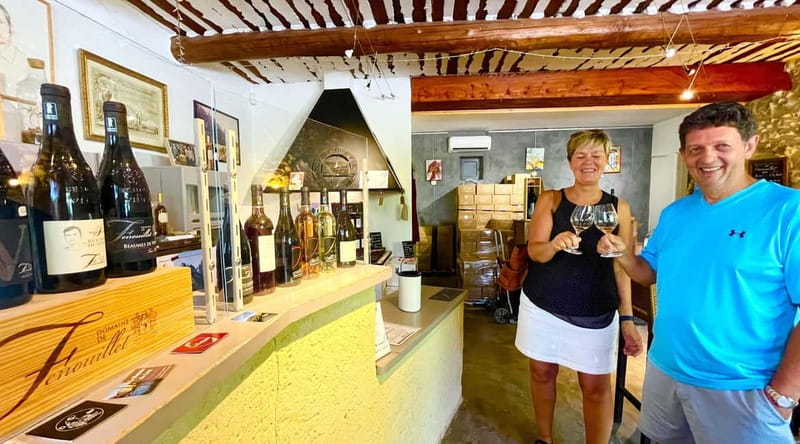
The best part of this tour is its range. In one day, you move from sweet Muscat in Beaumes de Venise to powerful reds in Gigondas and Châteauneuf du Pape, while Arnaud explains how the land changes between each stop. I like the small maximum of six people and the way the visits focus on boutique, family-run estates rather than a large tasting room conveyor belt.
I also like the local picnic, built around products such as goat cheese, tapenade, eggs, fruit, bread, and grape juice. The main drawback is the vehicle. A few people found the car cramped with five or six passengers, so if personal space matters to you, keep the group size in mind.
Key points to know before you book
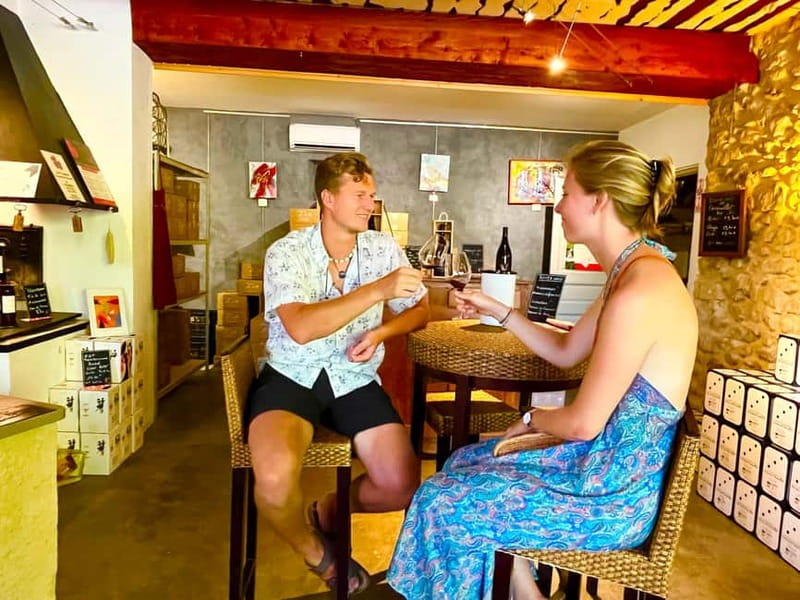
- Three appellations in one outing: Taste Beaumes de Venise, Gigondas, and Châteauneuf du Pape, each with a distinct climate and soil.
- At least nine wines: You usually taste at least three wines at each of the three wineries.
- Arnaud leads the tour: He speaks French and English and adds practical explanations during the drives between estates.
- Morning tours include a picnic: From April through October, the food is made with fresh produce from local farms and nearby villages.
- A genuine small-group format: The vehicle holds no more than six participants, keeping the visits personal.
- Season changes the schedule: The morning spring-to-autumn tour lasts about six hours with food, while winter visits are shorter and have only two estates.
Why three Southern Rhône areas make a better tasting
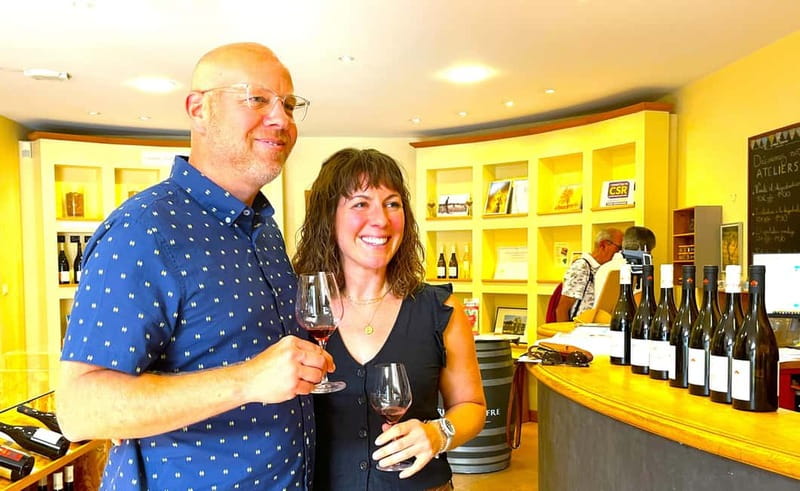
A single winery visit can be pleasant, but it does not always tell you much about a wine region. This outing gives you three useful comparisons in one day. The vineyards are close enough to combine, yet each appellation has its own identity.
Beaumes de Venise sits on the southern side of the Dentelles de Montmirail, a group of three pointed mountain ranges. The area is warmer and less exposed to wind than nearby vineyards, which helps explain its famous Muscat. This is a naturally sweet wine, made under an appellation that dates to 1943.
You can drink Muscat before a meal, with dessert, with blue cheese, or alongside charcuterie. The area also produces red wine, though that appellation is much newer, dating from 2005. The soils include limestone, sandstone, sand, and clay, so the tasting is not limited to one style.
Gigondas lies on the northern side of the Dentelles. Here, the Mistral can blow for roughly 150 days a year. That cold, drying wind can be hard on people, but it helps vineyard workers by pushing away clouds and reducing moisture around the vines.
The vineyards also climb higher, from about 100 to 600 meters. Sandy marl is a signature soil type, joined by clay, sand, limestone, and sandstone. Gigondas is best known for red wine, with rosé also permitted since 1971. White Gigondas is the newest addition, joining the appellation in 2023.
Châteauneuf du Pape is the famous final piece of the comparison. It was one of France’s first appellations, created in 1936, and its name is recognized well beyond the Rhône Valley. Red wine accounts for about 92 percent of production, while white wine makes up the rest.
The large rounded river stones are the feature you will notice first in the soil. Clay, sand, sandstone, and limestone also occur, but the stones are especially important because they absorb heat and release it later. These are generally full-bodied wines, and good bottles can be stored for 20 to 30 years.
I like this structure because you are not just drinking nine unrelated wines. You are tasting how warmth, wind, height, and soil influence the glass in front of you.
A few more tastings around France worth a look
- Paris: Moulin Rouge Cabaret Show Ticket with Champagne
★ 4.7 · 16,088 reviews - Loire Valley Castles Day Trip from Paris with Complementary Wine
★ 4.5 · 3,907 reviews - Bordeaux: Cité du Vin Entry Ticket and Wine Tasting
★ 4.6 · 3,885 reviews
Meeting Arnaud at Hôtel Le Bristol
The tour begins and ends in front of Hôtel Le Bristol in Avignon. Look for a black car marked Ventourisme on the sides. If you are staying outside Avignon itself, contact the provider in advance, since another meeting place may be possible.
Arnaud is the guide and driver. His English is strong, and he also conducts the tour in French. His most useful role is not simply pouring wine. During the drives, he explains the countryside, the mountain ranges, the vineyards, and the small changes in climate that separate one appellation from another.
He also has personal connections with the estate owners and tasting staff. That matters at small wineries, where an introduction can lead to a more relaxed visit and a little extra background. The tone is friendly and conversational, with plenty of room for questions about wine, villages, food, and other things to do around Avignon.
The ride is generally described as comfortable and smooth, but the car is compact. With three or four people, it should feel easier. With five or six, expect less room, especially if everyone is carrying jackets or day bags. Large bags, luggage, oversize items, and walking frames cannot go in the vehicle.
Beaumes de Venise: start with sweet Muscat
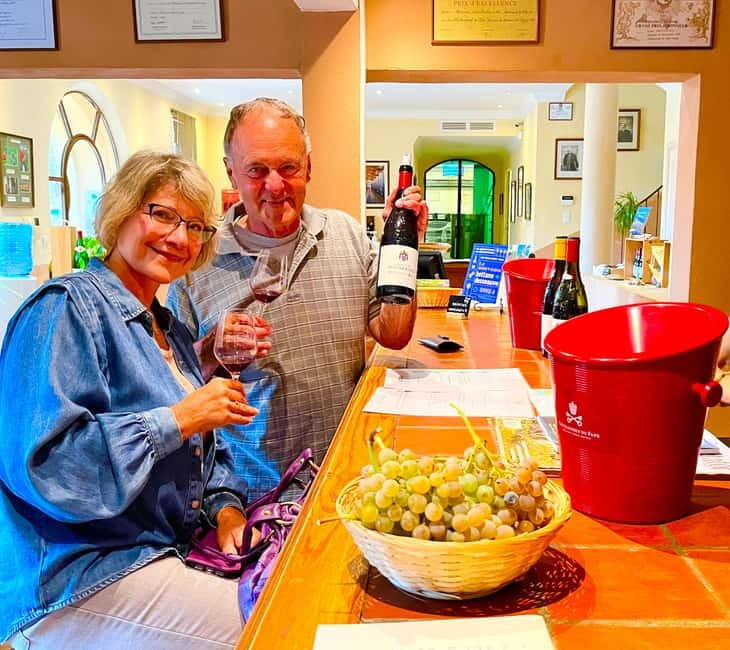
On the morning tour from April through October, Beaumes de Venise is the first tasting, lasting about 45 minutes. The stop introduces you to a style of Rhône wine that many visitors do not expect: naturally sweet Muscat.
The setting below the Dentelles de Montmirail helps make this a good first stop. The mountains shelter the vineyards from some of the region’s wind, and the warmer conditions suit the grapes used for Muscat. You may taste it as an aperitif, but its food matches are just as useful: dessert, blue cheese, and cured meats all work well.
The estate selection can also include red wines. One Beaumes visit has been especially appreciated for its historic setting and varied wines, including bottles made with organic methods. Since the appellation rules for red wine are newer, this stop gives you a wider picture than the usual idea of Beaumes de Venise as only a sweet-wine area.
Plan to ask how the wine is made sweet and what temperature the guide recommends for serving it. You will get more from the tasting if you treat the Muscat as a wine for the table, not just a sugary drink.
Gigondas: wind, altitude, and a picnic under the trees
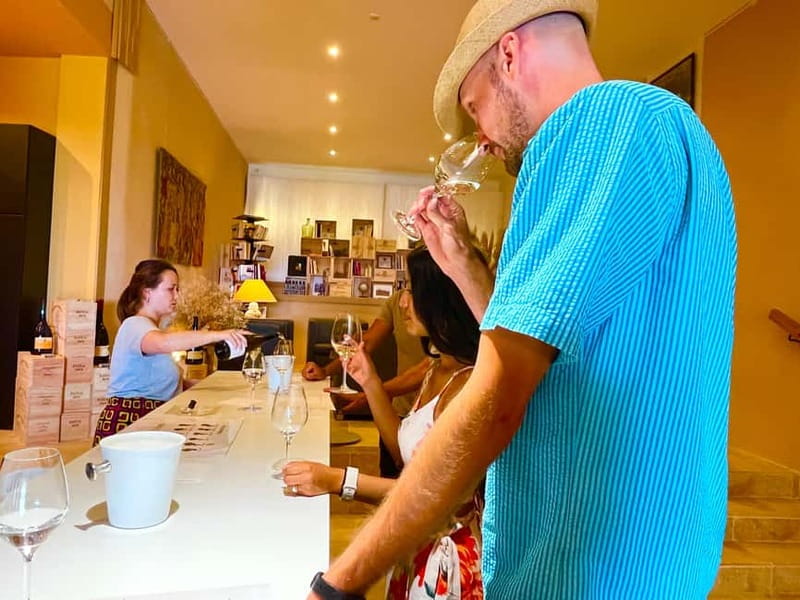
The Gigondas tasting lasts about an hour. This is usually the strongest contrast with Beaumes de Venise. The wines are famous for their reds, often with a firmer, more serious character, and the mountain setting feels more exposed because of the Mistral.
Arnaud explains why the wind matters. The Mistral can blow for around 150 days a year, drying the vines after rain and helping limit disease. The vineyards also rise well above the valley floor, with some reaching 600 meters. That combination of wind and altitude gives you a useful way to think about why two nearby Rhône wines can taste so different.
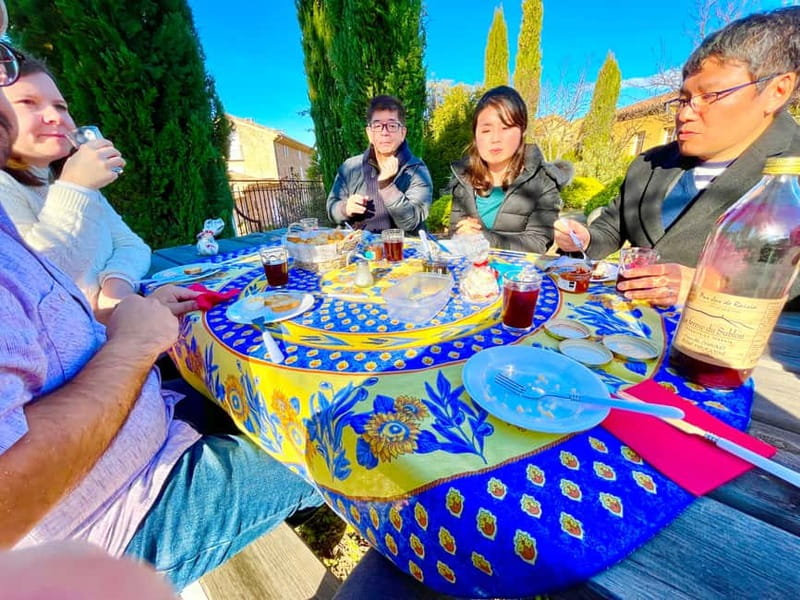
The local picnic takes place around the Gigondas stop on the April through October morning tour. It is better understood as a generous country snack than a formal restaurant lunch. Expect fresh local items such as boiled eggs, bread, black olive tapenade, sweet pepper tapenade, fresh goat cheese, seasonal fruit, and fruit juice.
Several picnic details make it feel tied to the area. Arnaud sources much of the food from his village and nearby farms, and the selection may include products from his own garden. Fresh Muscat grapes and grape juice can make an interesting comparison with the Muscat wine tasted earlier.
The picnic lasts about an hour and gives you a slower pause between tastings. I like this because the day could otherwise become a blur of driving, pouring, and swallowing. Still, you should not expect a full restaurant meal. If you need a substantial lunch, eat a proper breakfast first or plan an evening meal in Avignon.
Same town, a different glass:
- Bordeaux: River Garonne Cruise with Glass of Wine and Canelé
★ 4.5 · 3,630 reviews - Normandy D-Day Small-Group Day Trip with Omaha Beach, Cemetery & Cider Tasting
★ 5.0 · 2,786 reviews - Montmartre Hill French Gourmet Food and Wine Tasting Walking Tour
★ 5.0 · 2,588 reviews - Paris: Paradis Latin Cabaret Show with Optional Champagne
★ 4.6 · 2,231 reviews
Châteauneuf du Pape: the famous final tasting
The final winery is in Châteauneuf du Pape, with about an hour devoted to tasting. This is the name most familiar to many visitors, but the stop works best after Beaumes de Venise and Gigondas. By then, you have already learned to look for differences in terrain and winemaking.
The appellation is dominated by red wine, although white wine is also produced. The rounded river stones are easy to spot in the vineyards, and they offer a simple visual clue to the area’s warm conditions. The wines are often powerful and suitable for long aging, with well-kept bottles capable of spending 20 to 30 years in a cellar.
The exact wines served can vary. One important practical point is that the Châteauneuf tasting may feature younger bottles rather than older, more expensive examples. If you are visiting specifically to taste mature Châteauneuf du Pape, this tour may not satisfy that narrow goal. You can ask questions about vintages, aging, and how the current samples compare with cellar-worthy bottles.
The Châteauneuf stop is not only about the glass. If the group shows interest, Arnaud may add a brief look at the village castle area, as he has done before. Do not treat that as a guaranteed separate sightseeing visit, but it is worth expressing your interest in the village and its landmark.
How the seasonal schedules change the experience
There are three versions of the day, and the choice matters.
From April through October, the morning tour begins at 9:30 a.m. and returns around 3:30 p.m. You visit Beaumes de Venise, Gigondas, and Châteauneuf du Pape, taste at least nine wines, and stop for the picnic. This is the fullest version and the one I would choose if you want the food, countryside, and three-appellation comparison in one outing.
The afternoon option runs all year, generally from 2 p.m. to about 6:30 p.m. It visits the same three areas in reverse order: Châteauneuf du Pape, Gigondas, then Beaumes de Venise. There is no picnic, so have lunch beforehand.
From November through March, the morning tour runs from about 9:30 a.m. to 12:30 p.m. It visits only two estates, in Gigondas or Beaumes de Venise, followed by Châteauneuf du Pape. There is no meal. This shorter format may suit you if you have limited time or prefer not to spend most of the day tasting wine, but it offers less comparison than the spring and summer version.
The tour can be canceled because of weather. That is sensible in a rural area where driving and vineyard access depend on conditions, but keep some flexibility in your Avignon schedule.
Is $93 a good value?
At $93 per person, the tour includes transport from Avignon, a small group of up to six, three winery visits, and at least nine wine samples. On the spring-to-autumn morning departure, it also includes the local picnic.
I consider that good value if you want to visit several appellations without renting a car or arranging separate appointments. A designated guide and driver also remove the problem of tasting wine and then driving through the countryside. The small group improves the value because you can ask questions without waiting behind a busload of people.
The price is less compelling if your main goal is buying rare, mature Châteauneuf du Pape. The tastings are designed to introduce you to the area and its producers, not guarantee a flight of expensive aged bottles. You should also factor in potential purchases, which are not included.
The tour is especially useful for first-time visitors to Southern Rhône wine country. You get the basic map in a single day, then you can return to a favorite appellation or shop for bottles with a better sense of what you like.
Who will enjoy this tour most?
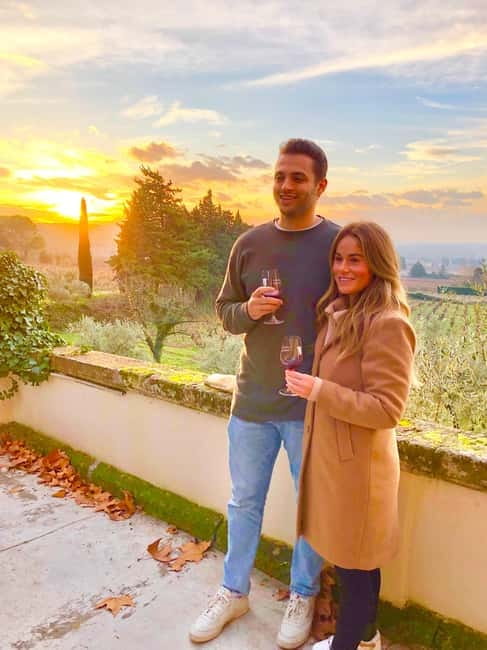
I would recommend it to wine drinkers who want context, not just samples. You do not need advanced wine knowledge. Arnaud explains the important points in plain language, and the three areas give you a clear structure for learning.
It also suits people who enjoy scenery and village roads. The countryside, mountain views, vineyards, and stone-covered soils are part of the experience. If you only want to sit in a tasting room, this may feel too much like a day out in the country.
The tour is a good match for couples, friends, and solo visitors who like meeting a few other people. The six-person limit keeps the group small, though the car can feel tight when full.
It is not suitable for pregnant women or people with heart problems, and walking frames cannot be accommodated. Anyone traveling with luggage should leave it at the hotel, since large bags are not allowed in the car.
Should you book it?
Book this tour if you want a well-paced introduction to three major Southern Rhône appellations from Avignon, especially on the April through October morning departure. The local food, small estates, and direct explanations from Arnaud give the day more character than a simple tasting shuttle.
Choose the afternoon version if you prefer a shorter outing without food, or the winter morning version if you need to fit wine country around a busy itinerary. Skip it if you need a spacious vehicle, a full restaurant lunch, or a guaranteed tasting of mature Châteauneuf du Pape.
For most wine-curious visitors, the strongest choice is the morning tour in the warmer months. Eat breakfast, bring a water bottle, leave your luggage behind, and come ready to compare three very different corners of the Rhône Valley.
FAQ
Where does the tour begin and end?
The tour begins and ends in front of Hôtel Le Bristol in Avignon. The vehicle is black and marked Ventourisme on the sides.
Can I be picked up outside Avignon?
You should contact the provider if you are not staying inside Avignon. Another meeting place may be possible.
How many people can join the tour?
The group is limited to six participants.
How many wines will I taste?
The tour includes at least three different wines at each of three wineries, for a minimum of nine wines in total.
Which wine areas does the tour visit?
The tour visits Beaumes de Venise, Gigondas, and Châteauneuf du Pape on the three-estate version.
Is a picnic included?
A picnic is included on the morning tour from April through October. It is not included on the afternoon tour or the winter morning tour.
What food is served at the picnic?
The picnic uses fresh products from local farms and may include eggs, black olive tapenade, sweet pepper tapenade, fresh goat cheese, seasonal fruit, and fruit juice.
Are the tours offered in English?
Yes. The tour is available in English and French.
Can I bring luggage?
Large bags, oversize luggage, and luggage in general are not allowed in the car. Walking frames are also not permitted.
Can I cancel the booking?
You can cancel up to 24 hours before the tour for a full refund. You can also reserve now and pay later, subject to availability and booking terms.
Just added around France
- Saint Emilion Full Day Wine and Bike Tour★ 5.0 · 167 reviews
- Professional – Bordeaux Wine and Cheese Tasting with a walking tour★ 5.0 · 218 reviews
- Bordeaux Wine and Trade Museum Admission Ticket with Wine Tasting★ 4.5 · 599 reviews
- Medoc Afternoon Wine Tour – 2 Wineries, tastings & delicacies★ 4.5 · 74 reviews
- Bordeaux Wine Masterclass: Blending workshop with appetizer★ 5.0 · 113 reviews
- Saint-Emilion Small-Group Electric Bike Wine Tour Tastings & Lunch from Bordeaux★ 5.0 · 383 reviews
- Discovery of the Bordeaux vineyard in 3 wines★ 5.0 · 133 reviews
- Saint Emilion Wine Tour Tasting Half Day from Bordeaux★ 5.0 · 254 reviews
Drinks Tours, compared.

Unlimited Prosecco, Beer and Aperol Spritz Cruise
Read our review →
Evening Cruise with Optional Wine and Snacks
Read our review →
Douro Valley w/ Boat Tour, Wine Tasting & Lunch
Read our review →
Chichen Itza, Cenote & Valladolid Tour with Tequila and Lunch
Read our review →
Complete Douro Valley Wine Tour with Lunch, Wine Tastings and River Cruise
Read our review →
Small-Group Wine Tasting Experience in the Tuscan Countryside
Read our review →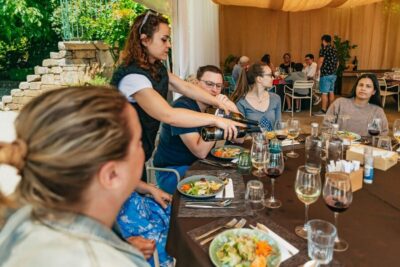
Douro Valley with Winery Lunch, Tastings & Cruise
Read our review →Browse the lists this tour appears in