
Review · FRANCE
Aÿ-Champagne: Pressoria Champagne Museum with Tasting
The best thing about Pressoria is that it explains Champagne as a whole process, not just a luxury drink in a glass. You move from the soil beneath the vines to grape picking, pressing, fermentation, aging, and bottling, with touch-friendly displays that make the technical parts easy to follow. The museum is family-friendly, but it gives adults plenty to think about, too.
I like the freedom to explore at your own pace, and I like the setting at the foot of the hillside in Aÿ-Champagne. The two tastings at the end, often enjoyed with vineyard views, give the information a practical finish. The main consideration is that this is not a guided cellar tour, so anyone looking for a host-led visit or a large Champagne house may find it quieter and more self-directed.
Key points at a glance
- Champagne from soil to bottle: Follow the full production process, including grape selection, pressing, fermentation, aging, and bottling.
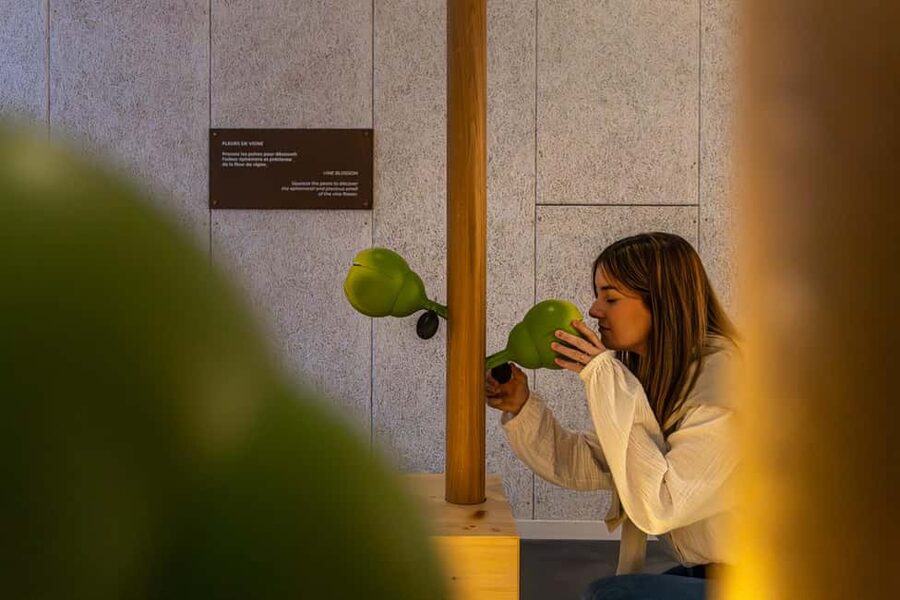
- Five-senses exhibits: Touch, sight, sound, smell, and taste all play a role in the museum experience.
- Two Champagne tastings: Finish with two local Champagnes rather than a single token sample.
- Aÿ-Champagne setting: Visit a UNESCO World Heritage commune and walk among peaceful vineyard views.
- Good for children and adults: Interactive displays help younger visitors stay involved while adults learn the finer points.
- Self-guided freedom: Take your time rather than keeping pace with a fixed group or guide.
Why Pressoria is different from a standard Champagne visit
Many Champagne experiences focus on a famous name, a polished tasting room, or a cellar beneath a large house. Pressoria takes another route. It explains why Champagne tastes the way it does and how the region, grapes, techniques, and time all shape the final drink.
That makes it useful for anyone who has tasted Champagne but never understood the work behind it. Instead of simply being shown a bottle, you get a visual and physical explanation of what happens before the cork pops.
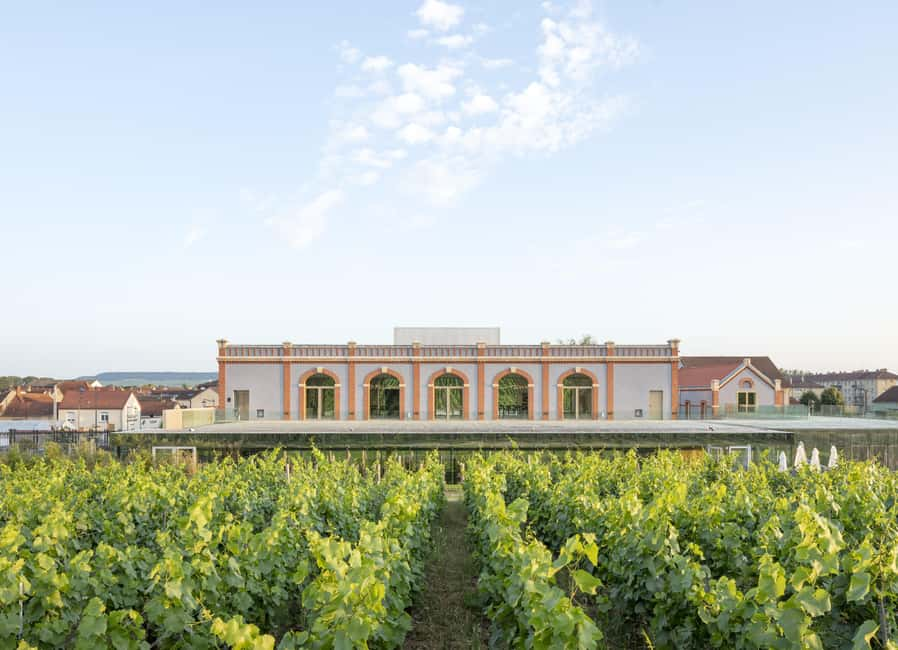
The museum is in Aÿ-Champagne, a commune surrounded by vineyards and included in the Champagne Hillsides, Houses and Cellars UNESCO World Heritage area. The setting matters. You are not learning about a distant wine region through a screen. You are learning at the foot of the hills where the vines grow.
I also like that Pressoria does not require expert wine knowledge. You can arrive knowing only that you enjoy bubbles. The displays build from basic ideas, such as soil and grapes, toward more involved subjects, such as fermentation, aging, and the construction of flavor.
More Champagne Tours in France
- Paris: Moulin Rouge Cabaret Show Ticket with Champagne
★ 4.7 · 16,088 reviews - Paris: Paradis Latin Cabaret Show with Optional Champagne
★ 4.6 · 2,231 reviews - Paris 3-Courses Gourmet Dinner Seine River Cruise with Champagne
★ 4.0 · 1,659 reviews
Starting with the soil beneath Aÿ-Champagne
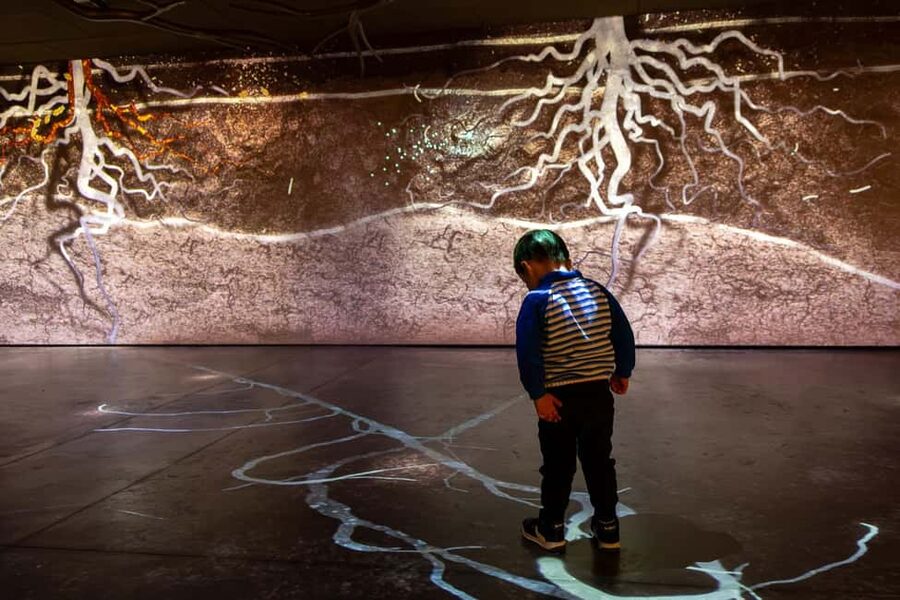
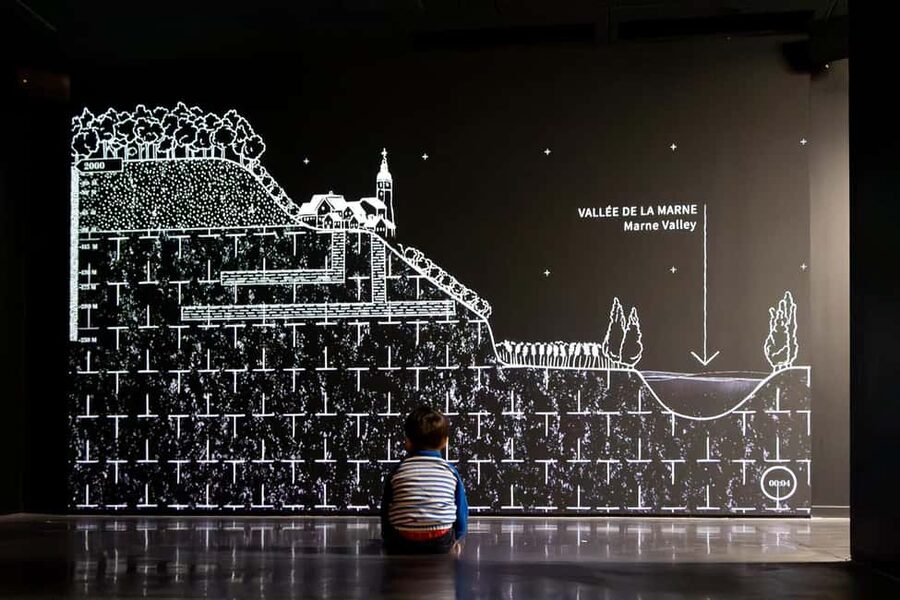
The visit begins with the place itself. Pressoria asks you to look below the vines, not just across them. The sub-soil, hillside, and growing conditions are part of the story, helping explain why Champagne is tied so closely to its region.
This is a useful beginning because it puts the bottle in context. A bottle of Champagne is not only the result of work in a winery. It begins with a particular patch of ground, a particular climate, and grapes picked at the right moment.
You then move into the vineyard side of production. The displays cover how grapes are picked and pressed, giving you a clearer sense of the care required before fermentation begins. The subject can sound simple, but timing and handling affect the juice that eventually becomes wine.
A walk or pause among the surrounding vineyards adds something that an indoor exhibition cannot. The area is peaceful and green, and the views help connect the museum’s information with the real vines outside. If the weather is pleasant, give yourself time here instead of rushing directly from the exhibits to the tasting.
Following the grapes through fermentation and aging
The central part of the visit traces the transformation from grape juice to Champagne. You learn about fermentation, aging, and bottling in a logical sequence, so each stage answers the question raised by the one before it.
Fermentation is where the drink begins to gain its character. Aging then adds another layer, and the bottle becomes more than a container. It becomes part of the process. Pressoria presents these stages in a way that helps you understand why Champagne has more complexity than simple fruitiness and fizz.
The museum also explains how the layers of flavor are built. That is one of the most useful parts for a first-time Champagne visitor. Instead of being told to search for certain flavors without context, you can connect what you taste with how the wine was made.
This is not a technical winemaking course, and you should not expect a professional certification or a private expert lesson. Still, the information goes well beyond a quick introduction. One visitor described learning more here than at many large Champagne house cellar tours, which makes sense if you prefer process and clarity over grand branding.
Interactive rooms that work for children and adults
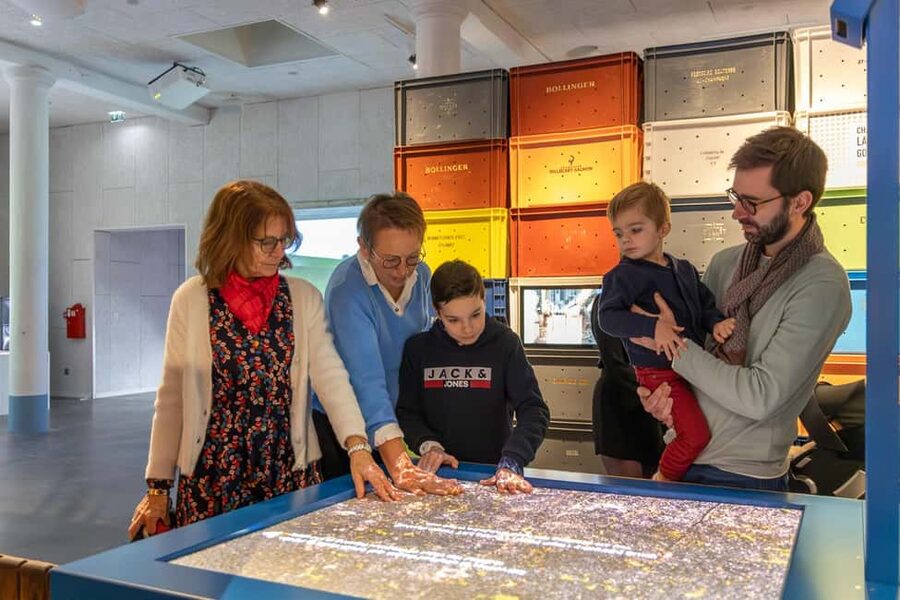
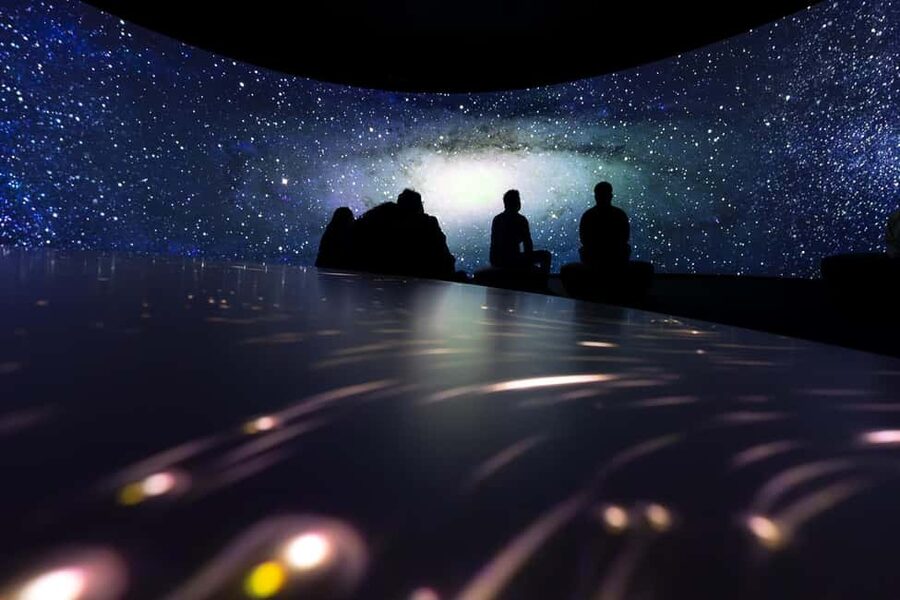
Pressoria uses technology and hands-on exhibits to explain the subject. The experience engages all five senses, so you are not simply reading wall panels from one room to the next.
That approach is especially helpful for families. Children can interact with the displays while adults absorb the wine information at a more useful level. The museum has been described as engaging for both age groups, and that balance is one of its strongest qualities.
I would still set expectations correctly. Family-friendly does not mean a playground. The subject remains Champagne, and some sections require attention if you want to understand the production details. Children who enjoy buttons, movement, and sensory activities should have more to do here than in a traditional wine museum.
For adults, the technology keeps the visit from becoming dry. The displays turn abstract ideas into things you can see and experience. You may find that you remember the stages more easily because you encountered them through several senses rather than through text alone.
Same town, a different glass:
- Loire Valley Castles Day Trip from Paris with Complementary Wine
★ 4.5 · 3,907 reviews - Bordeaux: Cité du Vin Entry Ticket and Wine Tasting
★ 4.6 · 3,885 reviews - Bordeaux: River Garonne Cruise with Glass of Wine and Canelé
★ 4.5 · 3,630 reviews - Normandy D-Day Small-Group Day Trip with Omaha Beach, Cemetery & Cider Tasting
★ 5.0 · 2,786 reviews
The tasting: two Champagnes with a view
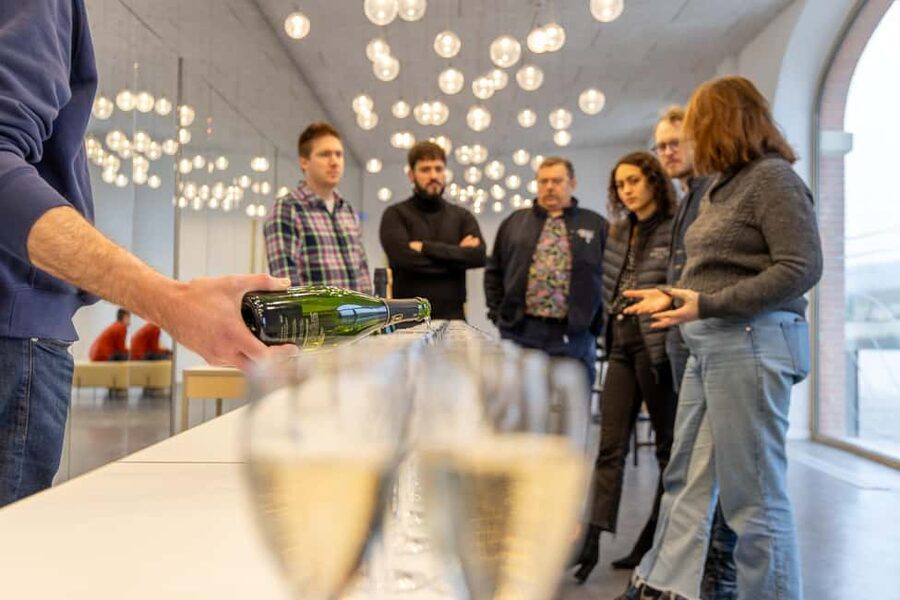
The tasting comes at the end, after you have learned how Champagne is made. That order is important. You can approach the two local Champagnes with a better sense of what to notice, including aroma, texture, bubbles, and the balance of flavors.
The tasting is not presented as a large meal, and food is not included. Think of it as a focused conclusion to the museum visit, not a substitute for lunch. If you need a full meal, plan that separately.
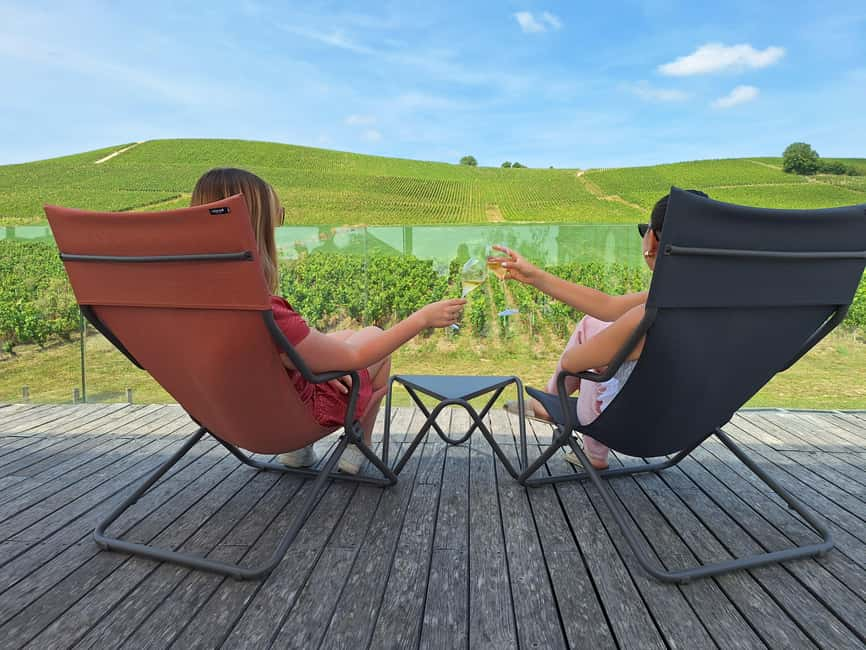
A balcony or terrace overlooking the vineyards can make this the most pleasant part of the experience. You have the landscape in front of you and the finished drink in your glass, which brings the entire soil-to-bottle story together.
The two pours also offer more room for comparison than a single sample. You can consider how one Champagne differs from the other and practice describing what you notice. You do not need polished wine vocabulary. Start with simple questions: Is it light or full? Sharp or soft? Fruit-forward or more complex?
The light effervescence is part of the appeal, but try not to focus only on the bubbles. The museum has prepared you to notice the wine beneath them. That is where the tasting earns its place in the visit.
How much time should you allow?
The ticket is valid for one day, and availability includes different starting times. The information provided does not set a fixed visit length, which suits the self-guided format. You can move more quickly through familiar subjects or spend longer with the displays that interest you.
I would avoid treating Pressoria as a quick stop between major Champagne houses. The exhibits cover several stages of production, and the vineyard setting deserves a little time. If you race through, you will still see the main material, but you may miss the value of the sensory approach.
A half-day plan around the museum and Aÿ-Champagne can work well, especially if you want time for the tasting and a calm look at the vineyards. The activity is listed as valid for one day rather than as a tightly timed tour, so check the available start time before booking and build the rest of your day around it.
There is no guide leading a fixed group through the experience. French and English support is available, and the self-guided format lets you pause when you need to. That is useful if people in your group have different interests or reading speeds.
The practical details that affect your visit
You can park around Boulevard Pierre Cheval, then walk to the Pressoria building, identified as Pressoria, Voyage sensoriel au coeur du Champagne. Parking around the building has been described as plentiful, which makes this a fairly simple stop if you are driving through the region.
Lockers are included, a small but useful detail if you are carrying day bags or coats. The museum is wheelchair accessible. French and English are the stated languages, so confirm your preferred language if that matters for your group.
Food is not included. I would plan a meal separately rather than expecting the Champagne tasting to fill that role. The souvenir shop may also be a modest stop rather than a major shopping opportunity, and you should not assume it will function as a full Champagne retail outlet.
The experience is offered by Pressoria, and the listed host or greeter languages are French and English. Since the visit is self-guided, the main benefit of staff support is help with orientation or questions rather than a long personal lecture.
You can cancel up to 24 hours before the activity for a full refund. A reserve-now, pay-later option is also available, which helps if your route through the Grand Est is still shifting.
Is $21 a fair price?
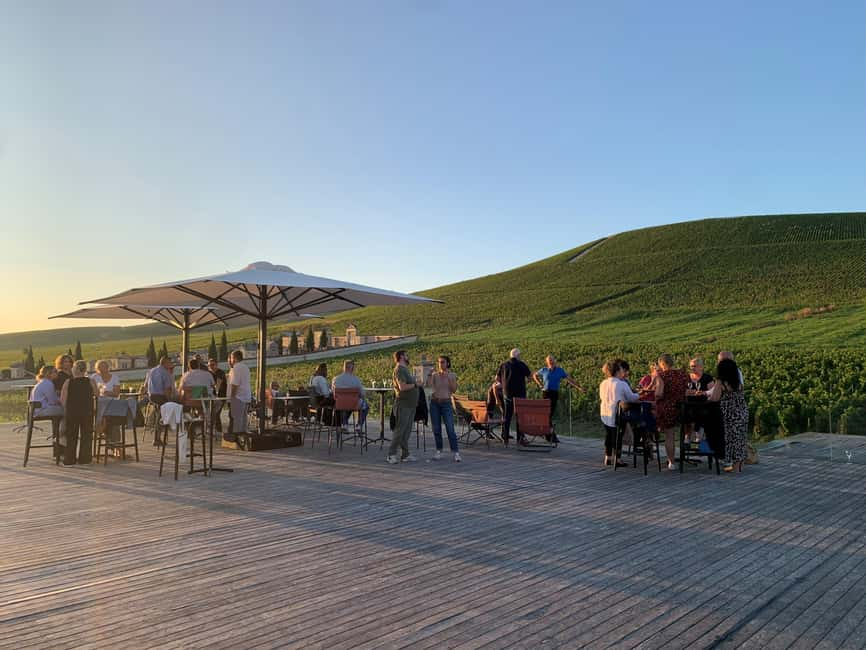
At $21 per person, Pressoria offers more than a tasting alone. Your ticket covers museum entry, the interactive exhibits, lockers, and two Champagne tastings. Compared with paying separately for a short pour at a tasting room, the combination gives you stronger value.
The price is especially reasonable if you want context. A tasting without explanation can be pleasant but brief. Pressoria gives you a full production story first, then lets you apply it to the glasses in front of you.
The value is less obvious if your main goal is to visit a famous Champagne producer, see working cellars, or buy bottles directly from a house. Pressoria is an educational museum, not a prestige-brand cellar tour. It also does not include food or a private guide.
For families, the price can work well because the interactive elements give children a genuine role in the visit. For serious Champagne collectors, the experience may feel introductory in places, though the complete explanation of production can still fill a gap.
Who will enjoy Pressoria most?
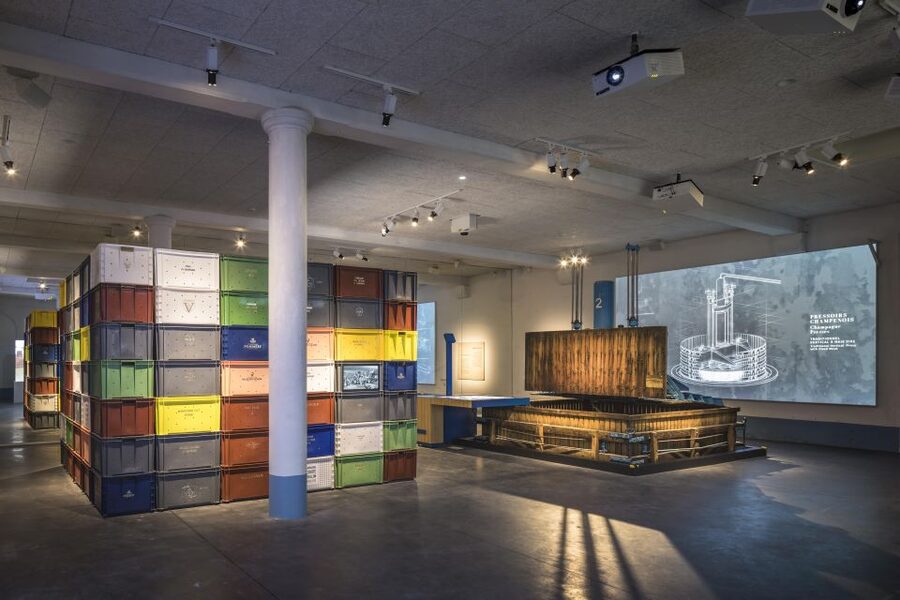
I would recommend Pressoria to first-time Champagne visitors, families, curious wine drinkers, and anyone driving through Aÿ-Champagne who wants more than a quick tasting. It is also a good choice if you prefer independent visits to fixed group tours.
The museum suits you if you like learning through displays, technology, and sensory activities. It also works well for mixed groups, since one person can focus on the science while another enjoys the setting and tasting.
You may want to choose a different experience if you need a private guide, a formal cellar tour, a substantial food pairing, or a well-known producer’s brand story. Pressoria explains the region and method rather than selling a single house’s identity.
The high rating of 4.7 from 239 evaluations reflects the experience’s main strengths: the engaging technology, clear production story, family appeal, and tasting terrace with vineyard views. The praise is most convincing when it concerns those specific features, not because the museum tries to be grand.
Should you book Pressoria?
Book it if you want to understand Champagne before you drink it. The museum gives you the full route from sub-soil to bottle, then finishes with two tastings in a peaceful vineyard setting. It is educational without requiring specialist knowledge and lively enough for children.
Skip it if you are seeking a guided cellar tour, lunch, or a large-scale Champagne house visit. For $21, though, the combination of interactive exhibits, two pours, lockers, and access to the Aÿ-Champagne setting is solid value.
I would make Pressoria a strong choice for a relaxed day in the region, especially when your group includes both Champagne newcomers and people who already know a little about wine.
FAQ
Where is Pressoria located?
Pressoria is in Aÿ-Champagne in France’s Grand Est region. The museum is at Boulevard Pierre Cheval, near the surrounding vineyards.
How do I reach the museum by car?
Park your vehicle on Boulevard Pierre Cheval and walk to the museum, identified as Pressoria, Voyage sensoriel au coeur du Champagne.
What does the ticket include?
The ticket includes museum entry, two Champagne tastings, and access to lockers.
Are food and meals included?
No. Food is not included, so arrange any meal separately.
How many Champagnes will I taste?
The experience includes tastings of two local Champagnes.
Is the museum suitable for children?
Yes. The exhibits are interactive, family-friendly, and designed to engage children as well as adults.
Is the visit guided?
The experience is self-guided. French and English are available, with a host or greeter who speaks French or English.
Is Pressoria wheelchair accessible?
Yes. The museum is wheelchair accessible.
How long is the ticket valid?
The ticket is valid for one day. Starting times depend on availability.
Can I cancel the booking?
Yes. You can cancel up to 24 hours in advance for a full refund. A reserve-now, pay-later option is also available.
More Museums in France
- Bordeaux Wine and Trade Museum Admission Ticket with Wine Tasting
★ 4.5 · 599 reviews - Bordeaux: Wine and Trade Museum Entry Ticket & Wine Tasting
★ 4.4 · 121 reviews - NYC: Empire State Building Tickets – Observatory & Museum
★ 4.7 · 25,757 reviews - Porto: Cálem Cellar Tour, Interactive Museum & Wine Tasting
★ 4.5 · 4,113 reviews
Just added around France
- Saint Emilion Full Day Wine and Bike Tour★ 5.0 · 167 reviews
- Professional – Bordeaux Wine and Cheese Tasting with a walking tour★ 5.0 · 218 reviews
- Bordeaux Wine and Trade Museum Admission Ticket with Wine Tasting★ 4.5 · 599 reviews
- Medoc Afternoon Wine Tour – 2 Wineries, tastings & delicacies★ 4.5 · 74 reviews
- Saint-Emilion Small-Group Electric Bike Wine Tour Tastings & Lunch from Bordeaux★ 5.0 · 383 reviews
- Discovery of the Bordeaux vineyard in 3 wines★ 5.0 · 133 reviews
- Bordeaux Wine Masterclass: Blending workshop with appetizer★ 5.0 · 113 reviews
- Saint-Emilion Winery Morning Tour with Local Guide★ 5.0 · 67 reviews
Champagne Tours, compared.
Paris 3-Courses Gourmet Dinner Seine River Cruise with Champagne
Read our review →
Top Private Cruises in Paris with French Champagne and surprises
Read our review →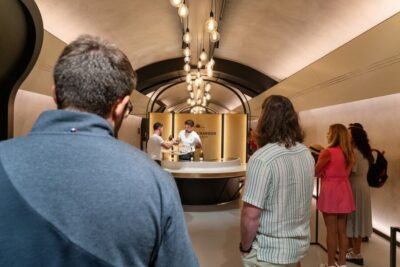
Day Trip to Champagne with 8 Tastings & Lunch
Read our review →

First Show Moulin Rouge with Champagne & Seine Cruise
Read our review →

Private Boat Ride in Miami with Experienced Captain and Champagne
Read our review →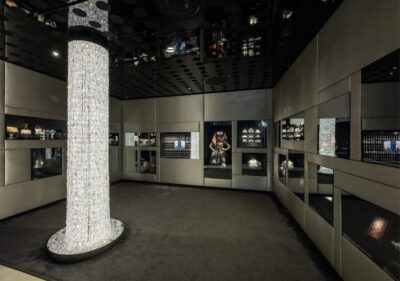
Browse the lists this tour appears in