
Review · PERU
Arequipa Tasting Tour
Arequipa’s best introduction may be a walk that ends with a cold spoonful of queso helado and a pisco tasting. This small-group tour combines the city’s white-stone churches and earthquake-shaped history with a close look at San Camilo Market, where the guide helps you make sense of local fruits, tubers, meats, and everyday food.
I like the market visit and the limited group size of eight. Guides such as José, Daniel, and Jorge have been praised for answering questions, explaining local customs, and adjusting their attention to small groups. The main caution is that the title suggests a food tour, but most of the three-and-a-half hours is a walking tour about architecture and history. The tasting comes near the end.
Key points to know before booking
- The market is the food heart of the walk: San Camilo Market brings local produce, fruit, meats, and tubers into one lively stop.
- Queso helado is part of the payoff: This traditional Arequipa dessert is served along with local fruit and pisco.
- The tour is mostly about central Arequipa: Expect churches, plazas, Jesuit architecture, earthquakes, and the city’s founding story.
- Small groups make a difference: The maximum is eight people, and past guide assignments have included José, Daniel, and Jorge.
- The price is low for a guided introduction: At $13 per person, the tour offers several hours of guiding plus tastings, though lunch and drinks are extra.
- Bring lunch if you choose the afternoon departure: Lunch is not included, and the operator recommends eating beforehand.
What the $13 Arequipa Tasting Tour really offers
At $13, this is an inexpensive way to get your bearings in central Arequipa. You receive about three and a half hours with a guide, a market visit, historical interpretation, local fruits, a traditional dessert, and a pisco tasting.
That is good value if you want context before exploring on your own. A guide can point out why the city looks the way it does, explain how earthquakes changed its buildings, and show you places you might otherwise walk past without noticing.
The price also makes the tour accessible for solo visitors and families. Since the group can have no more than eight people, you are more likely to ask questions and hear the answers than on a large city walk.
There is one important distinction. This is not a continuous tasting crawl. The food and drink are woven into a broader city tour, and the pisco tasting happens at the end at Centro Artesanal Fundo el Fierro. If your main goal is to eat your way through Arequipa, you may find the sightseeing portion longer than expected.
A few more tastings around the world worth a look
- Budapest: Unlimited Prosecco, Beer and Aperol Spritz Cruise
★ 4.8 · 37,304 reviews - Amsterdam: Evening Cruise with Optional Wine and Snacks
★ 4.4 · 22,178 reviews - Tuscany Day Trip from Florence: Siena, San Gimignano, Pisa and Lunch at a Winery
★ 5.0 · 21,634 reviews
Starting in Campo Redondo, where Arequipa’s story begins
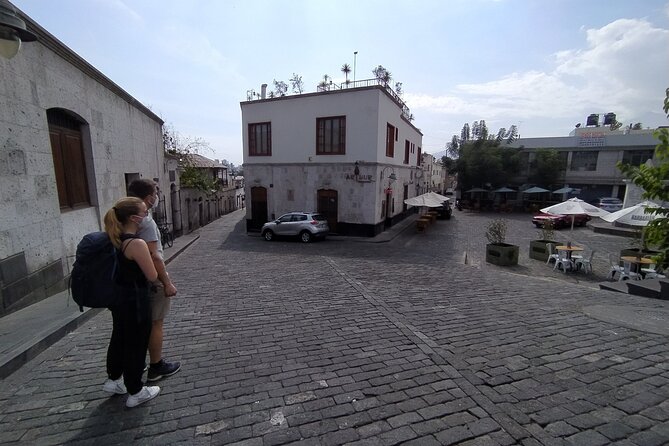
The walk begins at Plaza de Armas, but the first stop is Plaza Campo Redondo, about ten minutes away in the itinerary. This traditional neighborhood is linked with the first Spanish conquerors who settled in the area.
The stop is brief, yet it gives the tour a useful starting point. You are not simply looking at attractive buildings. You are hearing how the city developed from an early settlement into the Arequipa you see today.
I like this opening because it places the later churches and plazas in a larger sequence. The guide can connect the city’s earliest colonial development with the streets you will walk through afterward.
Do not expect a long visit here. Ten minutes is enough for an introduction and a few observations, not a full neighborhood tour.
San Francisco Plaza and the route past Santa Catalina
The walk continues toward San Francisco Plaza, passing the Santa Catalina Convent and the street that shares its name. Even when the convent itself is not the focus of this tour, seeing its setting helps you understand the concentration of religious buildings in central Arequipa.
At San Francisco Plaza, you see the Church and Monastery of San Francisco, along with the Fundo el Fierro artisan center. The church gives the stop its main architectural interest, while Fundo el Fierro introduces the handmade goods and craft side of the city.
This section is useful for orientation. It shows you how close many important places are to one another, making it easier to return later for a longer visit. The tour does not include entrance tickets, so you should not assume that this outing covers admission to the interiors of attractions along the way.
The guide has about twenty minutes here. That is enough for an outside explanation and a look at the surrounding area. If you want a thorough visit to Santa Catalina or the San Francisco complex, plan a separate visit.
Plaza de Armas, the city’s main classroom
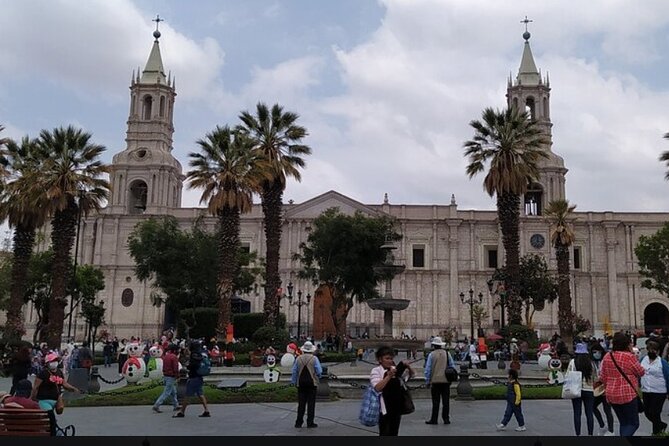
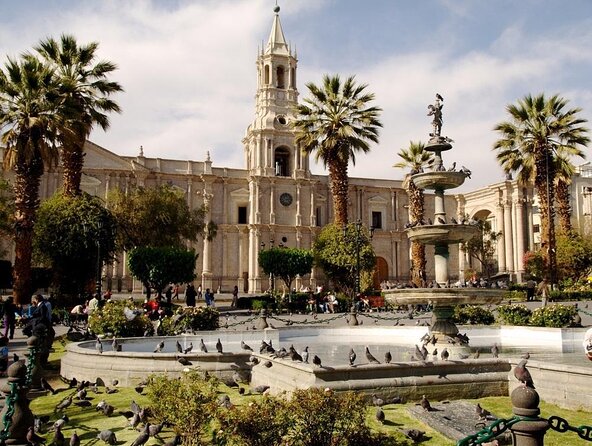
Back at Plaza de Armas, the guide spends about twenty-five minutes discussing Arequipa’s founding, its changes over time, and the effects of repeated earthquakes. The Cathedral is part of this explanation, along with other details connected to the square.
This is likely to be one of the most useful stops for a first day in Arequipa. The Plaza de Armas is the city’s obvious center, but a guide gives you a framework for reading it. You learn why the buildings have been repaired and altered, and how natural disasters shaped the city’s appearance.
I especially like this part for visitors who have already walked through the square but felt they had missed the point. A good guide can turn a quick photo stop into a lesson about the city’s construction, destruction, and rebuilding.
Guides José and Daniel have been singled out for giving clear explanations and answering a steady stream of questions. Jorge has also been praised for making the tour friendly and showing the key places in the center. The exact guide depends on the day, but the experience benefits from that personal, question-friendly format.
Same town, a different glass:
- From Porto: Douro Valley w/ Boat Tour, Wine Tasting & Lunch
★ 4.7 · 19,061 reviews - Paris: Moulin Rouge Cabaret Show Ticket with Champagne
★ 4.7 · 16,088 reviews - Chichen Itza, Cenote & Valladolid Tour with Tequila and Lunch
★ 4.5 · 15,789 reviews - Complete Douro Valley Wine Tour with Lunch, Wine Tastings and River Cruise
★ 5.0 · 12,920 reviews
The Jesuit Church and its gold-covered altars
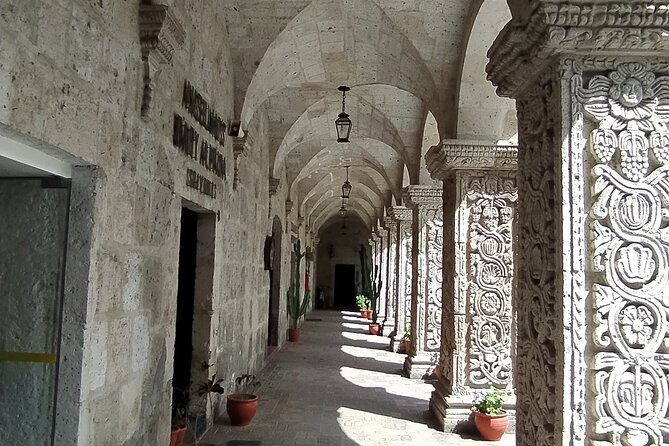
The next stop is the Church of the Company of Jesus, located beside Plaza de Armas. Its baroque facade is the first detail to look for. Inside, the sober layout contrasts with altars covered in gold leaf.
The visit is scheduled for about ten minutes, so treat it as an introduction rather than a complete church study. You will have time to notice the facade, hear about the Jesuit complex, and understand why this church matters in Arequipa’s religious architecture.
This short stop also shows the tour’s balance. The experience is not only about food, and it is not only about grand monuments. You move between architecture, religious history, local commerce, and regional ingredients.
Admission tickets are not included. The listed stops themselves are described as free, but any separate attraction admission or personal purchase remains your responsibility.
San Camilo Market, the most rewarding food stop
The thirty-minute visit to San Camilo Market is where the tour’s tasting theme becomes most direct. This is one of Peru’s varied markets, with produce from the region, tubers, meats, fruits, and other everyday ingredients.
A market can be hard to understand without help. You may recognize bananas or potatoes, but not know which varieties matter locally or how the products fit into Arequipa’s cooking. A guide can take you beyond the obvious stalls and explain what you are seeing.
The experience includes local fruit sampling, and the market has been a highlight for many people who want a more direct look at daily food culture. This is not a polished cooking demonstration. It is a working market, so expect a practical setting rather than a staged tasting room.
That is part of its value. You see the ingredients before you taste the finished products, and the connection between the market and Arequipa’s food traditions becomes clearer.
The market visit also gives you ideas for later meals and snacks. The guide can point out products worth recognizing when you return alone. Since the tour does not include lunch, do not count the market samples as a full meal.
The Jesuit cloisters and the final pisco tasting
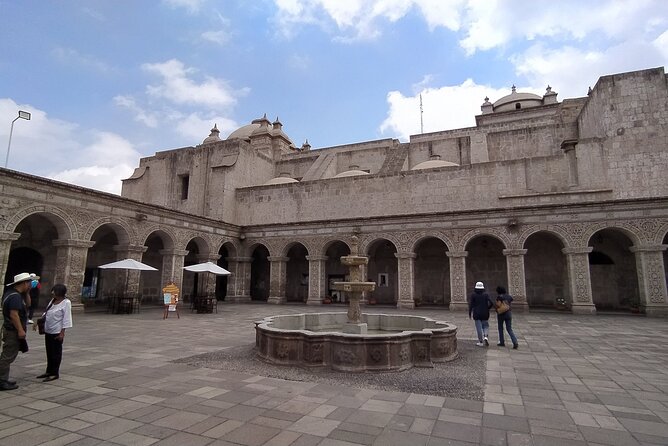
The itinerary allows about forty minutes at the Cloisters of the Company, formerly used by the Jesuit school and convent. The complex is described as one of the finest examples of viceregal religious architecture in Arequipa.
This is the longest architectural stop, and it helps explain why the tour is more than a food outing. Arched walkways, courtyards, and old religious buildings give you a chance to see the city’s colonial style at a slower pace.
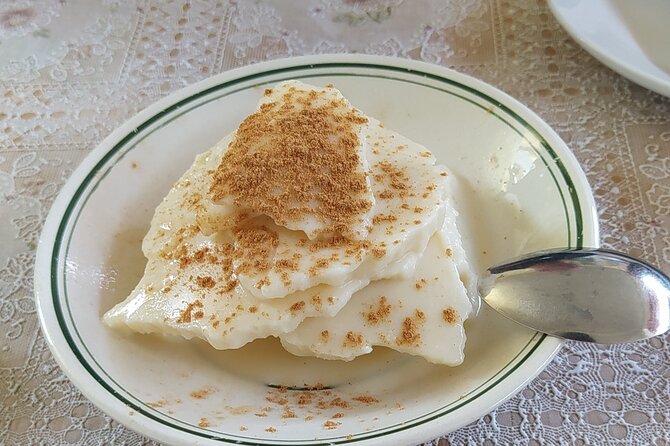
The tour finishes at Centro Artesanal Fundo el Fierro, where the pisco tasting takes place. You also receive a traditional dessert, local fruit, and pisco as part of the experience. Queso helado, Arequipa’s famous frozen dessert, is one of the treats repeatedly singled out as a highlight.
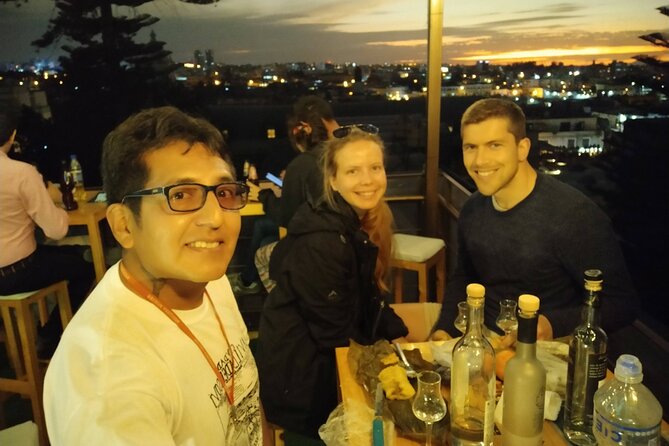
The pisco portion is not just a quick sip. The guides have explained what pisco is, how it is made, and how it fits into local drinking culture. One especially useful detail is that the tasting may take place in a quieter upstairs area, giving the last part of the tour a calmer setting after the streets and market.
In one case, a venue was closed and the tasting was rearranged for the following day. That suggests some flexibility, but you should still treat the scheduled tasting location and timing as subject to change.
Why the small group matters
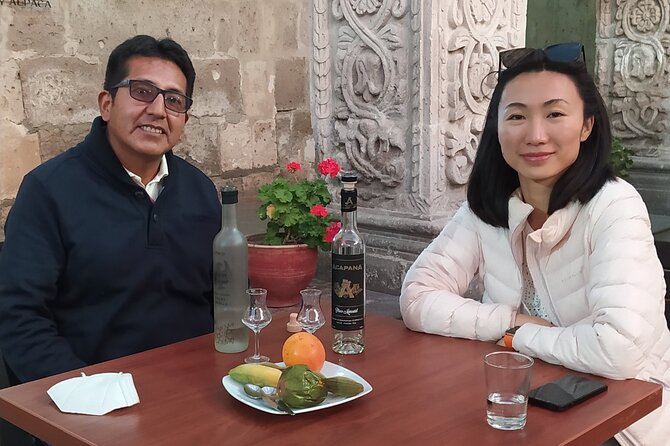
The maximum group size is eight. That is a real benefit on a walking tour through central Arequipa, where questions often arise about a facade, a food, or a religious custom.
A small group also lets the guide spend time with individual interests. If you want more information about architecture, you can ask. If the market catches your attention, you can ask about fruits or ingredients. Guides José and Daniel have been praised for their patience and willingness to answer many questions.
The format suits solo visitors particularly well. It is easy to feel lost in a new city when you are walking alone, and this tour provides a useful route through the center without the cost of a private guide.
Families can also benefit, although the amount of walking and the history-focused sections may test younger children’s patience. A moderate level of physical fitness is recommended. The tour is near public transportation, and service animals are allowed.
How long the walk feels in practice
The advertised duration is about three hours and thirty minutes. The scheduled stops add up to less than that, so the remaining time covers walking between locations, explanations along the route, and the tasting.
The pace is not described as strenuous, but you should expect to be on your feet for most of the tour. Comfortable shoes make sense. You may also want to carry water because bottled water is not included.
The tour ends at Fundo el Fierro on Calle Zela, not back at Plaza de Armas. That is convenient if you want to continue shopping or exploring the artisan center, but you should plan your next activity from the San Francisco area.
Timing matters most for afternoon bookings. Lunch is not included, and the operator recommends eating before you go. Market samples and dessert are enjoyable, but they are not a substitute for a proper meal.
What is included, and what will cost extra
The included items are:
- Pisco tasting
- Traditional dessert
- Local fruits
- Guided walking tour through central Arequipa
You pay separately for bottled water, soda, lunch, and any entrance tickets. The stated stops are free of admission, but the experience is not designed to cover every interior attraction in the historic center.
At $13, the included tasting and guide time give this tour a strong value rating. You are paying less for a focused food class and more for a guided introduction to the city with several edible stops.
If you already know Arequipa well, the historical sections may feel repetitive. If you are new to the city, the price is hard to fault, especially if you use the walk to decide which churches, markets, and artisan areas deserve a return visit.
The main drawback: the tasting comes late
The biggest thing to understand is the balance between food and sightseeing. The name points toward a tasting tour, but the schedule is mostly plazas, churches, cloisters, and explanations about Arequipa’s past.
The market visit lasts about thirty minutes, and the pisco and dessert come at the end. One person who wanted a shorter outing found the tour too long and felt the title created the wrong expectation.
I would not treat that as a reason to avoid the experience. I would treat it as a reason to book it for the right purpose. Choose it if you want a history walk with food as a satisfying finish. Skip it if you want several hours of continuous eating and drinking.
Who should book this Arequipa walk
I would recommend it to:
- First-time visitors who want a clear introduction to central Arequipa
- Solo visitors looking for a small, social walking group
- Families who enjoy markets, food, and short historical stops
- Visitors interested in pisco and the story behind it
- People who want practical ideas for places to revisit independently
- Anyone seeking a low-cost orientation before longer sightseeing
It is less suitable if you have limited walking ability, need a full meal during the tour, or want a dedicated culinary class. The experience requires moderate physical fitness and includes no lunch.
The tour can also be useful for people who have already walked through the center without understanding its buildings. A guide can fill in the missing connections between the Plaza de Armas, the Jesuit complex, San Francisco, Santa Catalina, and San Camilo Market.
Booking, cancellation, and practical details
Confirmation is provided when you book. The meeting point is Plaza de Armas, Arequipa 04001, and the tour finishes at Centro Artesanal Fundo el Fierro on Calle Zela 202.
You can cancel up to twenty-four hours before the start time for a full refund. Changes or cancellations made less than twenty-four hours before the start are not accepted for a refund. The tour requires good weather, and if poor weather causes cancellation, you will be offered another date or a full refund.
Because the tour is often booked around thirteen days ahead, booking early is sensible if your schedule is tight. The small maximum group size may also make popular dates fill sooner.
Should you book the Arequipa Tasting Tour?
Book it if you want an affordable first look at Arequipa that joins city history with a real market visit and a final pisco lesson. The strongest parts are the personal guiding, San Camilo Market, queso helado, and the chance to ask questions in a group of no more than eight.
Do not book it expecting a full meal tour. The main body is a walking tour of Arequipa’s plazas, churches, and Jesuit buildings, and the tasting arrives near the end.
For $13, I see this as a very good orientation tour, especially on your first day in the city. Eat beforehand, bring water, wear comfortable shoes, and think of the pisco and dessert as the reward at the end of a useful historical walk.
FAQ
How much does the Arequipa Tasting Tour cost?
The tour costs $13 per person.
How long does the tour last?
The experience lasts approximately three hours and thirty minutes.
Where does the tour begin?
The tour begins at Plaza de Armas in Arequipa, Peru.
Where does the tour end?
It ends at Centro Artesanal Fundo el Fierro, located at Calle Zela 202 in Arequipa. The pisco tasting takes place there.
What food and drink are included?
The tour includes a pisco tasting, a traditional dessert, and local fruits.
Is lunch included?
No. Lunch is not included, and people taking the tour in the afternoon are advised to eat beforehand.
Are bottled water and soda included?
No. Bottled water and soda are not included.
How large is the group?
The tour has a maximum of eight participants.
Can I cancel for a full refund?
Yes. You can cancel at least twenty-four hours before the start time for a full refund. Cancellations made less than twenty-four hours before the start are not refunded.
Just added around the world
- Catamaran Sunset Champagne Cruise Cape Town★ 4.5 · 85 reviews
- Luxury Sunset Cruise with Prosecco★ 4.5 · 71 reviews
- Private Tour of Top 5 Stellenbosch Wineries From Cape Town★ 4.0 · 56 reviews
- Private Stellenbosch, Franschhoek Paarl Wine Tour from Cape Town★ 5.0 · 89 reviews
- Full-Day Stellenbosch, Franschhoek and Paarl Wine Tasting Tour from Cape Town★ 4.0 · 98 reviews
- From CapeTown: Stellenbosch Half Day Wine Tour★ 4.5 · 287 reviews
- Private Full Day Stellenbosch Wine Tour with Pick Up and Drop Off★ 5.0 · 425 reviews
- Full Day Small Group Wine Tour Cape Town and Stellenbosch★ 5.0 · 79 reviews
Drinks Tours, compared.

Unlimited Prosecco, Beer and Aperol Spritz Cruise
Read our review →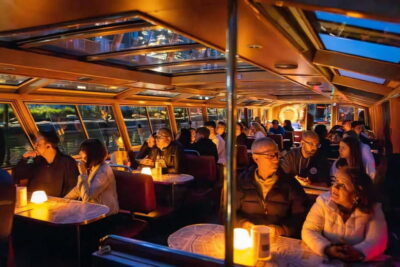
Evening Cruise with Optional Wine and Snacks
Read our review →
Douro Valley w/ Boat Tour, Wine Tasting & Lunch
Read our review →
Chichen Itza, Cenote & Valladolid Tour with Tequila and Lunch
Read our review →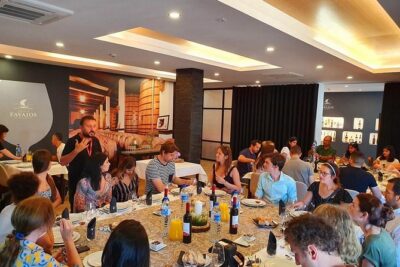
Complete Douro Valley Wine Tour with Lunch, Wine Tastings and River Cruise
Read our review →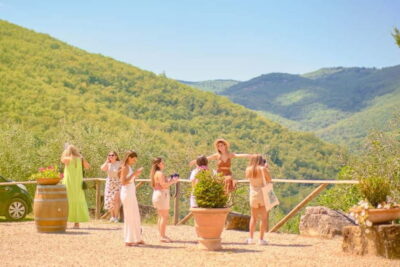
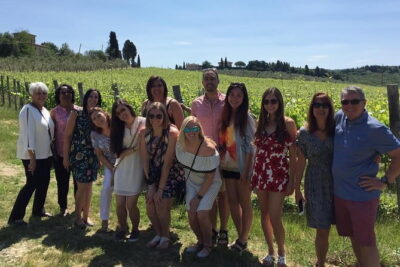
Small-Group Wine Tasting Experience in the Tuscan Countryside
Read our review →
Douro Valley with Winery Lunch, Tastings & Cruise
Read our review →Browse the lists this tour appears in