
Review · FRANCE
Alsace: Full-Day Wine Tour & Tastings from Strasbourg
Alsace wine country gives you two good reasons to leave Strasbourg for a day: serious white wine and postcard-pretty medieval villages. This small-group tour links both, taking you through Mittelbergheim, Dambach-la-Ville, Ribeauvillé, and Riquewihr while local producers pour Pinot Blanc, Sylvaner, Riesling, Pinot Gris, Muscat, and Gewürztraminer.
I like the personal scale, with no more than eight people, and the chance to meet winegrowers rather than simply shop at a large tasting room. I also like the range: you get vineyards, village streets, wine education, and plenty of time to taste. The main drawback is value. At $253 per person, the day is not cheap, especially since lunch and any monument visits cost extra.
Key points to know before booking
- Three winery visits give you a broad look at Alsace wines, with tastings often reaching a dozen or more pours across the day.
- Mittelbergheim and Dambach-la-Ville introduce you to Grand Cru country before the tour reaches the famous villages farther south.
- Ribeauvillé or Riquewihr provides free time for lunch and a walk through a beautifully preserved medieval setting.
- Small groups of up to eight make it easier to ask questions and keep the day relaxed.
- English-speaking guides such as Jerome, Laurence, Pauline, Florence, and others bring wine, local history, and village knowledge together.
- Bring food in mind, since snacks are generally not served with the tastings in order to keep the wine flavors clear.
Why this Alsace wine day works so well
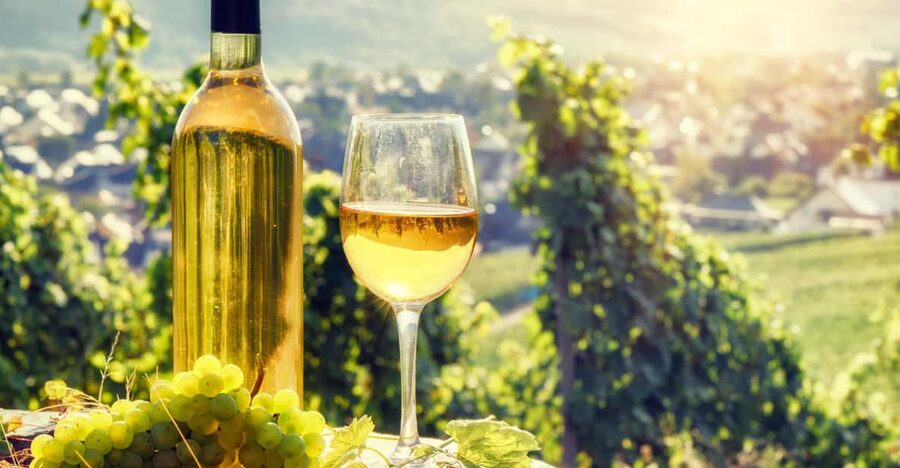
This is not only a tasting tour. It is a day of moving through the Alsace wine route, where the vineyards sit between the Vosges foothills and a string of old villages. The route gives you a useful sense of place. You see where the grapes grow, then taste the results at small wineries.
The tour also avoids making the day all about one famous town. Mittelbergheim and Dambach-la-Ville offer a quieter introduction, while Ribeauvillé and Riquewihr bring the architectural drama later. That progression helps you understand that Alsace wine country is more than a single photogenic stop.
The experience is operated in English, and the guide drives the minivan while providing live commentary. That matters here because the villages and wineries are spread out. You can look out the window, ask questions, and enjoy the wine without worrying about driving afterward.
A few more tastings around France worth a look
- From Paris: Reims and Champagne Tasting Full-Day Tour
★ 4.8 · 610 reviews - Small-Group Full-Day Tour of Côte de Nuits, Côte de Beaune Vineyards and Beaune Historical District
★ 5.0 · 364 reviews - Bordeaux Full Day Wine Tour – 3 Wineries & Gourmet Picnic Lunch
★ 5.0 · 307 reviews
Leaving Strasbourg for Mittelbergheim
The meeting point is at 17 Place de la Cathédrale, a central spot in Strasbourg. From there, you spend about an hour in the minivan before reaching the Mittelbergheim wine-producing area.
Mittelbergheim is home to the Zotzenberg, Kastelberg, and Wiebelsberg Grand Crus. The local soils are especially suited to Riesling, so this first stop gives the day a clear focus. You are not tasting random bottles from across France. You are tasting wines tied to a particular corner of Alsace.
The first session lasts about an hour. Expect a selection that includes Pinot Blanc, Sylvaner, and Riesling. This is a useful opening flight because the wines can show how different Alsace white grapes behave. Pinot Blanc is often an easy starting point, Sylvaner brings a more distinct regional identity, and Riesling is the grape that receives the most attention in this part of the route.
Some guides bring formal wine training to the conversation. Jerome has worked as a sommelier, while Laurence has also been praised for combining wine instruction with local family stories. Your guide will vary, but the format allows time for questions rather than rushing you through a counter.
Dambach-la-Ville and the Frankstein Grand Cru
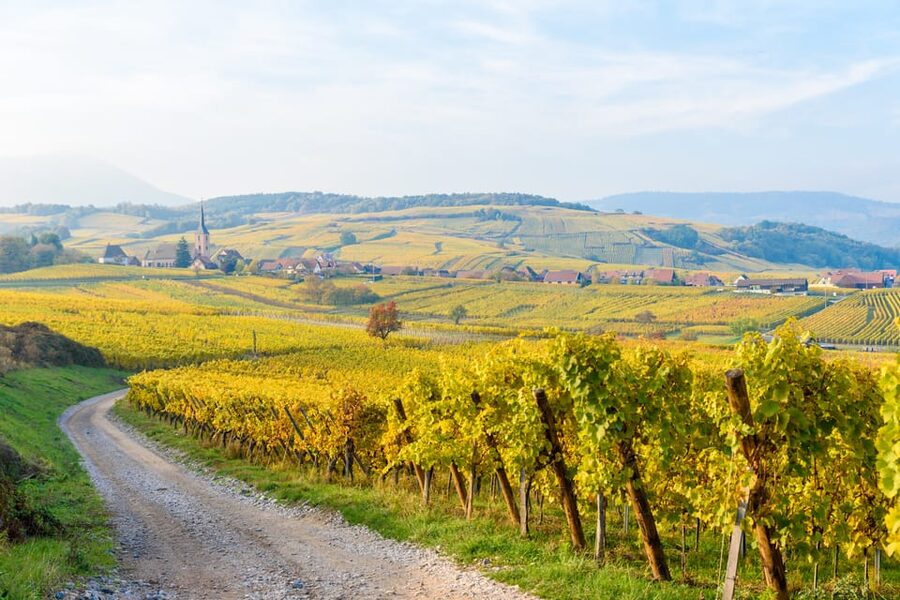
A short drive of about 15 minutes takes you to the Dambach-la-Ville area. The village sits in the heart of Alsace wine country and is associated with the Frankstein Grand Cru.
The second tasting lasts roughly 45 minutes. It is shorter than the first, but it adds another local perspective and keeps the day moving. You might compare the same grape varieties across producers, or encounter wines that show a different balance of fruit, acidity, sweetness, or aroma.
This is where the small group helps. In a group of eight or fewer, you can ask what makes one producer different from another. You also have a better chance of hearing the story behind the bottle, especially when the tasting is hosted by a family or winemaker.
The tradeoff is that three winery visits cannot provide a complete education in Alsace wine. You will sample a useful range, but this is a regional introduction rather than a professional wine course. If you already know the vineyards well, you may want more time at each producer.
Lunch and a medieval village walk
After the morning tastings, you get free time for lunch and a walk in a traditional village. The exact rhythm matters because this is the only clear break between the wine sessions, and lunch is not included.
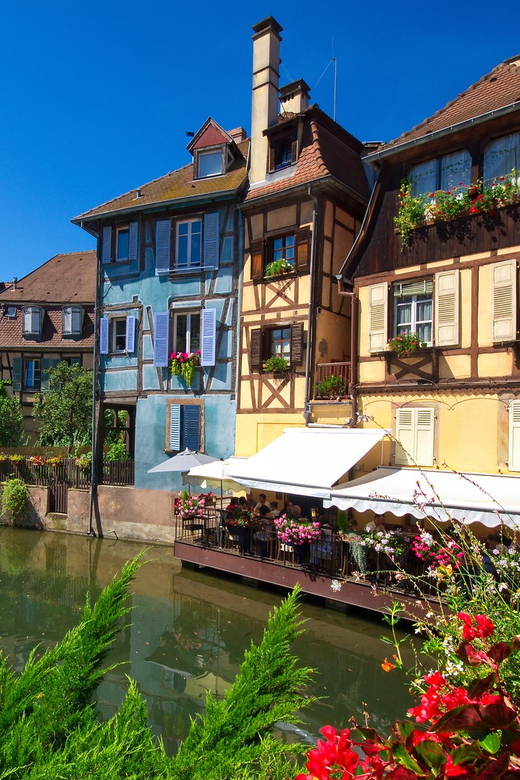
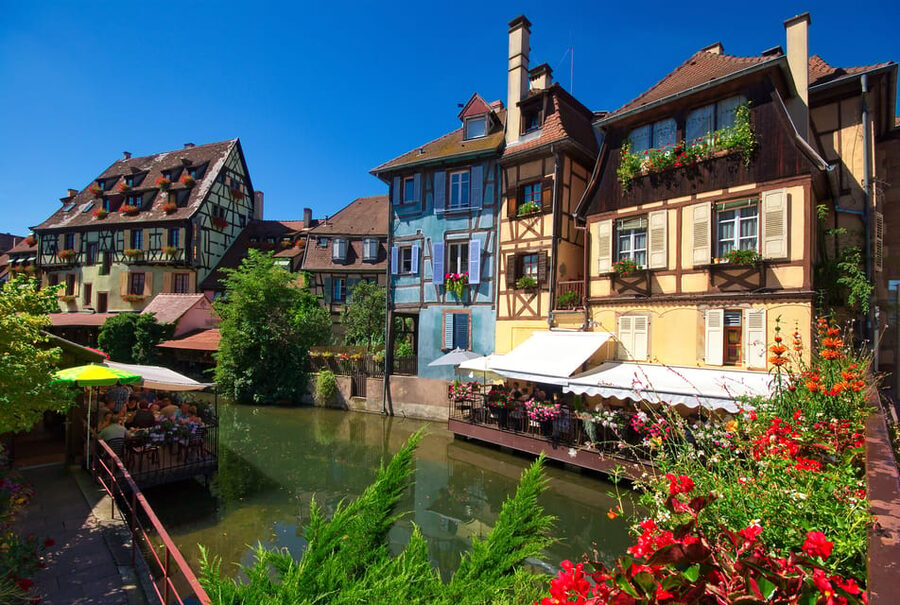
Ribeauvillé is one possible stop, and it offers a handsome setting for a midday pause. Riquewihr is another highlight, with narrow streets and old buildings that make the village feel carefully preserved. The tour includes the Ribeauvillé and Riquewihr wine area, but the exact village arrangements can vary.
Allow enough time to eat properly. The operator notes that snacks are usually not supplied during wine tastings, partly to avoid changing the flavor of the wine. A solid breakfast is wise, and lunch should be more than a quick pastry if you plan to appreciate the afternoon pours.
You may receive restaurant suggestions from the guide. Laurence, for example, has recommended Au Passage de la Tour in Ribeauvillé, where a group enjoyed an Alsatian setting and a full lunch. That restaurant is not part of the tour, so treat such suggestions as optional advice rather than an included feature.
The free hour is also your chance to walk without a guide speaking constantly. You can look at the half-timbered buildings, browse small shops, and take photographs. Just watch the clock. The afternoon tastings are part of the main value of the tour, and you do not want to turn lunch into a missed appointment.
Same town, a different glass:
- Paris: Moulin Rouge Cabaret Show Ticket with Champagne
★ 4.7 · 16,088 reviews - Loire Valley Castles Day Trip from Paris with Complementary Wine
★ 4.5 · 3,907 reviews - Bordeaux: Cité du Vin Entry Ticket and Wine Tasting
★ 4.6 · 3,885 reviews - Bordeaux: River Garonne Cruise with Glass of Wine and Canelé
★ 4.5 · 3,630 reviews
Afternoon wines around Ribeauvillé and Riquewihr
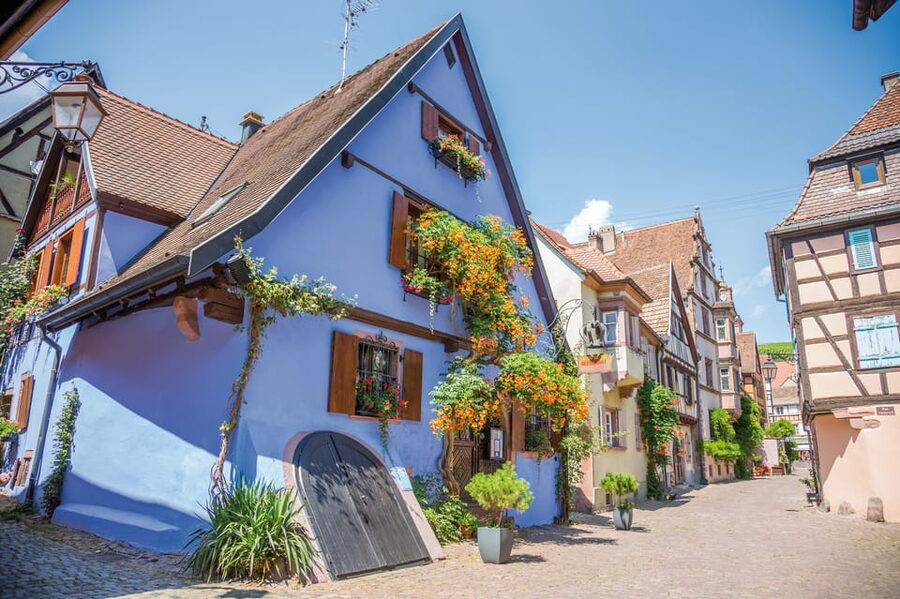
After lunch, the minivan continues for about 20 minutes to the Ribeauvillé and Riquewihr wine area. This region is associated with five Grand Crus: Geisberg, Kirchberg, Osterberg, Schoenenbourg, and Sporen.
Riesling is the leading grape here, but the local selection also includes Pinot Gris, Muscat, and Gewürztraminer. This gives the afternoon a wider flavor range than the opening tasting. You may encounter dry, aromatic, fuller-bodied, and sweeter styles, depending on the producer and the bottles selected.
The first afternoon tasting lasts about 45 minutes. Then the route includes a longer drive of roughly 45 minutes back toward Strasbourg, with arrival at Place de la Cathédrale.
There are two afternoon tasting sessions in the overall experience, though the precise order and timing can shift. Past groups have reported tasting around 12 to 16 wines over the day, and one group tasted 20 to 22. That is a substantial amount, so pace yourself. You do not need to finish every pour to get value from the session.
The final winery visit completes the contrast between producers. You might taste in a modest family setting, meet the owners, or learn how the wine is made. The tour is designed around three typical wineries, not grand monuments or luxury estates. That is a plus if you want local contact, but a limitation if you expect polished visitor centers or elaborate cellar tours.
Guides make or break the day
The guide is a major part of this experience. You are spending eight hours in a vehicle and at tasting tables, so a warm, capable guide can turn transfers into useful time rather than dead space.
Jerome has been praised for his wine expertise, local history, clear English, and ability to keep the day on schedule. Laurence has added personal stories about Alsace and has sometimes taken groups along smaller roads instead of relying only on the main highway. Pauline, Florence, Laurent, Maxime, and Camille have also led versions of the day, bringing different strengths in wine, history, or local culture.
You cannot choose a specific guide from the information provided, so do not book solely for one name. Still, the repeated pattern is clear: the best part of the format is the guide’s ability to connect the grapes, villages, and regional culture.
A good guide also helps when the winery staff and guests do not share the same language. The guide can explain the tasting, translate questions, and keep the group together. That support is especially useful for visitors who know little about French wine terms.
Transport, timing, and group size
The tour lasts eight hours and uses a comfortable, fully equipped minivan. The group limit is eight people, and the tour requires at least two adults to operate.
A small vehicle is a practical choice for this route. It allows access to village streets and keeps the group compact at the wineries. You will spend a fair amount of time driving, though. The listed transfers total about three hours, including the initial trip from Strasbourg and the return journey.
One older comment noted that the van could feel tight for passengers in the middle, with limited views through the windows. That is worth keeping in mind if you care strongly about every roadside view. The small group remains a benefit, but the vehicle is transportation first, not a sightseeing coach.
Comfortable walking shoes are important. The tour operates in rain or shine, and you will walk through villages and winery spaces. Wheelchair users cannot be accommodated on this activity. Pets are not allowed, and participants must be at least 18 to take part in the alcohol tastings.
Is $253 a fair price?
At $253, this is a premium day trip. The price includes transportation, an English-speaking driver-guide, and tastings at three wineries. It does not include lunch, entrance fees, personal insurance, or personal purchases.
The value improves if you would otherwise need to arrange a car, designate a driver, find wineries that accept visitors, and navigate between several villages. You are also paying for the guide’s regional explanations and the convenience of sampling wine without driving afterward.
The value is weaker if your main goal is simply to taste a few wines. Three winery visits may feel light for the price, particularly if you compare this with a single local tasting. One person also felt the cost was high for only three winery stops, while others considered the number of wines and personal contact with producers worth it.
I would judge the price by your priorities. For a first visit to Alsace, the combination of transport, wine, villages, and guidance makes more sense. For a serious wine collector who wants long cellar visits or rare bottles, a private custom tour might fit better, though that would not necessarily cost less.
What to bring and how to prepare
Bring a passport or identity card, comfortable shoes, and a good appetite. Eat breakfast before pickup, since tasting rooms generally do not provide snacks.
You can buy bottles directly from the wineries if you find something you like. That can be useful because you are purchasing from the producer rather than ordering a restaurant bottle, but remember that you must carry your purchases for the rest of the day and transport them home legally.
The tour runs in all weather, so check the forecast and dress sensibly. The villages are enjoyable in winter as well as warmer months, but cold weather makes the outdoor walking portions less forgiving. During the Christmas period, the return point is just outside Strasbourg’s Grande-Île district, with the exact address arranged with the guide.
Free cancellation is available up to 24 hours before departure, and you can reserve without paying immediately. The operator may cancel and refund the activity if the minimum of two adult passengers is not met.
Who should book this wine tour?
I would choose this tour if you are staying in Strasbourg and want a practical, full-day introduction to Alsace beyond the city center. It suits couples, friends, and small groups who enjoy wine but do not need to identify every grape blindfolded.
It is also a good fit if you want a guide to handle transport and explain the region. The small group creates a social but manageable setting, and the free village time keeps the day from feeling like one long tasting room visit.
You should think twice if you want a leisurely lunch, extensive museum time, or a wheelchair-accessible route. You should also compare prices if you are mainly interested in visiting one famous village. The strongest reason to book is the complete mix of three producers, several Grand Cru areas, and Ribeauvillé or Riquewihr in one organized day.
FAQ
Where does the tour start?
The meeting point is 17 Place de la Cathédrale in Strasbourg.
How long does the activity last?
The full experience lasts eight hours, including transportation, tastings, village time, and the return to Strasbourg.
How many people can join the group?
The tour is limited to a maximum of eight participants and requires at least two adult passengers to operate.
Which wines will I taste?
The tastings can include Pinot Blanc, Sylvaner, Riesling, Pinot Gris, Muscat, and Gewürztraminer. The exact wines depend on the wineries visited.
How many wineries are included?
The activity includes tastings at three typical local wineries.
Is lunch included?
No. Lunch is not included, and you receive free time to arrange and pay for your own meal in a traditional village.
Is the tour conducted in English?
Yes. The driver-guide provides live commentary in English, and the activity operates in English only.
Can children join the tour?
Participants must be at least 18 years old because the activity includes alcohol tastings.
What happens if the weather is bad?
The tour operates rain or shine. Comfortable walking shoes are recommended, and you should bring a passport or identity card.
Just added around France
- Saint Emilion Full Day Wine and Bike Tour★ 5.0 · 167 reviews
- Professional – Bordeaux Wine and Cheese Tasting with a walking tour★ 5.0 · 218 reviews
- Bordeaux Wine and Trade Museum Admission Ticket with Wine Tasting★ 4.5 · 599 reviews
- Medoc Afternoon Wine Tour – 2 Wineries, tastings & delicacies★ 4.5 · 74 reviews
- Bordeaux Wine Masterclass: Blending workshop with appetizer★ 5.0 · 113 reviews
- Saint-Emilion Small-Group Electric Bike Wine Tour Tastings & Lunch from Bordeaux★ 5.0 · 383 reviews
- Discovery of the Bordeaux vineyard in 3 wines★ 5.0 · 133 reviews
- Saint-Emilion Winery Morning Tour with Local Guide★ 5.0 · 67 reviews
Drinks Tours, compared.
Unlimited Prosecco, Beer and Aperol Spritz Cruise
Read our review →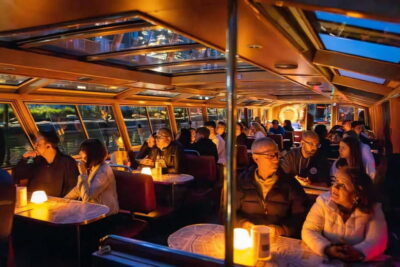
Evening Cruise with Optional Wine and Snacks
Read our review →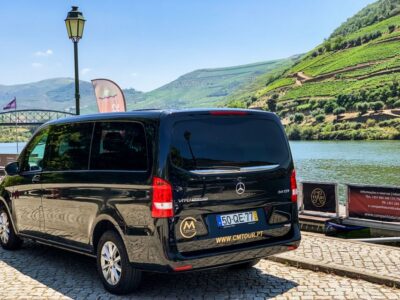
Douro Valley w/ Boat Tour, Wine Tasting & Lunch
Read our review →
Chichen Itza, Cenote & Valladolid Tour with Tequila and Lunch
Read our review →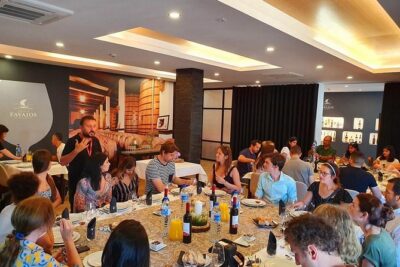
Complete Douro Valley Wine Tour with Lunch, Wine Tastings and River Cruise
Read our review →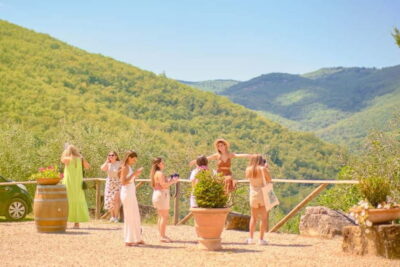
Small-Group Wine Tasting Experience in the Tuscan Countryside
Read our review →
Douro Valley with Winery Lunch, Tastings & Cruise
Read our review →Browse the lists this tour appears in