
Review · GERMANY
Düsseldorf: Sushi, Sake & Japanese Lifestyle Tour
Düsseldorf’s Little Tokyo packs Japanese food, books, bakeries, manga, and everyday shopping into a few streets around Immermannstraße. This two-hour walk gives you a quick cultural map of the district, with four food samples along the way.
I like the small group of no more than 10 and the mix of eating and sightseeing. I also like that the tour looks beyond sushi, pointing you toward ramen, soba, matcha, Japanese books, and manga. The main catch is that it runs in German, and the short schedule may leave some parts of the Japanese community unexplored.
The food samples are vegetarian-friendly, but they are not vegan or gluten-free. Guides including Patrizia and Julia have been praised for warmth, humor, and enthusiasm, while one recent experience raised concerns about inaccurate information and missing topics. Go in expecting a lively introduction, not an exhaustive study of Düsseldorf’s Japanese community.
Key points at a glance
- Immermannstraße is the center of the action: You’ll explore Düsseldorf’s concentrated Japanese district rather than visiting scattered restaurants across the city.
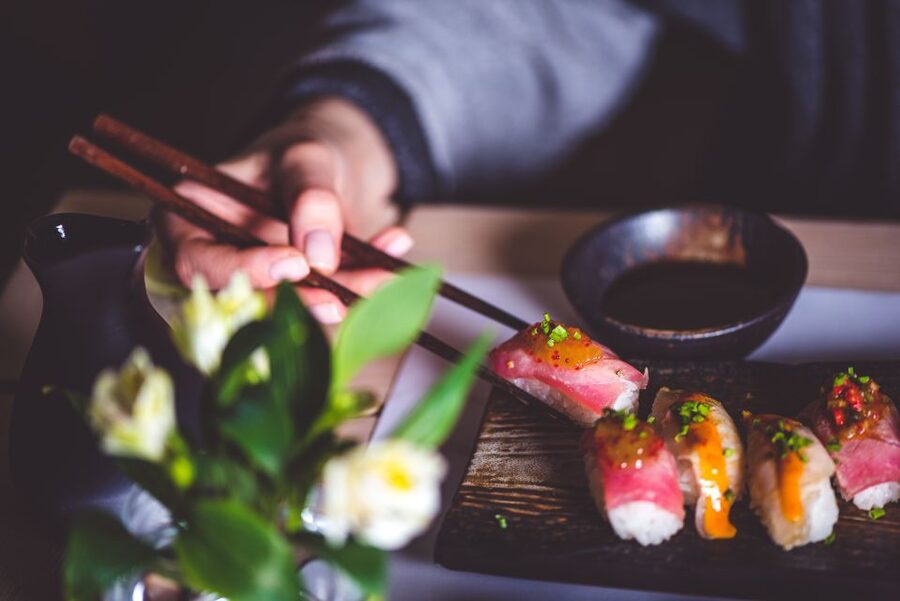
- Four food samples are included: The tastings add real value, especially if you want to try Japanese specialties without ordering a full meal.
- The tour reaches beyond sushi: Expect references to ramen, soba, sake, matcha, manga, bookshops, bakeries, arts, and crafts.
- German is the tour language: This matters more than the small group size if you do not understand German.
- Guides bring personality: Patrizia and Julia are noted for humor and enthusiasm, though the depth of information can vary.
- The voucher has an extra use: It is also valid for a visit to Düsseldorf’s city museum.
Why Düsseldorf has a Little Tokyo
Düsseldorf’s Japanese quarter is centered on Immermannstraße, close to the city center. The area is described as one of Europe’s most concentrated Japanese communities, which makes it easy to see several sides of Japanese daily life within a short walk.
That concentration is the chief reason to book this tour. You are not simply being taken to one sushi restaurant. You are shown a district where people shop, eat, read, meet, and seek out familiar products from Japan. In two hours, the guide can connect these businesses to the wider story of why the Japanese community has made Düsseldorf home.
The tour is especially useful early in your stay. You’ll learn where to look for Japanese food and products, then you can return later on your own. If you are already familiar with Düsseldorf, the value comes more from the food samples and local pointers than from basic orientation.
The meeting point is in front of the Clayton Hotel Düsseldorf, formerly Hotel Nikko Düsseldorf, at Immermannstraße 41. That location puts you right beside the district’s main corridor rather than wasting time getting to it.
More Sake Tastings in Germany:
- 1-Day Snow Monkeys, Zenko-ji Temple & Sake in Nagano
★ 5.0 · 1,020 reviews - 3-Hour Kyoto Insider Sake Brewery Tour with Tastings & Pairings
★ 5.0 · 917 reviews - Nagano: Snow Monkeys, Zenkoji Temple & Sake Day Trip
★ 4.9 · 833 reviews
Walking through Immermannstraße
The first part of the experience is a guided walk through Little Tokyo. The route focuses on the neighborhood’s special character and the way tradition and modern daily life sit side by side.
Do not expect a long-distance walking tour. The activity lasts about two hours, and the group is limited to 10 people. That should make it easier to hear the guide and ask questions, though the precise balance between walking, explanations, and tastings can depend on the guide and the pace of the group.
A good guide will help you notice details you could easily pass by alone. Japanese shops can look familiar to someone who has visited Japan, but a guide can explain which places serve the local community, which are aimed at casual dining, and where to seek particular foods or drinks.
You’ll also hear about the history of the district and why Japanese residents feel at home there. The supplied information promises fun facts and anecdotes, but the amount of background appears to vary. One guide, Patrizia, received criticism for leaving out several parts of Japanese life in Düsseldorf and for making at least one incorrect statement. That is worth keeping in mind if you want a carefully researched cultural lecture.
Japanese bookshops, manga, and bakeries
The tour visits traditional Japanese bookshops and bakeries, giving the walk a welcome change of pace from restaurant stops. These businesses show Japanese culture as something lived every day, not just something served on a plate.
The manga section is likely to be one of the most appealing stops for fans of Japanese comics. You’ll learn about popular manga and see how the comic-book world fits into the neighborhood’s cultural life. The supplied information does not name a specific shop or promise time to browse, so think of this as a guided introduction rather than a dedicated manga-shopping visit.
The bookshops may be particularly useful if you want to understand the language needs of the local community. A Japanese-language bookstore tells you more about a neighborhood than a themed souvenir shop does. It points to residents who read, study, and maintain daily ties to Japan.
Japanese bakeries add another practical detail. They are places where familiar European baking traditions meet Japanese tastes, and they can be an easy stop to revisit after the tour. The experience does not specify which pastries you will receive, so do not book it expecting a particular bakery item.
This part of the walk is also where the tour’s short length becomes noticeable. The district includes more than restaurants and bookstores. Japanese hairdressers, tailors, laundries, tea shops, and other services are part of the community, but they may not receive much attention. If those everyday businesses are your main interest, you may want to explore Immermannstraße again on your own.
Four food samples, with useful dietary limits
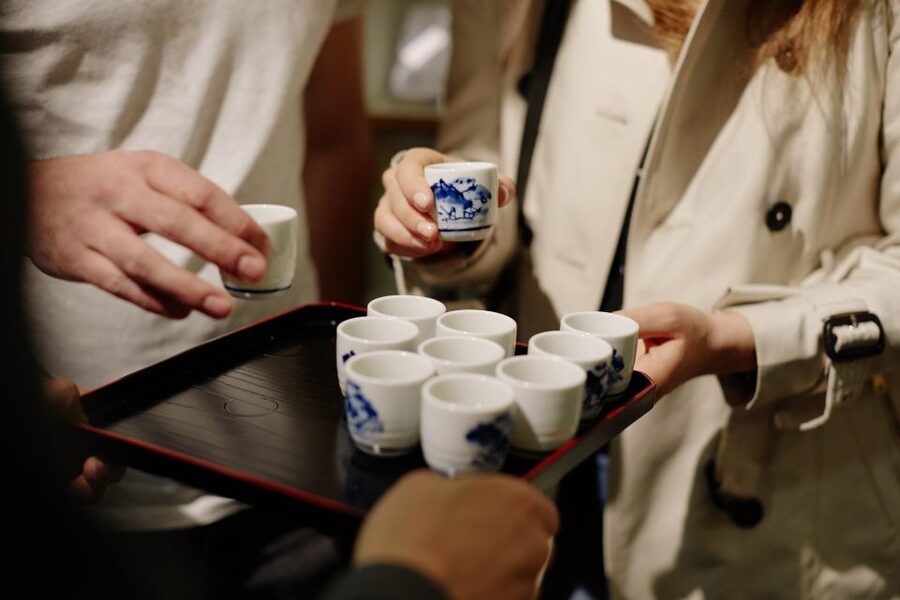
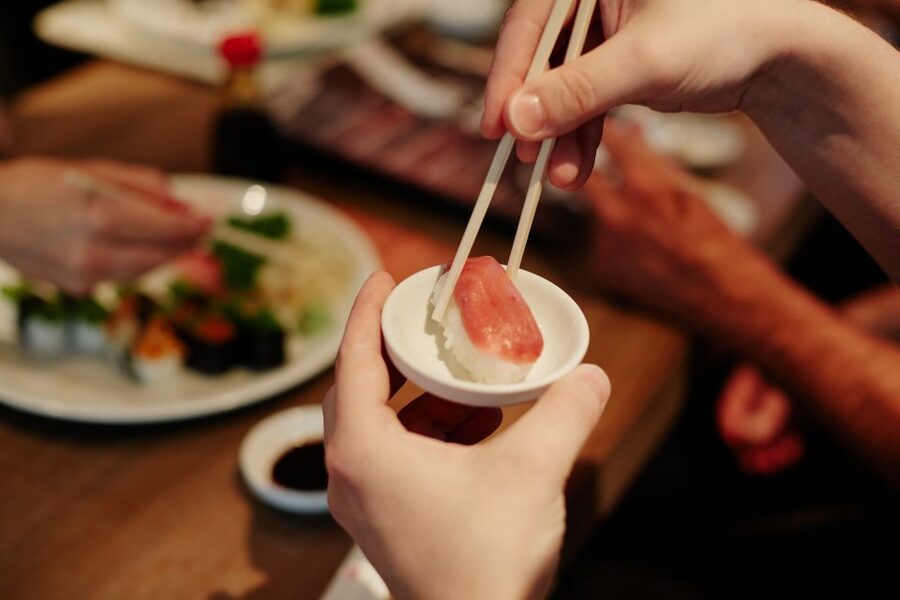
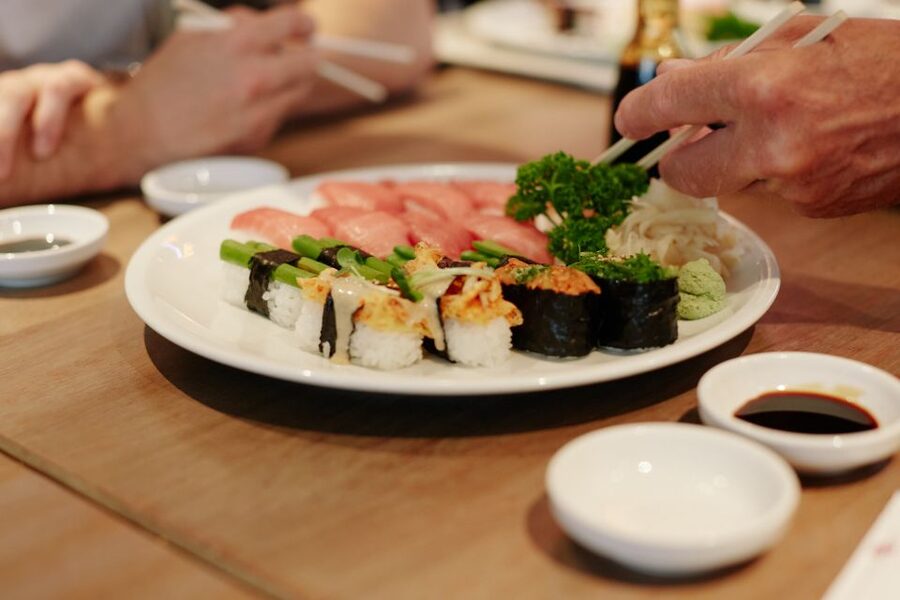
Food is a central part of the experience. Four samples are included, and the tour promises Japanese specialties connected to sushi, sake, and Japanese cuisine. The tastings are suitable for vegetarians, but not for vegans, and they are not gluten-free.
That makes this a practical choice if you want several small tastes rather than a single large lunch. You can try foods with the guide’s explanation, then decide which restaurants or shops deserve a return visit. The samples also help keep the tour moving, since you are tasting as part of the neighborhood walk.
The title emphasizes sushi and sake, but the wider theme includes ramen, soba, and matcha. The information does not identify every sample, so you should not assume that all four are sushi dishes or that sake is guaranteed as one of the tastings. Ask before booking if alcohol matters to you or if you need exact ingredient information.
The food portion is less suitable for strict dietary planning. Vegetarians have a clear advantage, but vegans and people avoiding gluten should not count on substitutions. Allergies are not addressed in the available information, so you should contact the provider before reserving if you need specific ingredient checks.
Food is also where the tour offers its clearest value. At $41 per person, four samples plus two hours of guiding is a reasonable package, especially if you use the advice to plan another meal in Little Tokyo. The price is less compelling if you mainly want a full sushi lunch, since the samples are not presented as a complete meal.
A few more tastings around Germany worth a look
- Cologne: Brewery Tour with 3 Kölsch Beer Tastings
★ 4.7 · 3,108 reviews - Bavarian Beer and Food Evening Tour in Munich
★ 4.5 · 1,575 reviews - Düsseldorf: Brewery Tour with Alt Beer Tastings
★ 4.7 · 1,523 reviews - Bremen: 3-Hour Beck’s Brewery Tour
★ 4.6 · 1,091 reviews
Matcha, sushi, sake, ramen, and soba
The food talk reaches beyond the most familiar Japanese export. You’ll get suggestions for sushi, sake, and matcha latte, along with references to ramen and soba. That broader view helps you understand the district as a place for everyday Japanese eating, not just special-occasion sushi.
Matcha fans may hear about Matcha Café Wakaba, described as Düsseldorf’s first dedicated matcha café, founded around 2017 or 2018. A stop there can be meaningful if the guide explains the café’s role and background. The listed sample may be a matcha brownie, but the tour does not promise a full drink tasting or a detailed café visit.
One important caution: do not treat every spoken claim as final authority. A recent participant specifically challenged a statement about the cost of eating at Nagaya, saying the quoted price of €700 per person was wrong. This does not cancel the value of the walk, but it does mean you should verify restaurant prices and opening details before making a special visit.
The tour also does not promise a Japanese tea ceremony. Such ceremonies may be available on Immermannstraße, but they are not listed as part of this activity. If tea ceremony is your main goal, this tour may point you in the right direction, but it is not a substitute for a dedicated tea experience.
A small group with a personal feel
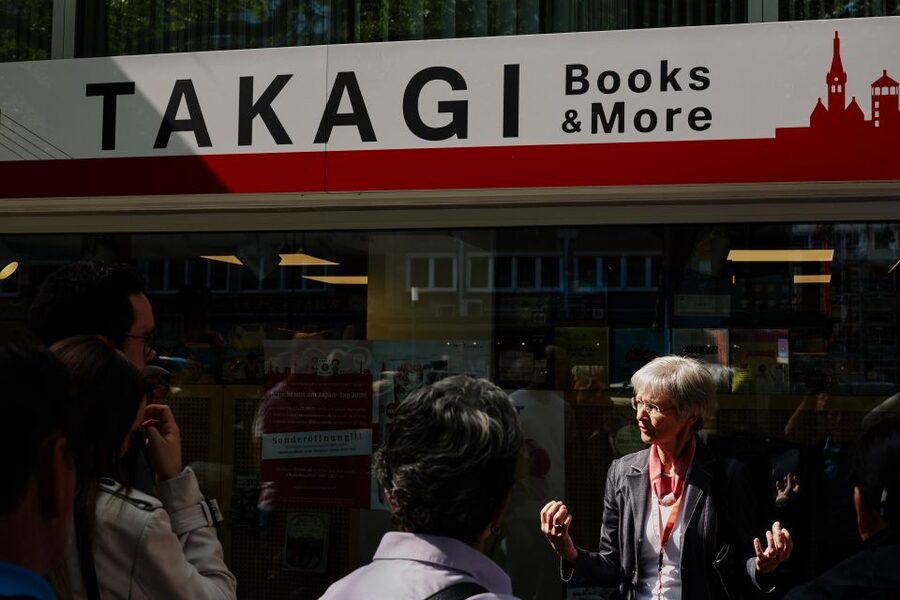
A maximum of 10 participants is a strong feature. You are less likely to be separated from the guide at a shop counter, and there should be room for questions about food, books, or manga.
The guide quality matters here. Patrizia has been described as friendly, while Julia has been praised for knowledge, humor, and keeping the tour interesting. Another account called the guide enthusiastic and attentive, with the overall experience lasting closer to two and a half hours than the advertised two.
That extra time may be welcome, but you should plan on two hours when arranging the rest of your day. The walk is guided in German only. If you understand German well, you can benefit from the stories and explanations. If you do not, the food samples and shop visits will still be visible, but much of the tour’s value will be lost.
The group format also makes this a better choice for curious solo visitors and couples than for anyone seeking a private, highly customized route. You’ll be sharing the pace and the questions with the rest of the group.
What the tour leaves out
A balanced look at the experience must include its limits. The district has more to offer than any two-hour introduction can cover, and some useful subjects may receive little or no attention.
The tour is not presented as a full social history of Japanese Düsseldorf. You may hear about the community’s presence and development, but detailed treatment of Japanese businesses such as hair salons, tailoring shops, and laundries is not guaranteed.
The information about individual venues may also be uneven. One recent account praised the organization and the guide’s friendliness but found the cultural explanations too thin, with omitted details and incorrect claims. That is the clearest warning for people who want precise, in-depth interpretation.
I would also avoid booking this as a specialist food tour if you need a detailed explanation of every dish. The four samples are a nice part of the walk, but the activity is built around the neighborhood as a whole. It is a sampler of Japanese life in Düsseldorf, not a chef-led tasting class.
Wheelchair users should note that the tour is not suitable for them. The available details do not give further information about step-free access, seating, or walking conditions, so anyone with mobility concerns should ask before booking.
Is $41 a fair price?
At $41, the tour sits in a sensible range for a two-hour small-group activity with four food samples and a souvenir available only on this tour. The souvenir gives the experience a little more value, though its exact nature is not specified.
The price works best if you plan to use the neighborhood advice afterward. A guide can help you choose a ramen, soba, sushi, sake, or matcha stop, and those tips may save you from wandering into a mediocre restaurant. The included city museum voucher is another useful extra, particularly if you already plan to visit the museum.
The value drops if you speak little German, need vegan or gluten-free food, or want a long and exact account of Japanese community life. In those cases, you may pay for explanations you cannot follow or samples you cannot eat.
Free cancellation up to 24 hours before the start and the option to reserve without paying immediately make the booking less risky. Those are practical advantages if your Düsseldorf schedule is still changing.
Who should book the Little Tokyo tour?
I would choose this tour for a first visit to Düsseldorf, especially if Japanese food and manga are high on your list. It gives you a short, organized introduction and enough restaurant and shopping ideas to shape the rest of your stay.
It also suits people who enjoy tasting several small items while walking through a real neighborhood. Families with older children or teenagers interested in manga may find the bookshop and comic angle more engaging than a standard city history tour.
You should think twice if you need English. The tour is in German, with no other language offered in the supplied details. I would also look elsewhere if you want a wheelchair-accessible route, vegan samples, gluten-free food, or a dedicated tea ceremony.
The experience earns its strongest praise for friendly guiding, humor, food samples, and personal attention. Its weaker side is the uneven depth of cultural information. If you treat it as an enjoyable neighborhood orientation with snacks, it offers good value. If you expect a definitive account of every part of Japanese life in Düsseldorf, the two-hour format may disappoint.
FAQ
Where does the Düsseldorf Little Tokyo tour meet?
The meeting point is in front of the Clayton Hotel Düsseldorf, formerly Hotel Nikko Düsseldorf, at Immermannstraße 41.
How long does the tour last?
The advertised duration is two hours. One experience lasted about two and a half hours, so allow a little extra time if your schedule is tight.
What language is the tour conducted in?
The tour is conducted in German. German is the only language specified.
How many people are in the group?
The group is limited to 10 participants.
What food is included?
Four food samples are included. The tour focuses on Japanese cuisine and mentions sushi, sake, ramen, soba, and matcha, but the exact four samples are not specified.
Are the food samples suitable for vegetarians?
Yes. The samples are suitable for vegetarians.
Are the samples vegan or gluten-free?
No. The samples are not suitable for vegans and are not gluten-free.
Is the tour suitable for wheelchair users?
No. The activity is not suitable for wheelchair users.
Can the tour voucher be used for anything else?
Yes. The voucher for the sushi tour is also valid for a visit to Düsseldorf’s city museum.
Can I cancel the booking?
You can cancel up to 24 hours in advance for a full refund. You can also reserve now and pay later.
Just added around Germany
- Alternative Berlin Pub Crawl★ 4.0 · 86 reviews
- Food tasting tour in Berlin of HIDDEN GEMS (Small Groups)★ 4.5 · 60 reviews
- Stuttgart: Stuttgart Wine Museum Wine Tasting★ 4.7 · 55 reviews
- Stuttgart: Guided Vineyards Tour★ 4.3 · 146 reviews
- Hamburg Pub Crawl – 4 Locations, Shots & Club Entry★ 4.6 · 302 reviews
- Informative and fun brewery tour in German, public★ 4.9 · 47 reviews
- Nuremberg: Castle and Old Town Tour – incl. Tickets and red beer tasting★ 4.9 · 68 reviews
- Nuremberg: Private 1.5-Hour Tour with Beer Tasting★ 4.6 · 111 reviews
Sake Tastings, compared.

3-Hour Kyoto Insider Sake Brewery Tour with Tastings & Pairings
Read our review →
Insider Sake Brewery Tour with Sake and Food Pairing
Read our review →
Insider Sake Experience with 7 Tastings and Snacks
Read our review →
KOBE Sake Tasting Tour at Breweries (tasting fee included)
Read our review →
Sushi and Ramen Cooking Class with Sake Pairing Set
Read our review →
Browse the lists this tour appears in