
Review · BARCELONA
Barcelona Paella Cooking Class & Boqueria & Hofmann-Trained Chefs
The best part of this Barcelona experience happens before you reach the stove. At La Boqueria, Chef Maria or Chef Emma guides you through seafood, produce, spices, and Catalan specialties before leading the group on a seven-minute walk to the cooking studio. You then turn those ingredients into paella, sangria, and a full shared meal.
I like the small group limit of 12, which makes it easier to take part instead of watching from the back. I also like the mix of food and place: rubbing tomato onto bread, sampling jamón and cheese, learning about seafood, and cooking over open flames gives you more than a standard restaurant meal.
The main consideration is that the seafood paella may not satisfy every palate, and one past participant found it mediocre. The market visit also includes some prearranged ingredient buying, so do not expect to personally negotiate every purchase with each vendor.
Key points at a glance
- La Boqueria comes first: Learn about seafood, produce, saffron, spices, and local shopping with your chef.
- Three paella choices: Seafood is the default, while black ink, vegetarian, and meat versions require advance notice where applicable.
- Hofmann-style technique: Practice the socarrat, the crisp rice layer at the bottom of the pan, over open flames.
- A proper Catalan spread: Pan con tomate, jamón, cheese, cava, sangria, paella, wine, and a seasonal dessert are included.
- Small and social: The maximum group size is 12, with everyone taking part in the preparation.
- Good value for a three-hour class: At $127.03 per person, the price covers the food, drinks, instruction, studio, recipes, and certificate.
Starting at La Boqueria with Maria or Emma
Meet at La Rambla 89, beside the Mercat de la Boqueria in Barcelona’s Ciutat Vella. The class begins with a walk through the market, not with a lecture in a classroom. That matters because you see the raw materials before they reach the pan.
Chef Maria and Chef Emma are the names most often associated with this class. The experience is presented as a mother-daughter cooking team, and both chefs bring a personal connection to Catalan food. Maria has been described as a third-generation chef, while Emma is praised for her clear explanations and easy way with mixed-age groups.
At the market, you learn how the ingredients fit together. Expect seafood such as prawns, Norway lobsters, mussels, squid, and cuttlefish, along with Bomba rice, tomatoes, fruit, saffron, paprika, pepper sauce, and other items used during the meal.
One useful part of the visit is learning how to judge ingredients rather than simply being told what to buy. The chef explains the seafood and produce, and the experience includes instruction about buying from local vendors. The advertised plan also mentions learning about bargaining, though the actual shopping may include ingredients arranged in advance.
That last point is worth keeping in mind. This is a guided market introduction, not a full market-shopping exercise where you choose and negotiate every item from scratch. You still gain context and see the ingredients in their natural setting, but the focus is getting the class ready to cook.
More Cooking Classes in Barcelona:
- Barcelona Paella Cooking Class with Market Visit, Tapas & Sangria
★ 5.0 · 2,531 reviews - Barcelona: Paella & Tapas Cooking Class with Sangria
★ 4.9 · 122 reviews - Barcelona Authentic Paella and Sangria Cooking Class
★ 5.0 · 95 reviews
The 700-meter walk through the Gothic Quarter
From the market, you walk about 700 meters to the cooking studio. The route takes roughly seven minutes and passes through the old streets of the Gothic Quarter.
I like this short transfer because it connects the market to the cooking lesson without adding a second transportation problem. You get a brief look at the city between courses, and the walk helps the class move from shopping mode into cooking mode.
The route is still a walk, so wear comfortable shoes. The meeting point and end point are the same, and the activity is close to public transportation. The class lasts about three hours, so allow enough time for the market visit, walk, cooking, eating, and conversation.
A Catalan welcome with pan con tomate and cava
The cooking studio is in a refurbished antique building that combines industrial touches with classic Catalan details, including arched wooden ceilings. The setting appears to be an important part of the experience. Past descriptions praise the room as clean, bright, and attractive, with a well-laid table.
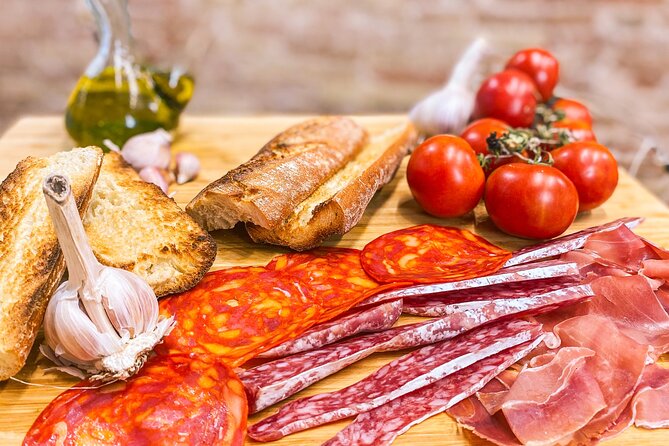
Before tackling paella, you prepare simple Catalan starters. You rub ripe tomato onto bread, add garlic, and finish it with jamón. This is pan con tomate, a dish that looks easy but teaches you something useful about local food: good ingredients and a few precise steps can do most of the work.
You also receive an artisanal jamón and cheese platter, plus a welcome glass of cava. The meal begins early, which is helpful if you arrive hungry. It also gives the group something to share while the chef explains the cooking plan.
This opening is one of the strongest parts for families and mixed-age groups. Children can take part in rubbing the tomato and assembling the bread, while adults get a quick introduction to Catalan eating habits without needing much kitchen experience.
Making your own sangria pitcher
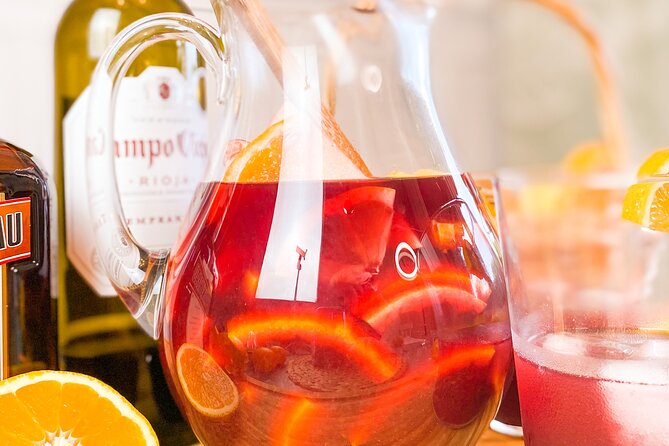
Next comes the sangria workshop. You muddle fruit and combine it with Spanish wine to make a pitcher for the table.
The sangria is not simply a drink handed to you at the end. You take part in making it, which turns a familiar tourist beverage into a small lesson in balance, fruit, and Spanish wine. Cava and wine are also provided during the class, and the drink service is described as generous.
Nonalcoholic sangria is available for children, according to the family-focused descriptions of the experience. Dietary and drink requirements should still be noted when booking, since the class specifically asks you to provide that information in advance.
The drink element helps create a relaxed social mood, but it is also something to plan around. You are combining cava, wine, and sangria during a three-hour class, so pace yourself. The class is about cooking first, not an all-you-can-drink tasting.
A few more tastings around Barcelona worth a look
- Barcelona: Cocktail Master Class by Mixologist with Tapas
★ 4.7 · 959 reviews - Barcelona: Cocktail Making Class with Tapas
★ 4.7 · 310 reviews - Barcelona: Wine and Van Gogh Paint and Sip Painting Class
★ 4.7 · 161 reviews - Barcelona: Rooftop Salsa Class with Bottomless Sangria
★ 4.7 · 157 reviews
Choosing seafood, black ink, vegetarian, or meat paella
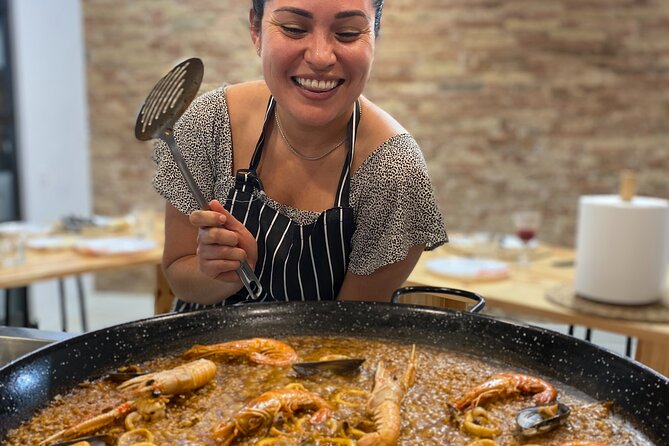
The default dish is a golden seafood paella. Its listed ingredients include prawns, Norway lobsters, mussels, squid, cuttlefish, Bomba rice, and a secret sofrito technique taught during the class.
You can also request black ink paella, which uses squid ink and gives the rice a dark color. It is a memorable choice if you want something different from the familiar golden version, though it can leave your mouth and tongue black for a while.
Vegetarian and meat paella options are available with advance notice. Do not wait until you arrive to mention a dietary need. The class specifically asks you to provide that information at booking, and this is especially important if you need a vegan, vegetarian, or meat version.
The seafood dish is a natural fit for Barcelona’s market setting, but it is also the area where expectations should be realistic. Most of the feedback praises the food, yet one account found the seafood paella only average. Paella depends on timing, heat, rice, and seafood, and individual taste can vary. The class teaches the method, but a cooking lesson cannot guarantee that every diner will prefer the final result.
Learning the socarrat over open flames
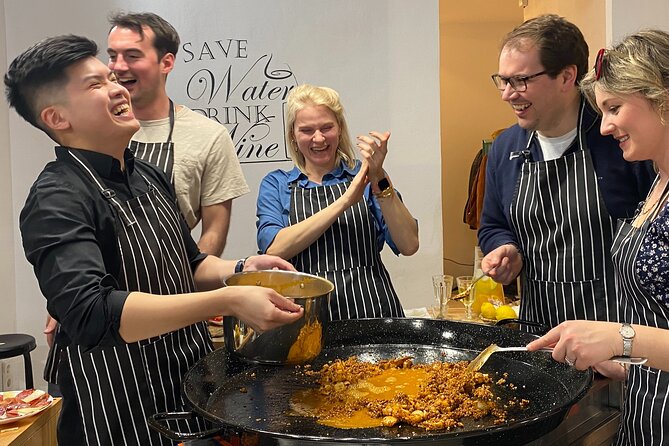
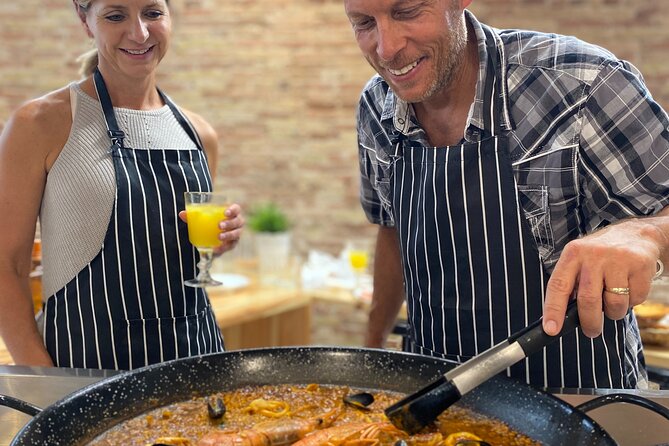
The main lesson is the paella itself. You work with the ingredients, prepare the components, and cook the rice under the chef’s direction.
A key technique is socarrat, the crisp layer of rice that forms at the bottom of the pan. The class teaches this over open flames, which gives you a practical feel for heat control. You learn that paella is not just rice mixed with seafood. The order of cooking, the sofrito, the stock, and the final heat all matter.
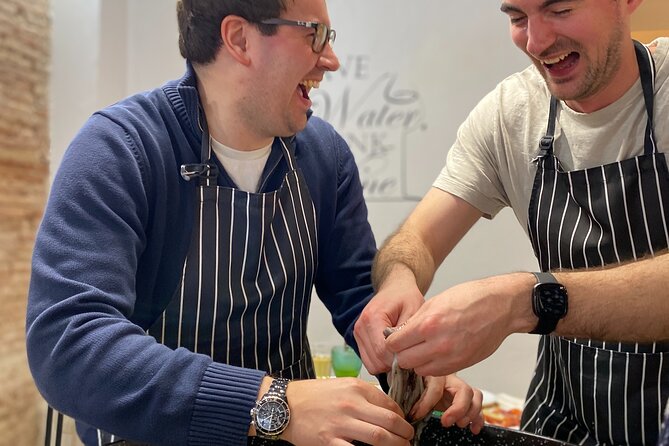
You do not need advanced kitchen skills. The class is designed for different ability levels, and the chef explains each step as the group works. The small group helps here. With no more than 12 people, you have a better chance to handle ingredients, ask questions, and see what is happening in the pan.
The format is communal rather than private. You cook alongside other people, divide tasks, and eventually sit down together. That social structure is a major part of the appeal, especially for solo visitors, couples, and families who want an activity that creates conversation naturally.
Sitting down to eat what you made
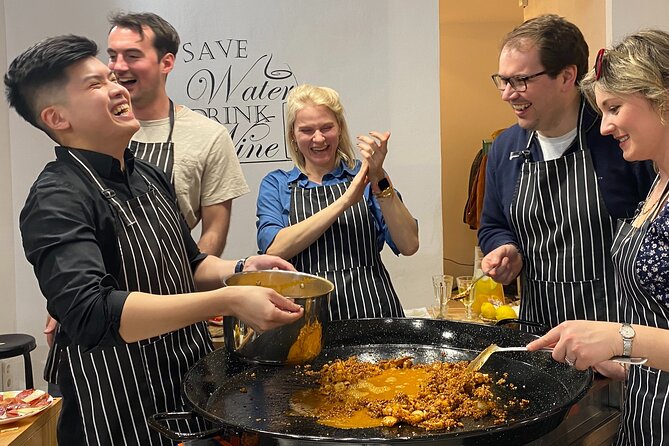
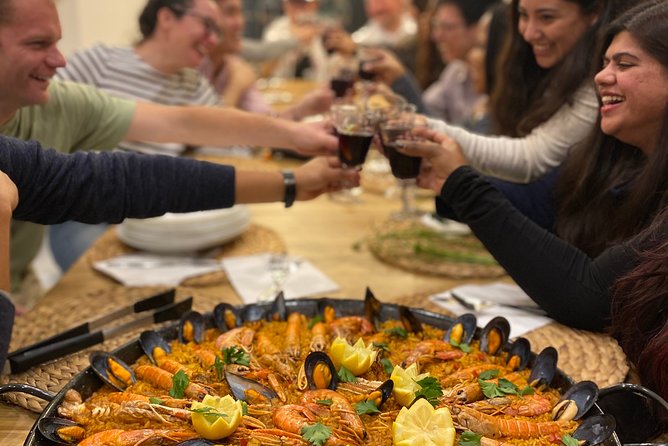
When the paella is ready, you eat it together at the studio. The meal includes wine, the sangria you prepared, the earlier tapas, and a seasonal Catalan dessert made with market ingredients.
The dessert is a surprise rather than a fixed menu item. That can be fun, but it also means you cannot plan around a particular sweet. The menu may change with the season, which fits the market-led character of the class.
The shared meal is more satisfying than a quick demonstration followed by a small sample. You have spent time preparing the food, so the final plate carries a sense of ownership. It is also a chance to compare the seafood, black ink, or other versions if more than one paella is being made for the group.
Recipes and a certificate are included. The digital recipe book is the practical souvenir. If you want to repeat the dish at home, the written instructions matter more than the certificate, especially since paella technique improves with practice.
What the $127.03 price really covers
At $127.03 per person, this is not a cheap meal. It is also not priced like a basic cooking demonstration. The fee covers the market visit, ingredients, instruction, a three-hour studio experience, cava, wine, sangria, tapas, paella, dessert, cooking tools, an apron, digital recipes, and a certificate.
I would judge the price against what you would otherwise pay for separate activities. You get a guided introduction to La Boqueria, a short Gothic Quarter walk, a hands-on cooking class, a substantial meal, and drinks in one booking. For someone who already planned to eat paella and visit the market, the class combines several expenses into one experience.
The value is strongest if you enjoy participation. If you only want to eat seafood paella, a restaurant will usually be simpler and possibly less expensive. If you want to understand the ingredients, make sangria, practice socarrat, and meet a small group around a shared table, the price makes more sense.
The class is often booked about 42 days ahead. That suggests you should reserve early for a particular date, especially if you need a vegetarian, meat, or other dietary version.
Who will enjoy this class most
I would recommend this experience to first-time visitors who want a gentle introduction to Barcelona through food. It links La Boqueria, Catalan starters, seafood, the Gothic Quarter, and a local-style meal without requiring you to organize several separate stops.
Families are also a strong match. The cooking is hands-on, the group is limited to 12, and the class can keep children involved in the market and kitchen. Nonalcoholic sangria is available, but dietary needs should still be sent ahead.
It also suits couples and solo visitors who like social activities. By the end, everyone has cooked and eaten together, which makes conversation easier than it would be on a standard guided walk.
I would be less likely to book it if you dislike seafood, group dining, or alcohol-focused activities. The default menu centers on seafood paella, and the drink service is a visible part of the class. You can request alternatives in advance, but the experience is built around food preparation and shared eating, not a quiet private lesson.
Practical details before you book
The activity is offered in English and uses a mobile ticket. It begins at La Rambla 89 and ends back at the meeting point.
Plan for about three hours, including the market visit, the 700-meter walk, cooking, and the meal. Wear shoes that are comfortable for walking and standing.
Free cancellation is available up to 24 hours before the start time for a full refund. Changes or cancellations made inside that period are not accepted for a refund. Poor weather or failure to reach the minimum group size can lead to a different date, another experience, or a full refund.
Should you book this Barcelona paella class?
Book it if you want to do more than order paella. The market visit gives the dish a setting, the chefs make the cooking approachable, and the small group keeps the class active rather than passive.
The strongest reasons to go are the combination of La Boqueria and the kitchen, the chance to make sangria and pan con tomate, and the direct practice with paella and socarrat. The main cautions are the relatively high price, the shared format, and the fact that the seafood paella will not please every palate.
For a first Barcelona visit, a family trip, or a food-focused afternoon, I think the experience earns its place on the schedule. Just provide dietary details early, reserve ahead, and arrive ready to cook rather than simply watch.
FAQ
Where does the paella class begin?
The class begins at La Rambla 89, Ciutat Vella, 08002 Barcelona, near the Mercat de la Boqueria.
Where does the activity end?
The activity ends back at the meeting point.
How long does the experience last?
The experience lasts approximately three hours.
How far is the cooking studio from La Boqueria?
The cooking studio is about 700 meters from the market, a walk of roughly seven minutes through the Gothic Quarter.
What type of paella is included?
The default option is golden seafood paella with prawns, Norway lobsters, mussels, squid, cuttlefish, and Bomba rice. Black ink, vegetarian, and meat options require advance notice where applicable.
Are drinks included?
Yes. The experience includes a cava welcome drink, sangria that you prepare, and wine during the shared meal.
Is the class suitable for people with dietary restrictions?
Dietary needs should be provided when you book. Vegetarian and meat paella options are available with advance notice, and the class information also refers to vegan arrangements.
What is the cancellation policy?
You can cancel at least 24 hours before the start time for a full refund. Cancellations or changes made less than 24 hours before the start time are not accepted for a refund. If poor weather or insufficient numbers cause cancellation, you will be offered another date, another experience, or a full refund.
Just added around Barcelona
- Bohemian Barcelona Neighborhood Evening Tapas & Wine Tour★ 5.0 · 419 reviews
- Wine Tasting Experience in Barcelona★ 5.0 · 172 reviews
- Barcelona: Guided Rooftop Wine Tasting – Enjoy 6 Spanish Wines★ 4.5 · 61 reviews
- Barcelona: Wine Tasting and 5 Course Tapas Pairing Dinner★ 4.5 · 129 reviews
- 2 Wineries Small Group Tour with Free Hotel PickUp from Sitges★ 5.0 · 83 reviews
- Barcelona speakeasy tapas pub crawl with hidden bars★ 4.0 · 109 reviews
- Barcelona Gothic Quarter VIP Tapas & Wine Tour★ 5.0 · 276 reviews
- Barcelona Wine and Gourmet Tapas Tour★ 5.0 · 188 reviews
Cooking Classes, compared.
Pasta Making Class with Wine, Limoncello, and Dessert
Read our review →
Rome Cooking Class: Make Pasta and 3 Spritz Cocktails
Read our review →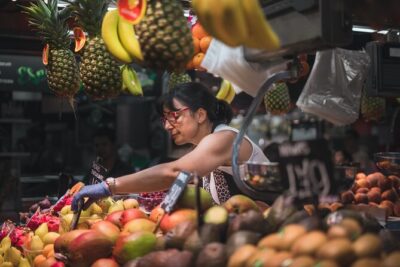
Barcelona Paella Cooking Class with Market Visit, Tapas & Sangria
Read our review →
Fettuccine & Tiramisù: Cooking Class with Wine & Limoncello
Read our review →
Pasta Cooking Class Near the Colosseum with 3 Spritz Cocktails
Read our review →
Rome Tipsy Cooking Class: Make Pasta and Mix 3 Spritz Cocktails
Read our review →
Spanish Cooking Class Paella Tapas and Sangria in Madrid
Read our review →
Pasta Making & Wine Tasting with Dinner in Frascati from Rome
Read our review →Browse the lists this tour appears in