
Review · TOKYO
Tsukiji: Unlimited Sake Tasting Experience
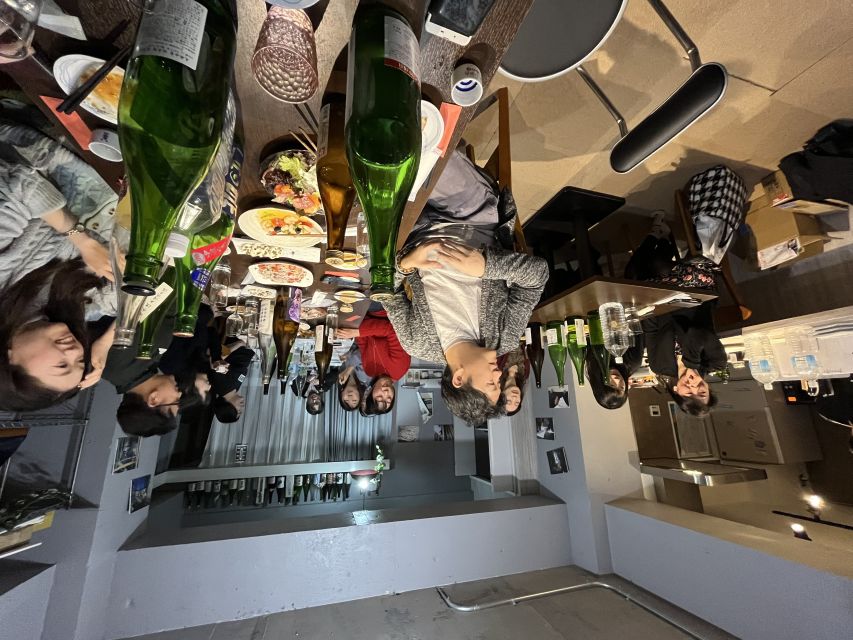
Tsukiji’s private sake salon offers a generous way to get past the idea that all sake tastes alike. You can sample from a selection of 50 to 60 bottles, though most sessions taste about 20 to 30, with an English-speaking sommelier explaining each pour. I like the chance to compare sake served at different temperatures, and I like the friendly, small-group setting led by hosts such as Mako, Yuki, or Kyoko.
The main thing to watch is the timing. The activity is sold as a 90-minute experience, while the description also refers to a two-hour tasting. Check the exact session details before booking. The $54 price is fair for a guided tasting of this size, but this is not a full meal, and food beyond the light snacks is not included.
Key points at a glance
- Taste across Japan: Choose from roughly 50 to 60 available sakes, with most people sampling about 20 to 30.
- Learn from a sommelier: Mako, Yuki, Kyoko, and other hosts explain breweries, brewing methods, styles, and serving temperatures.
- Compare temperature changes: Try the same kind of drink at different temperatures and notice how its flavor shifts.
- Pair with simple snacks: Cheese, rice crackers, and similar small bites help show how sake works with food.
- Enjoy an intimate setting: Small groups can make this feel like a private lesson rather than a crowded bar tasting.
- Plan for a short walk from Tsukiji sights: The salon is in a red brick building, on the fourth floor, in room 405.
Inside the Tsukiji sake salon
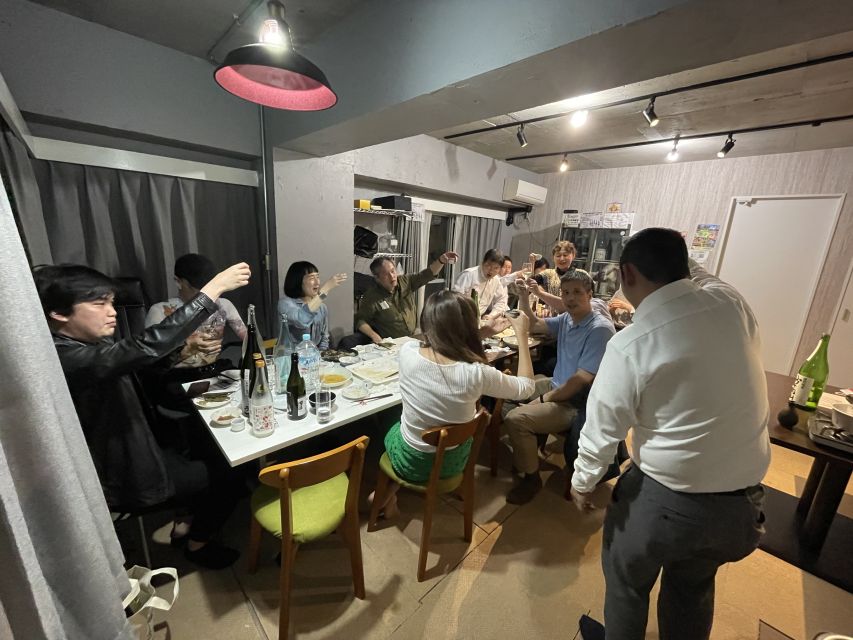
The meeting point is Sake Lovers Inc., in a red brick building in Tsukiji. Take the elevator to the fourth floor, then use the first door on the left, marked number 405. This is a useful detail to save on your phone because the experience takes place in a private salon, not at a large street-front tasting room.
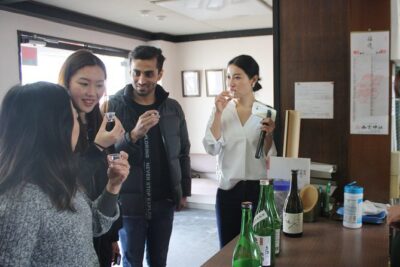
The setting matters. In a small room, you can ask basic questions without feeling out of place. That is especially helpful if your experience with sake begins and ends with ordering a bottle at a restaurant. The hosts are used to adjusting their explanations to the group, from complete beginners to people who already know a few Japanese styles.
The mood is friendly and informal. Several sessions have had only one, two, or three participants, giving the tasting the feel of a private class. A larger group is possible, but the salon format keeps the focus on conversation rather than a fast sequence of anonymous pours.
More Sake Tastings in Japan:
- 1-Day Snow Monkeys, Zenko-ji Temple & Sake in Nagano
★ 5.0 · 1,020 reviews - 3-Hour Kyoto Insider Sake Brewery Tour with Tastings & Pairings
★ 5.0 · 917 reviews - Nagano: Snow Monkeys, Zenkoji Temple & Sake Day Trip
★ 4.9 · 833 reviews
How the sake tasting unfolds
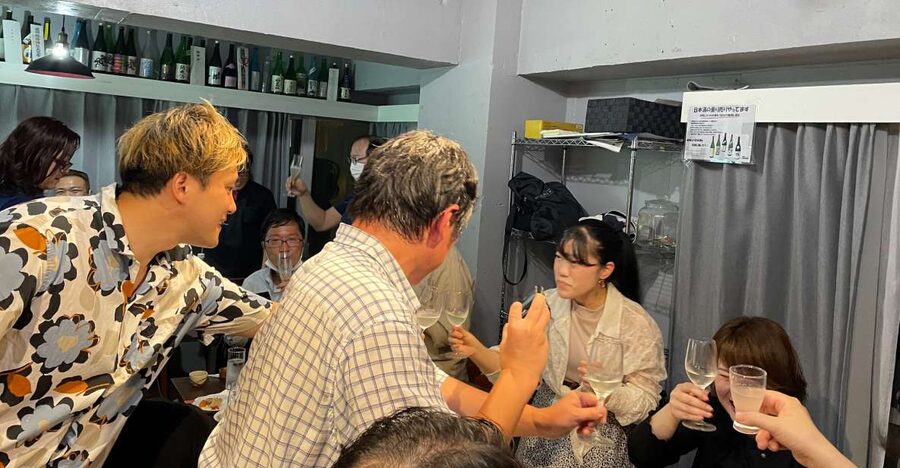
You begin with an introduction to sake and the way it is made. The host explains the role of rice, brewing, breweries, and the long tradition of sake in Japan. This opening gives you a framework for tasting instead of simply handing you one glass after another.
The bottles come from breweries around Japan, and the selection changes the experience from a single-brand visit into a broad comparison. You might find sake that is gentle and sweet, dry and clean, or fuller and more bitter. One of the pleasures here is realizing how wide the range can be.
The advertised selection includes 50 to 60 different kinds of sake. You will not sensibly drink a full serving of all of them in one sitting. In practice, tastings commonly cover about 20 to 30 samples, with the host guiding the pace. That is still a remarkable amount of variety in a short session, so use the water provided and avoid trying to rush.
The format is unlimited tasting, but unlimited does not mean you should treat it like a drinking contest. Sake can be stronger than its mild flavor suggests. Take small pours, eat the snacks, and give yourself time to decide what you actually like.
Why temperature changes the flavor
One of the most useful parts of the session is the temperature comparison. Sake is not limited to one serving style. Some bottles work well chilled, while others reveal different notes when served warmer.
The host lets you taste the change rather than simply describing it. A sake that seems crisp and restrained when cool can feel softer, rounder, or more aromatic at another temperature. This is practical knowledge you can use later in an izakaya or restaurant.
I like this part because it turns an abstract lesson into a direct comparison. You do not need a trained palate. You only need to notice which version you prefer. The exercise also helps explain why a restaurant may recommend a particular serving temperature for a certain bottle.
Cheese, rice crackers, and light pairings
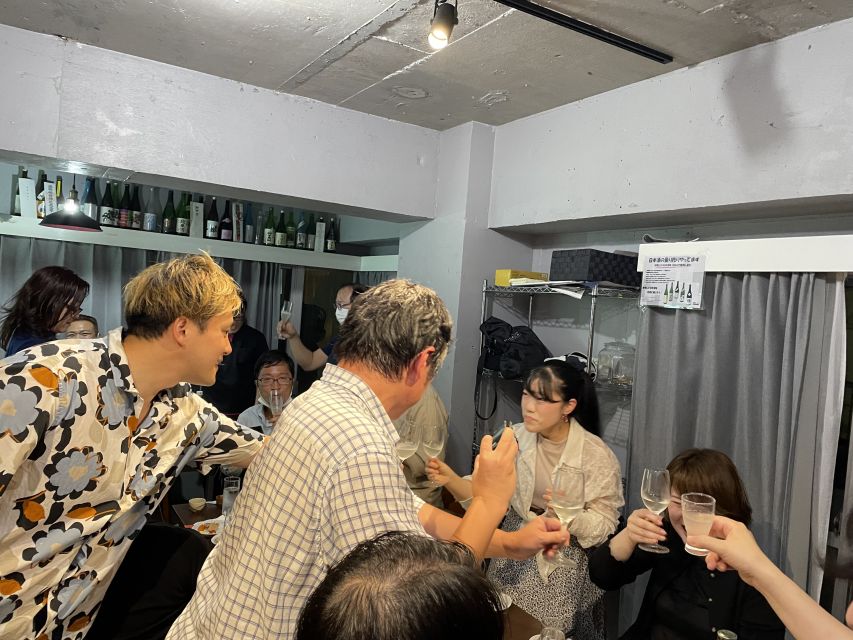
Small snacks are available during the tasting, including cheese, rice crackers, and similar bites. They are there to support the tasting, not replace lunch or dinner. Food is not listed as a full inclusion, so eat beforehand if you need a substantial meal.
The pairings are useful because food changes the way sake feels. A salty cracker can make a dry sake seem different, while cheese can soften the impression of a sharper pour. These are simple comparisons, but they help you understand why sake is such a flexible partner at the table.
This is also a good reason not to schedule the experience while very hungry. The snacks will keep you comfortable, but you should plan a separate meal around it. Tsukiji gives you plenty of options for food before or after, though this particular activity does not include hotel pickup, drop-off, or a meal.
A few more tastings around Japan worth a look
- Tokyo Bar Hopping Tour in Shinjuku (All-You-Can-Drink + Dinner)
★ 5.0 · 3,587 reviews - Shibuya Meltdown Nightlife Tour: All-You-Can-Drink Bar Hopping
★ 5.0 · 1,058 reviews - Osaka Bar Hopping Night Walking Tour in Namba (3 bars, 6 tastes)
★ 5.0 · 958 reviews - Tokyo: Pub Crawl and Bar Tour
★ 4.5 · 951 reviews
The hosts make the difference
The experience depends heavily on the sommelier leading your session. Mako is praised for a warm manner and clear explanations, and she adjusts the level of detail to match the group. Yuki has led sessions that felt like private lessons, with a calm, gracious approach. Kyoko is known for taking participants through a progressive tasting, moving from one style to the next in an orderly way.
The hosts explain the brewery and story behind each bottle before you taste it. That detail gives the drink a sense of place and purpose. You are not just comparing labels. You are learning why one bottle may taste gentle while another has more depth or bitterness.
The teaching style is interactive. Ask questions about sweetness, dryness, serving temperature, brewing, or how to order sake in a restaurant. If you arrive knowing very little, you should still be able to follow along. If you already have a favorite style, the host can help you compare it with something different.
What you may actually taste
The exact bottles are not fixed in the information provided, so you should not book this expecting particular brands. The appeal is the range. You might taste styles that are light and easy to drink, followed by something more powerful, dry, or earthy.
One useful lesson is that sake from a supermarket or ordinary bar does not represent the whole category. Some people arrive thinking they do not like sake and leave with a better sense of which styles suit them. Others discover that the sake they already enjoy tastes quite different when served at another temperature.
The number of samples depends on the session and your pace. About 20 to 30 is a realistic working range based on how the activity is described in practice, while 50 to 60 refers to the bottles available to sample from. That distinction is important. You are choosing from a large collection, not guaranteed to drink every bottle in the room.
Is $54 a good value?
At $54 per person, the cost is reasonable if you want guided instruction and a broad tasting in Tokyo. Buying 20 or more separate sake samples on your own could become expensive, and you would not necessarily get the brewing explanations or temperature comparisons.
The value is strongest for beginners. You leave with a better vocabulary for ordering, a sense of which flavors appeal to you, and a clearer idea of how serving temperature affects the drink. The experience can also help prevent an expensive mistake when you later choose a bottle in a restaurant.
For serious sake fans, the value depends on your expectations. The selection can include unusual bottles, and repeat visitors may find something new, but the session is not presented as a specialist brewery tour or a formal food-pairing dinner. If you want detailed production visits in the countryside, this is not that. It is a compact city tasting with a strong educational side.
Timing, location, and practical planning
The stated duration is 90 minutes, but the activity description also refers to two hours of unlimited tasting. Because the two details do not match, check the start time and expected finish when you reserve. Either way, allow extra time around it if you are booking a restaurant or another timed activity.
The host or greeter speaks English. The salon is at Sake Lovers Inc., in the red brick building, fourth floor, room 405. Look for the first door on the left after leaving the elevator.
Cancellation is free up to 24 hours in advance for a full refund, and the reserve-now, pay-later option can help if your Tokyo schedule is still changing. Those terms make the activity easier to fit into a busy itinerary.
The experience is not suitable for wheelchair users, according to the activity details. It is also not suitable for pregnant women. Families can bring children, but the staff will not serve alcohol to them, and parents need to bring nonalcoholic drinks for their children.
Who will enjoy this most?
I would choose this for someone who wants a friendly introduction to sake without committing to a formal lecture. It suits solo visitors, couples, and small groups, especially if you enjoy asking questions and comparing flavors.
It is also a good choice after visiting Tsukiji Market. The location makes sense as part of a food-focused day, though you should not count on the tasting as lunch. Have a meal or snack before arriving, then use the sake and small bites as a focused afternoon activity.
The experience works well for someone who wants to feel more confident ordering sake in Japan. By the end, you should have a better idea of whether you prefer something sweet, dry, light, or full-bodied, and whether you like it chilled or warmer.
I would be more cautious if you dislike alcohol, need a completely alcohol-free activity, or are hoping for a large meal. The tasting is centered on sake, and the available snacks are modest.
A note about buying your favorites
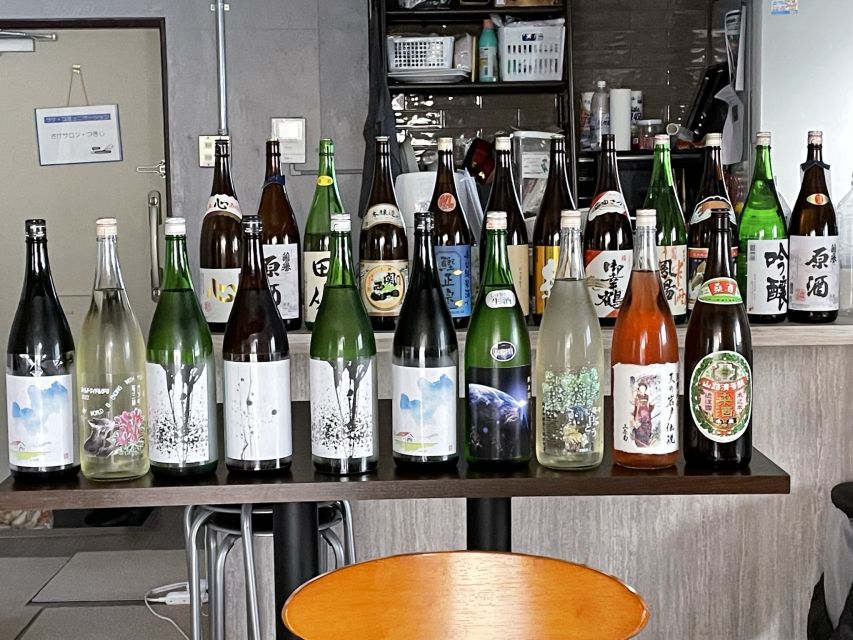
You may find a bottle you want to take home, but the tasting does not guarantee that every bottle served will be available for purchase. Some participants have been able to buy a few favorites, while other desired bottles were not on sale.
If a particular sake catches your attention, write down its name, brewery, and style during the session. Ask the host where it can be found, but understand that availability may vary. This small habit can save you from trying to remember a label after 20 or more samples.
Should you book the Tsukiji sake tasting?
Book it if you want to understand sake through comparison, conversation, and plenty of samples. The best parts are the small-group setting, the hosts’ clear instruction, and the chance to test temperature changes for yourself.
At $54, it offers solid value for a 90-minute guided tasting, provided you see it as an educational drinks experience rather than dinner. Confirm the actual duration, eat beforehand, and arrive ready to taste slowly. If you are curious about Japanese sake but do not yet know where to begin, this is a practical and enjoyable place to start.
FAQ
Where does the sake tasting take place?
It takes place at Sake Lovers Inc. in Tsukiji, Japan. Enter the red brick building, take the elevator to the fourth floor, and go to the first door on the left, room 405.
How long does the experience last?
The activity is listed as 90 minutes, but its description also refers to two hours of unlimited tastings. Check the exact session details when booking.
How many kinds of sake can I try?
The salon has about 50 to 60 different kinds available to sample. A typical session may taste around 20 to 30, depending on the pace and group.
Is the tasting led in English?
Yes. The host or greeter speaks English, and the experience includes explanations about sake, breweries, brewing, and Japanese history.
Is food included?
Food is not included as a meal. Small snacks such as cheese and rice crackers are available during the tasting, but you should eat separately if you need a full meal.
Can children attend?
The experience is family-friendly, but children will not be served alcohol. If you bring children, you must provide their nonalcoholic drinks.
Can I cancel for a refund?
You can cancel up to 24 hours in advance for a full refund. A reserve-now, pay-later option is also available.
Just added around Japan
- Tokyo: Shinjuku Izakaya and Golden Gai Bar Hopping Tour (2h)★ 4.9 · 67 reviews
- Tokyo: Sushi Cooking Class with Sake Tasting★ 4.8 · 55 reviews
- Tokyo: Shinjuku Bar Hopping & Night Walking Tour★ 4.6 · 137 reviews
- Tokyo: Sushi and Ramen Cooking Class with Sake Pairing Set★ 5.0 · 81 reviews
- Tokyo: Ramen Tasting Tour with 6 Mini Bowls of Ramen★ 4.9 · 432 reviews
- Takayama: Authentic Sake Tasting at a Historic Brewery★ 4.8 · 50 reviews
- Shibuya Meltdown Night Tour: All-You-Can-Drink Bar Hopping★ 4.8 · 183 reviews
- Osaka: Mind & Spirit Balance Temple Reiki Healing★ 5.0 · 41 reviews
Sake Tastings, compared.

3-Hour Kyoto Insider Sake Brewery Tour with Tastings & Pairings
Read our review →
Insider Sake Brewery Tour with Sake and Food Pairing
Read our review →
Düsseldorf: Sushi, Sake & Japanese Lifestyle Tour
Read our review →
Insider Sake Experience with 7 Tastings and Snacks
Read our review →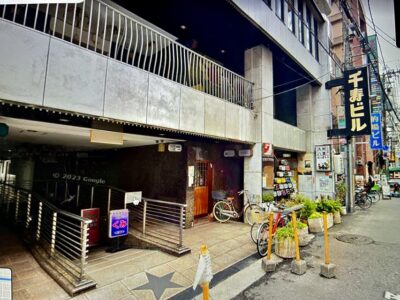
KOBE Sake Tasting Tour at Breweries (tasting fee included)
Read our review →
Sushi and Ramen Cooking Class with Sake Pairing Set
Read our review →Browse the lists this tour appears in