
Review · FRANCE
Libourne: Winery Tour with Wine and Chocolate Tasting
Château Cruzeau gives you something many wine tours skip: a clear look at the whole operation, from soil and vineyard work to vats, barrels, and the final glass. The five-generation Luquot family story adds a personal touch, and the guide may be Jessica, the owner’s wife, whose warm, flexible English has helped make the tour easy for international visitors.
I especially like the three-wine and three-chocolate pairing, which turns a standard tasting into a small lesson in flavor. I also like the setting: a 12-hectare family property between Saint-Émilion and Pomerol, close to Libourne but away from the grandest château crowds. The main consideration is timing. The activity is listed as 75 minutes, while the detailed schedule describes about 90 minutes, so allow a little extra time.
What makes this Château Cruzeau tour worth your time
- A five-generation family estate: You learn how the Luquot family has managed Château Cruzeau over five generations.
- A full winemaking route: The visit includes the vineyard, vat room, and barrel cellar, not only a tasting counter.
- Three wines with three dark chocolates: The chocolates come from Les Chocolats de Sophie, a local Libourne chocolate maker.
- A practical soil lesson: The guide explains how agricultural choices and soil life affect the character of the wine.
- English and French guiding: Jessica and the other guides can explain the visit in both languages.
- Easy planning: The château is wheelchair accessible, open by appointment year-round, and offers free cancellation up to 24 hours before the visit.
A family château between Saint-Émilion and Pomerol
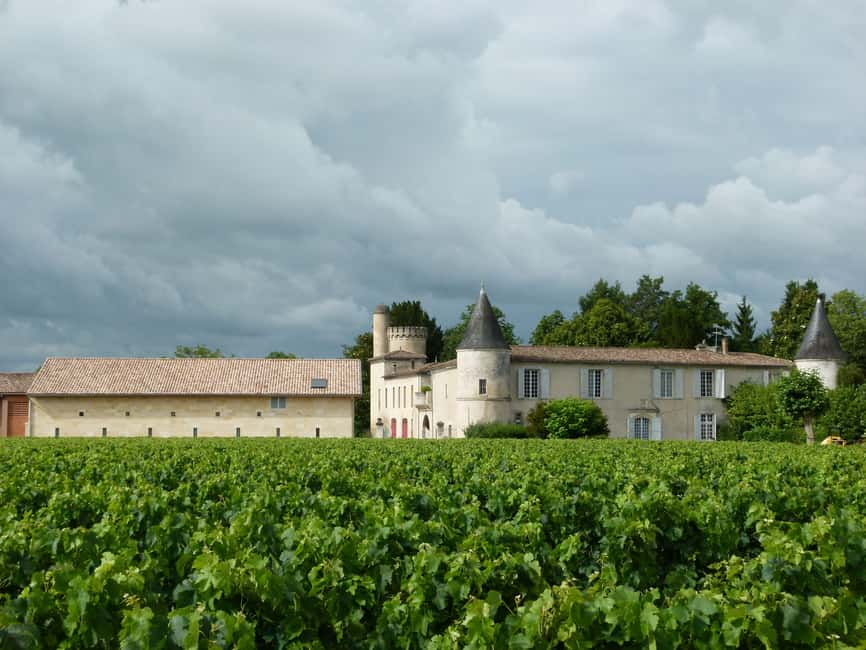
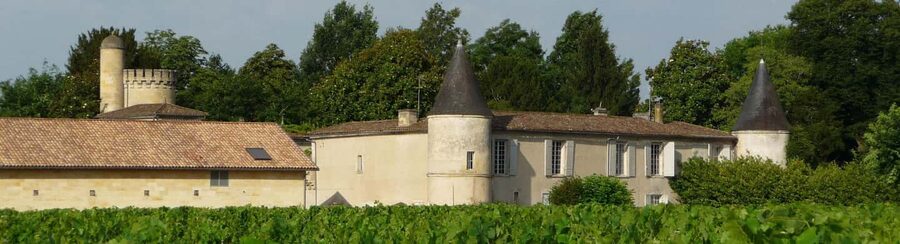
Château Cruzeau sits at 152 Avenue de l’Épinette, in the Libourne area of Nouvelle-Aquitaine. Its 12 hectares place you in a working wine estate rather than a grand public monument. That difference matters. You are not simply touring an ornate building and admiring old labels. You are seeing the places where grapes are processed, wine matures, and the family’s work becomes a finished bottle.
The property lies on the border of Saint-Émilion and Pomerol, two of Bordeaux’s best-known wine names. The château belongs to the Saint-Émilion Grand Cru appellation. That gives the tasting useful context, but the visit keeps its focus on the estate itself and on how the wine is made.
I like this type of stop for a first wine experience in the region. You get enough local background to understand the importance of the area, yet the small family setting makes it easier to ask basic questions. You do not need to arrive with a polished vocabulary for wine. The tour is designed to explain the process as you go.
The Luquot family connection is central. The estate has been managed by the family for five generations, and the personal link is especially clear when Jessica, the owner’s wife, leads the visit. Her English is described as strong and flexible, including with visitors who want to switch between English and French. That is useful when you are trying to understand a technical point about fermentation, barrels, or tasting.
More Winery Tours in France
- Saint-Émilion: Grand Cru Classé Winery Visit and Tasting
★ 4.6 · 1,118 reviews - Saint Emilion Half-Day Trip with Wine Tasting & Winery Visit from Bordeaux
★ 4.5 · 1,034 reviews - Champagne Day Trip with 6 Tastings, Reims and Winery from Paris
★ 5.0 · 902 reviews
Start in the vineyard, where the wine begins
The tour begins with a guided walk through the vineyard. This is more than a scenic opening. The guide uses the vines and soil to explain the agricultural practices behind the estate’s wines.
The most useful part is the discussion of soil life. You learn why the living material below the vines matters and how the condition of the soil helps shape the character of the wine. This is a good antidote to the idea that a bottle’s flavor comes only from the grape variety or the barrel.
The property also promotes environmentally friendly practices. The supplied information does not list every method used at the estate, so you should not expect a detailed technical audit of its farming. Still, the tour gives you a chance to ask how the vineyard is managed and what choices the family makes during the growing season.
The vineyard setting adds a welcome sense of place. You are standing among the vines that supply the cellar, rather than looking at an abstract diagram. If you bring a camera, this is likely one of the most pleasant parts of the visit, especially because the estate is described as being in a green setting near Libourne.
One small limitation is that vineyard conditions change with the season. The tour operates all year by appointment, but the view and the amount of visible vineyard activity will not be identical in January and August. The explanations remain useful, but you should choose the date for your broader Bordeaux plans rather than expect the same scene in every season.
Follow the grapes into the vat room
After the vineyard, you are guided into the vat room. This is where the tour shifts from farming to production.
The guide explains the steps involved in making the wine and shows how the fruit moves through the estate. The exact equipment and current cellar activity can vary, but the purpose of the stop is clear: connect what you saw outside with the work that happens after harvest.
I find this section particularly helpful for anyone who has tasted Bordeaux but never understood its production. A bottle can seem mysterious when you only encounter it at a restaurant table. Seeing the working spaces gives you a better sense of the decisions made between the vine and the finished wine.
The pace appears to be friendly and question-based rather than highly formal. Guides have answered questions about the grounds, farming, winemaking, and tasting, and the strongest part of the experience is the way those subjects connect. You can ask about something you just saw in the vineyard and hear how it affects the next stage in the vat room.
If you already take wine courses or visit many Bordeaux estates, the material may feel introductory. That is not a weakness for most people. It makes the visit accessible to mixed groups, including families with teenagers and people who do not usually drink wine.
See the barrel cellar before the tasting
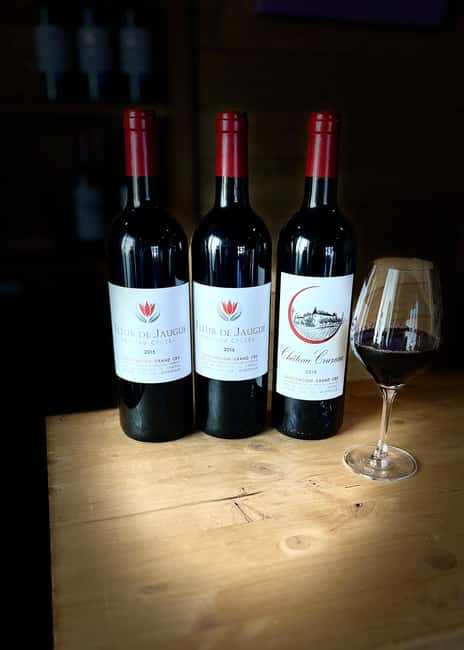
The barrel cellar is the next stop. Here, the focus turns to maturation and the way wine develops after its first stage in the vat room.
A cellar visit is valuable because it slows down the usual wine conversation. Instead of jumping straight to whether you like a particular bottle, you learn that the wine is part of a longer process. The guide can explain the role of the barrels and how the estate handles this stage of production.
The tour does not promise a large underground maze or a dramatic historic cellar. Château Cruzeau is a family property, so the appeal is the direct connection to the production spaces. You see the cellar as part of an active estate, not as a theatrical display built only for sightseeing.
This also gives you a chance to compare the practical scale of a 12-hectare property with the bigger names around Bordeaux. The family-run format can feel more personal, though it may have fewer grand architectural features than a famous estate with elaborate visitor rooms.
Same town, a different glass:
- Paris: Moulin Rouge Cabaret Show Ticket with Champagne
★ 4.7 · 16,088 reviews - Loire Valley Castles Day Trip from Paris with Complementary Wine
★ 4.5 · 3,907 reviews - Bordeaux: Cité du Vin Entry Ticket and Wine Tasting
★ 4.6 · 3,885 reviews - Bordeaux: River Garonne Cruise with Glass of Wine and Canelé
★ 4.5 · 3,630 reviews
Three wines, three chocolates, and a useful tasting lesson
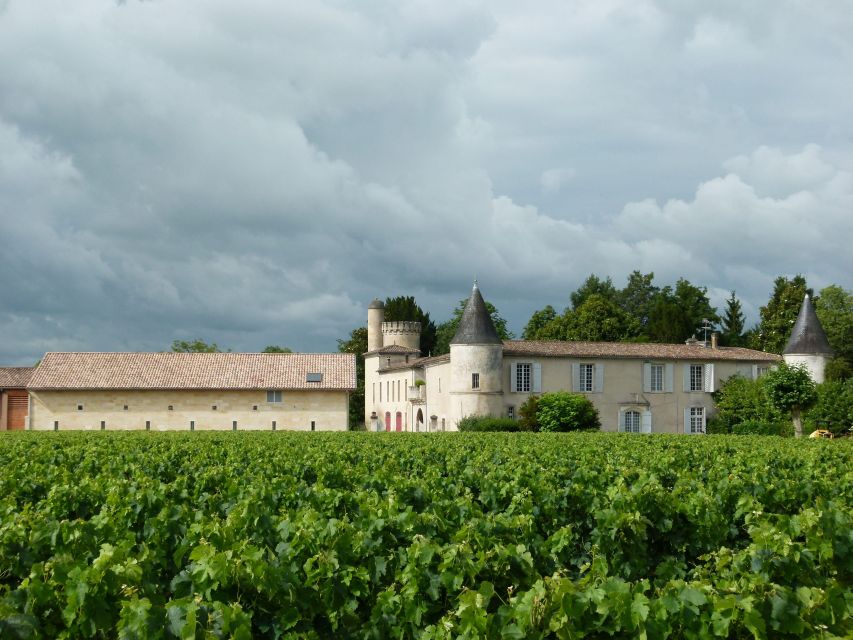
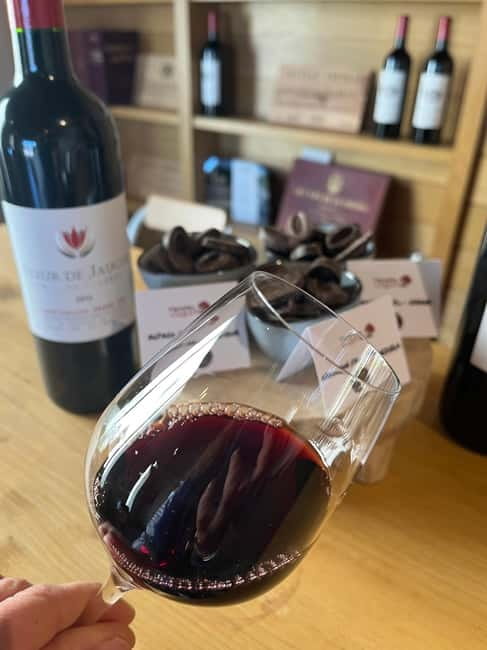
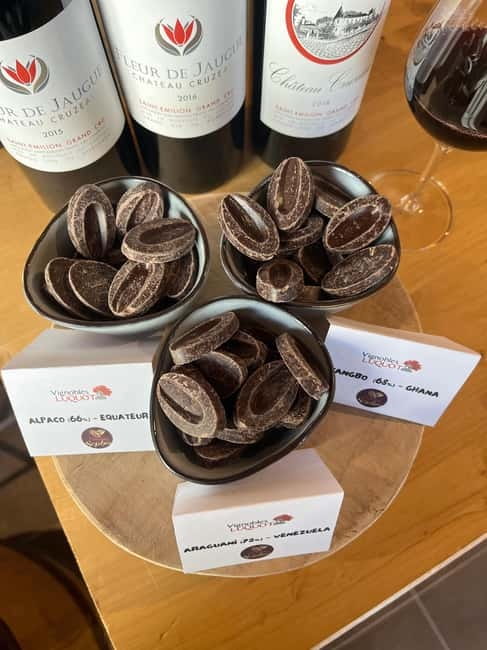
The final tasting pairs three wines from Château Cruzeau with three dark chocolates from Les Chocolats de Sophie, a chocolate maker in Libourne.
The pairing is not just a sweet extra. It gives you a simple way to notice how wine changes beside food. Chocolate can bring out differences in fruit, bitterness, body, and finish. You do not need special tasting skills. The guide walks you through the wines and helps you compare them.
The wines are red, according to the tasting details supplied for the experience. You taste three examples from the property, then try them with the chocolates. The chocolates are described as dark, and the pairing selection comes from the local Libourne maker. One account of the tasting described the chocolates as coming from South America, so the exact chocolate selection may vary. The useful point is that the tasting connects estate wine with a local confectionery source.
This is a strong feature for mixed groups. A wine enthusiast gets a structured comparison, while someone who rarely drinks wine has another flavor to focus on. One couple found that even a non-wine drinker enjoyed the experience, and a teenager in another group also found the visit engaging. The activity is still built around alcohol, so it is not a children’s tasting, but the educational portion can work well for older family members.
The guide also explains how to taste. You will likely be encouraged to compare the wines rather than rush through three separate pours. That makes the tasting more useful than a simple sample-and-shop stop.
You can buy wine at the estate. Shipping wine home has also been possible for visitors who wanted to purchase more, but shipping arrangements and costs are not specified, so ask directly before relying on that option.
The guide makes a real difference
The guide may be Jessica, the owner’s wife, and her role is one of the most distinctive parts of the experience. She has been described as warm, patient, engaging, and passionate about the wine. Those qualities matter because a small château tour depends heavily on the person explaining it.
You can take the tour in English or French. If your French is limited, you can ask for English explanations or switch between the two. This is especially helpful in the tasting room, where a small difference in wording can affect how you understand the wine.
The family connection also gives the visit a more personal shape. You are learning about the estate from someone close to its daily operation, rather than from a guide who simply moves between scheduled groups. Private or very small visits may sometimes be available, but group size is not specified, so do not book expecting a guaranteed private tour.
Getting to 152 Avenue de l’Épinette
Transportation is not included, so you need to make your own way to the château.
If you arrive by train from Bordeaux, one useful local tip is to look for the free number 4 bus just beyond the station parking lot. The bus reportedly stops close to the château. This is worth checking on the day, since local stop locations and schedules can change, and the advice is more practical than relying only on a map app.
You can also walk there if your route and energy allow. One person specifically found the property walkable. Still, the distance depends on where you begin, so check your own starting point before assuming it will be a short stroll.
The meeting point is listed as Accueil, and the address is 152 Avenue de l’Épinette. Transportation is not part of the $21 price, and meals are not included. This is a compact visit, so most people will pair it with other Libourne or Saint-Émilion plans rather than treat it as a full-day outing.
Is $21 a good value?
At $21 per person, the tour is priced well for a 75-minute wine experience that includes a vineyard walk, the vat room, the barrel cellar, three wines, and three chocolates.
The value comes from the range of what you see. A tasting alone might be cheaper, but it would not explain the soil, agricultural work, or cellar stages. A longer château tour might offer more architecture or a larger tasting, yet it could cost much more and feel less personal.
The price is especially fair if you want an introduction to Bordeaux wine without committing to a costly full-day excursion. You get a family estate, a guided production tour, and a food pairing in one short visit.
The main value question is your experience level. If you already know Bordeaux production well, you may want a longer or more technical visit. If you are new to wine, visiting with family, or looking for a practical activity near Libourne, the price makes sense.
Timing, access, and who should book
The activity is advertised as 75 minutes, while the detailed itinerary gives a visit of about 1.5 hours. I would plan on roughly 90 minutes door to door, with a little extra time if you want to ask questions or consider buying wine.
Visits are available all year by appointment. You must check the available starting times when booking. The tour is wheelchair accessible, which is an important practical advantage, though the supplied information does not describe the exact surfaces or route through every area. If you use a wheelchair, confirm the details with the château before arrival.
This experience suits:
- First-time wine drinkers who want plain explanations
- Couples looking for a short activity near Libourne
- Families with older children or teenagers
- Wine fans who enjoy meeting small producers
- Visitors who prefer a working family estate to a grand formal château
- Anyone interested in food pairings, not only wine tasting
It may be less suitable if you want a full meal, transportation from Bordeaux, a large historic château, or a long tasting with many different appellations. Neither transport nor meals is included.
Should you book Château Cruzeau?
I would book this tour if you want an approachable introduction to Bordeaux wine with a personal family feel. The strongest reasons are the complete route through the vineyard, vat room, and barrel cellar, plus the three dark chocolates that give the tasting a playful but useful twist.
The tour is also a smart choice for a mixed group. Wine experts can compare three estate wines, while beginners get a clear explanation of how wine is made. English and French guiding, wheelchair access, year-round appointments, and the nearby free number 4 bus make planning easier.
Skip it only if you want grand architecture, a long formal tasting, or a full-day winery circuit. For a short, fairly priced visit near Libourne, Château Cruzeau offers a direct look at family winemaking and a tasting you will remember for more than the bottle label.
FAQ
Where does the Château Cruzeau tour begin?
The meeting point is Accueil at 152 Avenue de l’Épinette in Libourne.
How long does the visit last?
The activity is listed as 75 minutes. The detailed itinerary describes about 1.5 hours, so allow roughly 75 to 90 minutes.
What does the tour include?
It includes a guided vineyard visit, a visit to the vat room and barrel cellar, a wine tasting, and a pairing of three estate wines with three chocolates from Les Chocolats de Sophie.
How many wines will I taste?
You will taste three wines from Château Cruzeau.
How many chocolates are included?
You will taste three dark chocolates from Les Chocolats de Sophie, a chocolate maker in Libourne.
Is the tour available in English?
Yes. The live guide can lead the experience in English or French.
Is Château Cruzeau wheelchair accessible?
Yes, the activity is listed as wheelchair accessible.
Can I visit at any time of year?
Visits are available all year by appointment. You need to check available starting times before booking.
Is transportation included?
No. Transportation is not included. A free number 4 bus from near the Libourne train station has been noted as a way to reach the château, but you should confirm the current stop and schedule.
Can I cancel the booking?
Yes. You can cancel up to 24 hours in advance for a full refund. Reserve now and pay later is also available.
More Dessert Tours in France
- Paris French Sweets Tasting Tour with Pastries and Chocolates
★ 4.5 · 947 reviews - Passy-Grigny: Chocolate and Champagne Tasting Tour
★ 4.8 · 284 reviews - Award-Winning Geneva Chocolate &Old Town Tour with Boat Ride (3h)
★ 5.0 · 3,721 reviews - Melbourne: Yarra Valley Wine, Gin, Whisky and Chocolate Tour
★ 5.0 · 3,667 reviews
Just added around France
- Saint Emilion Full Day Wine and Bike Tour★ 5.0 · 167 reviews
- Professional – Bordeaux Wine and Cheese Tasting with a walking tour★ 5.0 · 218 reviews
- Medoc Afternoon Wine Tour – 2 Wineries, tastings & delicacies★ 4.5 · 74 reviews
- Bordeaux Wine and Trade Museum Admission Ticket with Wine Tasting★ 4.5 · 599 reviews
- Bordeaux Wine Masterclass: Blending workshop with appetizer★ 5.0 · 113 reviews
- Saint-Emilion Small-Group Electric Bike Wine Tour Tastings & Lunch from Bordeaux★ 5.0 · 383 reviews
- Discovery of the Bordeaux vineyard in 3 wines★ 5.0 · 133 reviews
- Saint-Emilion Winery Morning Tour with Local Guide★ 5.0 · 67 reviews
Winery Tours, compared.
Douro Valley with Winery Lunch, Tastings & Cruise
Read our review →
Montserrat with Black Madonna & Medieval Winery with Tapas/Lunch
Read our review →
Wine Tour: Paarl, Franschhoek & Stellenbosch incl 3 wineries
Read our review →
Douro Valley Tour: 2 Vineyard Visits, River Cruise, Winery Lunch
Read our review →
5-Hour Traverse City Wine Tour: 4 Wineries on Old Mission Peninsula
Read our review →
Tastings at 2 Wineries, Chef’s Lunch & Boat Tour
Read our review →
Douro Valley Tour: Visit 2 Wineries, Lunch & River Cruise
Read our review →Browse the lists this tour appears in