
Review · KYOTO
Kyoto: Local Food Tasting Tour at the Nishiki Market
Nishiki Market is one of Kyoto’s best places to eat, but it can feel like a long, crowded corridor of tempting snacks and unfamiliar labels. This tour gives you a local guide, five planned tastings, and a route through nearby shrines and shopping streets, so you can spend less time guessing and more time eating.
I like the small group of up to six and the mix of foods, from delicate yuba and home-style obanzai to hamo tempura and wagyu steak skewers. I also like that guides such as Ayu, Takuma, Toshi, Saki, and Miho have been praised for explaining customs clearly and offering useful ideas for the rest of a Kyoto trip.
The main drawback is that this is a tasting walk, not a full meal. You also need to be comfortable walking through crowded streets, and the operator cannot handle vegetarian, halal, kosher, gluten-free, or allergy-related requests.
Key points at a glance
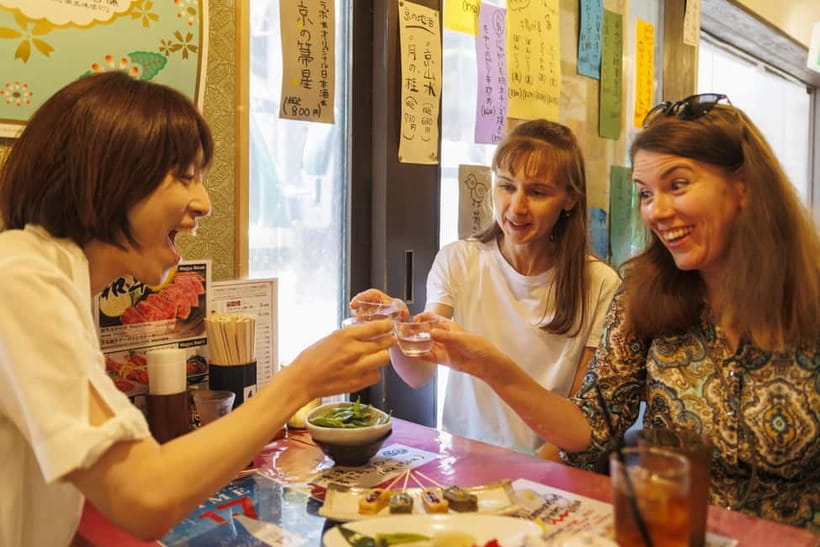
- Five planned Kyoto tastings: Try yuba, obanzai, hamo tempura, wagyu steak skewers, and other small bites without ordering blind.
- A 400-year-old food market: Nishiki has about 130 food stalls, with plenty to see beyond the stops included in the tour.
- Food and culture together: The walk includes Nishiki-Tenmangu Shrine, Shinkyogoku Shopping Arcade, and Teramachi Street.
- A genuinely small group: With a maximum of six participants, it is easier to ask questions and keep pace in tight market lanes.
- Optional tea ceremony: Choose the add-on for a 90-minute ceremony with kimono dressing, a tea master, and time for photos.
- Useful first-day orientation: The guide can help you understand Kyoto foods and point you toward places to revisit on your own.
Why Nishiki Market works best with a guide
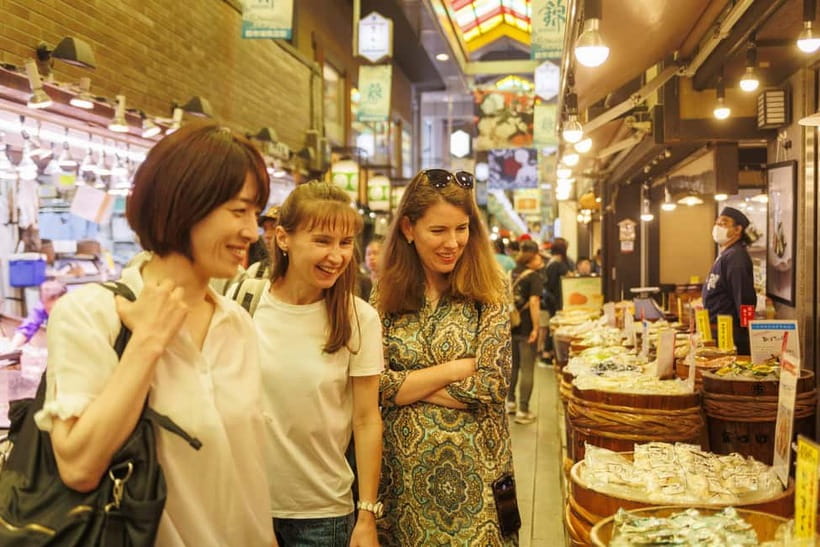
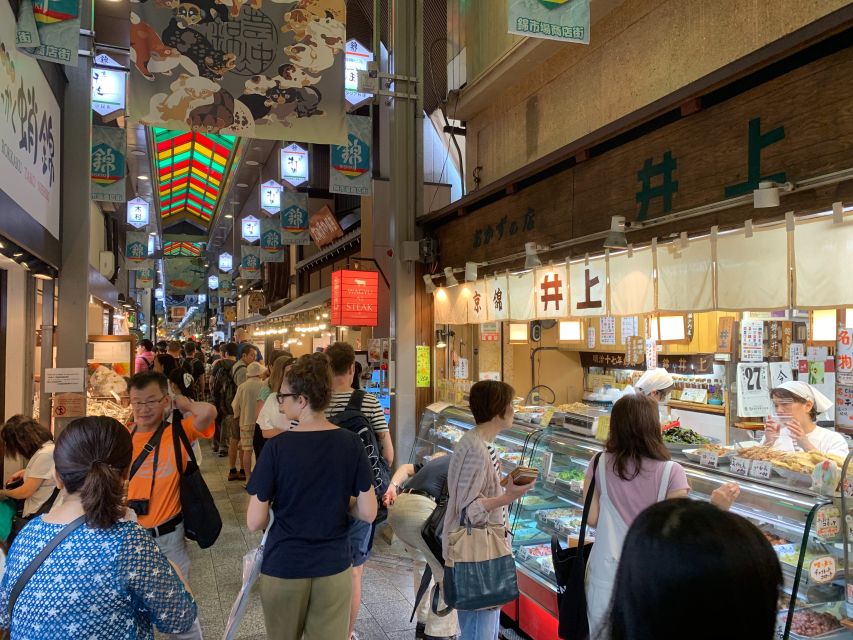
Nishiki Market is often called Kyoto’s Kitchen, and the name fits. The covered market has operated for roughly 400 years and stretches through a dense run of food shops, specialty stalls, and small stores. About 130 stalls mean plenty of choice, but also plenty of chances to miss something good.
I find the market most useful as an introduction to Kyoto food, not simply as a place to grab lunch. Many foods are presented in small portions, sold from counters, or labeled in Japanese. A guide can explain what you are looking at, how it is traditionally used, and which foods are worth trying during a short visit.
That help matters most if you are visiting Japan for the first time. Several guides, including Nagisa, Miho, Annie, and Saki, have been praised for helping people feel at ease in the crowd and for explaining foods they would not have chosen alone. You still have time to look around, but you do not have to make every decision from scratch.
The group size is a real advantage here. Six people is small enough for questions and conversation, while still giving the tour a social feel. On some departures, the group may be smaller, and past outings have sometimes been private or nearly private. The exact group depends on bookings.
A few more tastings around Japan worth a look
- Kyoto: Insider Sake Brewery Tour with Sake and Food Pairing
★ 5.0 · 704 reviews - Hiroshima: Bar Hopping Food Tour
★ 4.9 · 48 reviews - From Split: Krka Waterfalls, Food & Wine Tasting Tour
★ 5.0 · 9,326 reviews
Five foods that give you a proper taste of Kyoto
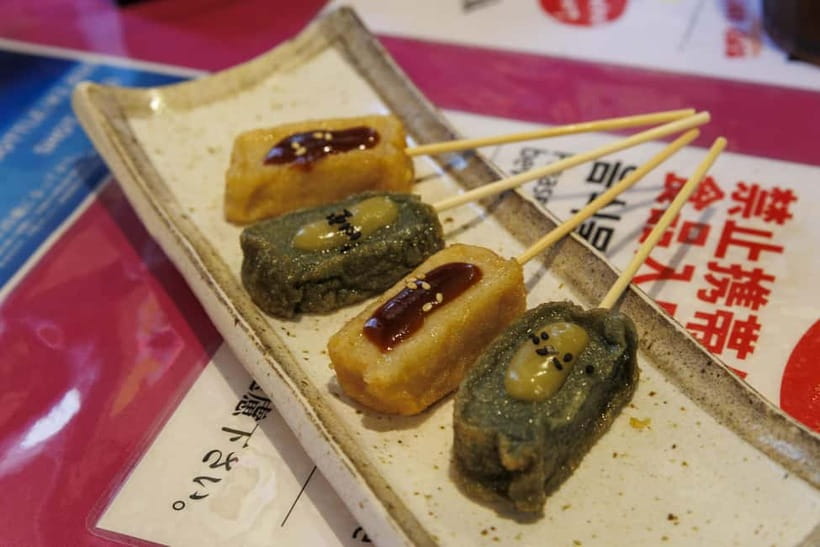
The included tastings are the heart of the experience. The exact selection can vary, but the advertised foods include yuba, obanzai, hamo tempura, and wagyu steak skewers, along with special seasonings, crackers, Japanese-flavored honey, and other small samples.
Yuba is tofu skin, formed from the thin layer that develops when soy milk is heated. Its soft, delicate texture is quite different from firm tofu. This is one of the foods that many people might walk past without understanding, which makes it a useful inclusion on a guided food walk.
Obanzai refers to home-style cooking associated with Kyoto. It is less about one fixed dish than a way of preparing familiar ingredients in a simple, everyday style. This gives you a taste of food culture beyond the famous restaurant dishes.
Hamo tempura is another Kyoto specialty. Hamo is a long, bony fish that requires careful preparation, and tasting it as tempura lets you try a local food in a friendly, snack-sized format. One past participant singled it out as a favorite, which is easy to understand if you enjoy seafood.
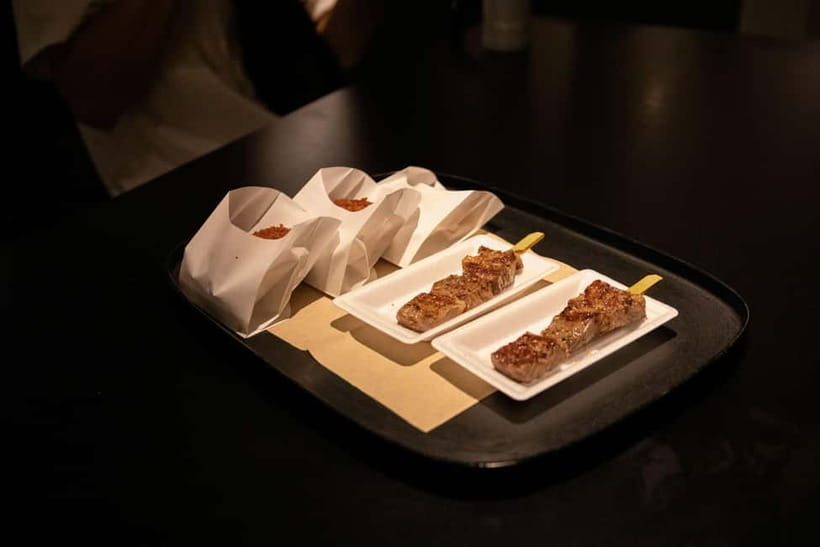
Wagyu steak skewers offer a more familiar pleasure, though in a small portion. The skewer format suits the market, where you are moving between shops rather than sitting down for a long meal.
Other tastings may include Kyoto seasonings, crackers, and Japanese-flavored honey. These smaller samples help show how Japanese food uses texture, salt, sweetness, and aroma. I would arrive hungry, but not so hungry that you rush through the explanations.
The tour is not designed for dietary substitutions. The operator states that it cannot accommodate vegetarian, halal, kosher, gluten-free, or allergy-related needs. If you have a serious food allergy or follow a strict diet, this is not the right booking.
Following the 1.5-hour market walk
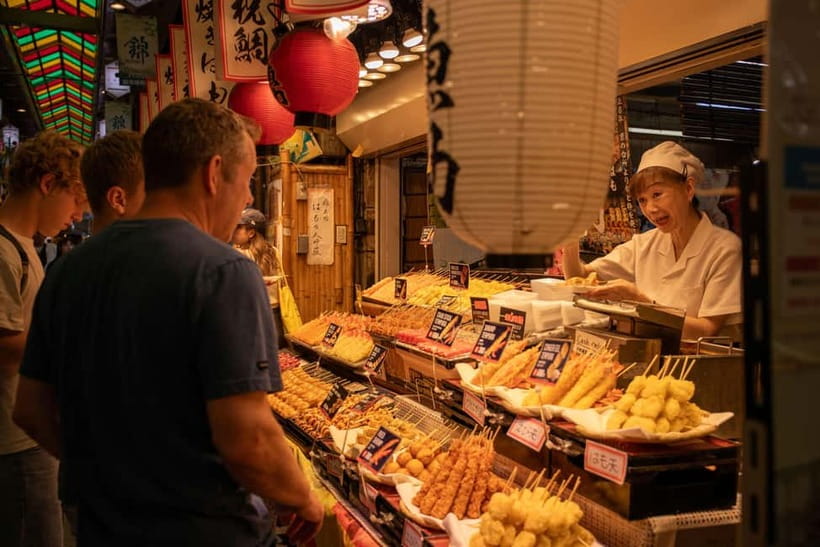
The main market visit lasts about an hour and a half. Your English-speaking guide leads you through selected shops and explains what you are tasting, along with the market’s role in Kyoto life.
The best part is the context. Food here is connected to season, preservation, local habits, and the practical rhythm of daily shopping. Guides have also explained Japanese customs, differences between local areas, and how particular foods fit into Kyoto cooking.
You should expect to stop often rather than walk straight through. That makes comfortable shoes important. Nishiki’s lanes can be tight, and the market may feel crowded, so a large bag or rolling suitcase would be a nuisance. Large bags and luggage are not allowed on the tour.
The route is also social. Guides such as Yume, Hide, and Takuma have been praised for answering questions and adjusting the pace. One family with tweens enjoyed having time to pause and try extra foods, while another participant appreciated being encouraged to taste unfamiliar dishes. Do not expect complete freedom to stop at every stall, but there is room for curiosity.
Nishiki-Tenmangu Shrine and the market’s quieter side
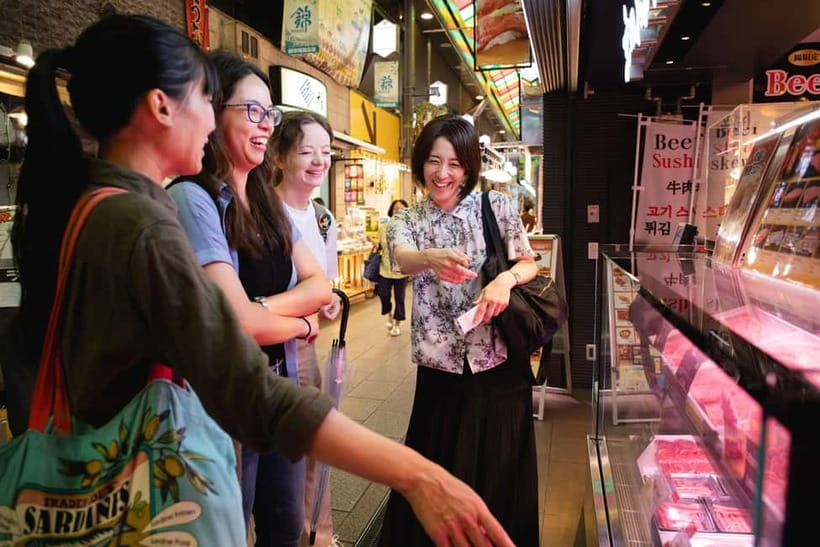
After Nishiki Market, the walk includes about ten minutes at Nishiki-Tenmangu Shrine. It is a short stop, but it changes the mood from food shopping to local worship and tradition.
This is where the tour gains value over a simple market visit. You are not only moving from one snack to the next. The guide connects the market area with Kyoto’s customs and history, then gives you a little time to look around the shrine.
Ten minutes is not enough for a long temple or shrine lesson, so keep your expectations in check. Think of it as a compact cultural pause that gives shape to the neighborhood. Guides have also used the stop to answer questions about Japanese culture and daily practice.
More Market Tours in Japan:
- Barcelona Paella Cooking Class with Market Visit, Tapas & Sangria
★ 5.0 · 2,531 reviews - Pike Place Market Tasting Tour
★ 5.0 · 1,696 reviews - Early-Bird Tasting Tour of Pike Place Market
★ 5.0 · 1,154 reviews - Paella Cooking Class, Wine Tasting & Central Market in Valencia
★ 5.0 · 1,150 reviews
Shinkyogoku’s 45 minutes of shopping and people-watching
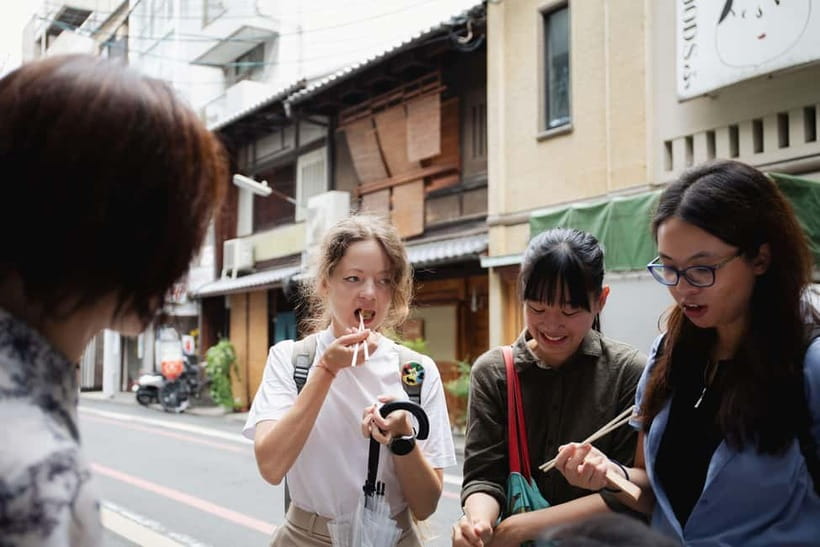
The next major section is Shinkyogoku Shopping Arcade, with about 45 minutes for guided sightseeing and shopping. This is a useful contrast to Nishiki. The market focuses more strongly on food, while the arcade gives you a chance to browse shops and see another side of central Kyoto.
You may find this section especially useful if you want small gifts, snacks, or a sense of how locals shop in the city center. The guide can help explain items that are difficult to judge at a glance, and you can ask for suggestions for the rest of your day.
The tradeoff is pace. A group tour cannot give you unlimited shopping time, and people who want to inspect every store may wish they had longer. If you see something you want to buy, keep an eye on the meeting plan and stay with the group.
The short stop and Teramachi Street
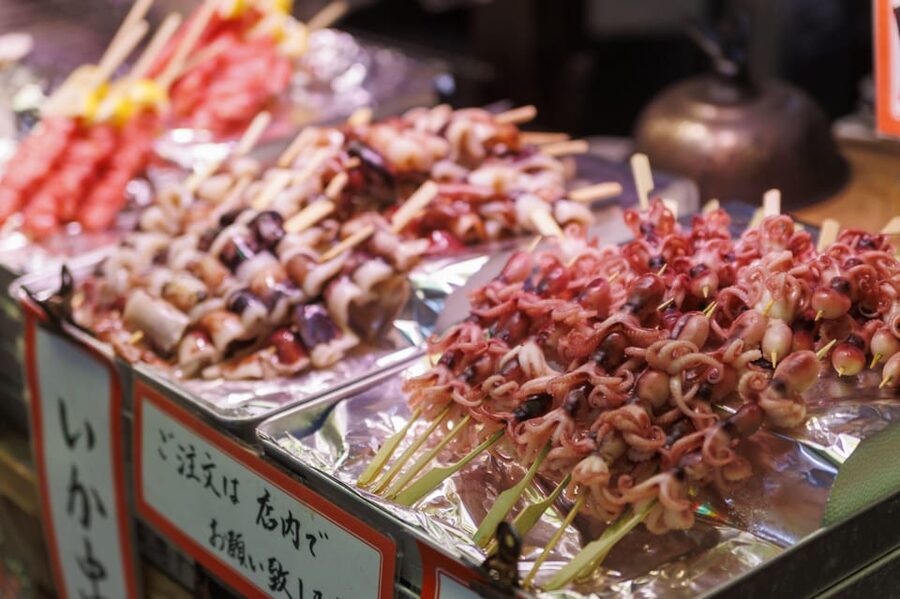
The itinerary includes a ten-minute stop described simply as a local special place. Since no specific name or attraction is supplied, treat this as a brief discovery along the route rather than a major landmark visit. The guide may use it to point out something easy to miss when walking alone.
The final named area is Teramachi Street Shopping District, where you spend about 30 minutes. Like Shinkyogoku, Teramachi brings shopping into the walk, but the two streets give you different stretches of central Kyoto to compare.
This part can be practical as well as pleasant. By now you have tasted several foods and learned how to recognize some ingredients and snacks. You can use that new confidence to decide what you want to return for later.
The tour ends at one of three listed drop-off points: the Shijo Higashinotoin area, Nishiki Orizuruya, or Kyoto Takashimaya S.C. The exact meeting and ending point can vary with the option you book, so check the confirmation carefully.
Is $78 a fair price?
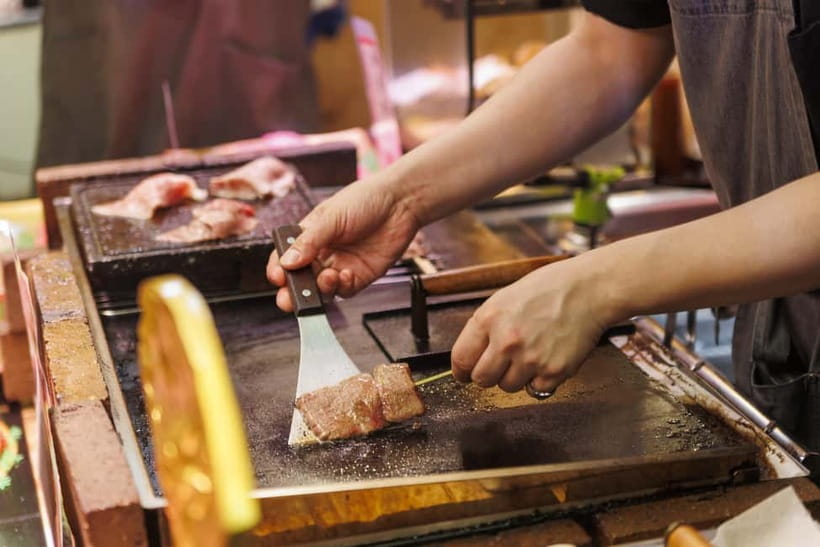
At $78 per person, this is not the cheapest way to stroll through Nishiki Market. You can walk into the market for free and buy individual snacks as you go.
The value comes from the structure. Your fee covers a local English-speaking guide, five selected foods, additional tastings, cultural explanations, and a route that continues beyond the market. You are paying to avoid guesswork and to gain a useful introduction to Kyoto cuisine.
I think the price is easier to justify on your first day or two in Kyoto. A guide can help you identify foods, understand the market, and return later with more confidence. One past participant did exactly that, going back after the tour to try more items alone.
The value is weaker if you already know Japanese food well, speak Japanese, or prefer to browse markets without a schedule. It is also not a good deal for someone expecting a large lunch. The food is spread across several stops, and the experience is built around learning and tasting.
Free cancellation up to 24 hours before the activity and a reserve-now, pay-later option add flexibility. Those policies are useful, but they do not change the central question: you should book this for guidance and access to selected tastes, not for quantity.
The optional tea ceremony after the market
You can add a traditional tea ceremony after the food tour. The ceremony begins at 2:00 PM, and you must make your own way to the venue near Nishiki Market.
The tea session lasts 90 minutes. It begins with professional kimono dressing, followed by a ceremony led by a tea master. You learn what the movements and gestures mean, then have time for commemorative photographs in a traditional setting.
This is a strong add-on if you want a more formal cultural experience after the lively market walk. The two activities also balance each other well: one is informal, food-focused, and mobile; the other is slower and highly structured.
Pay attention to the timing when booking. The tea ceremony is not simply an extension of the walking route, and transportation to the venue is your responsibility. Select the tea ceremony option in advance if you want it included.
What the guides add to the experience
The guide makes or breaks a food walk, and this one has received especially strong praise for personal attention and clear explanations. Ayu has guided several departures and is described as warm, attentive, and good at explaining food and culture. Takuma has been praised for encouraging people to try foods they might otherwise skip.
Toshi has been noted for a friendly manner and for explaining each dish carefully. Saki has helped people navigate the market, choose foods that suited their preferences, and understand nearby shrines. Miho’s calm style was particularly useful in crowded lanes.
Guide assignments vary, so you cannot request a particular person based on these examples. Still, the repeated pattern is encouraging: the guide is not just pointing at food. The role includes answering questions, explaining customs, and sometimes suggesting what to do next in Kyoto.
The English is intended for an international audience, but accents and speaking styles can vary. The small group makes it easier to ask for clarification if you miss something.
Who should book this Kyoto food walk?
I would recommend it to first-time Kyoto visitors, curious eaters, solo visitors, couples, and families with older children. It works well for anyone who wants to try local food but does not want to decode every menu or stall sign alone.
It is also a good first activity because it gives you a map of central Kyoto. After the walk, you will know more about Nishiki, Shinkyogoku, Teramachi, and the nearby shrine area. You can then return to the market on your own with a better idea of what to look for.
The tour is less suitable for people with limited mobility. Wheelchair users and people with mobility impairments are not considered suitable for this experience. You should also be prepared for a group walking tour, crowded market lanes, and possible weather changes. Bring rain gear and wear comfortable shoes.
Should you book it?
Book this tour if you want a guided introduction to Kyoto food, especially if yuba, obanzai, hamo, and wagyu are new to you. The combination of five tastings, a group of no more than six, and nearby cultural stops offers more than a self-guided snack run.
Skip it if you need a strict dietary plan, dislike walking, or want a full sit-down meal. For most first-time visitors who enjoy food and questions, $78 is reasonable because the guide turns a confusing market into an approachable introduction to Kyoto.
FAQ
How long does the Nishiki Market food tour last?
The activity is listed as three hours, with 270 minutes also shown in the timing information. Check the available start time and your booking details for the exact schedule.
What foods are included?
The included special foods are listed as yuba, obanzai, hamo tempura, wagyu steak skewers, and more. Additional tastings can include Kyoto seasonings, crackers, Japanese-flavored honey, and other samples.
Is the tour conducted in English?
Yes. The tour includes a live English-speaking guide.
How many people are in the group?
The group is limited to six participants.
Is this a full lunch?
No. It is a tasting walk with several small food samples rather than a full sit-down meal.
Can the tour accommodate vegetarian or allergy-related diets?
No. The operator states that it cannot accommodate vegetarian, halal, kosher, gluten-free, or allergy-related requests.
Is the tour suitable for wheelchair users?
No. Wheelchair users and people with mobility impairments are listed as unsuitable for this activity.
What should I bring?
Bring comfortable shoes and rain gear. Pets, luggage, and large bags are not allowed.
What does the tea ceremony option include?
The optional 90-minute tea ceremony begins at 2:00 PM near Nishiki Market. It includes professional kimono dressing, instruction from a tea master, an explanation of the ceremony’s movements, and time for commemorative photos. You must make your own way to the venue.
More Shopping Tours in Japan
- Tbilisi:Mtskheta,Jvari,Bazaar,wine tasting,Chronicles of Georgia
★ 5.0 · 730 reviews - Palermo: Street Food and Local Market Tasting Tour
★ 4.9 · 540 reviews - Cusco: Peruvian Cooking Class, Cocktails & Local Market Tour
★ 4.9 · 512 reviews - Budapest Food Tour: Market to Tavern with 14+ Tasters & Wines
★ 5.0 · 434 reviews
Just added around Japan
- Tokyo: Shinjuku Izakaya and Golden Gai Bar Hopping Tour (2h)★ 4.9 · 67 reviews
- Tokyo: Sushi Cooking Class with Sake Tasting★ 4.8 · 55 reviews
- Tokyo: Shinjuku Bar Hopping & Night Walking Tour★ 4.6 · 137 reviews
- Tokyo: Sushi and Ramen Cooking Class with Sake Pairing Set★ 5.0 · 81 reviews
- Tokyo: Ramen Tasting Tour with 6 Mini Bowls of Ramen★ 4.9 · 432 reviews
- Takayama: Authentic Sake Tasting at a Historic Brewery★ 4.8 · 50 reviews
- Shibuya Meltdown Night Tour: All-You-Can-Drink Bar Hopping★ 4.8 · 183 reviews
- Tsukiji: Unlimited Sake Tasting Experience★ 4.9 · 67 reviews
Drinks Tours, compared.

Unlimited Prosecco, Beer and Aperol Spritz Cruise
Read our review →
Evening Cruise with Optional Wine and Snacks
Read our review →
Douro Valley w/ Boat Tour, Wine Tasting & Lunch
Read our review →
Chichen Itza, Cenote & Valladolid Tour with Tequila and Lunch
Read our review →
Complete Douro Valley Wine Tour with Lunch, Wine Tastings and River Cruise
Read our review →
Small-Group Wine Tasting Experience in the Tuscan Countryside
Read our review →
Douro Valley with Winery Lunch, Tastings & Cruise
Read our review →Browse the lists this tour appears in