
Review · TORONTO
Toronto: Distillery District Historic Walking Tour
Toronto’s Distillery District is more than cobblestones, boutiques, and pretty brick façades. It was once the home of Gooderham and Worts, a company that grew into the world’s largest distillery. This one-hour walk connects the polished district you see today with a rougher Toronto of whiskey, business schemes, social change, and very thirsty citizens.
I like the access to historic interiors, including areas that are not always open to the public. I also like the way guides such as Erik, Nicole, Devin, Tom, and Eric use humor and questions to make the past easy to follow. The main consideration is simple: this is a history walk, not a drinks tasting. For spirits, book the separate Prohibition and Spirits Walking Tour.
Key points to know before you go

- Gooderham and Worts takes center stage: Learn how a local distillery grew into the world’s largest.
- Some interior access is included: You may see parts of buildings that casual visitors cannot enter.
- Toronto’s early years get a lively treatment: Expect stories about liquor, business, changing shorelines, and city life.
- The walking is easy: The tour lasts one hour and is generally suitable for visitors aged 10 and older.
- Guides make the difference: Erik, Nicole, Devin, Eric, Tom, and other guides are praised for clear stories, humor, and friendly answers.
- Drinks are not part of this booking: Chocolate or beer samples have appeared in some past tour experiences, but the current description includes no tasting.
Toronto’s whiskey district, before the boutiques
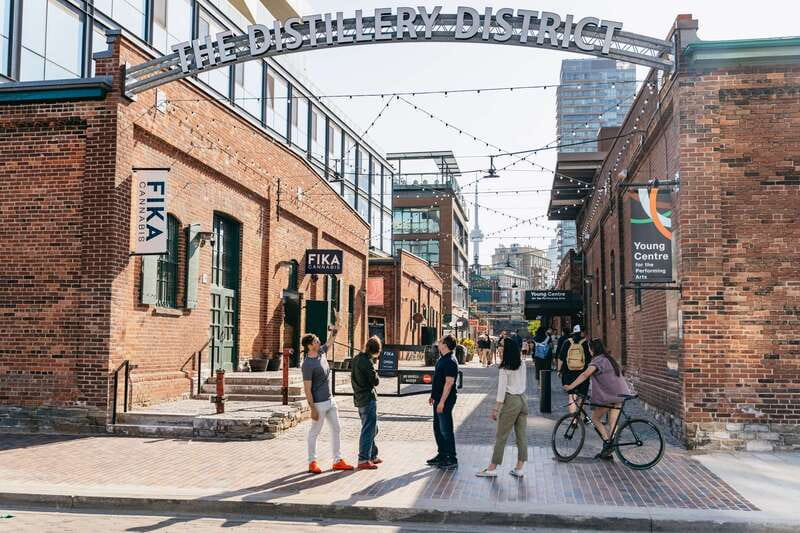
The Distillery District now feels designed for wandering. Its Victorian buildings hold restaurants, bars, shops, galleries, theaters, and outdoor sculptures. Yet the clean presentation can hide how industrial and rough-edged this place once was.
That contrast gives the walk its purpose. You are not simply admiring old façades. You are learning why this particular cluster of buildings mattered to Toronto’s growth, and how a company built around alcohol became tied to employment, trade, family fortunes, and city politics.
The story centers on Gooderham and Worts. The company began as a major local business and eventually became the world’s largest distillery. The tour also follows its decline, ending with the fact that distilling stopped in 1990. That rise and fall gives the hour a clear shape. You start with ambition, move through expansion and influence, and finish with the industrial site’s new life as a cultural district.
I find that especially useful if you have already visited the area on your own. The streets are attractive enough to reward a casual stroll, but the buildings make more sense once you understand what they were built to do.
More Distillery Tours in Canada:
- Toronto Distillery District Walking Tour
★ 5.0 · 327 reviews - Quebec City: Honey and Distillery Tour with Tasting
★ 4.9 · 103 reviews - Toronto: Short Distillery District Segway Tour
★ 4.8 · 55 reviews
Meeting near the Red Heart
Your starting point is Go Tours Canada at 11 Gristmill Lane, inside the Distillery District. The office is near the Red Heart at Parliament Street and Mill Street. Check in there before setting out.
The meeting point matters because the district has several entrances and plenty of visual distractions. Give yourself enough time to find the office rather than arriving at the last minute and trying to identify the group among the shops and old industrial buildings.
Wear comfortable shoes. The walking level is easy, but the tour takes place outdoors as well as inside. A camera is worth bringing because the district combines brickwork, old industrial details, narrow lanes, sculptures, and unusual views through and around the buildings.
The tour runs for one hour and returns to Go Tours Canada. That compact length works well in a Toronto sightseeing day. You can place it before lunch, after a visit to another downtown attraction, or at the start of a longer stay in the district.
Looking closely at Victorian industrial architecture
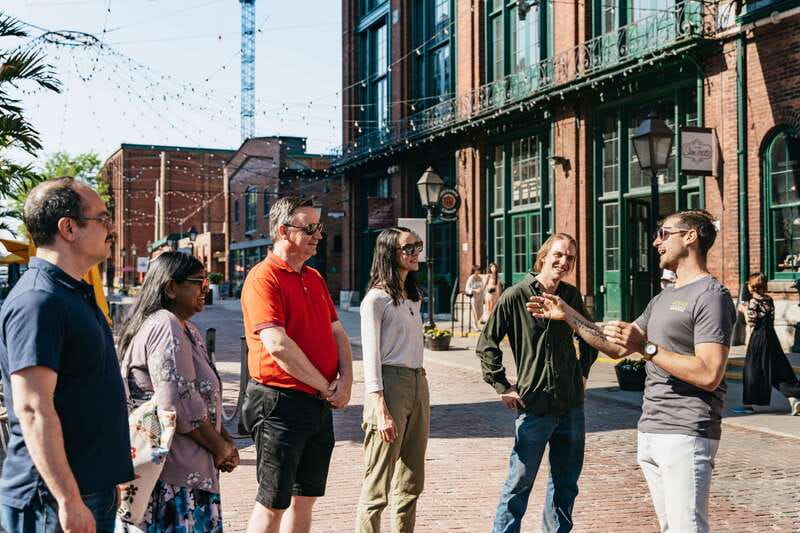
The architecture is the first thing you notice, but the guide helps you see past the surface. The Distillery District contains the largest and best-preserved collection of Victorian industrial architecture in North America, according to the tour description. That is a strong reason to take the walk even if you are not especially interested in whiskey.
Look for the practical side of the buildings. Thick walls, industrial scale, and working spaces tell you that this was a place of production rather than decoration. One building singled out by visitors has walls about a meter thick. Details like that help explain the demands of distilling and the desire to protect valuable goods, equipment, and storage areas.
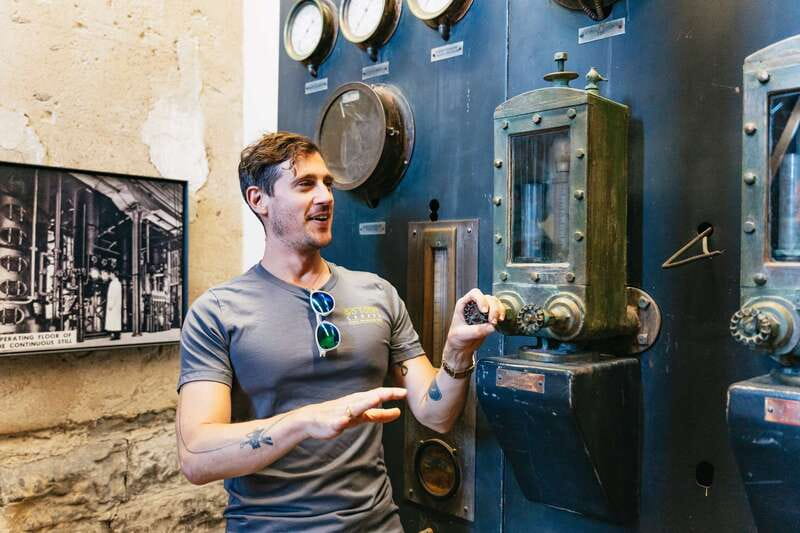
The tour includes architecture from the inside and out. You may receive a brief look at spaces that are not normally open to the general public. That access adds value because exterior façades can only tell part of the story. Inside, the scale and construction give you a clearer sense of the original workplace.
Do not expect a museum-style route packed with formal exhibits. The experience is a guided walk through a functioning district. Shops, cafés, restaurants, and galleries remain part of the setting, and that mix helps you see how an old industrial area has been put to new use.
The Gooderham and Worts story
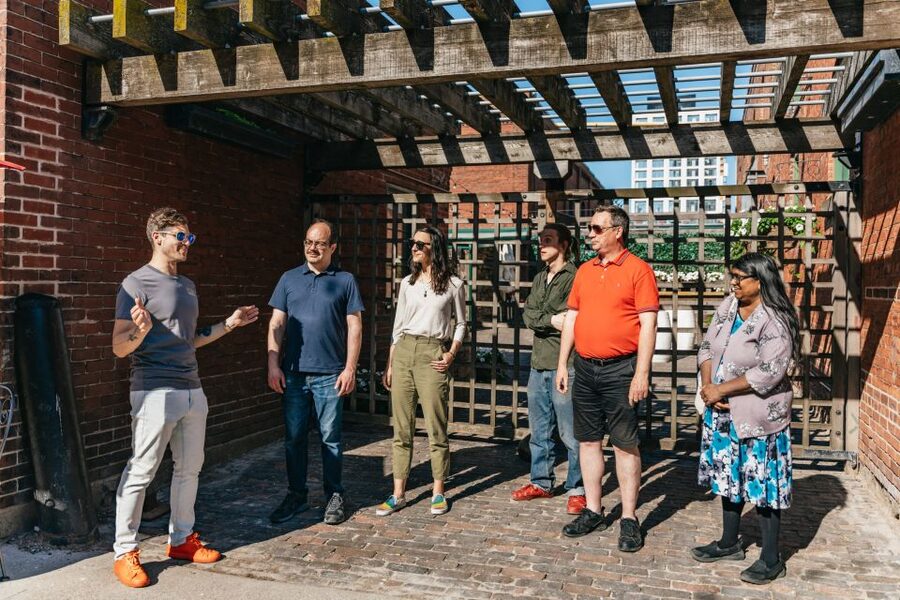
Gooderham and Worts is the backbone of the hour. The company’s success was not a minor local tale. It became a major force in Toronto and, at its height, the world’s largest distillery.
Your guide explains the company’s rise alongside the growth of the city. Toronto was young, unruly, and strongly connected to the liquor trade. The tour uses that setting to show how a distillery could create jobs, attract commerce, and help shape the city’s early identity.
The story also includes the company’s families and internal business drama. That human element keeps the talk from becoming a list of dates and production figures. You hear about ambition, influence, and the pressures that come with running a huge enterprise.
One useful detail concerns the shoreline. The lake was much closer to the original property than it is today. Changes to Toronto’s waterfront altered the relationship between the distillery and the water, and that physical change helps you picture the site as it once was.
The tour also covers the less expected parts of the business. The district’s industrial work included antifreeze, not only liquor. That detail is a good reminder that large companies often had more varied operations than their best-known product suggests.
A few more tastings around Canada worth a look
- Quebec City: Historical Walking and Tasting Tour
★ 4.8 · 70 reviews - Sevilla Food Tour: Tapas, Wine, History & Traditions
★ 5.0 · 3,468 reviews - Valencia Old Town Tour with Wine & Tapas in 11th Century Historic Monument
★ 5.0 · 3,234 reviews - Edinburgh: Whisky Tasting with History and Storytelling
★ 4.9 · 2,451 reviews
A city with a serious drinking habit
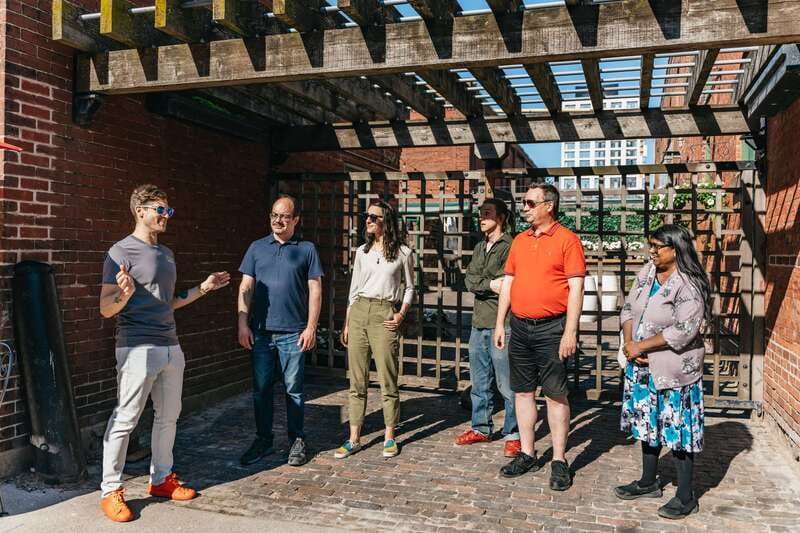
The tour’s title may focus on a distillery, but the wider subject is Toronto itself. The city’s early years were shaped by drinking, trade, work, and social rules that changed over time.
A good guide makes that setting understandable without turning the hour into a lecture. Guides such as Erik, Devin, Nicole, Tom, and Eric have been praised for combining facts with jokes, questions, and plain explanations. That style matters here because alcohol production can sound dry on paper. The stories give it movement.
You may also hear about the jobs created by the distillery, including opportunities for women. That point broadens the story beyond wealthy owners and company growth. It shows how a major industrial workplace affected ordinary families and brought wider social changes to Toronto.
The best part of the experience is the connection between big history and small details. A shoreline moved. A company expanded. Women found employment. A city developed around trade and industry. Eventually, distilling ended, and the buildings took on a new purpose.
A tour shaped by its guide
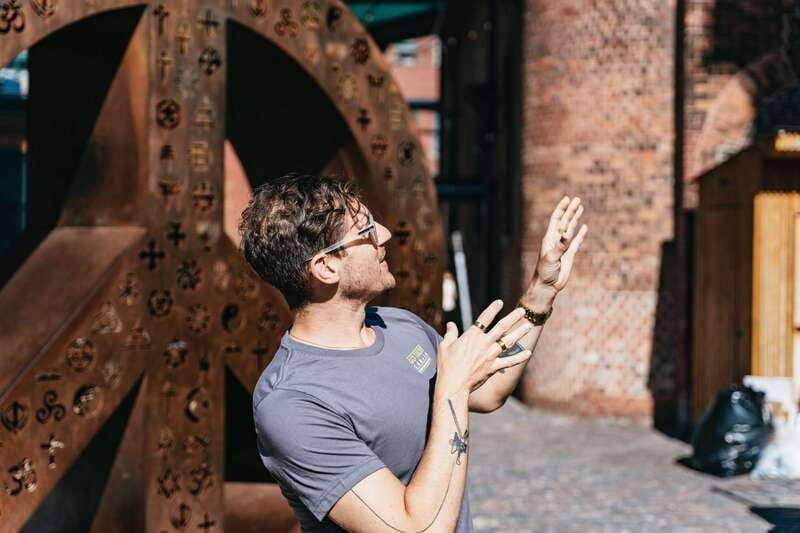
The guide is the most important variable. The strongest descriptions of this experience point to an engaging, energetic style rather than a quiet recital of information.
Erik is praised for enthusiasm, humor, and his ability to answer questions. Nicole is repeatedly described as friendly, patient, and willing to give a full explanation even when only one person joined the tour. Devin is noted for bringing the period to life and keeping the group interested even in heavy rain. Tom is praised for clear and engaging storytelling, while Eric is described as energetic and well prepared.
Those names are useful when comparing available departures, although you may not be able to choose your guide. The broader lesson is that the company’s guides appear to treat the hour as a conversation. They answer questions, connect the site to the rest of Toronto, and adjust when the group is small.
A small group can be a real advantage. Several past tours had only one or a few participants, and the guide still ran the full experience. That can mean more chances to ask about architecture, waterfront changes, family history, or the district’s present-day businesses.
At the same time, the value of a walking tour depends on your interest in listening. If you prefer to browse shops independently or take photographs at your own pace, an hour of guided commentary may feel structured. If you want the buildings to make sense, the structure is helpful.
What the one-hour route gives you
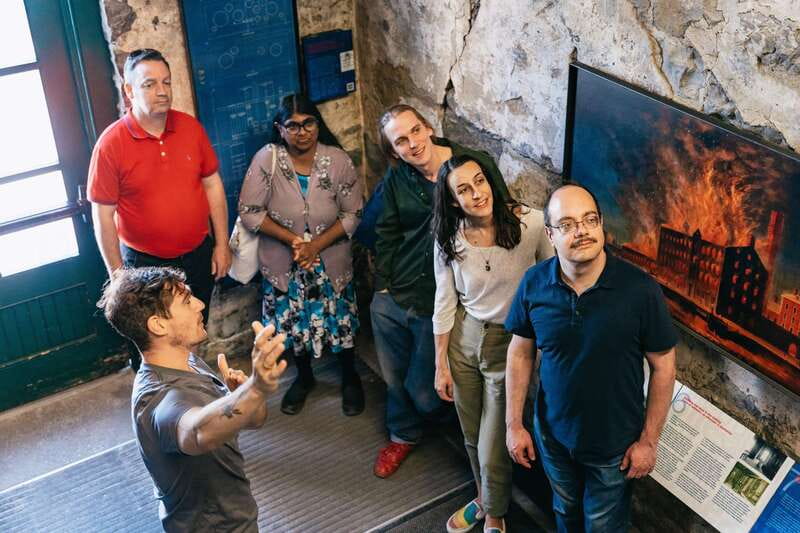
The walk begins at Go Tours Canada, moves through the Distillery District, and finishes back at the same office. The route is short, but the subject is larger than the physical area.
At the start, you get your bearings and learn why the district is important. The guide then places the buildings in their original industrial setting, explains the role of Gooderham and Worts, and points out architectural features that are easy to miss.
As you move through the district, expect a mix of exterior viewing and interior access. The exact buildings or rooms may vary, but the experience can include glimpses of areas beyond the usual public route. You should pay attention to walls, building scale, and the way the old structures fit together.
The final part connects the past with the district you see now. Restaurants, bars, galleries, theaters, boutiques, and sculptures have replaced the working distillery, but the old framework remains. After the tour, you return to Go Tours Canada, leaving you well placed to explore on your own.
The hour passes quickly. That is a benefit for families, first-time visitors, and anyone fitting several Toronto sights into one day. It is also the main limit. You will get a strong introduction, not a full industrial archaeology course.
Price, timing, and practical value
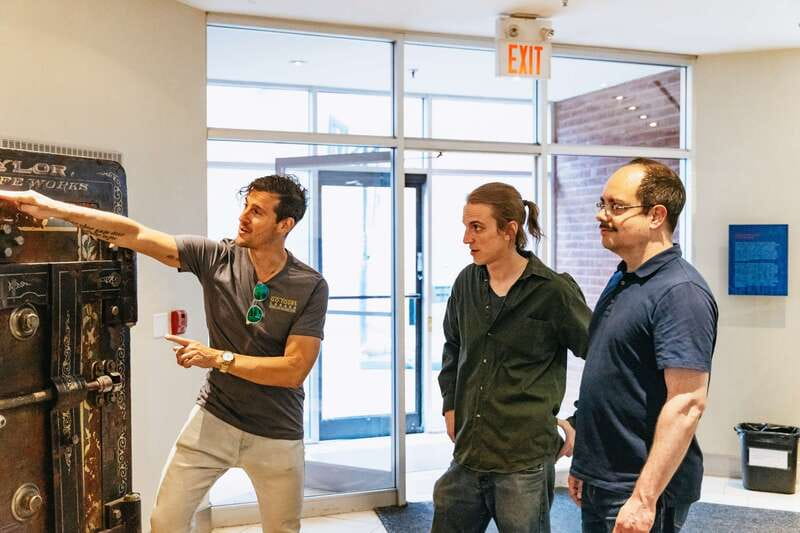
At $20 per person, this is a reasonable use of an hour in Toronto, especially if you already plan to visit the Distillery District. You are paying for a live guide, historical interpretation, interior access when available, and a clearer understanding of an area that is easy to admire without fully understanding.
The value is strongest if you would otherwise wander for an hour without context. The district is free to walk through, so the paid question is not about access to the streets. It is about whether the stories, explanations, and possible interior glimpses add enough to justify the fee. For most history-minded visitors, they do.
The tour includes sales tax and a professional English-speaking guide. It does not include food or alcohol in the current details. Some older tour experiences ended with chocolate, beer, or a sample, but you should not book this version expecting a tasting.
If tasting matters to you, choose the separate Prohibition and Spirits Walking Tour. That option combines Prohibition and Distillery District history with a flight of spirits at the end.
The booking terms are friendly for changing plans. You can cancel up to 24 hours before the tour for a full refund, and the reserve-now, pay-later option lets you hold a place without paying immediately.
Who will enjoy this walk most

I would recommend this tour to first-time visitors who want an easy introduction to one of Toronto’s most distinctive areas. It also suits locals playing tourist, since repeated visits to the district may reveal the shops and restaurants without explaining the industrial past.
Families with older children can manage the route comfortably. The general recommendation is age 10 and above, and the easy walking level removes much of the physical strain found on longer city tours.
Architecture fans will appreciate the Victorian industrial buildings and interior details. History fans will get the clearest value from the Gooderham and Worts story, the waterfront changes, and the account of Toronto’s early years.
The tour is less suitable if your main goal is alcohol tasting. It is also not the right choice if you want several hours of detailed exploration inside historic buildings. For that, you would need a longer or more specialized experience.
The route is wheelchair accessible, which makes it a practical option for visitors who need an accessible city activity. You should still wear comfortable shoes and check the available starting time when booking.
After the tour, stay in the district
Plan to remain in the Distillery District after the walk. The tour ends where it began, and the surrounding restaurants, bars, boutiques, galleries, theaters, and sculptures give you plenty to see at a slower pace.
The guide may also point out places worth returning to. Past tours have included recommendations for nearby sights and time to ask questions. Use that final conversation to clarify anything you missed and to decide where to eat, browse, or take photographs.
The district works well after the history walk because you will notice different things. A wall becomes evidence of industrial construction. A lane becomes part of a working plant. A polished shopfront sits inside a structure that once supported a very different kind of business.
Should you book the Distillery District Historic Walking Tour?
Book it if you want the Distillery District to feel like more than a photogenic shopping quarter. The one-hour format is easy to fit into a Toronto itinerary, the walking is gentle, and the price is fair for a live historical tour with possible interior access.
I would especially choose it for the stories about Gooderham and Worts, Toronto’s early drinking culture, the changing waterfront, and the jobs created by the distillery. Guides such as Erik, Nicole, Devin, Tom, and Eric have shown the lively, personal style this subject needs.
Skip this version if a spirits flight is essential. Choose the Prohibition and Spirits Walking Tour instead. For everyone else, this is a smart first step before spending more time among the district’s restaurants, galleries, shops, and old brick buildings.
FAQ
How long does the Distillery District Historic Walking Tour last?
The guided walking tour lasts one hour.
How much does the tour cost?
The price is $20 per person, including sales tax.
Where does the tour begin?
Meet at the Go Tours Canada office at 11 Gristmill Lane, inside the Distillery District. It is near the Red Heart at Parliament Street and Mill Street.
Where does the tour finish?
The tour returns to Go Tours Canada at the original meeting point.
Is the tour offered in English?
Yes. The live tour guide speaks English.
Is the walking difficult?
The walking level is easy. Comfortable shoes are recommended.
Is the tour wheelchair accessible?
Yes, the activity is listed as wheelchair accessible.
Is alcohol tasting included?
No. The current tour details include a one-hour walking tour and a professional guide, but no alcohol tasting. A separate Prohibition and Spirits Walking Tour includes a flight of spirits.
Can I cancel for a refund?
Yes. You can cancel up to 24 hours in advance for a full refund. You can also reserve now and pay later.
More Walking Tours in Canada
- Madrid Tapas & Wine Tasting Walking Tour – Small Group Local Bars
★ 5.0 · 3,644 reviews - Montmartre Hill French Gourmet Food and Wine Tasting Walking Tour
★ 5.0 · 2,588 reviews - Toledo Tour & Vineyard Walk with Wine Tasting from Madrid
★ 5.0 · 2,546 reviews - Southern Flavors Food, Pub Crawl, and History Walking Tour
★ 4.5 · 1,623 reviews
Just added around Canada
- Calgary Street Art & Craft Beer 3 Hour Tasting Tour★ 5.0 · 44 reviews
- Blend Your Own Gin Experience in Banff★ 5.0 · 170 reviews
- Toronto: Short Distillery District Segway Tour★ 4.8 · 55 reviews
- Toronto: Niagara-on-the-Lake, Wine Tasting & Chocolate Tour★ 4.8 · 62 reviews
- Quebec City: Island of Orleans Wine Tour★ 4.6 · 109 reviews
- Quebec City: Honey and Distillery Tour with Tasting★ 4.9 · 103 reviews
- Pickle Pub Crawl: Ferry Rides and Appetizers★ 4.7 · 52 reviews
- Niagara, Canada: Half-Day Winery Tour with Tastings★ 4.4 · 175 reviews
Distillery Tours, compared.
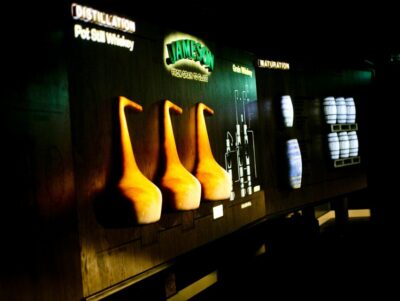
Jameson Whiskey Distillery Tour with Tastings
Read our review →
Dublin Jameson Distillery Bow St. Tour and Tasting 45 mins
Read our review →
Dublin Jameson Distillery and Guinness Storehouse Guided Tour
Read our review →
Nashville to Jack Daniel’s Distillery Bus Tour + Whiskey Tastings
Read our review →
Dublin Teeling Whiskey Distillery Guided Tour and Tasting 1 Hour
Read our review →

Hierve el Agua, Tule Tree, Mitla and Mezcal Distillery Tour
Read our review →Browse the lists this tour appears in