
Review · GREECE
Thessaloniki: Food Tastings and Drinks tour with a Chef
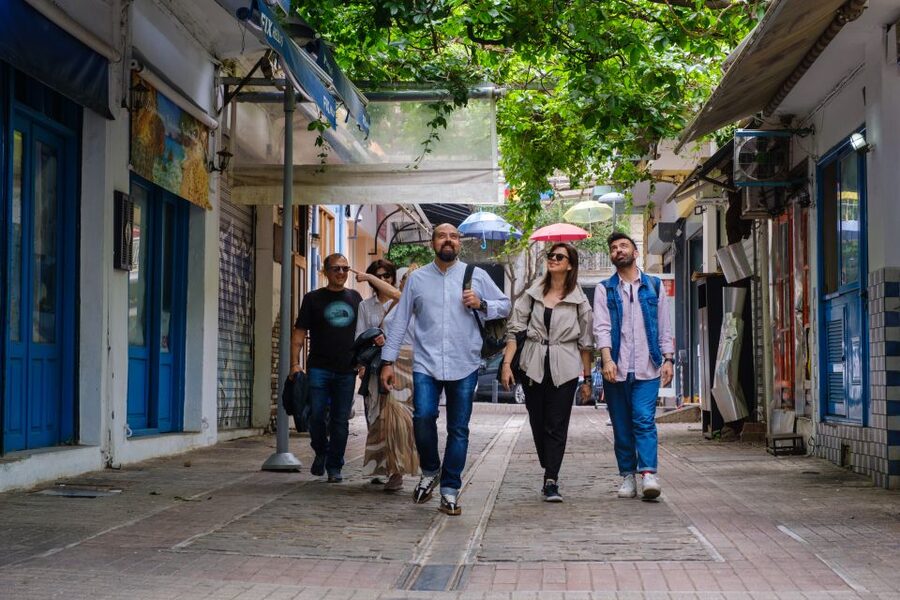
Thessaloniki’s best food stories are found on foot, in the shops and markets where locals buy cheese, pastries, coffee, seafood, herbs, and prepared foods. Chef Panos turns those stops into a four-hour lesson in the city’s mixed cultural past, with plenty to eat along the way.
I especially like the small group of six, which gives Panos time to explain a cheese, answer questions, or adjust the pace. I also like the way the tour reaches family-run food shops and ordinary market stops rather than sticking to sights built for tourists. The main caution is simple: come hungry, because the tastings can add up to a full meal, and you may need to pace yourself.
At a glance
- Chef-led food walk: Panos brings professional culinary experience as well as a strong personal connection to Thessaloniki.
- Local staples and lesser-known tastes: Try koulouri and bougatsa, then move on to cheeses, salads, seafood, meats, coffee, wine, and regional products.
- Food as a guide to history: Thessaloniki’s multicultural past is explained through its ingredients, shops, recipes, and eating habits.
- A very small group: With no more than six participants, the tour feels more like a guided outing with a local than a large organized walk.
- Four hours in central Thessaloniki: The route links markets, grocery shops, pastry stores, delis, cheese sellers, cafés, and places for drinks.
- Useful for the rest of your stay: Panos can point out food shops and restaurants worth returning to after the tour.
Why food is the right way to meet Thessaloniki
Thessaloniki is a city where food reflects movement. Greek traditions meet Balkan, Ottoman, Jewish, eastern Mediterranean, and Macedonian influences, and the result is not a tidy single cuisine. It is a city of layered flavors, old habits, imported ideas, and local ingredients.
This tour uses that mixture as its organizing thread. Instead of giving you a standard walk past monuments, Panos shows you how the city eats. A pastry can open a conversation about migration. A cheese can lead to the farming traditions of northern Greece. A cup of coffee can explain a drink that became closely linked with modern Greek café life.
That approach makes the tour useful even if you have already seen the White Tower, Aristotelous Square, or the main churches. You are not simply collecting samples. You are learning how Thessaloniki works at street level.
Panos is the key to the experience. He guides in English and Greek, and his interests reach beyond recipes. He talks about local customs, social life, historical change, and the people behind the shops. Several stops are places connected to his own life in the city, which gives the route a personal feel.
A few more tastings around Greece worth a look
- Athens: Street Food Tasting Tour
★ 4.9 · 3,343 reviews - Eating Athens: Our Big, Fat, Greek Food Tour
★ 5.0 · 570 reviews - Best Food Tasting Tour of Athens, taste 18+ iconic Greek foods!
★ 5.0 · 448 reviews
Starting at St. Sophia with coffee and context
The meeting point is in front of the gate to the Church of St. Sophia. You are told to look for Panos by his large beard and big smile, which should make the first meeting fairly easy.
The tour often begins with coffee and an introduction to Thessaloniki. One of the city’s signature cold coffees, frappé, gets special attention, including the story of how it was created and why it became such a familiar part of Greek daily life.
This opening is more useful than it may sound. You get a short orientation before the food begins, and you start to see cafés and coffee habits as part of the city’s social life. Panos also uses the early part of the walk to explain how Thessaloniki grew as a meeting point for different communities.
The coffee stop is not just a caffeine break. It sets the tone for a tour that connects ordinary food with larger stories. If you are visiting Thessaloniki at the start of your trip, this can help you read the city more confidently during the days that follow.
Koulouri, bougatsa, and the city’s sweet side
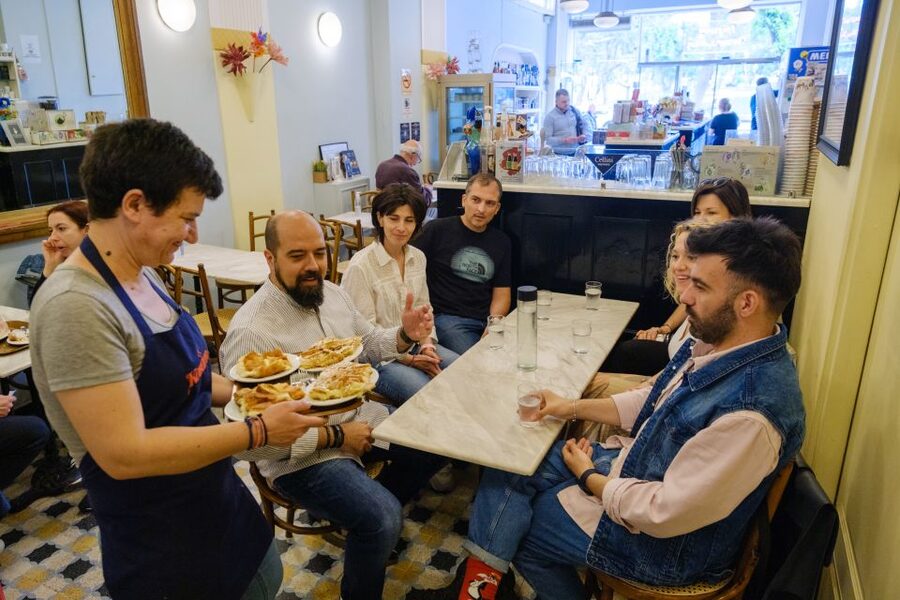
Two Thessaloniki staples receive special attention: koulouri and bougatsa. Koulouri is the sesame-covered ring of bread you will see in bakeries and street stands. It is modest, portable, and closely linked with everyday city life.
Bougatsa is the more indulgent stop, often associated with pastry, cream, and layers of flaky dough. The tour treats it not simply as a sweet snack, but as part of Thessaloniki’s wider food culture and its connections with nearby regions and older culinary traditions.
The exact order and presentation can change, but you should expect traditional pastries to play an early role. Panos explains how different foods are made and why certain dishes became local favorites. That detail matters because pastry names alone tell you very little. The pleasure comes from understanding how a food fits into breakfast, street life, family habits, or a particular neighborhood.
The practical point is to avoid eating a large breakfast before you arrive. These are tastings, but the portions across the full morning or afternoon can be generous.
Markets where Thessaloniki shops for dinner
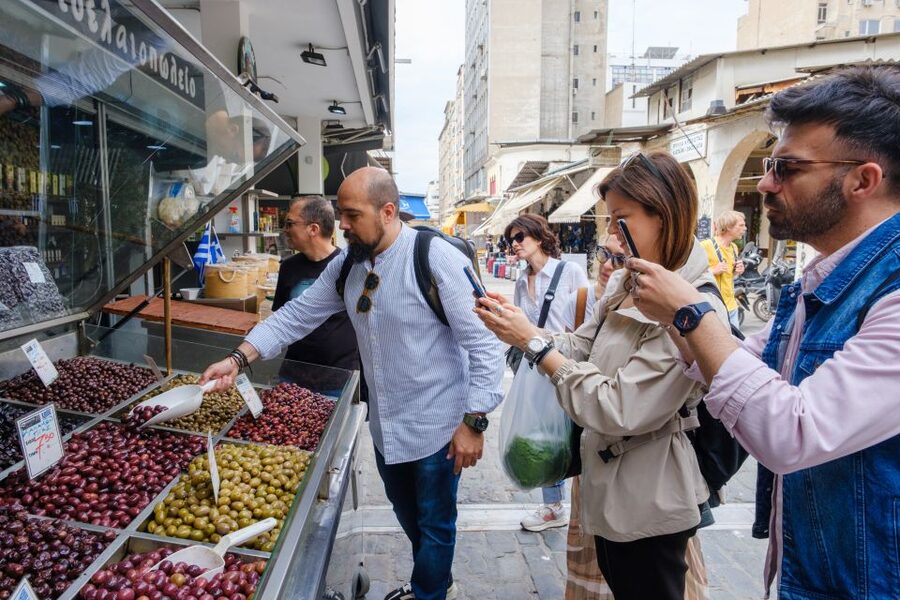
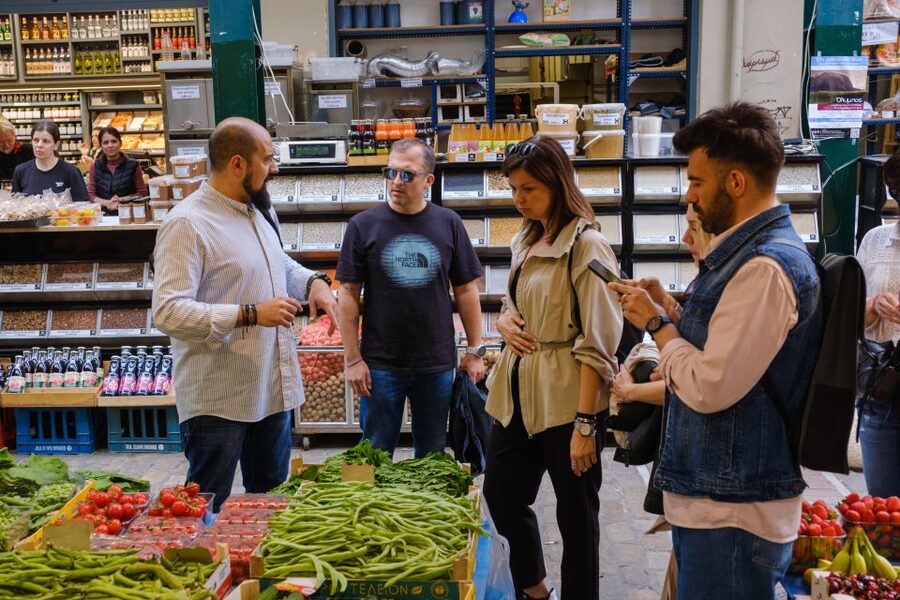
The route then moves through food markets, grocery stores, and smaller food businesses. This is where the tour feels most different from a restaurant crawl. You may see daily-caught seafood, fresh meat, herbs, seasonal fruit, marinated anchovies, dairy products, salads, dips, and other ingredients used in local cooking.
The market section gives you a clearer idea of what people actually buy. A restaurant menu can show you finished dishes, but a food market shows the building blocks: which cheeses are sold, how fish is displayed, what produce is in season, and how prepared foods fit into an ordinary meal.
Panos explains the products as you go, including ancient varieties of olives and the way Greek ingredients are used in regional cooking. The focus is not on rushing from one sample to the next. It is on stopping long enough to understand what you are tasting.
Markets can be crowded and noisy, and some walking surfaces may be less even than those on a broad city avenue. The tour is listed as wheelchair accessible, but anyone with mobility concerns should still consider the market setting and check the current route before booking.
Same town, a different glass:
- Santorini: Top Sights Day Trip, Wine Tasting, & Oia Sunset
★ 4.6 · 2,492 reviews - Santorini Wine Adventure with 12 Wine Tastings, Tapas and Sunset
★ 5.0 · 1,715 reviews - Tour and Wine Tasting in Mykonian Land
★ 5.0 · 1,357 reviews - Rhodes Exclusive Swim Cruise Cocktail Open bar & Gourmet Buffet
★ 5.0 · 1,230 reviews
Cheese, dairy, and family-run food shops
Cheese is one of the strongest parts of the route. You may taste several Greek cheeses, including products made by a small farm in northern Greece. Panos explains differences in texture, milk, production, and use, so the tasting becomes more than a plate of assorted samples.
A family-run cheese shop and local food store can include cheeses, creams, kefir, jams, honey, biscuits, vine leaves, dips, and salads. These products show how Greek eating extends beyond the famous dishes found on tourist menus.
This stop is particularly useful if you want to take something home. You can ask Panos what travels well and which products are best eaten fresh, though the available goods will depend on the day. It is also a good place to notice the social side of shopping. Panos knows the people working in some of these businesses, and the conversation feels more personal than a standard commercial tasting.
I would not treat the cheese portion as a minor extra. It is one of the tour’s most detailed food lessons, especially if you are curious about Greek dairy or want to compare regional styles.
Seafood, meats, herbs, and fresh produce
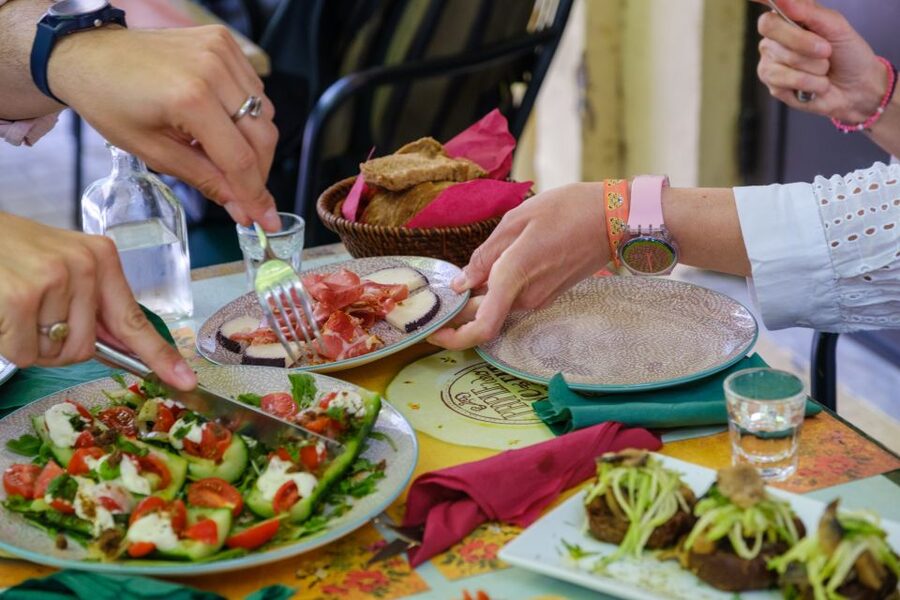
Thessaloniki’s position near the sea gives seafood a natural place in the route. The tour introduces daily-fished seafood and marinated anchovies, along with herbs, fresh meat choices, and produce used in local recipes.
You are not promised a fixed restaurant menu, so the exact samples may shift with the season and what is available. That is a strength as well as a limitation. A market visit tied to the day’s supply can feel more genuine, though anyone hoping for one specific dish should keep expectations flexible.
Seasonal fruit also enters the discussion. Greece’s fruit harvest changes through the year, and Panos uses that seasonal rhythm to explain why some ingredients taste best at certain times. This gives you a practical way to shop later in the trip. Look for what is being sold now rather than chasing a food that belongs to another season.
For people who like culinary detail, Panos also explains how ingredients are sourced and how different cooks interpret familiar foods. You get a sense of both tradition and personal style.
Drinks beyond coffee
Drinks are built into the route, not added as an afterthought. Depending on the stops and the day, you may taste coffee, wine, traditional spirits, and other beverages served with food.
A local shop may offer traditional spirits alongside prepared foods, while a later wine-bar stop can pair drinks with small savory bites. Some tastings include grappa, wine, fish, or grilled meat, and water is available throughout.
The drink portion adds useful balance to the food. Greek cuisine is not only about pastries, grilled meat, or salads. Drinks show how people pause, socialize, and match flavors across a meal.
This is worth noting if you do not drink alcohol. The tour includes coffee and nonalcoholic options, but the listing does not provide a detailed alcohol-free menu, so tell the provider about your needs before booking.
The history works because it stays attached to food
Panos’s historical explanations are a major part of the route. He connects Thessaloniki’s past to the ingredients and businesses in front of you, rather than separating the history lesson from the food.
That method helps the information stick. You might learn about the city’s different communities while tasting a pastry, discuss northern Greek farming while trying cheese, or talk about changing café culture over a cup of coffee.
The tour does not appear designed as a formal monument tour. If your main goal is a detailed visit inside churches or archaeological sites, you should book a separate sightseeing walk. If you want to understand how the city’s past shaped daily eating, this route is a better match.
Panos also welcomes questions and conversation. His knowledge of Greek cuisine is paired with interest in other cultures, so the experience can become a two-way exchange rather than a speech delivered to a group.
Why the group size matters
A maximum of six participants is a real advantage here. Food tastings work better when everyone can see the product, hear the explanation, and ask about ingredients without competing with a large crowd.
The small size also makes it easier to keep a steady pace through shops and markets. You are less likely to feel herded from one stop to the next, and Panos can spend extra time on a food that interests you.
The tradeoff is availability. Small-group tours can fill quickly, especially during popular travel periods. If this experience fits your schedule, booking ahead is sensible, particularly because the price includes the tastings and drinks rather than only the guiding.
Is $94 a fair price?
At $94 per person, the tour is not the cheapest way to eat in Thessaloniki. You could buy koulouri, coffee, pastries, and market food for much less if you already knew where to go.
The value comes from the access and explanation. Your fee covers all food bites, samples, coffee, and beverages, plus four hours with a local chef. You are also paying for the route through shops and food businesses that would be easy to miss, along with practical advice about what to order later.
I see the price as fair for someone who wants both a meal-sized tasting and a strong introduction to the city’s food culture. It is less compelling if you prefer to browse independently, dislike a fixed walking schedule, or mainly want a sit-down restaurant meal.
Because the food keeps coming, the tour can replace a substantial meal. That improves the value, but it also means you should pace yourself. One useful improvement would be to ask at the start how many stops remain, so you can save room for the later tastings.
Who should book this Thessaloniki food walk?
I would choose this tour for a first or second day in the city. It gives you a working map of food shops, markets, cafés, and restaurants, and Panos can help you make better choices for the rest of your stay.
It suits curious eaters, history fans, couples, solo visitors, and small groups who prefer conversation over a large tour format. Vegetarians have been accommodated, but you should state your diet in advance because the route includes seafood and meat products.
Comfortable shoes and loose clothing are sensible. Four hours of walking, standing, tasting, and moving through shops is not a formal hike, but it is more active than a restaurant meal.
English and Greek are available, and the activity is listed as wheelchair accessible. The meeting point is central, at St. Sophia, which makes it easy to combine with other sightseeing before or after the tour.
Final call: book it if you want the city behind the menu
Book this experience if you want Thessaloniki explained through the foods people buy, share, and remember. The strongest reasons are Panos’s personal connection to the city, the small group, the generous range of tastings, and the access to local shops that are easy to overlook.
Skip it if you want a short snack stop, a fixed list of famous dishes, or a quiet seated meal. The route is social, food-heavy, and shaped by what is available that day.
For most visitors who enjoy eating and asking questions, I would schedule it early in the stay. Come hungry, wear good shoes, and leave room for one more pastry.
FAQ
How long does the Thessaloniki food tour last?
The tour lasts four hours.
How much does the experience cost?
The listed price is $94 per person.
What food and drinks are included?
All food bites, samples, coffees, and beverages are included. Tastings may include koulouri, bougatsa, cheeses, seafood, pastries, salads, fresh produce, meats, wine, and traditional spirits.
Who leads the tour?
The tour is led by local chef Panos, also referred to as Panagiotis in the tour information and participant feedback.
Where is the meeting point?
Meet in front of the gate to the Church of St. Sophia in central Thessaloniki.
How will I recognize the guide?
The guide is described as having a big beard and a big smile.
What languages are offered?
The tour is available in English and Greek.
How many people can join the group?
The group is limited to six participants.
Is the tour wheelchair accessible?
Yes, the activity is listed as wheelchair accessible. You may still want to confirm the current route if market surfaces or shop entrances are a concern.
Just added around Greece
- Best Food Tasting Tour of Athens, taste 18+ iconic Greek foods!★ 5.0 · 448 reviews
- Acropolis Private Wine Tasting @ Finewine store★ 5.0 · 46 reviews
- Wine Trails Private Tour/ Nemea visit 3 wineries from Athens or Nafplion (10 h)★ 5.0 · 44 reviews
- Athens Kids and Families Food Tasting Tour★ 5.0 · 66 reviews
- Athens: The Classic Food Tasting Tour★ 5.0 · 106 reviews
- Athens evening food tasting tour-small group★ 4.5 · 74 reviews
- Athens Morning Food & Drinks Tour: A Bite from the Acropolis★ 5.0 · 104 reviews
- Mercedes Private Tour Nafplio, Corinth Canal, Nemea Wine Tasting★ 5.0 · 142 reviews
Drinks Tours, compared.
Unlimited Prosecco, Beer and Aperol Spritz Cruise
Read our review →
Evening Cruise with Optional Wine and Snacks
Read our review →
Douro Valley w/ Boat Tour, Wine Tasting & Lunch
Read our review →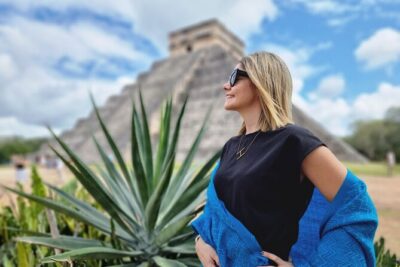
Chichen Itza, Cenote & Valladolid Tour with Tequila and Lunch
Read our review →
Complete Douro Valley Wine Tour with Lunch, Wine Tastings and River Cruise
Read our review →
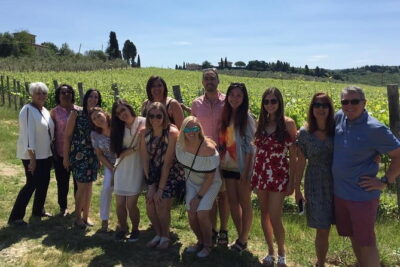
Small-Group Wine Tasting Experience in the Tuscan Countryside
Read our review →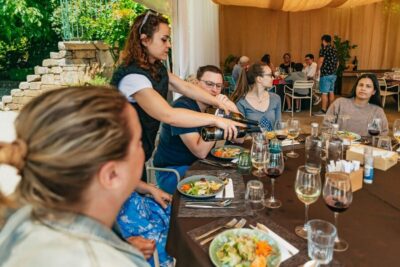
Douro Valley with Winery Lunch, Tastings & Cruise
Read our review →Browse the lists this tour appears in