
Review · PORTO
Porto: Guided Tour and Tasting of 3 Port Wines at Poças
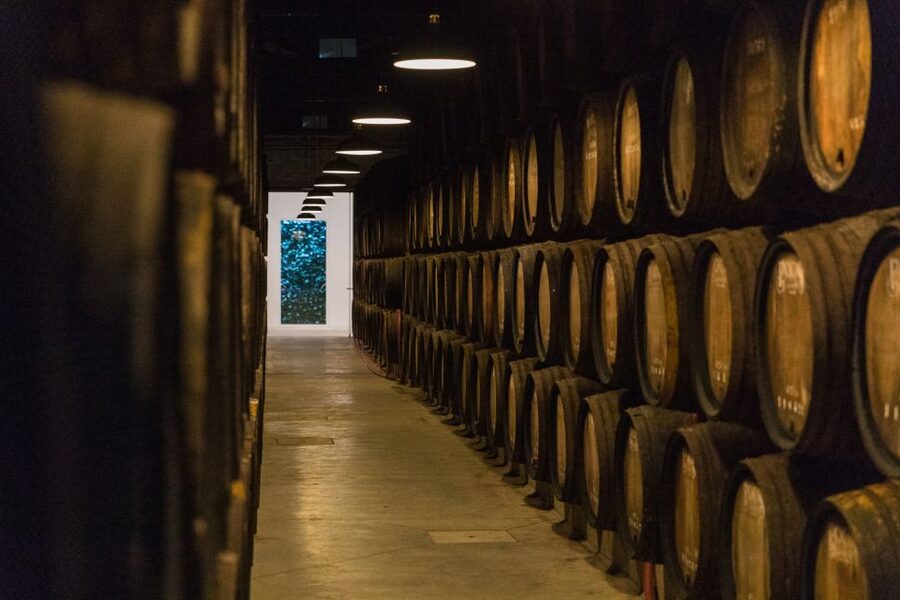
Poças gives you a close look at the wooden casks and cool ageing cellar where Port wines mature, some for generations. The tour connects the wine in your glass with the Douro Valley, the Portuguese family business behind it, and the careful process that makes Port different from ordinary wine.
I like the well-paced 90-minute format and the chance to taste three contrasting Ports rather than one token sample. I also like the friendly, lively guiding, with guides such as Cindy, Philippe, Fabia, and Letícia singled out for clear explanations and good humor. The main thing to consider is the location: the cellar is away from Gaia’s main riverside promenade, so you may want a taxi, ride-hailing car, or bus rather than an uphill walk.
Key points at a glance
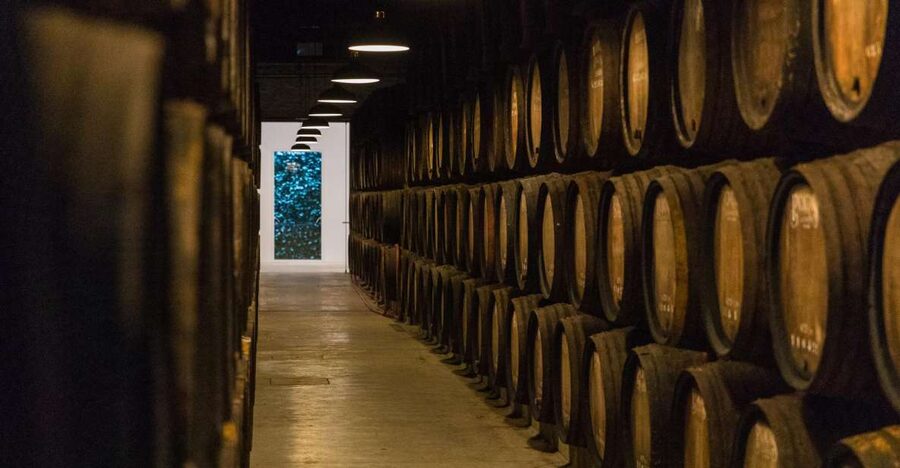
- Ageing cellar: See where Port has matured in wooden casks for decades, with some wines linked to more than 100 years of cellar tradition.
- Three Port styles: The tasting includes three Ports, with the selection often including both white and red expressions.
- Douro Valley context: Learn how the region, grapes, fermentation, and ageing shape the wine in your glass.
- Food-pairing advice: The guide explains which delicacies work with different Port styles.
- Friendly multilingual guides: Tours are offered in Portuguese, French, English, Italian, and Spanish.
- Useful final stop: The winery shop lets you buy bottles at the end, with a good range and reasonable prices according to the information available.
Why Poças makes a good first Port experience
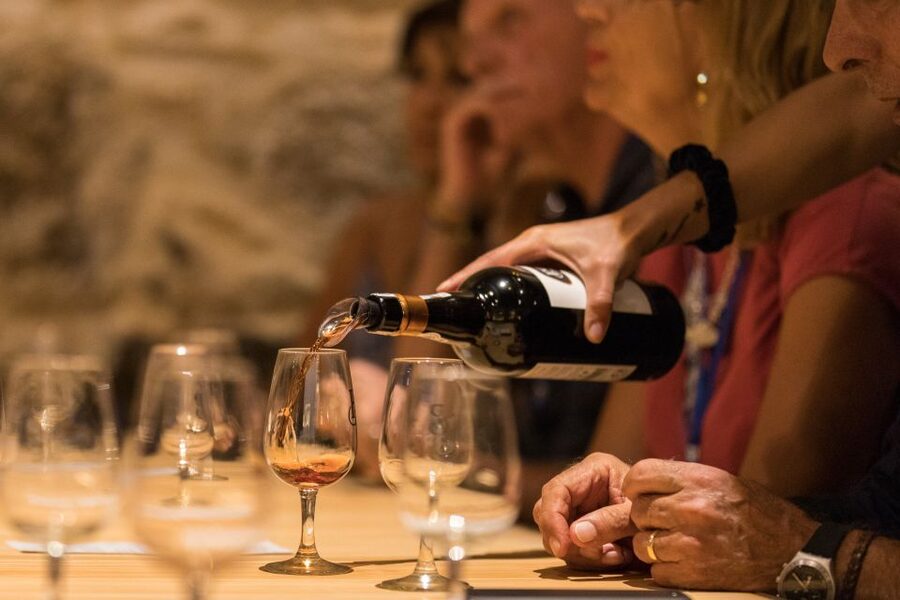
Port can be confusing at first. It is sweet, fortified, and served in several styles, so a tasting gives you a better starting point than ordering a random glass at a bar. At Poças, the guide gives you the basic map before you taste: where the Douro Valley is, how Port is made, and why ageing matters.
That background makes the tasting more useful. Instead of simply deciding that you like or dislike Port, you can pay attention to the differences between the three samples. One may seem lighter and fresher, another fuller and fruitier, while an older style may show more dried-fruit or nutty notes. The exact selection can vary, but the point is comparison.
I also appreciate that Poças is a Portuguese family business, not simply a polished tasting room built for quick stops. The company’s story and its connection to Port production give the visit a more personal feel. You are learning about a working wine house and its products, not just looking at decorative barrels.
The experience has earned a 4.6 rating from more than 1,000 bookings, and that matches the strongest pattern in the available feedback: people consistently praise the guides, the clear explanations, the wine, and the amount of time given to taste. That said, one practical criticism is worth noting. At busy times, the tasting room can feel crowded, and a smaller tasting group would make conversation easier.
A few more tastings around Porto worth a look
- Porto: Self-Guided Bike and Boat Tour with Port Wine Tasting
★ 4.7 · 52 reviews - Best of Porto Guided Tour: Cruise & Wine Tasting
★ 4.5 · 47 reviews - From Marrakech: Ouzoud Waterfalls Guided Hike and Boat Trip
★ 4.7 · 33,630 reviews
Walking through the cellar and Port-making story
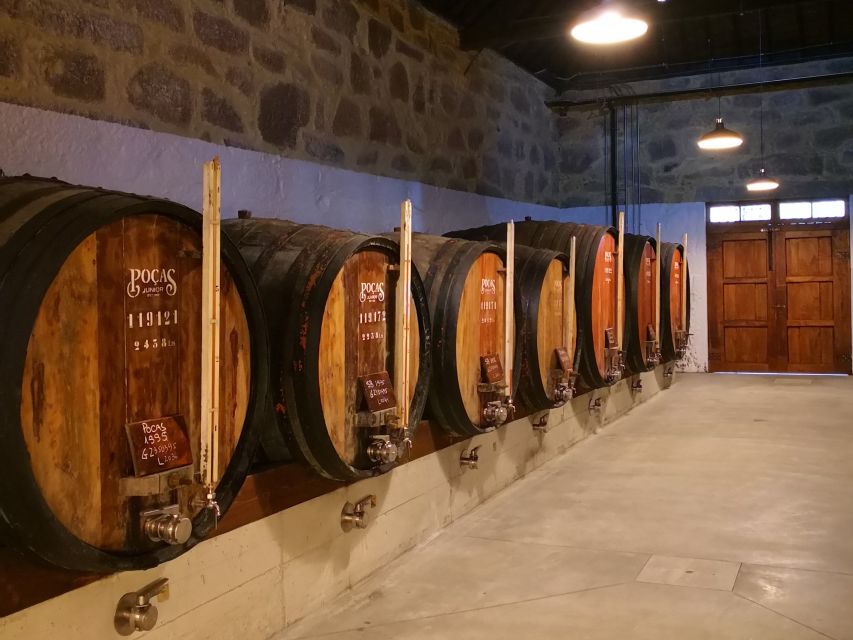
The visit begins with a guided tour of the ageing cellar. This is the part that gives the tasting its sense of place. You see the vessels used to mature the wines and learn why Port needs time, controlled conditions, and careful handling.
The cellar is also where the Douro Valley story becomes easier to understand. Port begins with grapes grown far from Porto, in the Douro region, then reaches the cellars around Vila Nova de Gaia for ageing and preparation. The tour explains this relationship between vineyard and cellar, which is central to understanding Portuguese Port.
Your guide also covers the basic production process. You learn how fermentation is interrupted and how the wine develops its final character through ageing. The presentation may include visual material, and past tour formats have used a large screen to make the technical points easier to follow.
I find this section most useful if you are new to wine. You do not need to arrive knowing the difference between a ruby, tawny, white, or vintage Port. The guide builds the lesson from simple ideas, then gives you something to taste so the details have a practical meaning.
The cellar is not presented as a huge industrial complex. That can be a plus or a drawback, depending on what you want. You get a focused visit rather than a long walk through a giant facility, but the setting may feel compact compared with larger wine attractions in Vila Nova de Gaia.
The three-glass tasting in the modern room
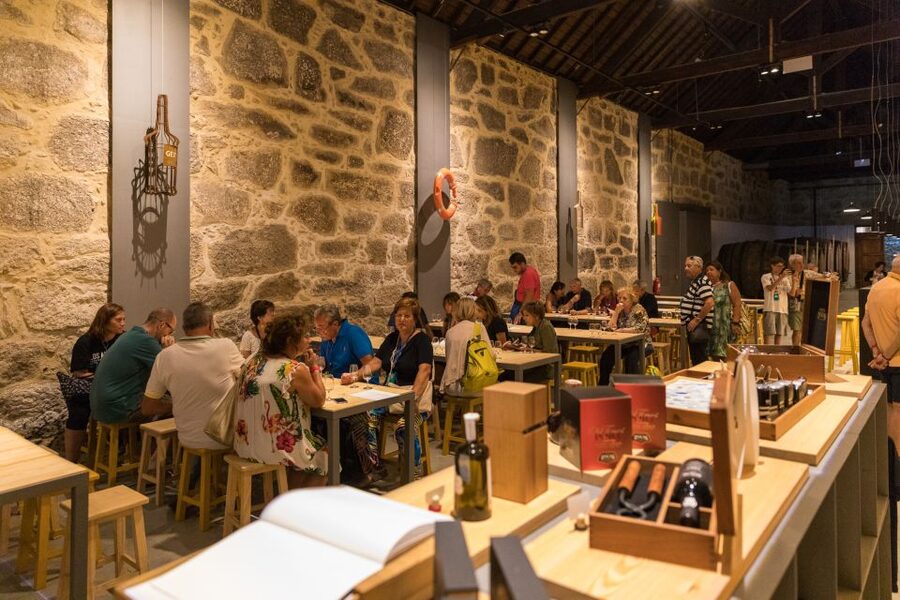
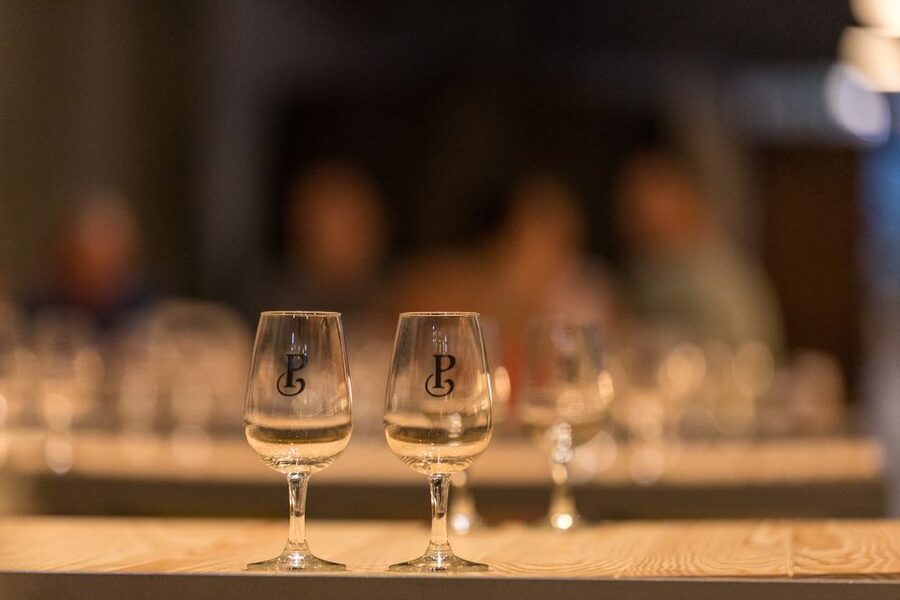
After the cellar visit, you walk to the tasting room. The setting is more modern than the ageing area, with a long bar and communal tables. The three wines are served as a guided tasting, so you are not left to guess what is in front of you.
The selection gives you a chance to compare styles. Several accounts specifically describe a mix of white and red Ports, which is helpful because many first-time tasters know only the dark, sweet style. White Port can offer a different entry point, while red Port shows the familiar rich fruit character associated with the drink.
Your guide explains each sample and suggests how to taste it. You can ask questions about sweetness, ageing, serving, and storage. Some groups also share samples among friends, allowing you to try more than three styles, though the included tasting itself is three Ports.
The pours are described as generous enough to appreciate the wines without turning the visit into a long drinking session. Still, Port is stronger than table wine, and three samples can catch up with you. One person described becoming a little tipsy, so plan the rest of your afternoon sensibly.
The tasting is not rushed. That matters. A short stop can feel poor value if you are hurried through the glasses, but here the usual format leaves time to compare the wines and listen to the guide. At the same time, the tour is short enough to fit into a busy day in Porto.
One point to keep in mind is group size. Many visits are small and personal, but one account describes a busier tasting with too many people sharing the room. If you value quiet conversation, booking a less popular time may help, though the available information does not identify specific quiet periods.
Learning how to pair Port with food
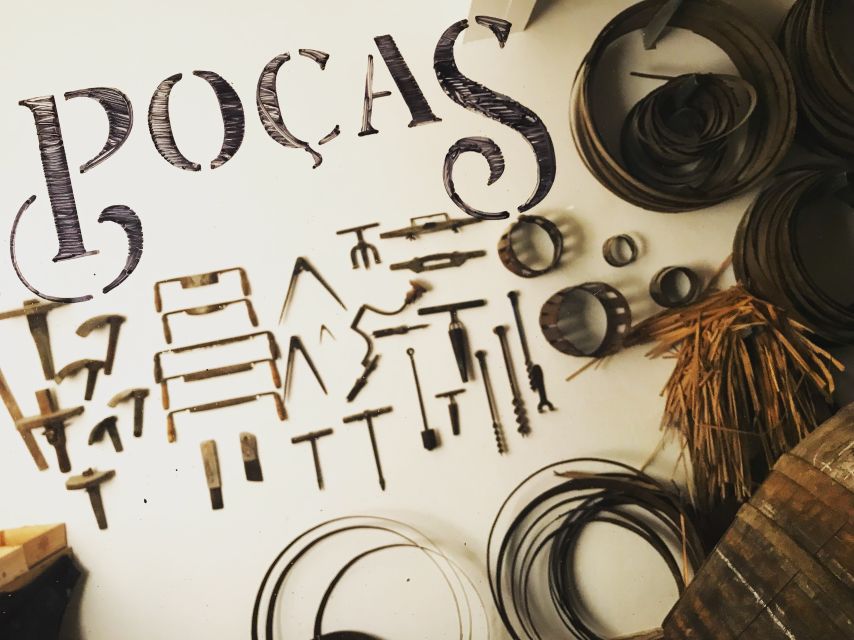
The food-pairing lesson is one of the more practical parts of the visit. Port is often treated as a dessert drink, but its range makes it more flexible than that. The guide explains which delicacies suit different styles and helps you think about sweetness, salt, fruit, and texture.
You may learn why a sweeter Port can work with a dessert, while another style may suit cheese, nuts, or savory bites. The exact food service is not fixed in the information provided. One person was surprised to find that food could be purchased, so ask at the cellar if you want something to eat with the tasting.
This advice is especially helpful if you plan to take a bottle home. Instead of buying only the label you liked best, you can choose a Port that fits your own table. You may prefer a bottle for dessert, an after-dinner drink, or pairing with a cheese board.
The tasting also gives you a chance to discover a style you might not order on your own. If you have only tried red Port, the white sample may be the useful surprise. If Port has always seemed too sweet, listening to the guide and comparing three types may help you find a better match.
Same town, a different glass:
- From Porto: Douro Valley w/ Boat Tour, Wine Tasting & Lunch
★ 4.7 · 19,061 reviews - Complete Douro Valley Wine Tour with Lunch, Wine Tastings and River Cruise
★ 5.0 · 12,920 reviews - Porto: Douro Valley with Winery Lunch, Tastings & Cruise
★ 4.7 · 7,002 reviews - Porto: Live Fado Show with Glass of Port Wine
★ 4.8 · 6,498 reviews
Buying bottles at the Poças shop
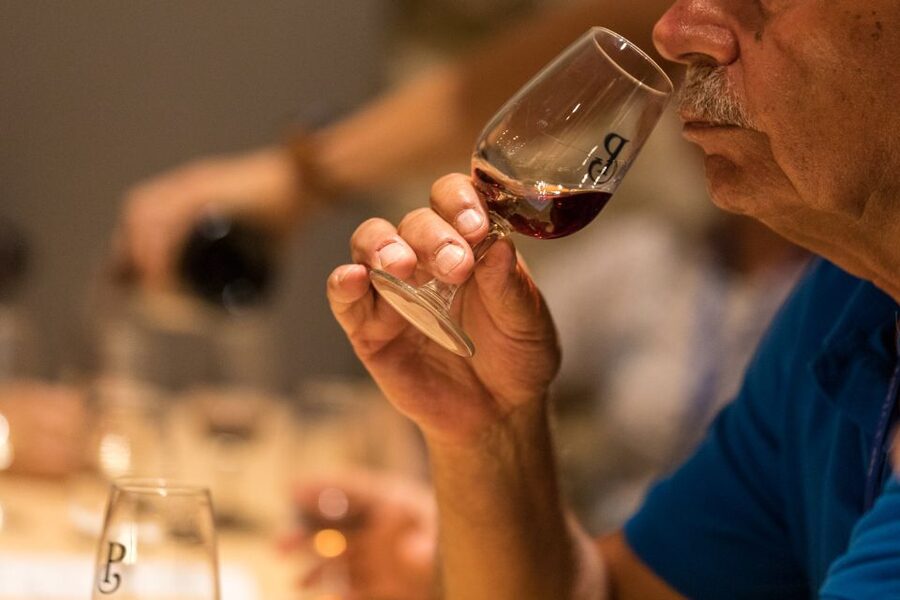
The final stop is the winery shop. You can buy the Port you liked, and the available information describes a broad selection at reasonable prices. This is convenient if you want to take home a bottle without searching several shops later.
You should still taste before buying. The most expensive bottle is not automatically the best choice for your preferences, and the three-glass format gives you a sensible way to compare first. Ask the staff about storage and serving, since the tour includes advice on how to keep purchased bottles.
The shop also makes the visit more useful for a souvenir hunter. A bottle of Port has a clear connection to the Douro and Porto, and you can choose something based on what you learned rather than grabbing a generic gift.
Remember that buying wine adds a practical concern to the rest of your day. Carrying bottles on steep streets or public transport may be awkward, so consider your route before purchasing several. The shop is at the end of the visit, which is better than having to carry bottles through the tour.
Reaching the cellar in Vila Nova de Gaia
Poças is in the Gaia area, but not directly on the main riverside promenade. This is the biggest logistical detail to handle before booking. One account describes it as a hike from the promenade, while another found a ride-hailing car easiest and used bus 904 afterward.
From Porto’s old town, the cellar can be reached by car in about 10 minutes under suitable traffic conditions. The bus stop is reported to be across the street from the entrance, though your exact meeting point can vary with the option booked. Check the location details carefully rather than assuming every Port lodge is lined up along the river.
The distance is not a reason to skip the tour, but it changes the timing. Allow extra time for the approach, especially if you are crossing from Porto, carrying luggage, or arriving for a fixed start. If you are already near the Gaia promenade, a taxi or car may save energy for the tour itself.
The building and reception area are described as attractive and inviting, with a sleek bar and communal tasting tables. The cellar setting is more functional and atmospheric, while the tasting area feels designed for comfort and conversation.
Who will get the most from this 90-minute visit
This is a strong choice for first-time Port drinkers. The guide explains the basics without requiring prior wine knowledge, and the three samples give you a clear introduction to different styles.
It also suits people who want substance without spending half a day at a wine estate. The tour and tasting together last 90 minutes, with past accounts placing the cellar explanation at roughly 35 to 50 minutes before the tasting. That leaves enough time for detail without testing your patience.
Families can consider it too, but Port is an alcoholic drink and the central activity is tasting. Two children, aged 11 and 13, were able to enjoy the visit with their parents, largely because the tour included history, production, and behind-the-scenes information rather than tasting alone.
Wine fans may prefer a longer Douro Valley day trip if they want vineyard views, a meal, or several producers. Poças is a cellar visit in the Porto area, not a full excursion through the valley. Its value comes from learning and tasting in a compact format.
The experience is wheelchair accessible, and the live guide options include Portuguese, French, English, Italian, and Spanish. Smoking is not allowed.
Is $27 good value?
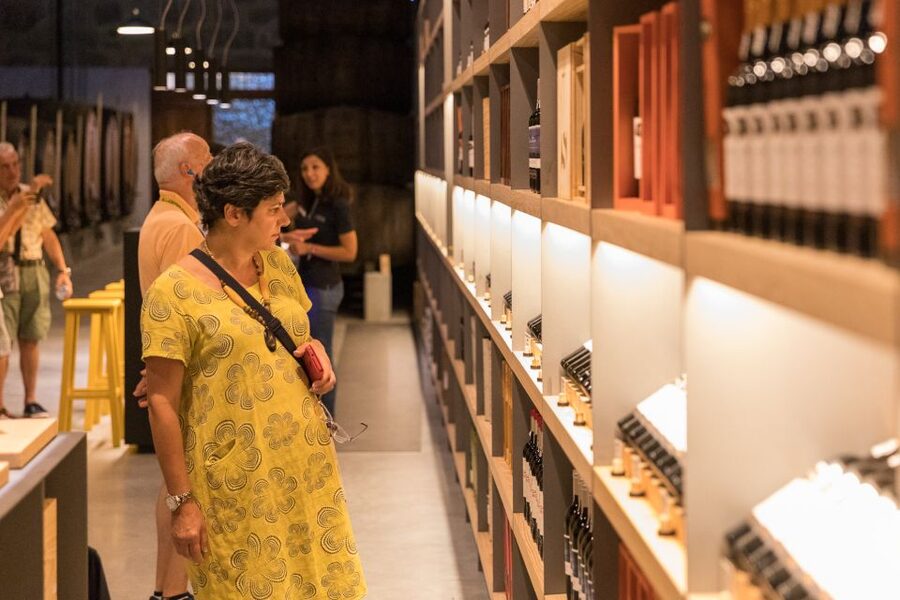
At $27 per person, the price is fair for a guided cellar visit, a lesson in Port production, and three tastings. You are paying for more than three glasses because the guide supplies the context that makes the samples meaningful.
The value is strongest if you are new to Port or want to choose a bottle with some confidence. A tasting at a city bar might cost less or more depending on the wines, but it would not necessarily include the cellar visit or a structured explanation of the Douro and Poças family business.
The price feels less compelling if you only want a quick drink or already know Port well. In that case, you may prefer to order a glass at a wine bar and spend your time elsewhere. For most visitors seeking a first introduction, though, 90 minutes is a sensible return for the money.
Free cancellation up to 24 hours before the start and a reserve-now, pay-later option add useful flexibility. Availability and start times vary, so check the schedule before building the rest of your day around it.
Should you book Poças?
Book this tour if you want a friendly introduction to Port, a look inside an ageing cellar, and three wines explained by a lively guide. The strongest reason to choose it is the balance: enough history and production detail to teach you something, but enough tasting time to keep the visit enjoyable.
I would especially recommend it if you are unsure which Port style you like, want food-pairing ideas, or hope to bring home a bottle. Just allow extra time to reach the Gaia cellar, and do not assume the tasting room will always be quiet or intimate.
Skip it if you want vineyard scenery in the Douro Valley, a full meal, or a long specialist tasting. For a focused Porto-area wine stop at $27, however, Poças offers a practical and enjoyable introduction with very little wasted time.
FAQ
How long does the Poças Port wine tour last?
The experience lasts 90 minutes, including the guided cellar visit and tasting of three Port wines.
How many Port wines are included?
Three different Port wines are included. The selection may include white and red Ports, giving you a chance to compare styles.
Which languages are available?
Live guides are available in Portuguese, French, English, Italian, and Spanish.
Is the experience wheelchair accessible?
Yes, the activity is listed as wheelchair accessible.
Can I buy Port after the tasting?
Yes. The winery shop sells Poças Port wines after the tour, and you can buy your preferred bottles to take home.
Can I cancel my booking?
You can cancel up to 24 hours in advance for a full refund. A reserve-now, pay-later option is also available.
Just added around Porto
- Porto: Tuk tuk Tours with Port Wine Tasting★ 4.5 · 65 reviews
- Porto: Tile Painting and Cocktails in Downtown Porto★ 4.9 · 484 reviews
- Porto Wine Tasting Experience with Portuguese Tapas Plate★ 4.7 · 356 reviews
- Porto: Tile Painting Workshop with Tea and Port Wine★ 4.9 · 66 reviews
- Porto: Self-Guided Bike and Boat Tour with Port Wine Tasting★ 4.7 · 52 reviews
- Porto: Sunset Walking Tour with Port Wine and Views★ 4.6 · 95 reviews
- Porto: Tuk-Tuk Tour, Douro River Cruise, and Wine Tasting★ 4.3 · 152 reviews
- Porto: 4 Bar Pub Crawl, 7 Drinks, & Skip-the-Line Club Entry★ 4.6 · 485 reviews
Drinks Tours, compared.

Unlimited Prosecco, Beer and Aperol Spritz Cruise
Read our review →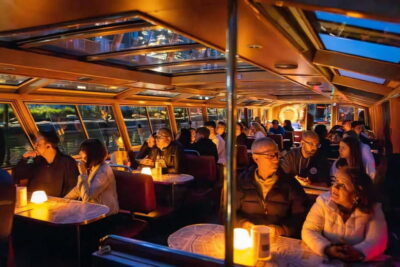
Evening Cruise with Optional Wine and Snacks
Read our review →
Douro Valley w/ Boat Tour, Wine Tasting & Lunch
Read our review →
Chichen Itza, Cenote & Valladolid Tour with Tequila and Lunch
Read our review →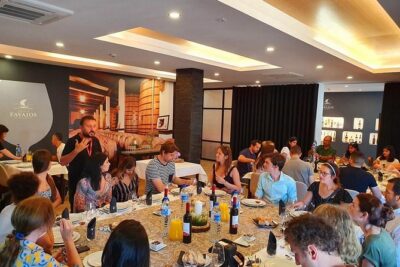
Complete Douro Valley Wine Tour with Lunch, Wine Tastings and River Cruise
Read our review →
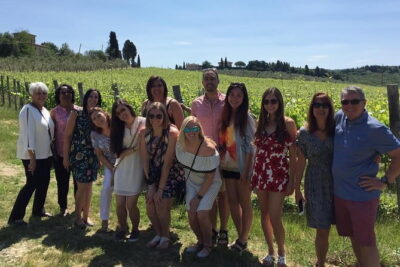
Small-Group Wine Tasting Experience in the Tuscan Countryside
Read our review →
Douro Valley with Winery Lunch, Tastings & Cruise
Read our review →Browse the lists this tour appears in