
Review · ALICANTE
Paella & Sangria Class with Tapas and Market Visit
Alicante’s best lesson in local food starts before you reach the kitchen. You meet your guide at Mercado Central, shop for the ingredients, then prepare paella in a working restaurant kitchen rather than a staged cooking studio. I like the market stop because it gives meaning to the meal, and I like that everyone helps with the cooking instead of simply watching a chef perform. The only caution is that the final paella may be lighter on seafood or meat than some visitors expect, since the Alicante style puts the emphasis on the rice and stock.
I especially like the choice of seafood, meat, or vegetarian paella, which makes the class workable for different tastes. Guides called Federico, Fred, and Freddy are praised for clear English, humor, and an easy way with a group. At about $59.26 for three and a half hours, this is a strong value if you want lunch, a market visit, recipes, and a practical introduction to local food in one outing.
Key points at a glance
- Shop inside Alicante’s Mercado Central: Learn about shrimp, squid, Iberian ham, olives, salted fish, and other local ingredients before cooking.
- Cook the full dish from scratch: You help prepare the broth, salmorreta sofrito, seafood or meat, and rice.
- Choose your paella style: Seafood, meat, and vegetarian options are available.
- Make sangria yourself: The class covers the traditional combination of wine, orange juice, soda, syrup, liqueur, and fruit.
- Eat more than paella: Tapas, tomato salad with salted fish, olives, cured sausage, Iberian ham, and fruit may accompany the meal.
- Small-group format: The stated maximum is about 15 to 16 people, with some sessions much smaller.
Starting with shrimp, olives, and Alicante’s central market
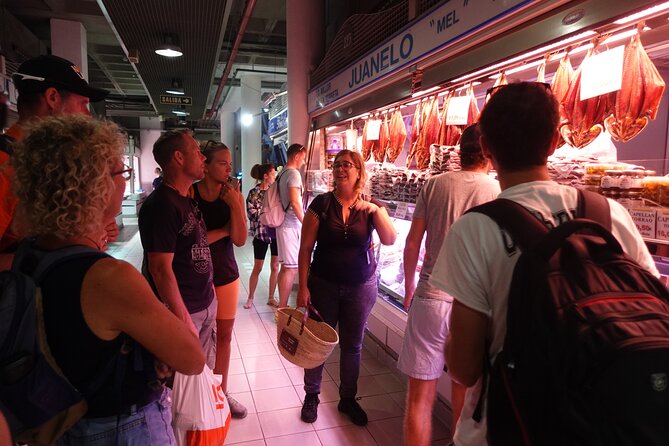
The meeting point is Plaza 25 de Mayo, outside the Mercado Central de Alicante. This is a useful place to begin because you are not being dropped into a kitchen with no sense of place. You first see where local cooks buy food, and the ingredients become easier to understand once you have seen them in their natural setting.
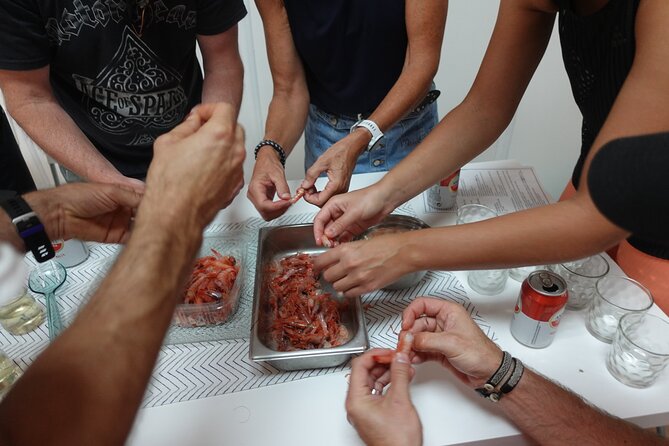
Your guide leads you through the market stalls and explains what goes into the meal. The focus is not simply on collecting a shopping list. You learn about Mediterranean produce, local seafood, Iberian ham, olives, salted fish, sausage, and the different types of shrimp found around Alicante.
That market hour is one of the strongest parts of the experience. I would pay close attention to the details about choosing shrimp, handling seafood, and tasting local products. You may also get a useful lesson in the difference between ingredients that look familiar but are used in very different ways.
The market can be the most interesting part for people who already enjoy food. You have time to look at the stalls, ask questions, and connect the final meal with Alicante’s food culture. If you are mainly interested in cooking technique, you may find the market walk a little long, but it gives the class a sense of place that a standard kitchen lesson lacks.
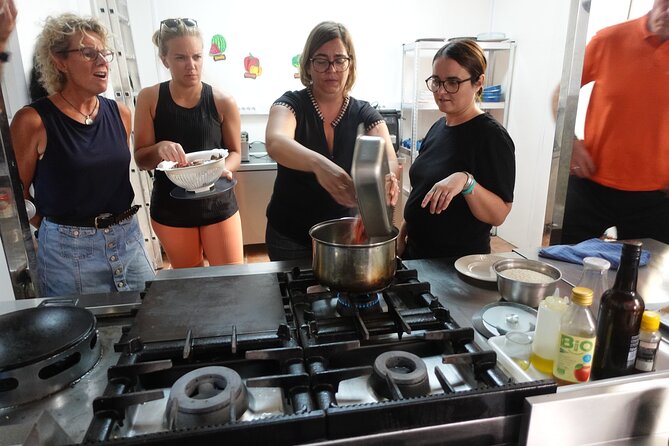
The group then walks to a local restaurant kitchen. One account describes the kitchen as a small restaurant space a few blocks from the market. It is presented as a working place where locals eat, not a purpose-built tourist classroom. That setting matters: you are learning in the kind of environment where the food belongs.
More Market Tours in Spain:
- Barcelona Paella Cooking Class with Market Visit, Tapas & Sangria
★ 5.0 · 2,531 reviews - Paella Cooking Class, Wine Tasting & Central Market in Valencia
★ 5.0 · 1,150 reviews - Alicante: Paella & Sangria Class with Tapas and Market Visit
★ 4.8 · 243 reviews
Preparing salmorreta, broth, and the paella base
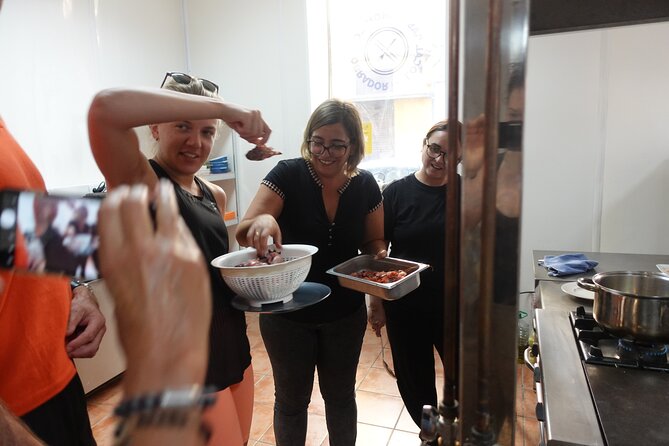
The cooking begins with preparation. You help work with the ingredients, prepare the broth, and make salmorreta, the sofrito base used in Alicante-style paella. This is a better lesson than simply stirring a finished pan because you see where the flavor begins.
The guide and chef explain each step, then share tasks around the group. People have described taking turns with preparation and cooking, so you should expect to participate rather than sit at a demonstration table. Depending on the group, you may chop, season, prepare seafood, or help with another part of the meal.
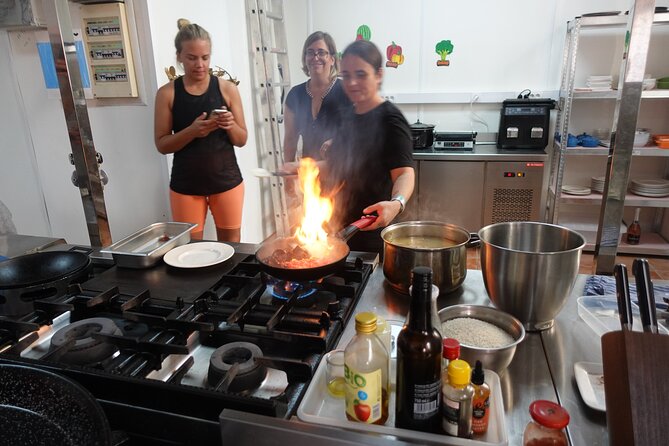
The class has included a blowtorch for cooking fish, along with hands-on work on ingredients such as squid and cuttlefish. Exact tasks can change with the menu and the market supply, but the general format is practical. You are not only told how paella works. You get to handle the components and watch the dish come together.
Guides named Federico, Fred, and Freddy receive especially strong praise for their teaching and people skills. Federico is described as comfortable switching between English and Spanish, while Fred is praised for patient explanations and a sense of humor. Chef Maria has also been named as part of the kitchen team. The guide leads the class, but the chef adds a second professional presence during preparation and cooking.
That two-person setup is useful. One person can explain the process and keep the group involved while the other manages the kitchen work. It also helps the experience feel organized when several people are preparing food at once.
Choosing seafood, meat, or vegetarian paella
You choose among seafood, meat, or vegetarian paella. This is one of the tour’s most practical features. It gives you a say in the main dish instead of locking the entire group into a single recipe.
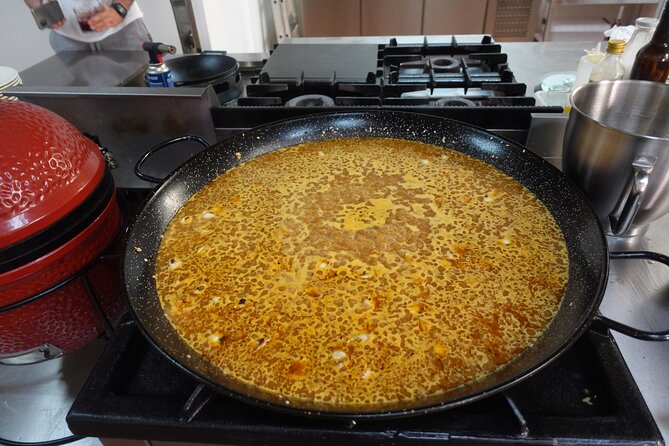
Still, you should understand the local approach before booking. Alicante paella is not meant to be a mountain of seafood, meat, vegetables, and other toppings. The flavor comes from the rice and the stock, with the other ingredients used in a more measured way.
One unhappy participant felt the seafood portions were too small, with modest shrimp and baby squid spread across a larger group. The operator explained that local Mediterranean shrimp are smaller than ocean shrimp, and that sepionet, or baby squid, is considered a prized ingredient. The response also stressed that the stock, not a large pile of seafood, provides much of the flavor.
That difference in expectations is important. If you want a generous seafood platter with large shrimp, this may not be your ideal meal. If you want to understand how an Alicante cook builds flavor through broth, salmorreta, and rice, the approach makes more sense.
The best advice is to arrive expecting a traditional rice dish, not a seafood feast. You may receive two local shrimp per person, depending on the day’s ingredients, but the portion and exact seafood can vary. The meat and vegetarian versions give the class flexibility, though the available details do not specify every ingredient in those options.
Making sangria while the rice cooks
Paella needs time, and the class uses that cooking period well. You prepare sangria while the rice simmers, then enjoy tapas and other small dishes before sitting down to eat the main course.
This is hands-on but not complicated. The class uses wine with orange juice, soda, syrup, liqueur, and fruit. That is worth knowing because some people expect sangria to taste like straight wine with a little fruit. Traditional sangria is diluted and sweetened, so it can be lighter and fruitier than you may expect.
One person disliked the drink for being watered down with juice and soda. That reaction shows how personal sangria preferences can be. The class is teaching a traditional mixed drink, not serving an undiluted glass of wine. If you prefer dry wine, you may find the result sweet or light. If you want to learn the basic formula for making sangria at home, this part is useful.
The tapas help fill out the meal. The food described includes Iberian ham, cold sausage from the mountains, olives, crisps, and tomato salad with salted fish. Fresh fruit may finish the meal. These side dishes also turn the class into a broader introduction to Spanish eating habits rather than a single-recipe workshop.
I like this shared-table format. Paella is meant to be eaten together, and the food between cooking steps gives the group time to talk. Several people have enjoyed meeting other participants and finding that strangers become an easygoing group by the end.
A few more tastings around Spain worth a look
- San Sebastian: Market, Pintxos and Wine Tasting Tour
★ 5.0 · 111 reviews - Pike Place Market Tasting Tour
★ 5.0 · 1,696 reviews - Early-Bird Tasting Tour of Pike Place Market
★ 5.0 · 1,154 reviews - Tbilisi:Mtskheta,Jvari,Bazaar,wine tasting,Chronicles of Georgia
★ 5.0 · 730 reviews
Eating the paella you helped cook
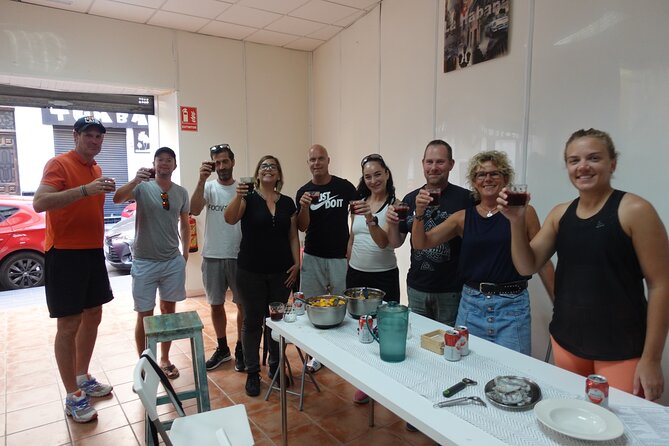
The final meal takes place back at the kitchen or restaurant setting, and the activity ends at the original meeting point. You eat the paella, sangria, and tapas you helped prepare, with recipes available to take home.
This is where the class earns much of its value. You are not only paying for a finished dish. You are paying for access to a market, instruction on local ingredients, practical cooking time, and a meal with drinks and side dishes.
The experience lasts about three and a half hours. That is long enough to cover the market, preparation, cooking, and lunch without feeling like a rushed demonstration. It also means you should avoid scheduling a tight appointment immediately afterward.
The group size is a small but important detail. The experience is described as having a maximum of 15 participants in one place and 16 in the additional information. In practice, some sessions have had only five, seven, or eight people, while another had 12 seafood eaters. A smaller group makes it easier to follow the guide around the market and gives you more chances to handle the food.
If your date has a larger group, you may spend less individual time at the cooking station. Even so, the format is designed for group participation, and the guide assigns tasks so everyone can take part.
Is $59.26 good value in Alicante?
At $59.26 per person, I consider this good value for someone who wants a full activity rather than a simple meal. The price includes roughly an hour at the market, about three hours of preparation and cooking, the food, sangria, tapas, and the instruction of a guide and chef.
You are also getting a meal that you helped make. That is different from paying for a restaurant paella, where the finished dish is the entire product. Here, the market visit and cooking lesson are the main reasons to book.
The value is strongest for couples, friends, and solo visitors who like food and social activities. It is also a good choice for a first visit to Alicante because it connects local products with regional cooking customs.
The value is weaker if you want a private lesson, a large seafood portion, or a quiet restaurant lunch. The activity is social, and the meal follows the class recipe rather than your personal preferences. You should also be comfortable with the fact that the final dish may use less meat or seafood than an international version of paella.
The experience is offered in English, and confirmation comes at booking. It is near public transportation, with the start and finish at Plaza 25 de Mayo. Alcohol is limited to adults aged 18 and over.
Who should book this cooking class?
I would book it if you want to understand Alicante through food instead of simply ordering local dishes. The market gives you useful context, and the kitchen work helps you remember the ingredients after the trip.
It suits:
- First-time visitors who want a practical introduction to Spanish food
- Home cooks who want to learn paella technique
- Couples and friends looking for a shared activity
- Solo visitors who enjoy meeting a small group
- Anyone interested in local seafood, ham, olives, and market shopping
I would think twice if you dislike group activities, do not drink alcohol and still want a drink-focused class, or expect a large serving of seafood. The class can still work for a nondrinker, but the sangria is a central part of the program. The seafood style may also disappoint you if quantity matters more than the rice and stock.
The cancellation terms are simple: cancel at least 24 hours before the start for a full refund. Changes or cancellations inside that window are not accepted, and the class may be moved or refunded if the minimum number of participants is not reached.
My recommendation for the paella and sangria class
I recommend this experience for most food-minded visitors to Alicante. The market visit, salmorreta lesson, shared preparation, tapas, and final meal give you far more than a standard cooking demonstration.
Go in with the right expectations. You are learning Alicante-style paella, where the rice and broth carry the dish. You are not ordering a plate piled high with seafood, and the sangria is a mixed drink made with juice and soda. With that understood, the class offers a friendly, useful, and fairly priced way to spend half a day in the city.
FAQ
Where does the class begin?
It begins at Plaza 25 de Mayo, outside the Mercado Central de Alicante, at Pl. 25 de Mayo, 03004 Alicante, Spain.
Where does the experience finish?
The activity ends back at the meeting point.
How long does the experience last?
The class lasts approximately three hours and 30 minutes.
What types of paella can I choose from?
You can choose seafood, meat, or vegetarian paella.
Is the class offered in English?
Yes. The experience is offered in English.
How many people can join the class?
The stated group limit is about 15 to 16 participants. Some sessions may be smaller.
Is alcohol included, and how old must I be to drink?
Sangria is included as part of the class. The minimum age for alcohol consumption is 18.
Can I cancel for a full refund?
Yes. You can cancel at least 24 hours before the start time for a full refund. Cancellations or changes made less than 24 hours before the experience are not accepted.
More Workshops in Spain
- Spanish Cooking Class Paella Tapas and Sangria in Madrid
★ 5.0 · 1,340 reviews - Madrid: Paella and Sangria Workshop in the City Center
★ 4.9 · 1,264 reviews - Barcelona: Cocktail Master Class by Mixologist with Tapas
★ 4.7 · 959 reviews - Paella Workshop with Bottomless Sangria in Central Madrid
★ 5.0 · 763 reviews
Just added around Spain
- Visit a winery of the 19th century and its draft★ 5.0 · 62 reviews
- Ribera del Duero Underground Cellar & Wine Tasting Experience★ 4.5 · 49 reviews
- Visit and Wine Tasting at the Territorio Luthier Winery★ 5.0 · 89 reviews
- Semi-Private Rioja Tour of 3 Premium Wineries from Bilbao★ 5.0 · 128 reviews
- Paella and Burnt Basque Cheesecake Cooking Class (in Bilbao)★ 5.0 · 46 reviews
- La Rioja Boutique Wine Tour & Charming Lunch (From Bilbao)★ 5.0 · 62 reviews
- Basque Best Bites – #1 Food & Wine tour of Bilbao★ 5.0 · 268 reviews
- Rioja Wine Tour: 2 Wineries From Bilbao★ 5.0 · 111 reviews
Drinks Tours, compared.
Unlimited Prosecco, Beer and Aperol Spritz Cruise
Read our review →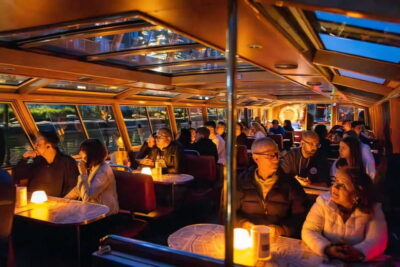
Evening Cruise with Optional Wine and Snacks
Read our review →
Douro Valley w/ Boat Tour, Wine Tasting & Lunch
Read our review →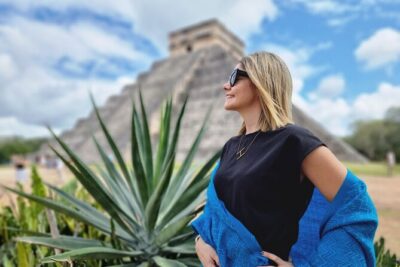
Chichen Itza, Cenote & Valladolid Tour with Tequila and Lunch
Read our review →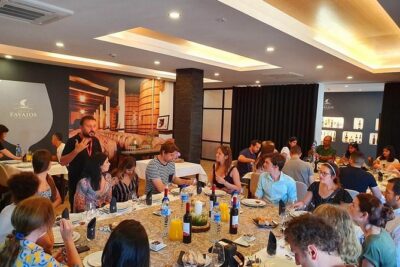
Complete Douro Valley Wine Tour with Lunch, Wine Tastings and River Cruise
Read our review →
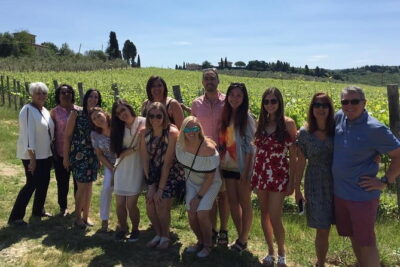
Small-Group Wine Tasting Experience in the Tuscan Countryside
Read our review →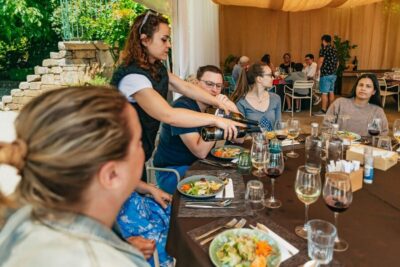
Douro Valley with Winery Lunch, Tastings & Cruise
Read our review →Browse the lists this tour appears in