
Review · MONTEPULCIANO
Montepulciano: Wine Tasting and Cellar Tour
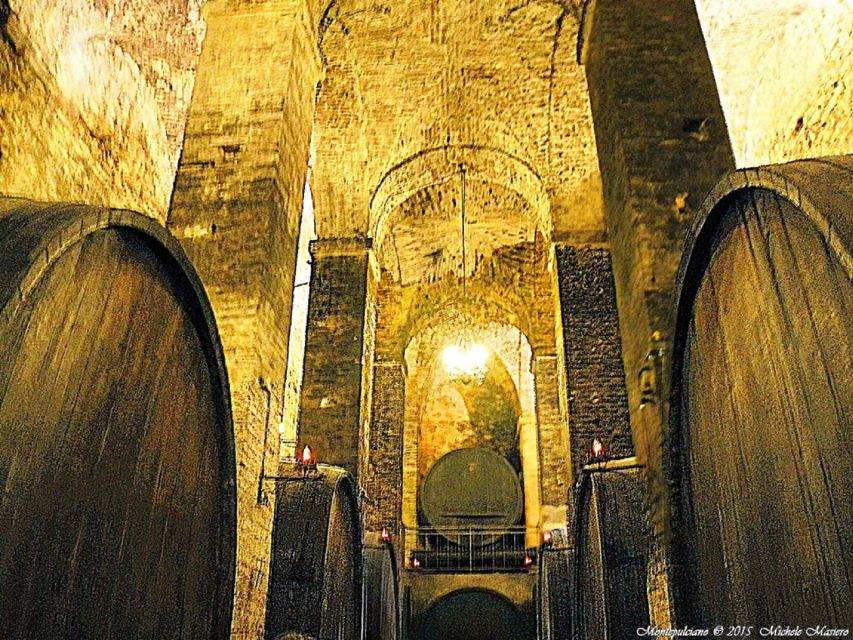
Montepulciano’s best wine experience happens below street level, where huge oak barrels rest in old stone and tufa cellars. You’ll taste the town’s Nobile di Montepulciano and other Tuscan wines while learning why the soil, wood, and family traditions matter.
I like the historic cellar setting and the way the tasting comes with real local food, not just a few crackers. I also like the short one-hour format, which fits neatly into a day of sightseeing. The main consideration is that the cellar sits in Montepulciano’s no-car zone, so you must park outside the center and walk uphill.
Key points
- Rows of giant oak barrels: See wine aging in Slavonian oak and French wood beneath the medieval town.
- Five DOC and DOCG wines: Taste a focused selection of Montepulciano wines rather than a single glass.
- Pecorino and Tuscan snacks: Pair the wines with aged cheeses, bruschetta, olive oil, and crostini.
- Guides with local ties: Guides such as Emilio, Debi, Mirko, and Ron bring family stories and winemaking context.
- One-hour schedule: A useful choice if you want a compact wine stop between Montepulciano’s churches, shops, and viewpoints.
- Central but car-free location: Park at S. Donato or P8, then walk to the cellar.
Below Montepulciano’s medieval streets
This is not a vineyard tour. You will not ride through the countryside or visit several estates. Instead, you go underground in the center of Montepulciano, where the cellar gives you a close look at how wine has been stored and aged inside the town itself.
That setting is the main reason to choose this experience. Montepulciano can feel like a string of grand palaces, steep lanes, and scenic overlooks. Beneath those streets, the cellar adds another layer to the town. You see the working side of its wine culture, with barrels, aging rooms, and the cool stone spaces used for production.
The tour focuses especially on Nobile di Montepulciano, the area’s well-known red wine. Your guide explains how local producers use the sandy tufa soil and why fossils found in the ground point to the area’s ancient origins. That soil discussion gives the tasting a useful sense of place. You are not simply sampling red wine under a famous label. You are learning what makes this corner of Tuscany different from nearby wine regions.
The cellar is also visually striking. One review described the underground rooms as a wine cathedral, and that is a fair way to picture the grandest spaces: long rows of barrels, stone walls, and a quiet, almost churchlike atmosphere. The rooms are well lit, so you can see the barrels and architecture without wandering through a dark storage area.
More Wine Tasting Tours in Italy
- Florence: Chianti Wineries Tour with Wine Tasting
★ 4.5 · 10,071 reviews - Small-Group Wine Tasting Experience in the Tuscan Countryside
★ 5.0 · 7,392 reviews - Rome: Tuscany & Montepulciano Day Trip with Lunch & Wine Tasting
★ 4.5 · 5,232 reviews
The barrel rooms and the wood behind the wine
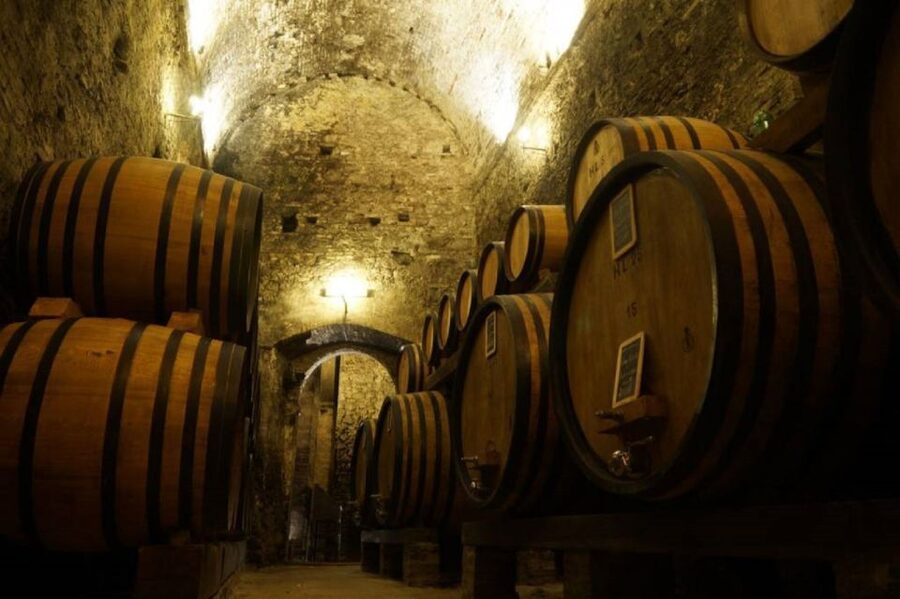
The tour puts unusual attention on the barrels. You will see enormous oak casks made from Slavonian wood, along with barrels made from French oak. These are not decorative props. They are part of the explanation of how Nobile di Montepulciano is aged and how producers use different woods to shape the finished wine.
A good guide will make this useful even if you are new to wine. You do not need to know the difference between every aging vessel before you arrive. The point is to understand that wood choice affects the wine’s character, and that local winemakers have built their methods over generations.
The scale of the barrels helps. A tasting-room photograph can make wine production seem tidy and abstract. Here, the oversized casks show you the physical work behind each bottle. They also make the visit more interesting for anyone in your group who is not a serious wine drinker.
Several guides have received especially warm praise for the way they handle this part of the visit. Emilio has been noted for telling stories about the cellar and the families connected with it. Debi, also called Debbie in some introductions, brings humor and a strong sense of local pride. Mirko and Ron have also led tours praised for clear explanations and an easy manner.
Guide assignments can change, so you should not book solely to meet one particular person. Still, the tour’s strength clearly depends on having someone who can connect the cellar, the wine, and Montepulciano’s past without turning the visit into a lecture.
A tasting built around Tuscan food
After the cellar walk, you sit down to taste the wines. The advertised selection includes five DOC and DOCG wines from Montepulciano. Some tasting sessions have included six wines, so the exact lineup may vary, but you should expect a substantial sampling rather than one token pour.
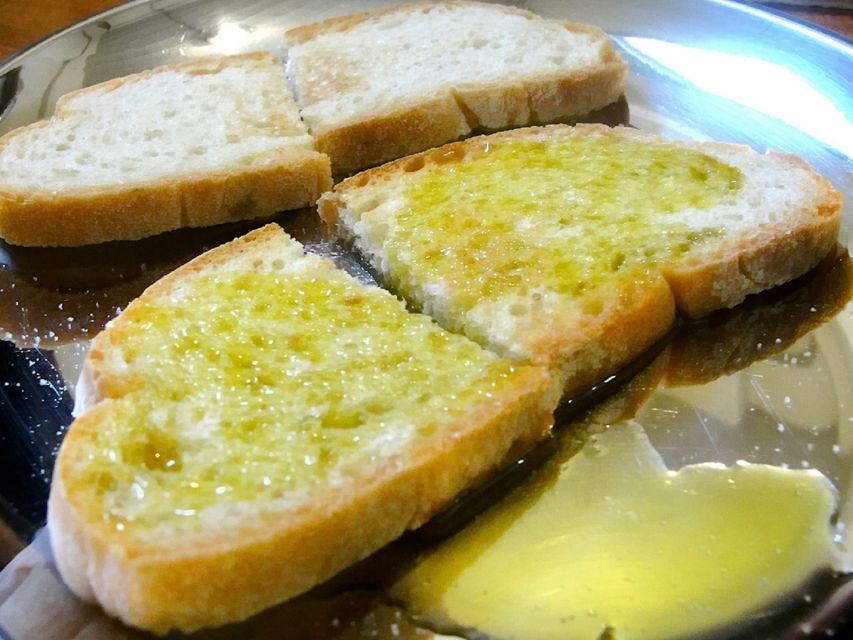
The food makes a real difference. Your tasting includes pecorino cheeses at different ages, bruschetta with extra-virgin olive oil, and typical crostini. Some sessions have also included small portions of meat or antipasti. These are simple foods, but they are exactly the right companions for Tuscan wine.
The different ages of pecorino let you notice how texture and strength change. A younger cheese may be softer and gentler, while an older one can bring more salt and bite. Bread and olive oil offer a clean contrast between pours. The food is not a full meal, so do not arrive expecting lunch, but it is enough to make the tasting feel generous.
I especially like that the pairing gives you something to do besides sip and listen. You can compare a wine with cheese, then taste it again with bread and olive oil. That makes the experience more useful if you are trying to decide what sort of Tuscan wine you actually enjoy.
The tasting room itself may be more comfortable and modern than the underground rooms. That change in atmosphere works well. You first see the historic production spaces, then finish somewhere designed for sitting, conversation, and tasting.
What you will learn about Montepulciano wine
The tour is not only about the producer. It also explains Montepulciano as a wine town and places its bottles within Tuscany’s larger tradition.
Nobile di Montepulciano is the central subject. The experience introduces the DOC and DOCG classifications attached to the wines, giving you a basic framework for understanding the labels. If you usually see Italian wine names but are unsure what the letters mean, the guide can help connect the legal designations with what you are drinking.
You will also hear about the local soil. Montepulciano’s sandy tufa contains fossils, evidence of an ancient environment beneath the modern town. That detail is memorable because it links the wine to geology rather than treating the region as a postcard backdrop.
The family stories add another layer. Guides have discussed the De’Ricci family, the origins of the cellar, and the symbols connected with the business. These stories help explain why the underground rooms are still in use and why wine remains part of Montepulciano’s identity.
This is where the guide matters most. The facts themselves are useful, but the best explanations connect them to what you see: the stone walls, the barrel wood, the soil, and the glass in front of you. The strongest guides have been described as friendly, funny, and passionate, which is a good fit for a short tasting where too much technical detail could easily become dry.
More Wine Tastings in Italy:
- SMALL-GROUP Wine Safaris: Tuscan Wine Tasting Tours from Florence
★ 5.0 · 5,088 reviews - San Gimignano, Siena, Monteriggioni, Chianti Day Trip with Lunch & Wine Tasting
★ 4.5 · 4,432 reviews - From Florence: Small Group Wine Tasting Tour to Tuscany
★ 4.9 · 3,902 reviews - Florence: S. Gimignano, Siena, Chianti Wine Tasting & Lunch
★ 4.6 · 3,102 reviews
Getting to a cellar in the no-car zone
The cellar is in central Montepulciano, inside a no-car area. You cannot expect to pull up directly at the entrance, unload, and walk straight inside.
The practical solution is to park at Parking S. Donato or Parking P8, then continue on foot. The town is hilly, and Montepulciano’s central streets are made for walking rather than driving. Give yourself extra time, especially if you have luggage, small children, or anyone who finds steep streets difficult.
One past visitor noted that the meeting-area signage could be clearer. I would treat that as a reason to arrive early, not as a major problem. Have the meeting instructions ready on your phone, and do not aim to arrive at the last second.
Transportation is not included. That matters if you are staying outside Montepulciano or building the visit into a wider Tuscan day. You need to arrange your own parking or transfer, and the tour operator does not provide a ride from another town.
The location is still a plus once you are there. You can combine the tasting with Montepulciano’s historic center, shops, churches, and views. Since the activity lasts about an hour, it works well before or after a longer walk through town.
Is $38 a fair price for one hour?
At $38 per person, this is not the cheapest way to drink wine in Tuscany. You could order a glass at a bar for less. But that comparison misses what you are paying for.
The price includes a guided cellar visit, an explanation of the local wine tradition, five listed DOC and DOCG tastings, and food pairings with pecorino, bruschetta, olive oil, and crostini. You are paying for access to a historic production space as well as the wine itself.
The value is strongest if you care about place and context. The barrels, tufa rooms, family stories, and tasting all work together. If you only want to sample wine quickly, a shop tasting may be enough. If you want to understand why Montepulciano’s wine has its own identity, the added cost makes more sense.
The one-hour length also keeps the price from feeling excessive. You get a focused introduction without giving up half a day. Some sessions have run through six wines, but the official offering lists five, so I would judge the value on five pours and treat any extra as a bonus.
You may also find bottles you want to take home. Several guides can arrange shipping to certain countries, including the United States, though shipping availability is not universal. Canada, in particular, may not be included, so ask before buying if you plan to send wine home rather than carry it yourself.
Who will enjoy this Montepulciano wine tour?
I would choose this for wine beginners who want clear explanations without a full technical course. The food helps, the tour is short, and the guide can give you enough background to understand what you are tasting.
It also suits experienced wine drinkers who enjoy cellars and regional production methods. The barrel rooms and the comparison between Slavonian and French wood give the visit substance beyond a basic tasting counter.
Families can make it work, although the tasting is designed for adults. One family found the bread and charcuterie useful for keeping a young child occupied. The one-hour format is easier with children than a long vineyard visit, but the cellar still requires attention and care.
This is a good stop for couples and small groups who want an atmospheric activity between sightseeing stops. It is less suitable if you want vineyard views, a full meal, or transportation from Florence, Siena, or another Tuscan base.
The tour is offered in English and Italian. If you need another language, this is not the right choice based on the information available.
Booking, timing, and cancellation details
Starting times vary, so check availability for your date. The activity is listed at one hour, which makes it easy to fit into a busy day, but you should add walking time from the car park.
You can cancel up to 24 hours before the scheduled start for a full refund. The reserve-now-and-pay-later option also lets you hold a place without paying immediately, which is useful when your Tuscan plans are still shifting.
Book early if your schedule is tight, especially in the high season. The cellar is in a popular hill town, and the most convenient times may not remain open.
Should you book it?
Yes, if you want a short, atmospheric introduction to Montepulciano wine. The strongest reasons are the underground cellar, the oversized oak barrels, the local soil and family stories, and a tasting that includes proper Tuscan food.
I would skip it only if you want a countryside estate, a long lunch, or a full-day wine route. For everyone else, $38 buys more than five glasses. It gives you a clearer understanding of why wine belongs at the center of Montepulciano’s identity, all without taking over your day.
FAQ
Where does the Montepulciano wine tasting take place?
The cellar is in the center of Montepulciano, inside the town’s no-car zone.
Where should I park?
Parking S. Donato and Parking P8 are recommended. From either car park, you need to walk into the central area.
How long does the tour last?
The activity lasts one hour.
How many wines are included?
The official selection includes five DOC and DOCG wines from Montepulciano. Some tasting sessions have included six wines.
What food is served with the wine?
The tasting includes pecorino cheeses of different ages, bruschetta with extra-virgin olive oil, and typical crostini. Some sessions also include small portions of meat or antipasti.
What languages are available?
The live tour guide is available in English or Italian.
Just added around Italy
- Catamaran tour stops bathing and snorkeling toast with prosecco★ 5.0 · 214 reviews
- Cagliari Boat Tour by Maxi Rib – Wine and Snorkeling★ 5.0 · 128 reviews
- Small-Group Food and Wine Tour from Cagliari★ 5.0 · 237 reviews
- Cagliari Boat Tour with Sardatrips; Swim, Snorkeling, Sip & Snack★ 5.0 · 106 reviews
- Cagliari 3 Hours Luxury Motorboat Tour – Wine and Snorkeling★ 5.0 · 118 reviews
- Wine Experience: vineyard, wines and food★ 5.0 · 155 reviews
- Dinner in the vineyard with wine tasting and walk★ 5.0 · 58 reviews
- Wine Tour and Tasting of Lugana Wines in Desenzano★ 5.0 · 58 reviews
Wine Tasting Tours, compared.
Douro Valley w/ Boat Tour, Wine Tasting & Lunch
Read our review →
Complete Douro Valley Wine Tour with Lunch, Wine Tastings and River Cruise
Read our review →
Small-Group Wine Tasting Experience in the Tuscan Countryside
Read our review →
SMALL-GROUP Wine Safaris: Tuscan Wine Tasting Tours from Florence
Read our review →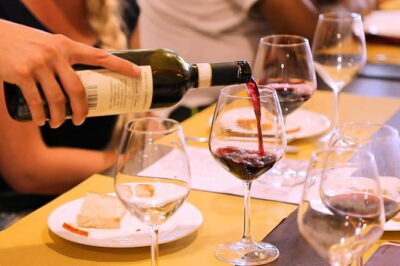
San Gimignano, Siena, Monteriggioni, Chianti Day Trip with Lunch & Wine Tasting
Read our review →
Cálem Cellar Tour, Interactive Museum & Wine Tasting
Read our review →
Browse the lists this tour appears in