
Review · SPAIN
La Palma: Bodegas Teneguia Winery Tour with Wine Tasting
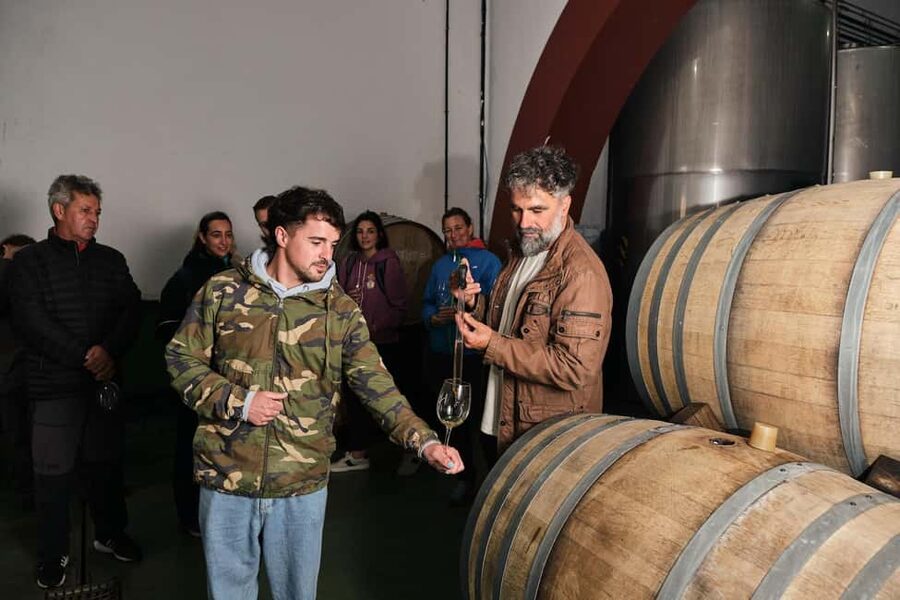
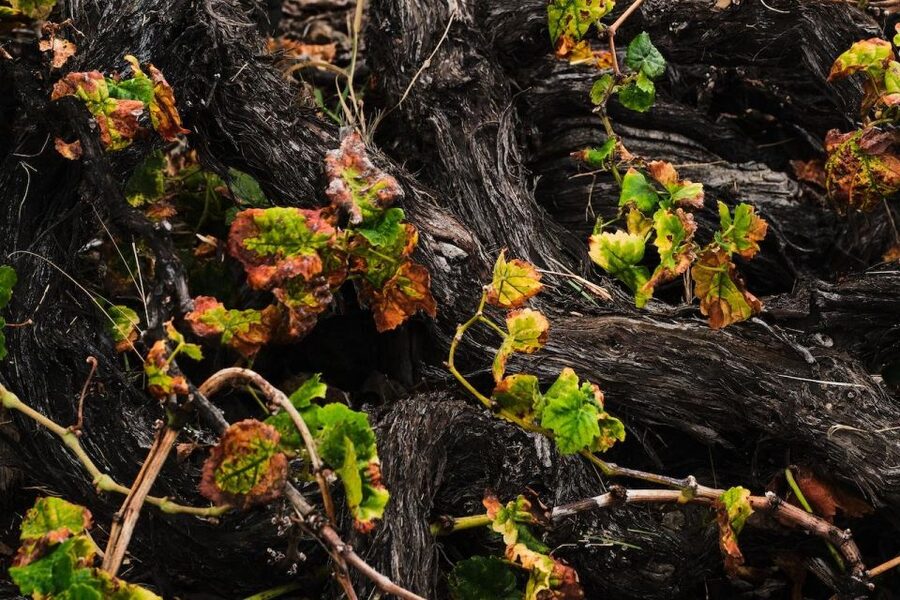
At Bodegas Teneguía, the most interesting part is not the tasting room. It is the winery’s link to Fuencaliente’s volcanic soil, where vines grow in a setting shaped by old volcanic activity. Inside, you follow the grapes from harvest and pressing to fermentation, aging, and bottling.
I like two things right away. First, the $17 price makes this an easy add-on for a day in southern La Palma. Second, the tour includes the old cement warehouses built in 1945, along with oak barrels and working wine rooms rather than just a sales counter. The one concern is timing: although the visit is advertised as one hour, a bilingual presentation and a large group can make it much longer.
Key points to know before you go
- Volcanic-soil wine: You learn how grapes are cultivated in Fuencaliente and how the local ground affects the winery’s work.
- A working cellar: The visit covers destemming, pressing, fermentation, aging, and bottling.
- Historic cement warehouses: Several large cement tanks date from 1945 and add real character to the cellar.
- English and Spanish tour: The guide presents in both languages, which can lengthen the visit if the group is large.
- A short tasting: The tasting has included two wines, one white and one red, rather than a broad flight.
- Useful purchase stop: You can buy bottles at the winery after tasting them.
Why Fuencaliente makes a good wine stop
Bodegas Teneguía is in Fuencaliente, a municipality known for viticulture in the south of La Palma. That setting gives the tour a clear sense of place. You are not simply tasting wine imported into a visitor center. You are learning about grapes grown in local volcanic ground and processed at the same winery.
The winery has operated for more than seventy years, and its age is visible in the facilities. You see modern wine-making steps alongside older cement storage spaces. That contrast helps explain how wine production changes over time without turning the visit into a museum tour.
I like this kind of stop because it gives you a small piece of La Palma’s working culture. The island is often sold through views and outdoor activities, but viticulture is part of its daily identity too. A glass of wine with a view toward the vineyards connects the drink to the place where it began.
The tour is also compact in theory. One hour is long enough to learn the basic process without giving up most of your day. If you are building a south-island itinerary, it can fit before or after other Fuencaliente sights. You need to arrange your own way to the winery, since transportation is not included.
More Wine Tasting Tours in Spain
- Montserrat & Cogwheel Train, Gourmet Wine Tasting & Tapas/Lunch
★ 5.0 · 6,290 reviews - Madrid Tapas & Wine Tasting Walking Tour – Small Group Local Bars
★ 5.0 · 3,644 reviews - Toledo Tour & Vineyard Walk with Wine Tasting from Madrid
★ 5.0 · 2,546 reviews
Starting at the reception hall
Your visit begins at Llanovid S. C. L. Bodegas Teneguía. The guide meets you in the reception hall and introduces the winery before explaining how grapes become wine.
This first section is useful because it sets up the rest of the visit. You learn what raw materials are used and how harvesting affects the final product. The guide also explains the basic work done after the grapes arrive, including destemming and pressing.
These are simple steps, but they matter. Destemming separates the grapes from the stems, while pressing extracts the juice. Knowing that makes the later parts of the cellar easier to understand. Instead of looking at pipes and tanks as a wall of equipment, you can connect each stage to a specific job.
The tour is conducted in English and Spanish. That is helpful if you need English explanations, but it also affects the pace. The guide may repeat each point in both languages before moving on. One recent group found that the bilingual format and a crowd of roughly 30 people stretched the visit to about two hours.
That is the main practical issue to keep in mind. If you need a strict one-hour stop, ask about the current group size and format before setting your next appointment. The advertised duration is one hour, but the actual pace can vary.
From grape harvest to first processing
The early part of the tour explains how grapes are harvested and brought into the wine-making process. You hear about the raw material before seeing how it is treated inside the winery.
I find this part valuable because it puts the labor back into the bottle. Vineyard work is not just a scenic backdrop for a tasting. The grapes must be cultivated, picked, sorted, destemmed, and pressed before fermentation begins. The tour makes that chain visible.
The presentation also gives you a better idea of why volcanic vineyards are worth discussing. The point is not simply that the soil sounds unusual. It is that the growing conditions are part of the identity of the wine produced here. You are tasting something connected to Fuencaliente rather than an anonymous label.
The tour does not appear to be designed as a technical wine course. You should expect a clear introduction to the production process, not a long lesson in chemistry or a detailed comparison of every grape variety. That makes it a good match for curious beginners and casual wine drinkers.
If you already know a great deal about viticulture, the basic explanations may feel brief. Still, the chance to see the actual cellar gives the visit more substance than a tasting with no production access.
The 1945 cement warehouses and aging rooms
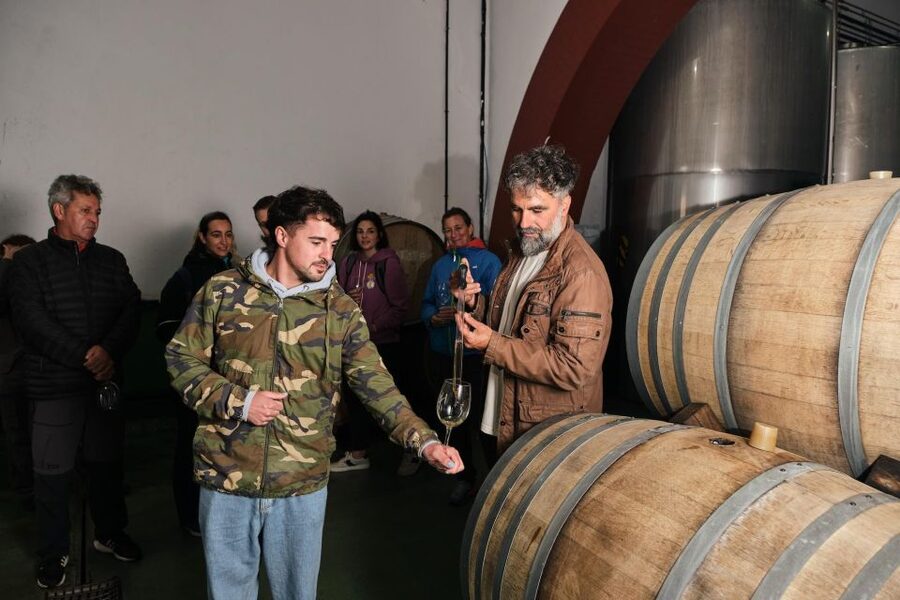
The aging rooms are one of the best parts of the visit. Oak barrels line the room, and the cellar also contains cement warehouses built in 1945.
Those cement structures give Bodegas Teneguía a strong sense of age. They are not decorative props added for a tour. They are part of the winery’s working past and show how wine was stored before many modern systems became common.
The guide explains that wine is aged in this area after fermentation. That sequence is important: the wine is not ready for bottling as soon as fermentation ends. Aging gives the winery time to develop the finished product, and the barrels offer a clear visual clue to that process.
You may find the room especially interesting if you enjoy old industrial spaces. The combination of oak barrels and large cement warehouses makes the cellar feel practical rather than polished for tourists. It also gives the tour a useful point of difference from a simple vineyard walk.
There is one comfort issue here. The full visit involves walking and standing, and one recent participant found there was no chance to sit during a visit that lasted about two hours. Comfortable shoes and clothes are sensible, but comfortable clothing will not solve a long wait on your feet. If standing is difficult for you, confirm the expected duration before booking.
More Winery Tours in Spain
- Barcelona: Montserrat, Cogwheel, Black Madonna & Winery Tour
★ 4.8 · 5,633 reviews - Montserrat with Black Madonna & Medieval Winery with Tapas/Lunch
★ 5.0 · 5,209 reviews - Montserrat Full Day Tour with Farmhouse Lunch and Winery Visit
★ 5.0 · 1,068 reviews - Montserrat & Winery Visit Tour with Traditional Farmhouse Lunch
★ 4.5 · 1,035 reviews
Seeing the bottling area
After the aging rooms, the tour continues to the bottling area. This is where the process comes together. You have seen the grapes arrive, watched the guide explain pressing and fermentation, and then viewed the place where the wine matures. Bottling is the final practical step before the wine reaches the shelf.
I like ending with this part because it makes the visit feel complete. Many winery stops jump from a vineyard straight to a tasting. Here, you get a basic production story from grape to bottle.
The visit may also include an explanation of a high-quality wine produced by the winery that is not necessarily part of the tasting. That can be frustrating if you hear about a special bottle but cannot sample it. Still, the explanation can help you understand the range of wines made at Bodegas Teneguía and decide what to look for at the sales point.
Do not expect the bottling area to function as a hands-on workshop. The attraction is seeing the stage and understanding its place in the process. The tour remains observational, with the guide doing the explaining.
What the wine tasting is really like
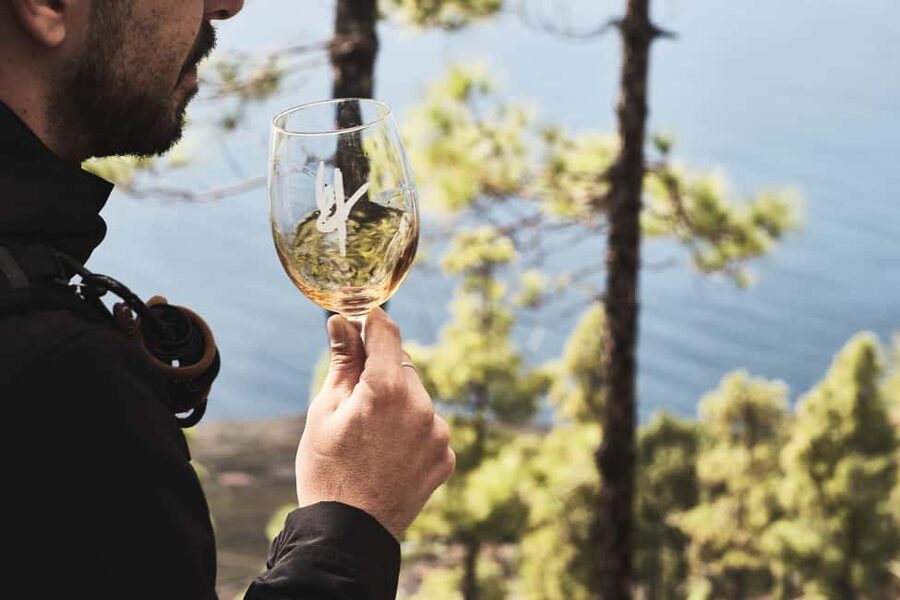
The tasting comes at the end, after the cellar tour. You can enjoy a glass while looking toward the vineyards, then purchase bottles at the winery’s point of sale.
The tasting is best viewed as an introduction rather than a full wine flight. A recent visit included two wines, one white and one red. That is enough to give you a simple comparison, but it may feel limited if you have visited wineries offering five or six pours.
At $17, the value still makes sense for many people. The price covers the guided visit, bilingual guide, tasting, and access to the production areas. You are paying for more than two small samples, but you are not paying for a long premium tasting with a large selection.
I would book this for the setting, cellar, and explanation of the wine-making process, with the tasting as the final bonus. If your main goal is to sample many wines, this may not be the right choice. If you want an affordable introduction to one La Palma winery, the package is more appealing.
The sales point is useful because you can buy a bottle you have just tasted. That is more practical than shopping from a long list with no guidance. If you find a wine you like, the winery gives you a direct way to take it home.
Timing, group size, and the bilingual format
The listed duration is one hour, but you should allow extra time if your schedule is tight. The guide speaks English and Spanish, and repeating the full explanation in both languages can lengthen each stop.
A bilingual tour is a clear advantage for mixed-language groups. You can join without worrying that the visit will be available only in Spanish. The tradeoff is pace. One recent group found that the tour took about two hours, largely because the same information was given in both languages.
Group size matters too. A group of around 30 can make it harder to hear, move through narrow cellar areas, or stay close to the guide. The experience is likely to feel more personal with a smaller group, but the available information does not promise a fixed group size.
My practical advice is simple: do not schedule a meal, bus, or timed attraction immediately afterward. Treat one hour as the planned length and two hours as a possible real-world total, especially around busy dates.
The winery has also had an occasional holiday scheduling problem. One booking in early January found the site closed, possibly because of the Three Kings holiday, and the visitor had driven for an hour without a visit. That does not establish a regular policy, but it is a good reason to confirm opening arrangements around public holidays before making a special trip.
Getting there and planning the stop
Transportation to and from Bodegas Teneguía is not included. You need to reach Llanovid S. C. L. Bodegas Teneguía on your own, so this tour works best if you already have a car, a planned taxi, or another way to move around southern La Palma.
The location is in Fuencaliente, an area known for vineyards. The route to the winery includes scenic views, but the experience itself does not provide transport from a hotel or port. Build driving time into your plan, and decide in advance who will handle the return journey if you intend to taste wine.
Wear comfortable shoes. You walk through the reception area, production spaces, aging rooms, and bottling area, and the visit may involve standing for much of the time. Comfortable clothes are also recommended.
The free cancellation policy allows cancellation up to 24 hours in advance for a full refund. You can also reserve now and pay later, which helps if your La Palma schedule is still taking shape. These terms are useful, but they do not replace checking the winery’s holiday opening arrangements.
Who will enjoy this winery visit most
I would choose this tour if you want a short, affordable look at La Palma’s wine culture. It suits first-time wine visitors, couples adding a local food stop to a south-island drive, and anyone curious about how volcanic soil connects to the bottle.
It is also a good option for mixed groups. The guide works in English and Spanish, so people who speak either language can follow the explanation. The tasting is modest, but the tour gives non-specialists enough background to understand what they are drinking.
You may want a different experience if you prefer a quiet, small-group tasting. The bilingual format can repeat information, and a larger group may make the cellar feel crowded. Wine enthusiasts looking for many samples or extended discussion should also keep expectations in check.
I would not make this the sole reason to visit Fuencaliente if you have a very tight schedule. The risk of a longer visit, plus the need to arrange your own transportation, means it works better as one part of a wider day.
Should you book Bodegas Teneguía?
Book it if you value place, production, and price more than a large tasting menu. For $17, you get a guided look at a long-established winery, volcanic-soil viticulture, historic cement warehouses from 1945, oak aging rooms, the bottling area, and a tasting with the chance to buy wine afterward.
Skip it if you need a guaranteed one-hour visit, dislike standing, or want a broad selection of wines. Before booking, confirm the opening time around holidays and allow extra time for the English and Spanish presentation.
For most visitors already exploring Fuencaliente, I think it is a sensible stop. Go for the winery story and the old cellar first. The two wines at the end are a pleasant finish, not the entire reason to come.
FAQ
Where does the Bodegas Teneguía tour start?
The tour starts at Llanovid S. C. L. Bodegas Teneguía in Fuencaliente, La Palma.
How long does the winery tour last?
The advertised duration is one hour. A bilingual presentation and a larger group can make the visit longer, with one recent visit lasting about two hours.
What languages are available?
The live guide speaks English and Spanish.
What is included in the price?
The price includes a guided tour of Bodegas Teneguía, an English and Spanish-speaking guide, and a wine tasting session.
How many wines are included in the tasting?
The tasting has included two wines, one white and one red. The exact selection may vary.
Can I buy wine after the tour?
Yes. You can purchase wines you have tasted at the winery’s point of sale.
Is transportation included?
No. You must arrange your own transportation to and from the winery.
What should I wear and bring?
Bring comfortable shoes and wear comfortable clothes. Much of the visit may involve walking and standing.
More Wine Tastings in Spain
- Madrid: Tapas & Wine Tasting Tour with Local Guide
★ 4.8 · 2,171 reviews - Paella Cooking Class, Wine Tasting & Central Market in Valencia
★ 5.0 · 1,150 reviews - Bilbao: Basque Food Tour and Wine Tasting with Guide
★ 4.9 · 772 reviews - Madrid Countryside Wineries Guided Tour with Wine Tasting
★ 5.0 · 740 reviews
Just added around Spain
- Visit a winery of the 19th century and its draft★ 5.0 · 62 reviews
- Ribera del Duero Underground Cellar & Wine Tasting Experience★ 4.5 · 49 reviews
- Visit and Wine Tasting at the Territorio Luthier Winery★ 5.0 · 89 reviews
- Semi-Private Rioja Tour of 3 Premium Wineries from Bilbao★ 5.0 · 128 reviews
- Paella and Burnt Basque Cheesecake Cooking Class (in Bilbao)★ 5.0 · 46 reviews
- Basque Best Bites – #1 Food & Wine tour of Bilbao★ 5.0 · 268 reviews
- La Rioja Boutique Wine Tour & Charming Lunch (From Bilbao)★ 5.0 · 62 reviews
- Rioja Wine Tour: 2 Wineries From Bilbao★ 5.0 · 111 reviews
Winery Tours, compared.
Douro Valley with Winery Lunch, Tastings & Cruise
Read our review →
Montserrat with Black Madonna & Medieval Winery with Tapas/Lunch
Read our review →
Wine Tour: Paarl, Franschhoek & Stellenbosch incl 3 wineries
Read our review →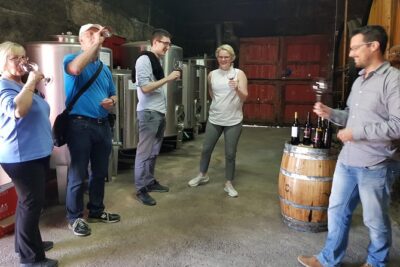
Douro Valley Tour: 2 Vineyard Visits, River Cruise, Winery Lunch
Read our review →
5-Hour Traverse City Wine Tour: 4 Wineries on Old Mission Peninsula
Read our review →
Tastings at 2 Wineries, Chef’s Lunch & Boat Tour
Read our review →
Douro Valley Tour: Visit 2 Wineries, Lunch & River Cruise
Read our review →Browse the lists this tour appears in