
Review · USA
Exotic Fruit Tasting Tour in Kona
Some of Hawaii’s best food experiences come in small bites. At Aloha Adventure Farms, you sit down to sample fruits that many mainland visitors rarely see, from creamy cherimoya and mangosteen to snake fruit, abiu, and durian. The guide explains where each fruit comes from, how it is eaten, and how it fits into island life.
I like the wide range of samples and the chance to ask questions in a group capped at 15 people. I also like the practical touch of packing leftover fruit for later, perhaps for breakfast or a beach snack. The main consideration is expectation: this is chiefly a guided tasting, not a long working-farm walk, so some of the fruit is prepared in advance and the tasting may take place at a picnic table.
Key points to know before booking
- You may taste 20 or more fruits: Past selections have included several kinds of mango, papaya, coconut, banana, dragon fruit, and rare fruits such as abiu and jaboticaba.
- The tour lasts about 90 minutes: That gives you time to taste, ask questions, and see some plants without turning the visit into a half-day farm outing.
- The group is limited to 15 people: You get a better chance to ask about unfamiliar fruits or request another look at a plant.
- A guide adds context to the food: The presentation can include Polynesian culture, fruit origins, growing details, and hands-on moments such as opening a coconut.
- Leftovers go home with you: Utensils, fruit, and a take-home container are included.
- Come ready for outdoor conditions: Mosquito repellent on your legs is a sensible precaution, and the farm can move the tasting under cover if the weather turns wet.
A Kona food stop with a genuine sense of surprise
The appeal here is simple: you arrive knowing pineapple, mango, and banana, then meet fruits that look and taste entirely different. A good guide turns each sample into a small lesson rather than a parade of unfamiliar names.
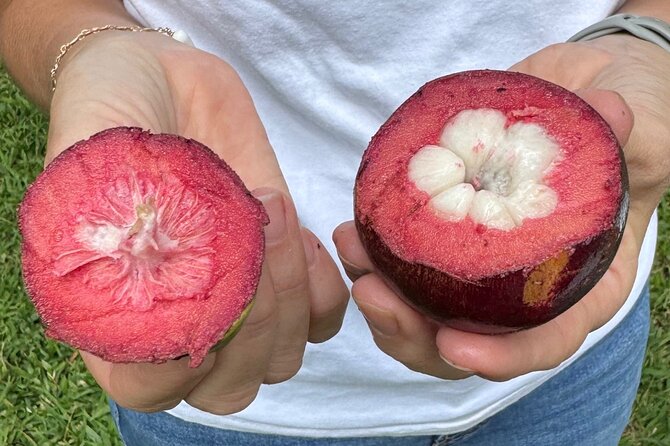
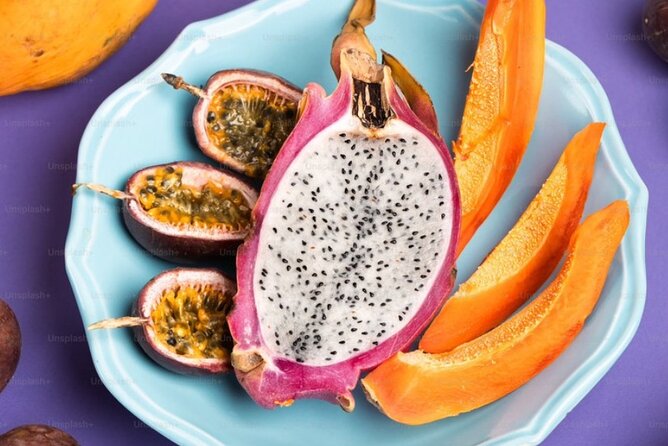
The fruit list can be extensive. Past tastings have included two kinds of papaya with calamansi, cotton candy coconut, dwarf Samoa coconut, apple bananas, ice cream bananas, star fruit, cacao, rambutan, longan, snake fruit, lychee, lilikoi, mangosteen, white guava, four kinds of mango, two kinds of dragon fruit, abiu, jaboticaba, tamarillo, and durian.
You should not treat that list as a fixed menu. Fruit availability changes, and the selection can depend on what is ready to serve. That is part of the appeal, but it also means you should book this for discovery rather than for one specific fruit.
The tasting format works especially well if you like comparing flavors. Two papayas can taste noticeably different, just as two mangoes can vary in sweetness, texture, and perfume. You may find that the fruit you expected to love is less interesting than something you had never heard of.
A few more tastings around the USA worth a look
- Pedal Bar Crawl of Old Town Scottsdale
★ 5.0 · 4,254 reviews - Boston to Martha’s Vineyard Day Trip with Optional Island Tour
★ 4.5 · 3,162 reviews - 5-Hour Traverse City Wine Tour: 4 Wineries on Old Mission Peninsula
★ 5.0 · 2,369 reviews
What happens at Aloha Adventure Farms
You meet at Aloha Adventure Farms, at 77-6261 Mamalahoa Highway in Holualoa. The activity begins and ends at the same place, which keeps the logistics easy if you are already exploring the Kona side of the Big Island.
The experience lasts about one hour and 30 minutes. The supplied itinerary lists the farm as the single stop, but the visit is more than a plate of cut fruit. You can expect an explanation of the samples, a look at fruit plants, and time to learn about the farm’s food and cultural setting.
One important detail deserves plain wording. This is not presented as a long walk through rows of trees while you pick every fruit directly from the branch. Much of the fruit is collected ahead of time so the tasting can offer a broad selection within a short visit.
That arrangement has a clear benefit. You get more variety than you would from waiting for each item to be harvested, washed, opened, and served. The tradeoff is that you may spend much of the session seated at a picnic table, with only a short look around the property.
If your family expects an active farm adventure, especially teenagers hoping to roam, this format may feel too quiet. If you want an easygoing food lesson with a small amount of walking, it makes more sense.
The fruit tasting is the main event
The best part is the steady rhythm of trying, asking, and comparing. A sample of creamy cherimoya may be followed by the sharp sweetness of another fruit, then something floral, tart, crunchy, or soft.
Rare fruits are not always easy to identify from appearance alone. A guide can tell you what to remove, what to eat around, and which part offers the best flavor. That help matters with fruits such as durian, snake fruit, cacao, or jaboticaba, where the name alone tells you very little.
You may also learn about fruits in ways that go beyond taste. The farm presentation can cover origins, uses, and connections to Polynesian culture. That context gives the tasting a stronger sense of place than a generic fruit platter at a hotel.
The guides are one of the experience’s strongest features. Leah led one especially well-received session, explaining the fruit clearly and keeping the mood friendly. The guiding team also demonstrates hands-on items, including cracking open macadamia nuts and coconuts.
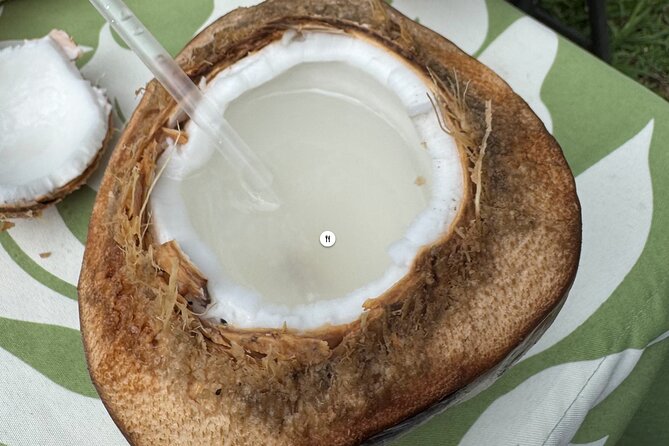
One unusual detail is the chance to open a coconut with a Tongan blade. That is not the kind of small cultural and practical moment you get from simply buying a smoothie. It gives you a better sense of the work behind a familiar tropical food, though the exact activities may vary by session.
Why the farm setting matters, and where it falls short
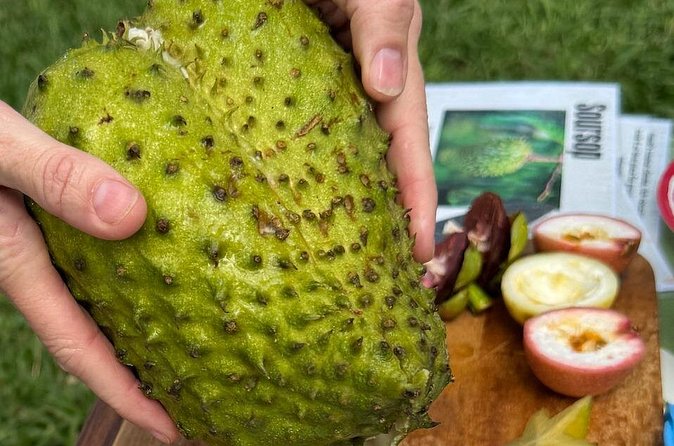
Seeing vanilla, cacao, apple bananas, and other plants on the property helps connect the samples to real growing conditions. Even a short walk can answer a basic question: What does this fruit look like before it reaches a cutting board?
The setting also gives families something to point out between tastings. Children and teenagers who like trying new foods may stay engaged because the experience combines food, plants, and simple demonstrations. One family found that even teenagers who were unsure about the idea ended up asking for more fruit.
Still, keep the scale in mind. The supplied details describe one stop and a short tour, not an extensive agricultural visit. If your main goal is to walk through a large orchard or see fruit harvested from start to finish, this may not satisfy you.
Weather can affect the feel of the visit. When rain arrives, the tasting can move under cover, which keeps the activity going but may reduce the sense of wandering around the property. Kona weather can change quickly, so light rain protection is a sensible addition to your day bag.
Mosquitoes are another practical concern. Citronella candles have been used during tastings, and water has been provided, but repellent is still worth applying, especially to your legs. One particularly useful tip is to use repellent even if mosquitoes do not usually bother you at home.
Same town, a different glass:
- NYC: Empire State Building Tickets – Observatory & Museum
★ 4.7 · 25,757 reviews - Oahu’s Waikiki Coast: Moana’s Sunset Cocktail Sail
★ 5.0 · 2,205 reviews - Belle Meade Guided Mansion Tour with Complimentary Wine Tasting
★ 4.5 · 2,189 reviews - Nashville to Jack Daniel’s Distillery Bus Tour + Whiskey Tastings
★ 5.0 · 1,906 reviews
Is $84.99 a fair price?
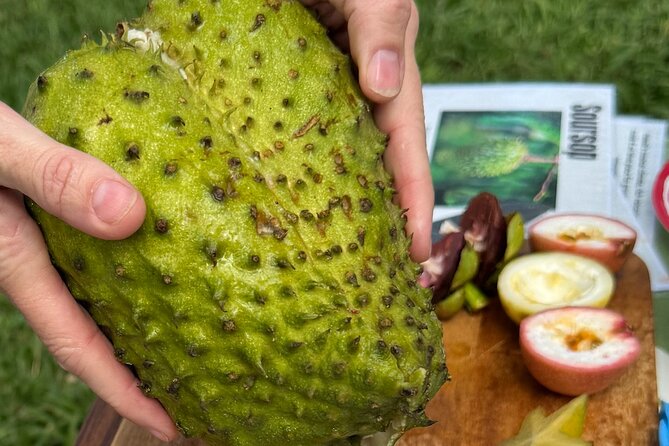
At $84.99 per person, this is not a casual roadside fruit sample. For a family of four, the price adds up quickly, and you should compare it with what else that money could buy on the Big Island.
The value depends on how much you care about access to unusual produce and guided explanation. If you would happily spend an hour tasting rare fruits, asking questions, and learning how they grow, the price can feel reasonable. You are paying for the guide, the variety, the farm setting, utensils, water when provided, and the chance to take unfinished fruit with you.
The take-home container improves the value. Leftovers can become a snack later in the day, and one couple enjoyed extra fruit on the beach the following day. You may not finish every sample, especially if the selection is large, so the container is more useful than a decorative souvenir.
The price is harder to justify if you mainly want a full farm tour. In that case, the seated tasting format may feel limited for the money. I would book this for the food and the teaching, not because you expect a major agricultural excursion.
Who will enjoy this most?
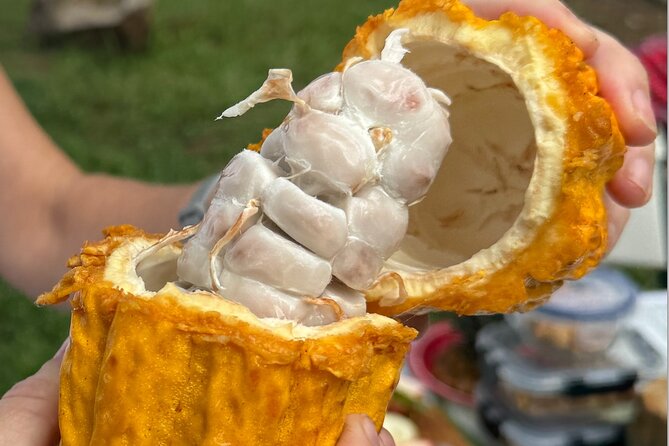
This tour suits food-focused visitors who want to try unfamiliar produce without committing to a full day of activities. It also works for families with children who enjoy sampling and comparing flavors.
Curious teenagers can have a good time, especially when the session includes coconuts, macadamia nuts, cacao, or a surprising fruit. The experience is less likely to work for a teenager who wants a high-energy activity or a long walk.
Couples and friends can use it as a relaxed stop between other Kona plans. The one-hour-30-minute schedule is long enough to feel substantial but short enough to fit into a busy day.
It is also a good choice if you want to see a quieter side of Hawaii. You are not simply moving between major attractions. You are spending time with local produce and learning why the Big Island can grow foods that are difficult to find elsewhere.
The tour is offered in English. Most people can participate, service animals are allowed, and the farm is near public transportation. The group limit of 15 makes the setting more personal than a large coach tour, though the activity still involves sitting and some outdoor movement.
What to bring and how to prepare
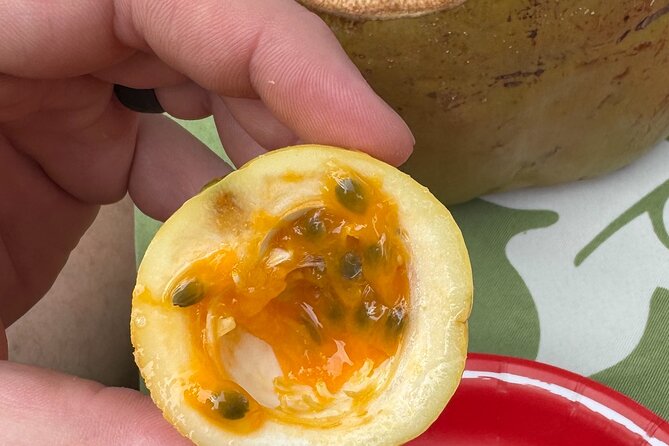
Wear comfortable clothing for an outdoor farm setting. Apply mosquito repellent before you arrive, with special attention to your legs, and consider carrying more if you are sensitive to bites.
Bring an appetite, but do not arrive expecting a conventional meal. You will sample many small portions, and unfamiliar fruit can be filling. The included take-home container means you do not need to force yourself to finish every bite.
A little flexibility helps. You might not receive every fruit named in the description, and the order of tasting can change. Think of the list as a guide to the kinds of discoveries possible, not a promise of a fixed menu.
If rain is in the forecast, plan around the fact that the tasting may move under cover. That protects the activity from the weather, but it can change how much of the farm you see.
How this compares with a standard Hawaii food stop
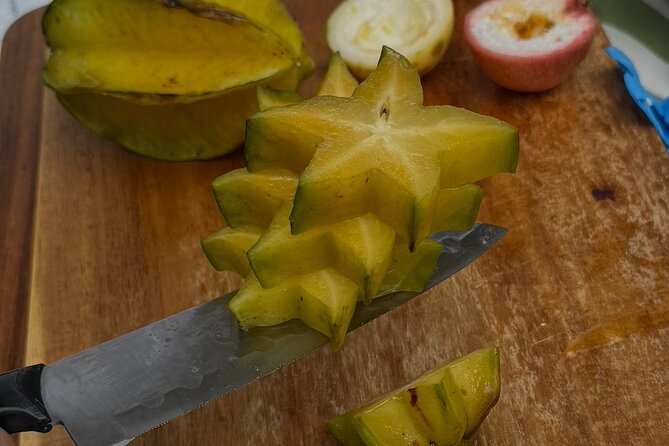
A restaurant meal gives you a more predictable menu and a comfortable place to sit. This experience gives you more novelty and explanation, but less control over what arrives next.
A farmers market lets you browse at your own pace. Here, the guide sets the rhythm and explains the fruit as you go. That is useful when you do not know what to buy or how to eat something unfamiliar.
A botanical attraction may offer more walking and plant identification. This tour puts the emphasis on taste. You may see vanilla, cacao, bananas, and other plants, but the food on the table remains the central feature.
That distinction is worth making before you reserve. The activity works best when you want a guided introduction to tropical fruit, not when you want to spend hours exploring a large farm on your own.
Booking and cancellation details
The tour costs $84.99 per person and is commonly reserved well ahead of time, with an average booking lead of about 40 days. That suggests you should plan ahead if it fits an important day in your Kona schedule.
You receive confirmation when booking, and a mobile ticket is available. The activity is in English, starts and ends at Aloha Adventure Farms, and has a maximum group size of 15 people.
Free cancellation is available if you cancel at least 24 hours before the start time. A cancellation or change made less than 24 hours ahead is not accepted for a refund, and the cut-off follows local time.
Should you book the Kona fruit tasting?
Book it if you like trying new foods, want a small-group setting, and would enjoy learning the story behind fruit rather than simply eating it. The variety, the friendly teaching style, the hands-on coconut and macadamia moments, and the take-home container make this a distinctive Kona stop.
Skip it if your main goal is a long farm walk, fruit picking, or an active outdoor adventure. The tasting can be seated for much of the time, and the $84.99 price requires a real interest in food to feel worthwhile.
For curious families, couples, and anyone who has wondered what mangosteen, abiu, jaboticaba, or durian actually taste like, I would put this on the short list. Arrive ready for unusual flavors, use mosquito repellent, and judge the experience as a guided tasting with a farm connection, not as a full agricultural tour.
FAQ
Where does the fruit tasting take place?
The tour takes place at Aloha Adventure Farms, located at 77-6261 Mamalahoa Highway in Holualoa, Hawaii.
How long does the experience last?
The experience lasts approximately one hour and 30 minutes.
What is the price?
The listed price is $84.99 per person.
What fruits might I taste?
Possible samples include cherimoya, mangosteen, papaya, calamansi, coconut, apple bananas, ice cream bananas, star fruit, cacao, rambutan, longan, snake fruit, lychee, lilikoi, guava, mango, dragon fruit, abiu, jaboticaba, tamarillo, and durian. The exact selection can vary.
Is the fruit included?
Yes. Fruits, utensils, and a container for unfinished fruit are included.
Can I take leftover fruit home?
Yes. You receive a container for fruit you do not finish during the tasting.
How large is the group?
The activity has a maximum of 15 people.
Is the tour offered in English?
Yes. The tour is offered in English.
Are service animals allowed?
Yes. Service animals are allowed.
Can I cancel for a full refund?
Yes, if you cancel at least 24 hours before the experience start time. Cancellations or changes made less than 24 hours before the start are not accepted for a refund.
Just added around the USA
- Burlington Signature Guided Brewery Tour★ 5.0 · 133 reviews
- Ridden- Fat Bike Beer & Distillery Tour★ 5.0 · 160 reviews
- Cocktails & Cannoli: Boston’s North End Dessert Tour★ 5.0 · 309 reviews
- Branson VIP Wine Tasting and Dinner Tour★ 4.5 · 162 reviews
- Signature Boston Guided Brewery Tour with snack★ 5.0 · 271 reviews
- Boston Seafood Private Tasting Tour★ 5.0 · 102 reviews
- 2 Hour Historic Pub Crawl in Boston★ 5.0 · 45 reviews
- Delray Beach Food & Drinks Tour★ 5.0 · 176 reviews
Drinks Tours, compared.
Unlimited Prosecco, Beer and Aperol Spritz Cruise
Read our review →
Evening Cruise with Optional Wine and Snacks
Read our review →
Douro Valley w/ Boat Tour, Wine Tasting & Lunch
Read our review →
Chichen Itza, Cenote & Valladolid Tour with Tequila and Lunch
Read our review →
Complete Douro Valley Wine Tour with Lunch, Wine Tastings and River Cruise
Read our review →
Small-Group Wine Tasting Experience in the Tuscan Countryside
Read our review →
Douro Valley with Winery Lunch, Tastings & Cruise
Read our review →Browse the lists this tour appears in