Review · DRINKS TASTINGS
Coffee tasting experience at Divino Café Especial
Bogotá’s Divino Café Especial turns a morning coffee into a small sensory lesson. You’ll smell, taste, and compare four Colombian specialty coffees prepared by different methods, from espresso to a Japanese siphon, while learning what makes one cup feel brighter, heavier, or more fragrant than another.
I like the small maximum of eight people, which gives the session an intimate feel and leaves room for questions. I also like the practical finish: you learn four steps for making better coffee at home, not just how to admire a cup in the café.
The main consideration is caffeine. Depending on how much you drink, this can be a serious coffee hit in about 90 minutes. The experience also requires good weather, and its morning or afternoon schedule may not suit every Bogotá itinerary.
Key details before you book
- Four coffees, several brewing methods: Compare specialty coffee through espresso, Japanese siphon, Chemex or V60, and AeroPress or French press.
- A sensory approach: You’ll work with fragrance, aroma, flavor, and body rather than simply deciding which cup tastes best.
- A small-group setting: The experience accepts no more than eight participants, useful if you prefer conversation over a large demonstration.
- A central meeting point: Start and finish at DV Café Especial, Cl. 12b #4-06 in La Candelaria, near public transportation.
- House cake is included: A portion of cake gives you something to eat alongside the tasting.
- Several English start times: English sessions are listed at 9 am, 11 am, and 3 pm.
A coffee lesson in the heart of La Candelaria
The experience begins at Divino Café Especial, also called DV Café Especial, at Cl. 12b #4-06 in Bogotá’s historic La Candelaria district. You meet at the café and return there at the end, so there is no complicated route between stops.
That location makes the tasting easy to pair with a morning or afternoon in central Bogotá. If you are already planning time in La Candelaria, this gives you a focused activity rather than another quick café stop. Public transportation is nearby, which matters in Bogotá, where traffic can make a short cross-city trip take much longer than expected.
The room is designed for a small group of no more than eight people. That number is important. Coffee tasting works best when you can smell each sample carefully, ask why one brewing method produces a different result, and hear the guide explain the answer without competing with a large crowd.
The guides named for this experience include Leandro, Jason, and Sebastian. Their approach is aimed at both coffee enthusiasts and complete beginners. You do not need to arrive knowing technical coffee terms. The session explains the basics in plain language, then lets you test those ideas with your own senses.
More Coffee Tastings in the world:
- Dublin: Irish Coffee Masterclass at the Irish Whiskey Museum
★ 4.6 · 279 reviews - Puerto Vallarta: City Tour, Tequila and Coffee Factory Tour
★ 4.2 · 212 reviews
First lesson: fragrance, aroma, flavor, and body
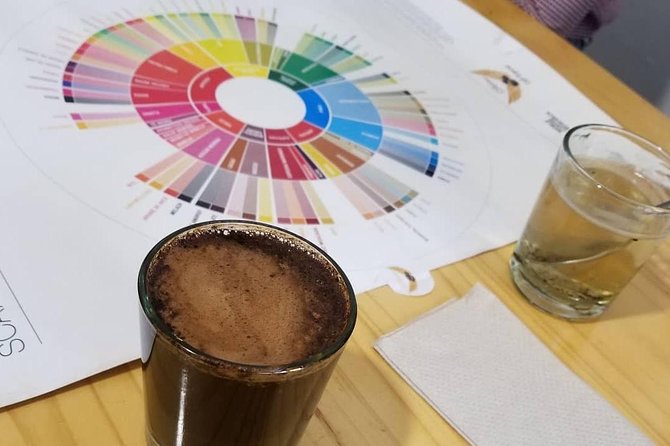
The tasting starts with a sensory exercise. You learn to separate fragrance, aroma, flavor, and body, four words that can blur together when you are simply drinking a morning cup.
Fragrance refers to what you notice before tasting, while aroma develops as you smell the brewed coffee. Flavor covers what reaches your palate, and body describes the weight or texture of the drink. The useful part is not memorizing definitions. It is learning to pause and notice what is actually happening in the cup.
I like this structure because it gives beginners a way into specialty coffee without making the subject feel like an exam. You can say that one coffee smells floral, tastes bright, or feels light-bodied, then compare your impression with the group. The activity is meant to be interactive, so you are not just watching someone prepare drinks behind a counter.
The session also places coffee in context, from the bean and its production to harvesting, roasting, and preparation. That broad view helps explain why two coffees can taste so different before the brewing method even enters the picture.
Four Colombian coffees prepared four ways
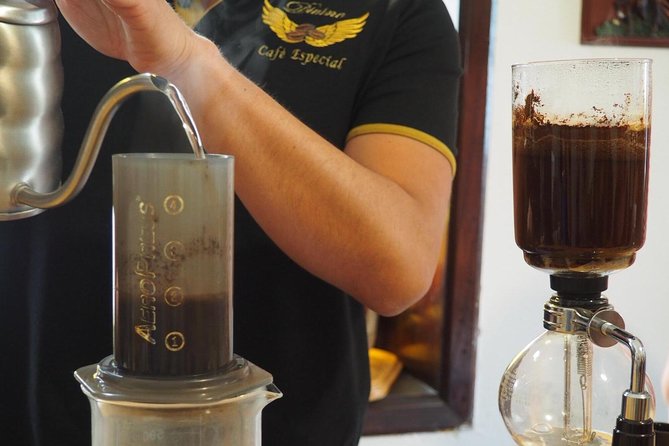
The main tasting features four different specialty coffees and several extraction methods. The stated lineup includes an espresso machine, Japanese siphon, Chemex or V60, and AeroPress or French press. The exact combination may vary within those options, but the point is clear: you compare coffee and technique at the same time.
Espresso machine
Espresso gives you a concentrated reference point. It is usually the most compact and intense preparation in the lineup, making it useful for noticing aroma, body, and finish in a small amount of coffee.
You can also see why brewing equipment matters. Pressure, water contact, and serving size all affect how the coffee presents itself. If espresso is your usual order, this part gives you a sharper way to think about what you already drink.
A few more tastings around the world worth a look
- Budapest: Unlimited Prosecco, Beer and Aperol Spritz Cruise
★ 4.8 · 37,304 reviews - Amsterdam: Evening Cruise with Optional Wine and Snacks
★ 4.4 · 22,178 reviews - Tuscany Day Trip from Florence: Siena, San Gimignano, Pisa and Lunch at a Winery
★ 5.0 · 21,634 reviews - From Porto: Douro Valley w/ Boat Tour, Wine Tasting & Lunch
★ 4.7 · 19,061 reviews
Japanese siphon
The siphon is one of the more unusual methods included. It uses a glass apparatus and a visible brewing process, so it adds a bit of theater to the tasting without turning the event into a show.
This method is especially useful for comparison. Coffee prepared in a siphon can feel different from coffee made under espresso pressure or through a paper filter. You get to observe the method and then decide what changes in scent, clarity, flavor, or body.
Chemex or V60
Chemex and V60 are pour-over methods associated with a clean, defined cup. The paper filtration can make it easier to notice delicate aromas and differences between beans.
For anyone who usually adds milk or sugar, this may be the most revealing part of the session. Drinking the coffee without heavy additions lets you pay attention to its natural character. You may find that a coffee you prefer as espresso is not the one you prefer as a pour-over.
AeroPress or French press
AeroPress and French press offer another contrast. Their brewing styles can produce a different texture and level of body, giving you a useful comparison with the cleaner profile of a paper-filtered cup.
The value here is practical. These are methods you might reasonably use at home, depending on the equipment you already own. The guide connects the tasting to ordinary coffee-making rather than leaving you with techniques that only work in a professional café.
Why the guided comparison matters
A single excellent cup can be enjoyable, but four coffees prepared in different ways teach you more. You begin to separate the qualities of the bean from the effect of the brewing method.
That distinction is useful when you buy coffee in Colombia or order specialty coffee elsewhere. If a cup tastes sour, bitter, thin, heavy, floral, or sweet, you will have a better idea of whether the cause may be the bean, the roast, the water, or the extraction.
The experience also gives you a vocabulary for choosing coffee. Instead of saying only that you like or dislike a particular cup, you can identify the qualities you want: more body, a cleaner finish, stronger fragrance, or a brighter flavor.
Leandro is described as bringing particular energy and technical skill to the session, while Jason is noted for making beginners feel comfortable. Sebastian is associated with calm, clear explanations about production, harvesting, and preparation. Since the guide can vary, your exact teaching style may depend on the session, but the format is built around patient explanation rather than specialist talk for its own sake.
House cake and the caffeine question
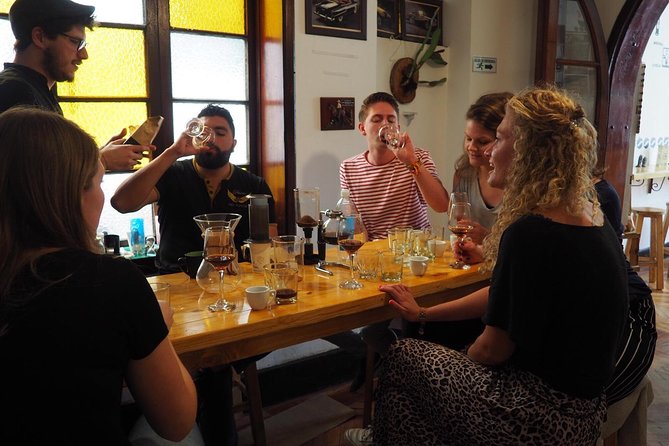
A portion of house cake is served with the tasting. This is a small detail, but it improves the session. You have something to eat while sampling several coffees, and the sweetness gives you another point of contrast as you think about flavor.
Still, do not treat the cake as a full meal. The tasting lasts about 1 hour 30 minutes, and the central activity is drinking coffee. If you are sensitive to caffeine, plan accordingly. One description characterizes the experience as lasting closer to two hours, so it is sensible to allow a little extra time rather than scheduling a tight appointment immediately afterward.
The caffeine level will depend on how much you drink and how much of each sample is served. The supplied details do not specify serving sizes, so you should not assume that every tasting is a tiny sip. If you are concerned, ask the provider before booking.
Four steps you can use at home
The final teaching section focuses on making coffee at home. You receive four steps intended to help you prepare a better cup, using the lessons from the tasting.
This is one of the strongest reasons to choose the experience over a standard café visit. You are not only paying for drinks consumed in Bogotá. You are learning how to notice quality and how to improve your own routine after you leave.
The advice is aimed at ordinary coffee drinkers, not only people who own expensive equipment. The session includes several professional and specialty methods, but the goal is to make the ideas understandable for a nonprofessional audience.
You may also receive a file with memories of the experience if you want one. The details do not specify exactly what the file contains, so think of it as a possible digital keepsake rather than a guaranteed technical manual.
Is $33 a fair price?
At $33 per person, this costs more than ordering four ordinary coffees in Bogotá. You are paying for the guided comparison, the instruction, the small group, multiple preparation styles, and the house cake, not just for liquid in a cup.
I consider the price reasonable if you are curious about specialty coffee or want an organized introduction to Colombian coffee. A high-end winery tour is a useful comparison: the value comes from learning how to taste, understanding production, and comparing several examples under guidance.
The price is less compelling if you simply want a strong morning coffee or have little interest in how brewing changes flavor. You could spend less at a café and still have a pleasant drink. This experience earns its cost through explanation and variety.
Its high rating and 98 percent recommendation figure support the idea that the teaching is a major part of the value, but your priorities matter more than the numbers. Coffee lovers are likely to get more from it than people who want a quick caffeine stop.
Best times to fit it into your Bogotá plans
English sessions are listed at 9 am, 11 am, and 3 pm. The morning options are useful if you want to begin your day in La Candelaria, while the afternoon time can work after other sightseeing.
The 9 am start may appeal to serious coffee drinkers who like beginning early, but check the exact time shown when booking. The information also lists English at 11 am and 9 am or 3 pm in different places, so confirm the available slot for your date rather than relying on a general schedule.
Because the activity begins and ends at the same café, it is easy to combine with other plans in the district. Leave enough room for the tasting to run beyond the approximate 90-minute duration, especially if the group has many questions.
The experience is usually booked about 16 days ahead. That is a useful planning signal, particularly if you want a specific English time or are visiting Bogotá for only a few days.
Who will enjoy this most?
I would choose this for:
- Coffee drinkers who want to understand specialty coffee without taking a formal course.
- Solo visitors who prefer a structured activity with a small group.
- Couples and friends looking for something more hands-on than a café break.
- People interested in Colombian coffee from production through preparation.
- Anyone planning to buy brewing equipment or improve coffee at home.
It also suits beginners unusually well. The teaching begins with the senses, not with an assumption that you know coffee jargon. Several of the guide descriptions emphasize clear explanations for people starting from zero.
I would hesitate if you dislike tasting several coffees in one sitting, need a full meal, or want a tour focused on coffee farms outside Bogotá. This takes place in a café in La Candelaria. It explains the coffee process, but it is not a farm visit or a trip into the growing regions.
Practical details that matter
Confirmation is provided at booking. The meeting point is DV Café Especial, Centro Histórico, Cl. 12b #4-06, La Candelaria, Bogotá, Colombia, and the activity ends at that same point.
The group maximum is eight people. The experience is near public transportation, which makes access simpler than a meeting point far outside the center.
Free cancellation is available up to 24 hours before the start time for a full refund. Cancellations or changes made less than 24 hours before the start are not accepted for a refund. The cut-off uses local time.
The activity requires good weather. If poor weather causes cancellation, you are offered another date or a full refund. That condition is worth noting even though the tasting happens inside a café, so check the provider’s instructions close to the date.
Should you book the Divino Café Especial tasting?
Book it if you want more than a good cup. The combination of four Colombian specialty coffees, multiple extraction methods, sensory training, house cake, and home-brewing advice gives you something useful to carry into the rest of your trip and back home.
I especially like it for solo visitors and beginners. The eight-person limit keeps the format personal, while the guides, including Leandro, Jason, and Sebastian, are described as patient and engaging with people at different levels.
Skip it if your main goal is a quick coffee, a farm excursion, or a full meal. For everyone else, $33 is a fair price for a focused 90-minute lesson in how to taste and prepare Colombian coffee. Just allow for the caffeine, confirm the English time, and leave your schedule loose enough for a session that may run long.
FAQ
Where does the coffee tasting take place?
It takes place at DV Café Especial, Centro Histórico, Cl. 12b #4-06, La Candelaria, Bogotá, Colombia.
How long does the experience last?
The stated duration is approximately 1 hour 30 minutes. One description refers to a session closer to two hours, so allow some extra time.
How many people can join?
The maximum group size is eight people.
Which coffee brewing methods are included?
The tasting includes coffee prepared with an espresso machine, Japanese siphon, Chemex or V60, and AeroPress or French press.
Are English sessions available?
Yes. English start times are listed at 9 am, 11 am, and 3 pm. Confirm the exact available time for your chosen date.
Can I cancel for a full refund?
Yes. You must cancel at least 24 hours before the experience begins. If poor weather causes the activity to be canceled, you are offered a different date or a full refund.
Just added around the world
- Catamaran Sunset Champagne Cruise Cape Town★ 4.5 · 85 reviews
- Luxury Sunset Cruise with Prosecco★ 4.5 · 71 reviews
- Private Tour of Top 5 Stellenbosch Wineries From Cape Town★ 4.0 · 56 reviews
- Private Stellenbosch, Franschhoek Paarl Wine Tour from Cape Town★ 5.0 · 89 reviews
- Full-Day Stellenbosch, Franschhoek and Paarl Wine Tasting Tour from Cape Town★ 4.0 · 98 reviews
- From CapeTown: Stellenbosch Half Day Wine Tour★ 4.5 · 287 reviews
- Private Full Day Stellenbosch Wine Tour with Pick Up and Drop Off★ 5.0 · 425 reviews
- Full Day Small Group Wine Tour Cape Town and Stellenbosch★ 5.0 · 79 reviews
Drinks Tours, compared.

Unlimited Prosecco, Beer and Aperol Spritz Cruise
Read our review →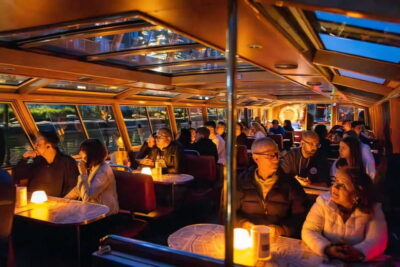
Evening Cruise with Optional Wine and Snacks
Read our review →
Douro Valley w/ Boat Tour, Wine Tasting & Lunch
Read our review →
Chichen Itza, Cenote & Valladolid Tour with Tequila and Lunch
Read our review →
Complete Douro Valley Wine Tour with Lunch, Wine Tastings and River Cruise
Read our review →
Small-Group Wine Tasting Experience in the Tuscan Countryside
Read our review →