
Review · GREECE
Crete: Full-Day Cretan Wines, Olive Oil, Raki and Food Tour
Crete’s best stories often arrive at a table, beside an olive press, or in a small village workshop. This full-day outing brings all three together, with olive oil, five wines, raki, a proper local lunch and pottery making spread across the countryside near Heraklion. The family-run stops are the real attraction. You are not simply sampling products. You are meeting the people who make them.
I like two things in particular. First, the small group is limited to eight, so guides such as George and Antonis can keep the day friendly and personal. Second, the tour connects food with daily life: olive growing, wine production, distilling, cooking and pottery all make sense together. The main consideration is its pace. Eight hours is a full day, and with food and drink at nearly every stop, you should arrive hungry but pace yourself with the raki.
Key points at a glance
- Five wines at a family-owned winery: Visit an organic producer, walk through the vines and taste a broad selection.
- Olive oil from grove to mill: See how one of Crete’s central crops becomes the oil on your plate.
- Raki with local character: Tour a distillery with an old wine press, then taste the island’s famous spirit.
- A generous village lunch: Settle into a traditional taverna for a meal built around Cretan specialties.
- Pottery you can try yourself: Finish in Thrapsano, a village known for pottery, with an optional hands-on workshop.
- A genuinely small group: Transport, pickup and guiding are designed for no more than eight participants.
Why this Cretan food tour feels different
Many food tours stay in a city and move from one tasting counter to the next. This one takes you into the countryside, where the products have their roots. The route visits vineyards, olive groves, a distillery, a village taverna and a pottery studio, giving you a wider look at Crete than a standard restaurant crawl.
The connections matter. You taste olive oil after seeing the grove and mill. You try wine after walking through the vines and hearing how the family works. You learn about raki at the distillery before drinking it with food. By the end, Cretan cuisine feels less like a list of dishes and more like the result of farming, family work and local custom.
The tour costs $141 per person and lasts eight hours. That is not a cheap quick outing, but the price includes transportation from your accommodation, a guide, several guided visits, wine and raki tastings, snacks, and lunch. Since the day combines several separate activities, it offers solid value if you would otherwise book visits to an olive mill, winery and pottery workshop individually.
A few more tastings around Greece worth a look
- Athens: Street Food Tasting Tour
★ 4.9 · 3,343 reviews - Eating Athens: Our Big, Fat, Greek Food Tour
★ 5.0 · 570 reviews - Best Food Tasting Tour of Athens, taste 18+ iconic Greek foods!
★ 5.0 · 448 reviews
Pickup and the ride into rural Crete
The day begins with pickup at your accommodation in Crete. The first drive takes about 30 minutes, followed by shorter transfers of 10 to 15 minutes between most stops. You spend enough time in the van to see the countryside, but not so much that the day becomes a bus ride.
The small-group setup is important here. With up to eight people, the vehicle feels more manageable than a large coach, and your guide can answer questions as you go. George is especially often praised for combining humor with local facts, while Antonis is described as warm, energetic and attentive. The exact guide may vary, but the tour is offered in English and Greek.
Pickup areas and exact start times depend on availability, so check the schedule before booking. If you have food allergies, follow a vegetarian diet or need another meal adjustment, contact the operator at least 48 hours ahead. That is the smart way to handle a food-heavy day.
Skalani and the olive oil story
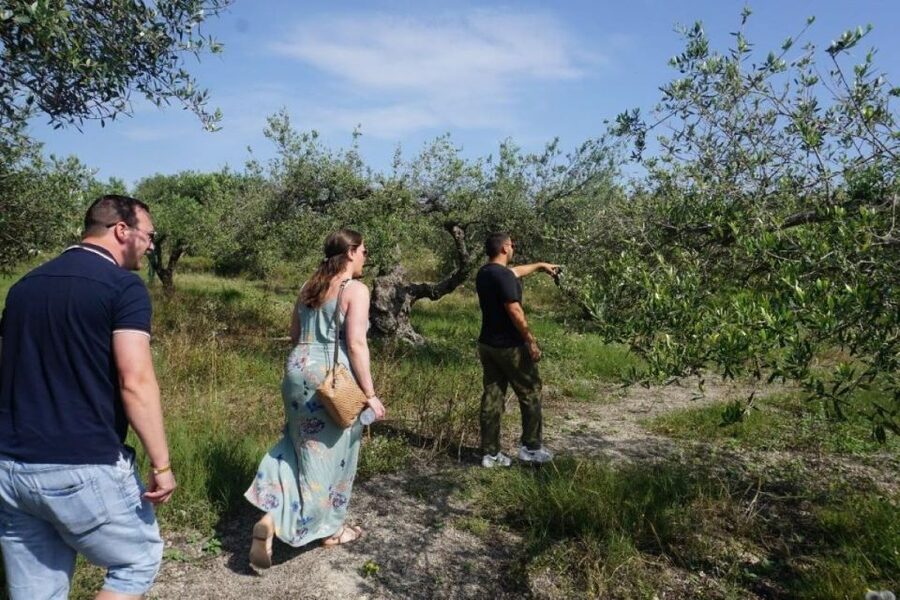
The first major stop is around Skalani, an area associated with vineyards and olive groves. You begin with a visit to an olive grove and mill, where the guide explains the production process before you taste the oil.
This is more useful than simply putting a small dish of oil on the table. You can see the setting in which the olives are grown and understand why olive oil matters so much to Cretan cooking and local income. The tasting is usually accompanied by simple local foods such as bread, cheese, fruit and other snacks, giving you a chance to notice how the oil works with everyday ingredients.
The setting also helps explain Crete’s long farming tradition. Vineyards and olive trees have shaped the island since the Minoan era, and the tour places those old customs in a working modern setting. The point is not to turn you into an olive oil expert in an hour. It is to give you enough context to recognize fresh, good-quality oil and appreciate why Cretan households use it so freely.
The morning stop can function as a brunch, so do not eat a large breakfast before pickup. The portions and hospitality are repeatedly described as generous. You may also have a chance to buy oil or other local products, so carrying some cash is wise. Card payments may be available, but one participant specifically found that payment terminals were affected by a recent internet outage.
A family winery and five Cretan pours
After a short drive, you reach a family-owned winery that uses organic growing methods. The visit includes a walk through the vineyards, a tour of the winery, scenic views and a tasting of five wines.
This is where the tour shifts from agriculture to flavor. You are not only sampling finished bottles. You see the vines first, then learn how the winery handles its grapes and production. That order makes the tasting easier to follow, especially if you do not know much about Greek wine.
The winery is also notable for its personal scale. The tour has featured a woman-owned producer, and the family businesses along the route are chosen for their connection to local life. That makes the visit feel less like a commercial tasting room and more like an introduction to people who take pride in keeping their work on the island.
You should not expect a formal wine course or a long period of quiet tasting. The day is social and active, with guides adding stories and the group moving at a steady pace. If you want detailed technical discussion of grape varieties, ask questions as they arise. The guide can add useful context, but the main focus is enjoyment, place and hospitality.
One small limitation is that food pairings at the winery are not clearly guaranteed. Other stops provide plenty of bread, cheese, fruit and snacks, but do not book this outing expecting a dedicated wine-and-food pairing menu at the vineyard.
Same town, a different glass:
- Santorini: Top Sights Day Trip, Wine Tasting, & Oia Sunset
★ 4.6 · 2,492 reviews - Santorini Wine Adventure with 12 Wine Tastings, Tapas and Sunset
★ 5.0 · 1,715 reviews - Tour and Wine Tasting in Mykonian Land
★ 5.0 · 1,357 reviews - Rhodes Exclusive Swim Cruise Cocktail Open bar & Gourmet Buffet
★ 5.0 · 1,230 reviews
The old wine press and the raki distillery
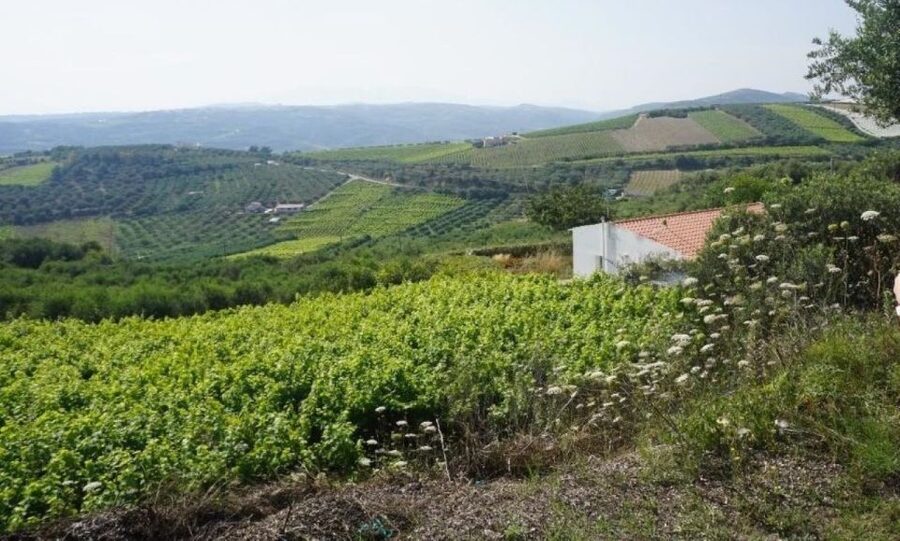
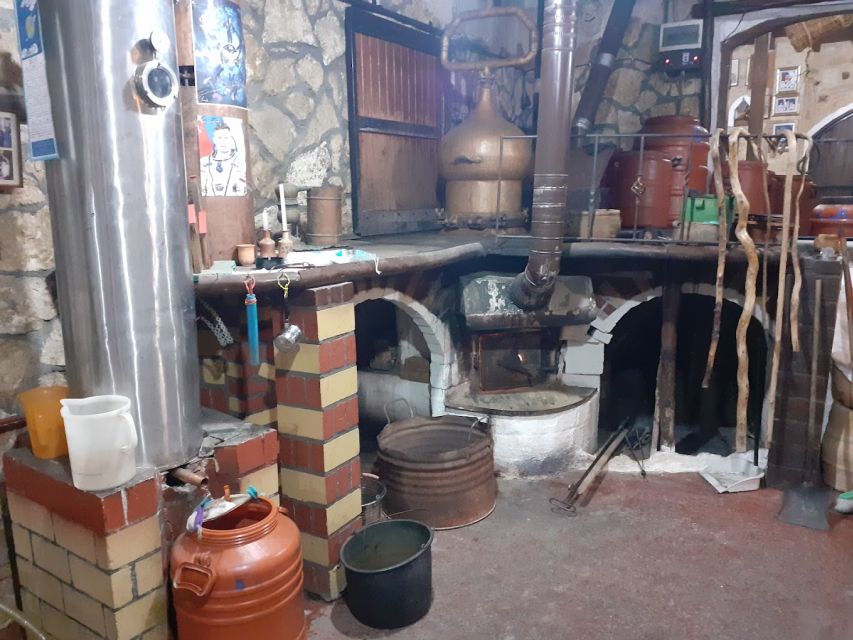
The next stop is one of the most distinctive: a raki distillery with an ancient wine press. Raki, also called tsikoudia in Crete, is made from grape remnants after winemaking and is closely tied to harvest time and local hospitality.
The guide takes you through the distillery and explains how the spirit is produced. You then taste raki and additional local snacks. The flavored versions can be a pleasant surprise, with lemon and a warming spice profile described as tasting like Christmas. The plain spirit is stronger and more direct, so take the invitation to sip slowly.
This part of the day has a different mood from the winery. Wine invites comparison between pours, while raki is closely tied to welcome, conversation and a shared table. You are learning about agricultural practice, but you are also seeing how a drink fits into social life in Crete.
The distillery is a highlight for many reasons, though it comes with an obvious warning: there is a lot of alcohol across the day. You will have already tasted olive oil and wine before reaching the raki stop, and more raki appears with lunch. You do not need to finish every pour to enjoy the experience. Drink water when it is offered, eat the snacks, and remember that the return drive is included for a reason.
A traditional village lunch

After the distillery, the group stops at a local taverna in a traditional village. Lunch lasts about an hour and is included in the price. It is presented as a proper meal rather than a token snack, with Cretan specialties and generous portions.
This is one of the most valuable parts of the day because it lets you sit down with the group instead of rushing from one sample to the next. Meals in Crete are social, and sharing a table with people from different countries fits the spirit of the tour. Several guides have been praised for making the meal relaxed and good-humored.
You may find several courses and plenty of food, but the exact dishes can change. That is normal for a local taverna and part of the appeal. If you have allergies or dietary restrictions, contact the operator before the tour rather than trying to sort it out at lunchtime.
The meal also gives you a chance to absorb what you have seen. Olive oil, wine, grape products and local cooking are no longer separate attractions. They become part of one food culture. For many people, this is the best meal of their holiday because it feels tied to the place and the people serving it.
Thrapsano pottery and a hands-on finish
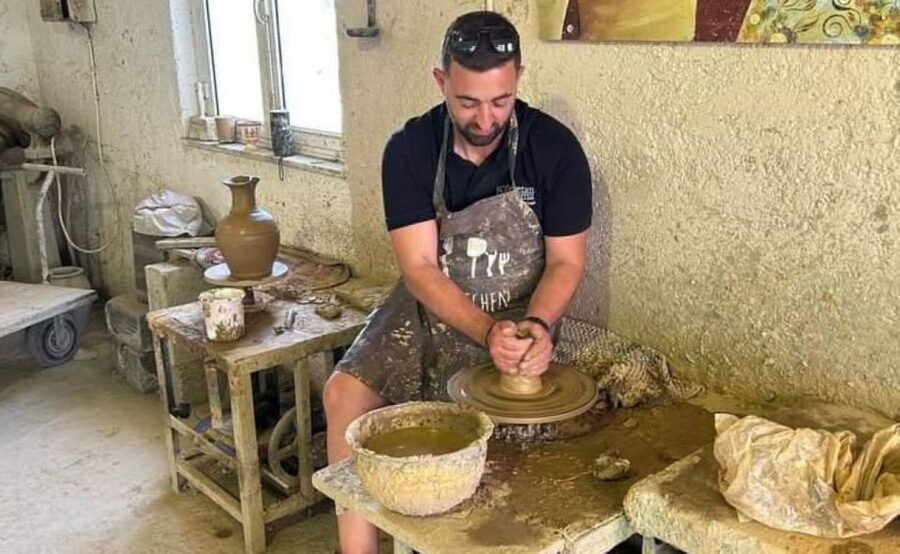
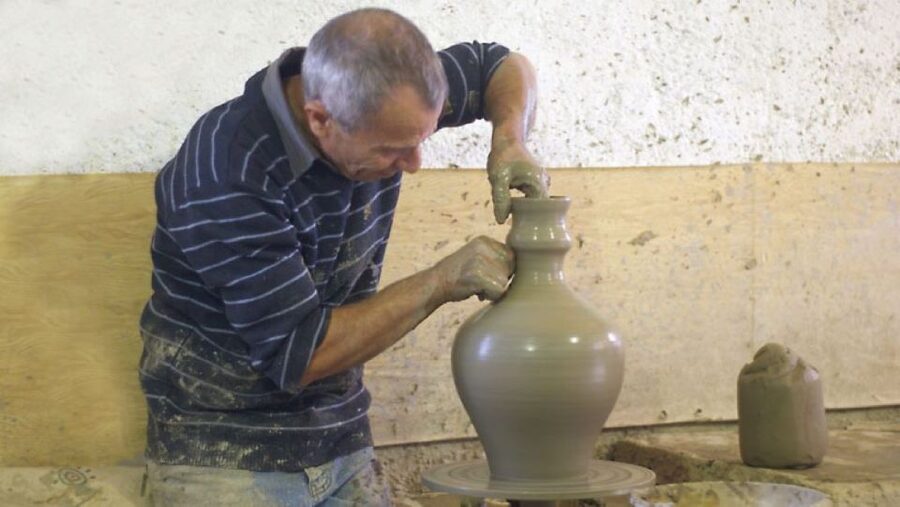
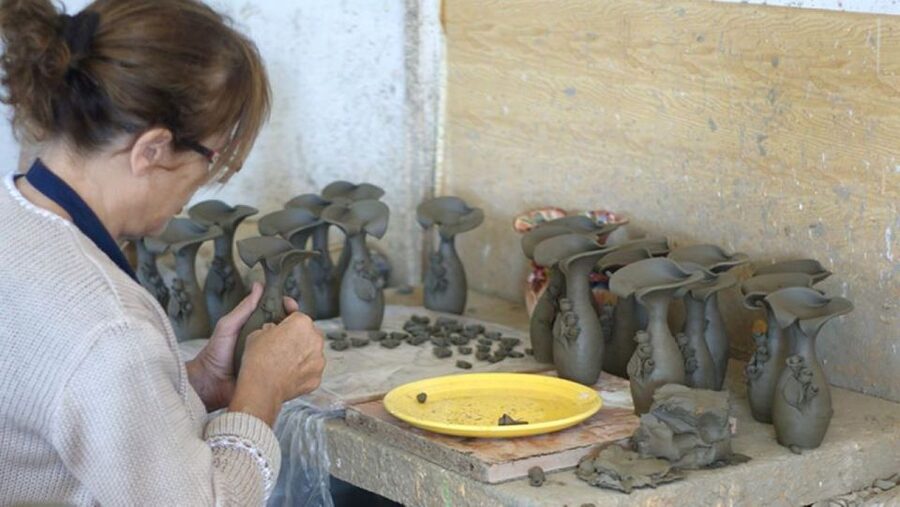
The final stop is Thrapsano, a traditional village known for pottery. You visit a pottery studio, watch the maker work and, when the workshop is available, try shaping clay yourself on the wheel.
This is a smart way to finish the tour. After a day built around tasting, pottery gives your hands something to do. It also introduces another old Cretan craft, one that depends on local skill rather than a packaged souvenir display.
The pottery workshop is optional, and the pottery lab is not available on Sundays. Confirm this point if the hands-on part is important to you. The studio visit itself remains part of the advertised experience, but the practical workshop may not operate on that day.
Do not expect to produce a perfect bowl on your first attempt. The fun is in trying, getting messy and seeing how much control the potter has over the clay. Some participants have been able to purchase pieces and arrange shipping, though personal purchases are separate from the tour price.
How the timing and group size affect the day
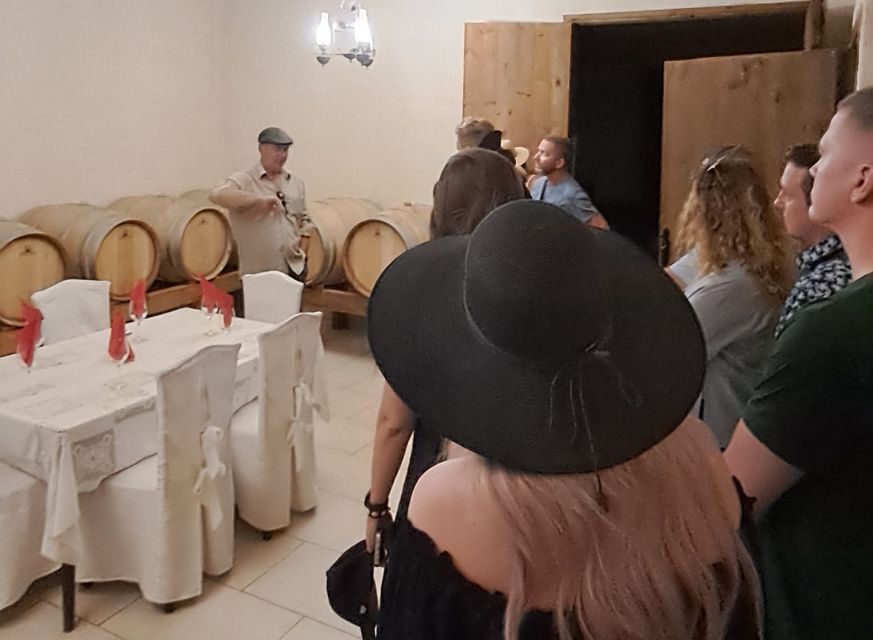
The published schedule allows about an hour at the olive stop, 90 minutes at the first winery, 90 minutes at the raki distillery, an hour for lunch and an hour in Thrapsano. Transfers add roughly 80 minutes in total, depending on pickup and traffic.
That makes the day full but not needlessly rushed. You have time to listen, taste and ask questions at each stop. Still, this is not a lazy afternoon with one long winery visit. You move several times and cover several types of activity.
The group limit of eight is a strong advantage. You can hear the guide, get help during the pottery session and speak with the producers without fighting through a crowd. It also means the social side of the day matters. If you prefer private sightseeing or quiet tastings, this may feel busy. If you like sharing food and conversation, the format works well.
The tour has earned a 5.0 rating from 264 reviews, and the praise is remarkably consistent around the guides, the family businesses, the food and the small group. The most frequently highlighted guide names are George and Antonis. Their role matters because the day involves several hosts and several different traditions. A good guide links those pieces together.
Who should book this experience?

I would choose this tour if you want more than wine tasting. It suits people who are curious about food production, enjoy meeting local makers and prefer a full day with several stops rather than one polished attraction.
It is especially good for:
- Couples looking for a shared food and culture day
- Small groups who want a personal guide
- First-time visitors who want rural scenery and local context
- Wine and food enthusiasts who also enjoy crafts
- Anyone who wants to taste raki in a proper local setting
It may be less suitable if you do not drink alcohol, dislike long days or want a highly focused wine lesson. Olive oil, wine and raki appear throughout the schedule, though you can choose to limit what you drink. The day also involves getting in and out of a vehicle several times and participating in a pottery studio if you choose the workshop.
Because lunch and tastings are generous, you should not plan another major meal that evening. The tour is designed as a full food day, not a light sampling trip.
Practical value at $141 per person
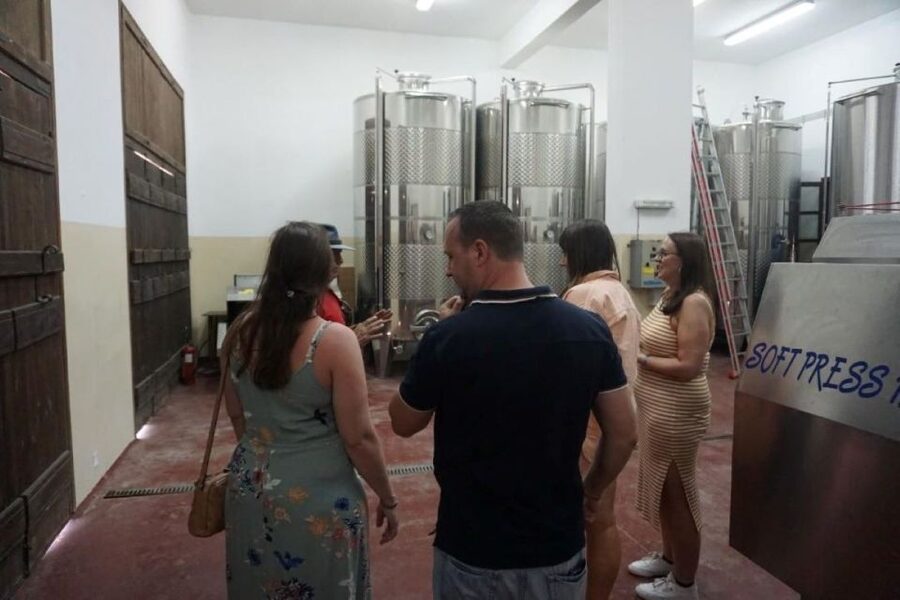
At $141, the tour asks more than a simple half-day vineyard visit, but it gives you much more in return. Transportation, accommodation pickup and return, guiding, olive oil tasting, five wines, raki, snacks, lunch and the pottery visit are included.
The strongest value comes from the range. You receive access to small producers and local businesses that would be difficult to connect with efficiently on your own, especially if you do not have a car. The guide also handles the driving after the tastings, which is a major practical benefit.
Personal purchases are not included. Bring some cash in case a producer or studio has payment problems, and budget separately if you want to take home oil, wine or pottery. The tour operator allows free cancellation up to 24 hours before departure and offers reserve-now, pay-later booking, which helps if your Crete plans are still changing.
Should you book the Cretan wines and food tour?
Book it if you want an active, social day that explains Crete through what people grow, make, drink and eat. The olive mill, organic winery, raki distillery, village lunch and pottery studio form a satisfying chain, and the small group makes the experience feel more like a hosted outing than a standard coach excursion.
I would skip it only if you want a quiet day, a single serious wine lesson or very little alcohol. For everyone else, $141 is fair for the amount included, especially with lunch, transport and multiple guided visits covered. Come hungry, bring water and cash, save room for raki, and check the pottery schedule if your visit falls on a Sunday.
FAQ
How long does the tour last?
The experience lasts eight hours, including transportation between stops and pickup and return to your accommodation.
What is included in the $141 price?
The price includes transport, accommodation pickup and return, a guide, the olive grove and olive mill visit, winery tour and tasting, raki distillery tour, wine and raki tastings, snacks, lunch and the pottery studio visit.
How many people are in the group?
The tour is limited to eight participants, making it a small-group experience.
Which languages are available?
The live tour guide service is available in English and Greek.
Is lunch included?
Yes. Lunch at a traditional village taverna is included. Tell the local operator about allergies, vegetarian needs or other dietary requests at least 48 hours ahead.
Is the pottery workshop available every day?
The pottery lab is not available on Sundays. The pottery studio visit is listed as optional, so confirm the workshop details when booking if pottery making is important to you.
Just added around Greece
- Best Food Tasting Tour of Athens, taste 18+ iconic Greek foods!★ 5.0 · 448 reviews
- Acropolis Private Wine Tasting @ Finewine store★ 5.0 · 46 reviews
- Wine Trails Private Tour/ Nemea visit 3 wineries from Athens or Nafplion (10 h)★ 5.0 · 44 reviews
- Athens Kids and Families Food Tasting Tour★ 5.0 · 66 reviews
- Athens: The Classic Food Tasting Tour★ 5.0 · 106 reviews
- Athens evening food tasting tour-small group★ 4.5 · 74 reviews
- Athens Morning Food & Drinks Tour: A Bite from the Acropolis★ 5.0 · 104 reviews
- Mercedes Private Tour Nafplio, Corinth Canal, Nemea Wine Tasting★ 5.0 · 142 reviews
Drinks Tours, compared.

Unlimited Prosecco, Beer and Aperol Spritz Cruise
Read our review →
Evening Cruise with Optional Wine and Snacks
Read our review →
Douro Valley w/ Boat Tour, Wine Tasting & Lunch
Read our review →
Chichen Itza, Cenote & Valladolid Tour with Tequila and Lunch
Read our review →
Complete Douro Valley Wine Tour with Lunch, Wine Tastings and River Cruise
Read our review →
Small-Group Wine Tasting Experience in the Tuscan Countryside
Read our review →
Douro Valley with Winery Lunch, Tastings & Cruise
Read our review →Browse the lists this tour appears in