
Review · NEW ORLEANS
New Orleans Cocktail and Food History Tour
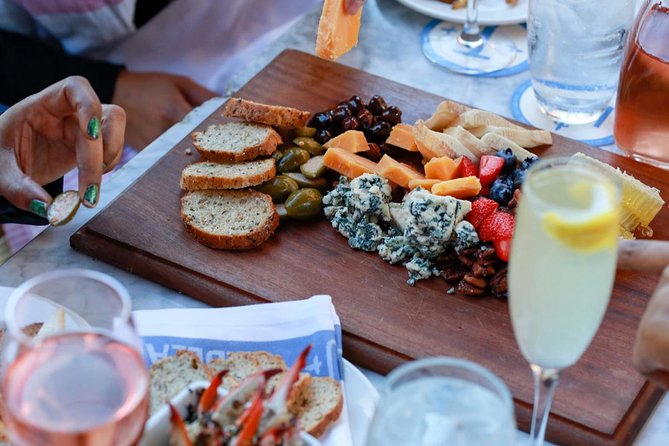
New Orleans puts its history in a glass and on a plate, and this four-hour walk lets you sample both. You begin with alligator sausage gumbo and a Hurricane, then work through muffuletta, jambalaya, pralines, fried plantains, hot sauces, and more. I like the strong mix of food and cocktails, and I like how guides such as Meg, Ben, and Gary connect each dish to the people and places that shaped the city. The main consideration is the $160 price, which feels fair if you value four full-size drinks and a history lesson, but high if you expect a large meal at every stop.
The route is also a real walk, not a string of nearby tables. You cover several French Quarter blocks and finish at Cane & Table on Decatur Street, so comfortable shoes matter. Portions have pleased some diners enough to leave them full, while others found the food and drink total modest for the price.
Key things to know before booking
- Four full-size cocktails: The tour includes drinks such as a Hurricane, Pimm’s Cup, and daiquiri, with the full selection subject to the day’s arrangements.
- Classic New Orleans food: Gumbo, muffuletta, chicken and andouille jambalaya, pralines, fried plantains, and hot sauce samples form the edible history lesson.
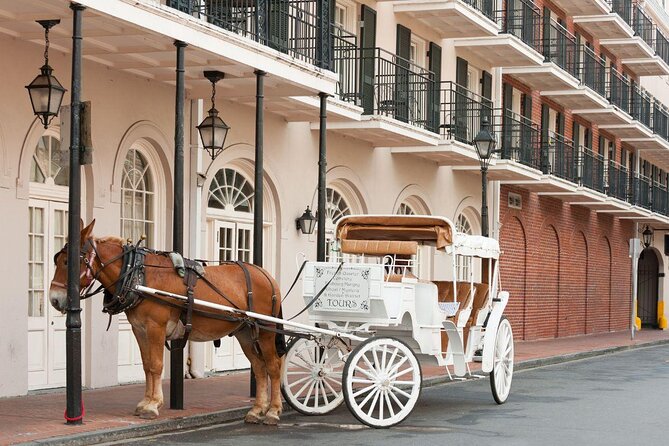
- A walking route through the French Quarter: You pass Bourbon Street, Jackson Square, and Royal Street between restaurant and shop stops.
- Small-group format: The maximum group size is 16, which gives you a better chance to hear the guide and ask questions.
- Vegetarian, but not vegan: A vegetarian option is available if requested at checkout. Gluten-free, dairy-free, and vegan menus are not offered.
- A 21-plus afternoon: The tour starts at 2 p.m. at Red Fish Grill and ends at Cane & Table after about four hours.
Why this tour works as a first taste of New Orleans
I like food walks that explain why a dish belongs in a city, rather than simply placing a plate in front of you. This tour links Louisiana’s colonial period, Cajun influence, immigrant communities, Caribbean connections, and cocktail culture to what you eat and drink along the way.
That makes it useful early in a New Orleans visit. You get a quick introduction to the French Quarter, several classic dishes, and practical ideas for what to order later. Guides have also offered suggestions for further dining and jazz, which adds value beyond the four-hour route.
The format suits a first visit especially well. You do not need to research the difference between a muffuletta and jambalaya before arriving. The guide explains the food as it appears, gives you context for the neighborhood, and keeps the afternoon moving from one stop to the next.
This is not a formal cooking class or a tasting menu at one restaurant. It is a progressive meal through several established French Quarter spots. That means the food has variety, but the experience also depends on walking, timing, and the availability of each venue.
More Cocktail Classes in the USA
- Oahu’s Waikiki Coast: Moana’s Sunset Cocktail Sail
★ 5.0 · 2,205 reviews - Key West Afternoon Snorkel Sail with Unlimited Cocktails!
★ 4.5 · 1,572 reviews - St. Augustine’s Wine, Cocktail and Food Experience
★ 5.0 · 1,251 reviews
Red Fish Grill starts the afternoon with gumbo and a Hurricane
Meet at Red Fish Grill, 115 Bourbon Street, at 2 p.m. The opening stop usually lasts about 35 minutes and sets the pattern for the rest of the afternoon: eat, drink, listen, and move on.
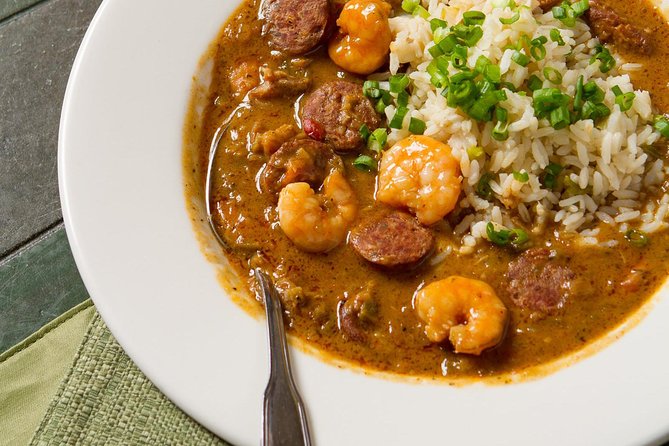
The first serving is seafood gumbo with alligator sausage. It uses a dark roux and includes shrimp, crab, sausage, and rice. This is a useful introduction to Louisiana cooking because gumbo is less about one fixed recipe than about layers of local ingredients and technique.
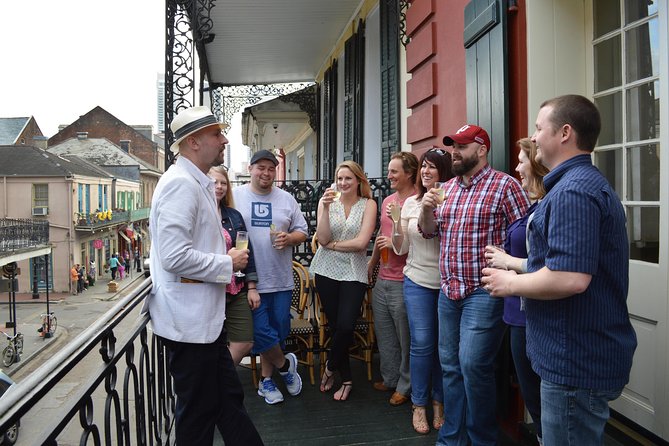
The accompanying Cat 5 Hurricane gives you an immediate lesson in New Orleans drinking culture. The tour describes it as a craft Hurricane, and the first cocktail often gets special attention because it starts the afternoon on a generous note.
The guide also covers Louisiana’s pre-colonial and colonial periods here. That pairing matters. You are not just tasting a soup and a sweet cocktail; you are hearing how the place developed before moving into later Cajun, immigrant, and Caribbean influences.
Keep the alcohol in mind from the start. Four full-size drinks over roughly four hours can add up quickly, even with food and walking between stops. Pace yourself, drink water when available, and do not treat the cocktails as small samples.
Pepper Palace turns hot sauce into a tasting stop
Four blocks later, the group enters Pepper Palace. This is the least traditional restaurant stop, but it adds a different side of Louisiana flavor.
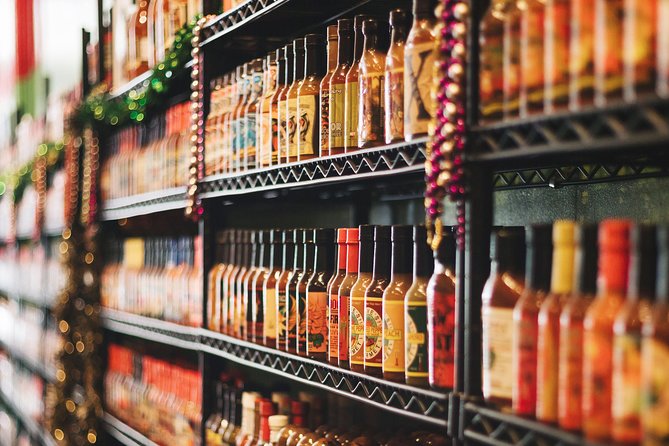
You can try an unlimited range of hot sauces, barbecue sauces, Buffalo wing sauces, salsas, dry rubs, marinades, and related seasonings. You also receive a free bottle of Louisiana-style hot sauce, a practical souvenir that is easier to use than another fragile keepsake.
The guide uses this stop to discuss Cajun influence. For you, the useful part is the chance to compare flavors before deciding what kind of heat you enjoy. The word hot sauce covers a wide range, so sampling several versions gives more meaning to the conversation than simply being handed one fiery condiment.
Do not assume that unlimited sauce samples mean unlimited food. This is a tasting stop, not a second meal. If you have a low tolerance for spice, take small portions and ask questions before trying the hotter choices.
Napoleon House brings the most substantial seated course
The Napoleon House stop gives the walking tour a welcome seated break. Here you receive a muffuletta, chicken and andouille sausage jambalaya, and a Pimm’s Cup.
The muffuletta is an Italian-style sandwich built on fresh-baked bread. It contains pastrami, salami, smoked ham, provolone, mozzarella, and an in-house olive salad. It is one of the clearest examples of how immigrant communities shaped New Orleans food. The sandwich is heavy, salty, and layered, so even a portion shared as part of a tasting can feel substantial.
The jambalaya offers a different texture and flavor. Slow-cooked rice, chicken, smoked sausage, herbs, and spices make it savory and filling. Together, the sandwich and jambalaya show two separate strands of local cooking without forcing you to choose between them.
The Pimm’s Cup lightens the stop. It is closely linked with New Orleans bar culture, and its place beside the food helps explain why this city treats drinks as part of its culinary identity rather than as an afterthought.
This is also where the guide discusses 19th-century immigration patterns. I find that connection particularly useful because it keeps New Orleans cuisine from being reduced to a short list of familiar dishes. Gumbo, jambalaya, and muffuletta do not all come from the same tradition, and the tour makes that point through lunch.
Same town, a different glass:
- NYC: Empire State Building Tickets – Observatory & Museum
★ 4.7 · 25,757 reviews - Pedal Bar Crawl of Old Town Scottsdale
★ 5.0 · 4,254 reviews - Boston to Martha’s Vineyard Day Trip with Optional Island Tour
★ 4.5 · 3,162 reviews - 5-Hour Traverse City Wine Tour: 4 Wineries on Old Mission Peninsula
★ 5.0 · 2,369 reviews
Pralines and bacon pecan brittle add a sweet Bourbon Street pause
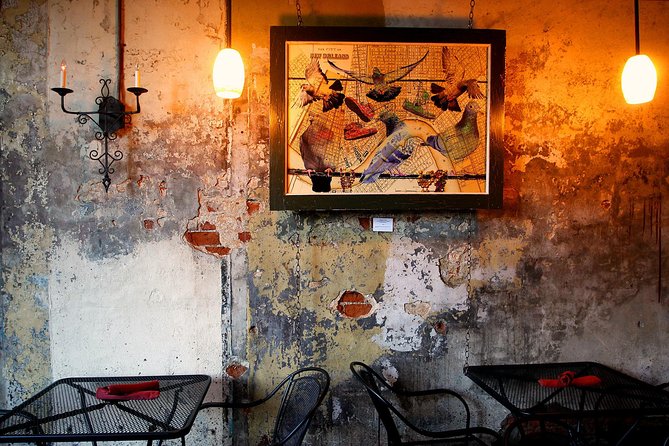
After Napoleon House, you walk past Bourbon Street and continue to Leah’s Pralines, a third-generation family-owned candy store.
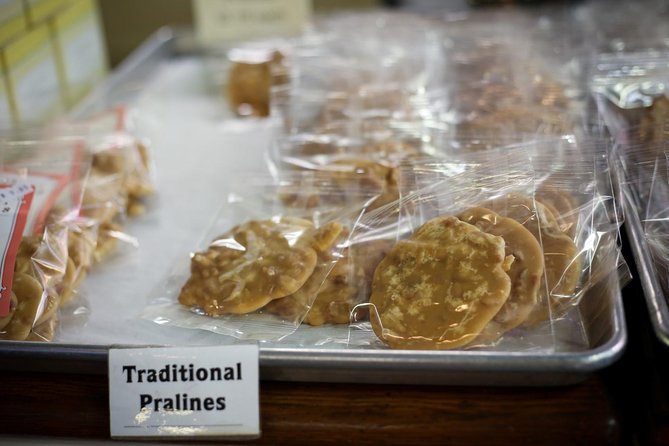
The tasting includes a traditional Louisiana praline made with brown sugar, pecans, and dairy. You also try bacon pecan brittle, which gives the stop a more modern, savory-sweet edge.
Pralines are a good small finish after the heavier sandwich and jambalaya. They also travel well, so this is the point where you may want to buy something for later, though shopping beyond the included tasting is your own expense.
The candy stop keeps the food selection from leaning too heavily toward savory dishes. It also shows that the city’s signature flavors extend beyond restaurant plates. Pecans, sugar, butter, and family candy-making traditions are part of the local food story too.
Cane & Table closes the route with rum and plantains
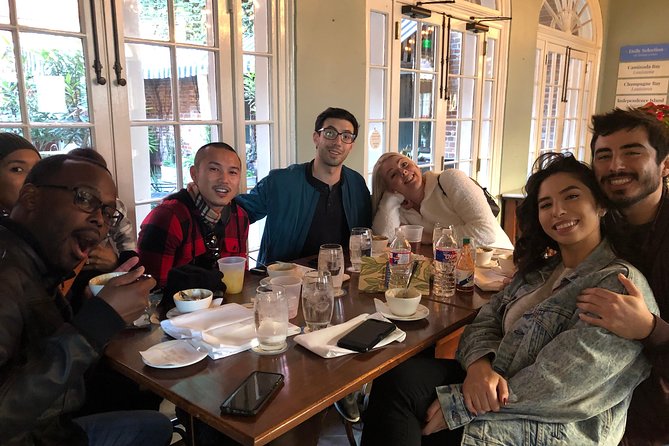
The final food stop is Cane & Table at 1113 Decatur Street. The tour ends inside the restaurant, which makes this both the last tasting and the official finish point.
You sample fried plantains, called maduros, with lime crème fraîche, salsa macha, and cilantro. The plantains are mildly sweet, while the lime and salsa add sharpness and heat. After gumbo, sausage, cured meats, and rice, this is a welcome change in direction.
The drink here is a classic daiquiri made with Caribbean white rum, fresh lime, and sugar. It is a simple recipe, but that is the point. The guide uses the drink and the restaurant’s focus on rustic colonial cooking to explain the Caribbean side of New Orleans food and cocktail culture.
The advertised package includes four full-size drinks, but the supplied menu details three by name: the Cat 5 Hurricane, Pimm’s Cup, and classic daiquiri. The fourth drink may vary with the day’s arrangements, as venues and selections can change based on availability. If the exact cocktail lineup matters to you, ask when booking.
Cane & Table is also a practical end point. You are near Decatur Street rather than returning to Bourbon Street, so you can continue exploring the French Quarter, remain for a meal at your own cost, or make your way toward another part of the city.
Jackson Square and Royal Street make the walking worthwhile
The route passes Jackson Square and Royal Street, even though these are sightseeing portions rather than tasting stops.
Jackson Square gives you one of the French Quarter’s most recognizable views and a useful sense of the district’s layout. Royal Street adds art shops, galleries, and old buildings to the walk. These stretches break up the restaurant visits and help you see the neighborhood between bites.
Still, do not book this as a purely food-focused crawl with minimal walking. The route covers several blocks, and one especially direct assessment is that it is a long walk. The tour is not recommended if you have significant mobility or walking problems.
Wear shoes that can handle uneven city streets and a four-hour afternoon. The group is capped at 16, which should help the guide keep everyone together, but a small group does not remove the distance.
How the food portions and drinks affect the $160 price
At $160 per person, this is a premium food walk. The price includes the food set menu, beverages, the guide, and the history woven through the route. You also receive the hot sauce bottle and visit several named French Quarter venues.
The value depends on what you want from the afternoon. If you would otherwise pay separately for a gumbo lunch, cocktails, pralines, a muffuletta, and a daiquiri, the package can make sense. The guide’s local recommendations and historical explanations add something you would not get by ordering these dishes on your own.
Portions are not uniform. You get full-size drinks, but the food is served as tastings and shared-course portions rather than a full entrée at every location. Some diners have found the servings larger than expected and finished full, while others have felt that four drinks and the food samples did not quite justify the cost.
My advice is simple: book it for the combination of food, drinks, and interpretation, not as the cheapest way to eat lunch. If you want a large restaurant meal for $160, you may feel disappointed. If you want a guided introduction to several New Orleans flavors and cocktail traditions, the price is easier to defend.
Guides can shape the whole afternoon
The guide is important here because the route is built around explanation. Meg has been praised for mixing humor, personal local knowledge, and historical detail, while Ben is known for food and city stories, strong pacing, and useful recommendations for later dining and jazz.
Gary has also been singled out for packing a great deal of city, food, and cocktail history into the walk. Dylan has been described as bringing a lively personality and strong command of the subject.
Guide assignments can change, so you cannot count on a particular person unless the operator confirms it. What you can expect is a tour that depends heavily on the guide’s ability to connect the stops rather than simply announce each dish.
The best guides on this route do more than recite dates. They explain why a drink belongs in New Orleans, how immigration affected the food, and how the French Quarter’s streets fit into the city’s story. That is where much of the tour’s value lies.
Food restrictions, age rules, and practical limits
The minimum age is 21, and alcoholic drinks are central to the experience. Service animals are allowed, and the meeting point is near public transportation.
A vegetarian option is available, but you must request it at checkout. There is no vegan, dairy-free, or gluten-free option. You should report food allergies during checkout, while simple dislikes or aversions may not be accommodated.
All venues can change based on availability. That matters because the character of the tour comes partly from the mix of restaurants and shops. The named stops describe the planned route, but the operator may need to adjust them.
The tour requires good weather and a minimum number of participants. If poor weather or low enrollment cancels it, you are offered another date or experience, or a full refund. You can cancel for a full refund up to 24 hours before the start time. Changes or cancellations inside that window are not accepted.
Who should book this New Orleans food walk
I would choose this tour for a first visit, a food-focused weekend, or an afternoon when you want an organized introduction to the French Quarter. It is especially useful if you want to try classic dishes without spending time choosing restaurants and ordering full plates at each one.
It also suits couples, friends, and solo visitors who enjoy meeting a small group while walking and tasting. The capped group size helps, and the shared food format gives you plenty to discuss between stops.
I would think twice if you need a vegan, dairy-free, or gluten-free menu. I would also skip it if four full-size cocktails sound excessive, if walking is difficult, or if you measure value only by the amount of food on the plate.
Should you book it?
Book this tour if you want New Orleans explained through gumbo, muffuletta, jambalaya, pralines, plantains, hot sauce, and classic cocktails. The best reason to go is the combination of a varied route and guides who connect food to colonial Louisiana, Cajun cooking, immigration, and Caribbean influence.
Skip it if $160 feels too high for tasting portions, or if you want a quiet seated meal instead of an active afternoon. For most first-time visitors who can handle the walking and the alcohol, it is a smart way to get your bearings, learn what to order next, and sample several defining flavors in one go.
FAQ
How long does the New Orleans Cocktail and Food History Tour last?
The tour lasts approximately four hours.
What time does the tour begin?
The tour starts at 2 p.m.
Where does the tour begin?
The meeting point is Red Fish Grill at 115 Bourbon Street, New Orleans, Louisiana 70130.
Where does the tour end?
The tour ends inside Cane & Table at 1113 Decatur Street, New Orleans, Louisiana 70116.
What food and drinks are included?
The food includes seafood gumbo with alligator sausage, hot sauce and seasoning samples, a traditional praline, muffuletta, chicken and andouille sausage jambalaya, and fried plantains. Named drinks include a craft Hurricane, Pimm’s Cup, and classic daiquiri, with four full-size drinks included overall.
Is there a vegetarian or special-diet option?
A vegetarian option is available if requested at checkout. The tour does not offer vegan, dairy-free, or gluten-free options. Food allergies should be reported during checkout.
Can I cancel for a refund?
Yes. You can cancel at least 24 hours before the local start time for a full refund. Cancellations or changes made less than 24 hours before the tour are not accepted.
More Historical Tours in the USA
- Boston Freedom Trail History Pub Crawl Small-Group Tour
★ 5.0 · 996 reviews - New Orleans Cocktail History Walking Tour in the French Quarter
★ 5.0 · 604 reviews - Boston: History Pub Crawl Tour Along the Freedom Trail
★ 4.9 · 279 reviews - New Orleans: Combo Cocktail and Food History Tour
★ 4.9 · 180 reviews
More Food in the USA
- Southern Flavors Food, Pub Crawl, and History Walking Tour
★ 4.5 · 1,623 reviews - Greenwich Village Walking and Food Tasting Tour
★ 5.0 · 1,572 reviews - Gaslamp Quarter Food and Drink Tour: Brothels, Bites & Booze
★ 4.5 · 786 reviews - Midtown Atlanta Food & Cocktail Tour
★ 5.0 · 681 reviews
Just added around the USA
- Burlington Signature Guided Brewery Tour★ 5.0 · 133 reviews
- Ridden- Fat Bike Beer & Distillery Tour★ 5.0 · 160 reviews
- Cocktails & Cannoli: Boston’s North End Dessert Tour★ 5.0 · 309 reviews
- Branson VIP Wine Tasting and Dinner Tour★ 4.5 · 162 reviews
- 2 Hour Historic Pub Crawl in Boston★ 5.0 · 45 reviews
- Signature Boston Guided Brewery Tour with snack★ 5.0 · 271 reviews
- Boston Seafood Private Tasting Tour★ 5.0 · 102 reviews
- Delray Beach Food & Drinks Tour★ 5.0 · 176 reviews
Cocktail Classes & Tastings, compared.

Luxury Saloon Boat Cruise with Cocktails & Waffle
Read our review →Luxury Saloon Boat Cruise with Cocktails & Waffle
Read our review →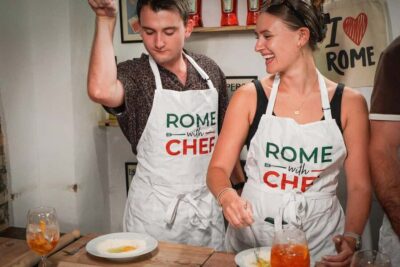
Rome Cooking Class: Make Pasta and 3 Spritz Cocktails
Read our review →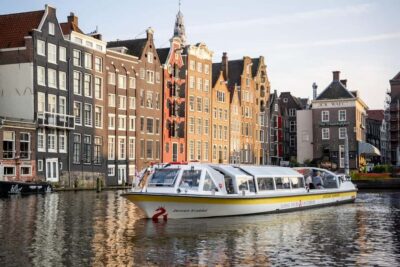
City Centre Canal Cruise & Free Flower Cocktail
Read our review →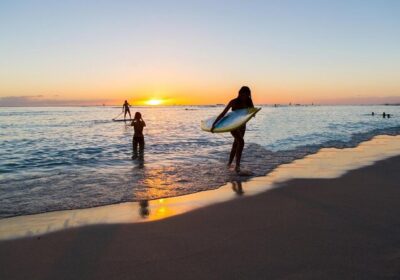
Oahu’s Waikiki Coast: Moana’s Sunset Cocktail Sail
Read our review →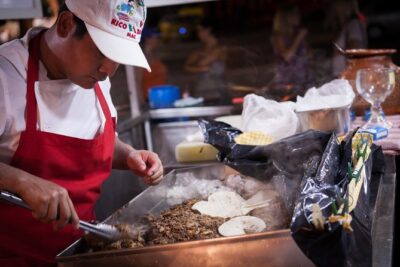
Food & Mixology Tour:Tequila,Tacos, Mezcal and Agave Cocktails
Read our review →
Pasta Cooking Class Near the Colosseum with 3 Spritz Cocktails
Read our review →
Key West Afternoon Snorkel Sail with Unlimited Cocktails!
Read our review →Browse the lists this tour appears in