
Review · MADRID
Madrid Countryside Wineries Guided Tour with Wine Tasting
Madrid’s wine country begins surprisingly close to the city. Within about 30 kilometers, this tour takes you from urban streets to vineyards, old cellar caves, clay fermentation jars, and small family estates. You taste more than 10 wines at three wineries, with enough cheese, Ibérico ham, and hot regional dishes to serve as lunch.
I like the mix of modern and centuries-old wine-making. I also like the personal scale: guides such as Ismael, Antonio, Muna, and Enrique are praised for making technical details clear and keeping the day relaxed. The main consideration is the generous amount of wine and food, so eat a solid breakfast and plan a quiet evening afterward.
Key points at a glance
- Three very different wineries: Expect a boutique organic estate, a historic producer, and a cellar where wine still rests in large clay jars.
- More than 10 tastes: Local tempranillo reds and malvar whites are central to the day, with other regional wines likely included.
- A short escape from Madrid: The first winery is roughly 30 kilometers from the city, yet the countryside feels far removed from Madrid.
- Food is part of the experience: Cheese, Iberian products, tapas, and regional hot dishes are served throughout the visits.
- Small-group feel, but not guaranteed: The average group is about eight people, with a maximum of 20. A minibus is used when the group is larger.
- A guide makes a real difference: Ismael, Antonio, Muna, and Enrique have all led highly praised departures, each bringing a personal style to the wine talk.
Why Madrid’s nearby wine country is worth your time
Madrid is not usually the first Spanish city that comes to mind for wine. Rioja, Ribera del Duero, and Priorat get more attention. Yet the Vinos de Madrid region has its own Denominación de Origen, or D.O., and a wine-making tradition tied to the rivers and towns south of the capital.
The region includes the fertile areas around the Manzanares, Tajuña, Jarama, Henares, and Tajo rivers, as well as vineyards near the granite foothills of the Sierra de Guadarrama. Wine has been made here for about 900 years, and the area supplied the growing capital during the era when Madrid became the center of the Spanish Empire.
That context matters because this is not simply a day of tasting familiar Spanish labels. You get a look at a lesser-known wine region that is still finding its place beside Spain’s better-known names. The trip also shows two sides of production: modern boutique wine-making and old methods that remain in use.
The tour lasts about six hours, so it is best thought of as a substantial half-day outing rather than a full day away from Madrid. You leave in the morning and return to the same meeting point in the afternoon.
More Wine Tasting Tours in Madrid
- Madrid Tapas & Wine Tasting Walking Tour – Small Group Local Bars
★ 5.0 · 3,644 reviews - Toledo Tour & Vineyard Walk with Wine Tasting from Madrid
★ 5.0 · 2,546 reviews - Madrid: Tapas & Wine Tasting Tour with Local Guide
★ 4.8 · 2,171 reviews
Starting at Conde de Casal
The meeting point is outside the cafeteria at the front door of Hotel Claridge, at Plaza del Conde de Casal, 6. Conde de Casal metro station on Line 6 is nearby, making the departure point practical if you are staying elsewhere in Madrid.
The minivan leaves at 9:30 a.m. and departs on time. This is not a casual meet-up where you can stroll in several minutes late and expect the group to wait. Allow an extra 10 to 20 minutes beyond the journey time shown on a map, and plan the route the night before.
A regular taxi is recommended over Uber for reaching the meeting point. The cafeteria belongs to hotel customers, so do not count on using its facilities while you wait.
Transport is by air-conditioned minivan or bus. The usual group size averages around eight people, though the maximum is 20. That difference matters. With a small group, the drive and winery visits can feel personal. With a full departure, you may ride in a comfortable minibus and have less time for one-to-one conversation.
The first stop, Señorio de Val Azul
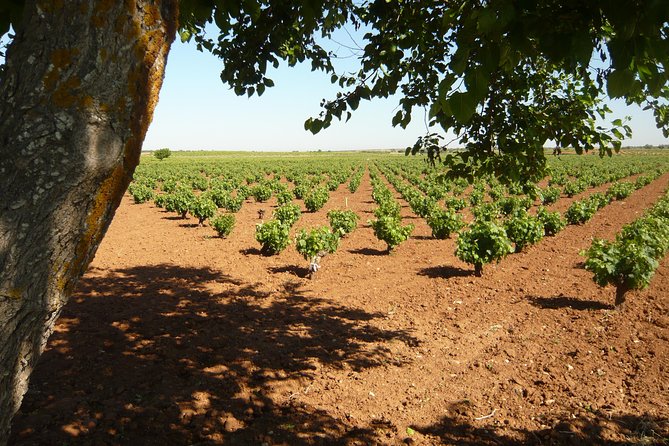
The opening visit is at Señorio de Val Azul, a boutique winery with its own organic vineyard planted around the property. Its proximity to Madrid makes the change in mood immediate. You have not spent hours on a coach, but the city already feels well behind you.
This stop gives you a useful introduction to the Vinos de Madrid D.O. The guide explains the rules behind the regional designation and how local producers work within them. You also begin tasting the area’s grapes, with full-bodied tempranillo reds and malvar whites likely to feature.
The visit lasts about an hour and a half. That allows time for the winery, the vineyard setting, the wine-making explanation, and a proper tasting rather than a rushed sample at the end.
The organic approach may appeal to you if you like seeing how a producer works with its own land. At the same time, do not expect a grand estate on the scale of a major Rioja producer. The attraction here is the boutique setting and direct connection between the vineyard and the bottles.
Bodega del Nero and the wine-making story
The second winery takes you to another town in the Madrid region. Bodega del Nero offers another look at local production, and the guide and winery staff explain the process while you taste more wines.
This is where the tour’s wider purpose becomes clear. You are not visiting three copies of the same tasting room. The selected wineries are intended to show different approaches to wine in the Tagus River Valley, from contemporary production to older cellar traditions.
The wines may not all suit every palate. Tempranillo is a major local grape, and if you prefer lighter reds or do not enjoy the variety, some of the tasting flight may feel less exciting. That is a fair limitation to keep in mind. This tour is designed to introduce you to Madrid’s regional wines, not to guarantee that every bottle matches your usual taste.
The second visit also helps you understand why a guide matters. Ismael is praised for explaining the wine business and production methods in detail, while Antonio is known for a more humorous, easygoing approach. Both styles can make a technical subject easier to follow, especially if you are interested in wine but do not know much about Spanish grapes.
More Wine Tasting Tours in Spain
- Ribera del Duero Wineries Guided Tour & Wine Tasting from Madrid
★ 5.0 · 328 reviews - Madrid Region Wineries Guided Tour with Wine Tastings
★ 4.9 · 222 reviews - Madrid: Toledo Day Trip with Winery Visit and Wine Tasting
★ 4.4 · 177 reviews - From Madrid: Alcalá de Henares, Winery Tour & Wine Tasting
★ 4.4 · 63 reviews
Bodegas Jesús Díaz e Hijos and the old clay jars
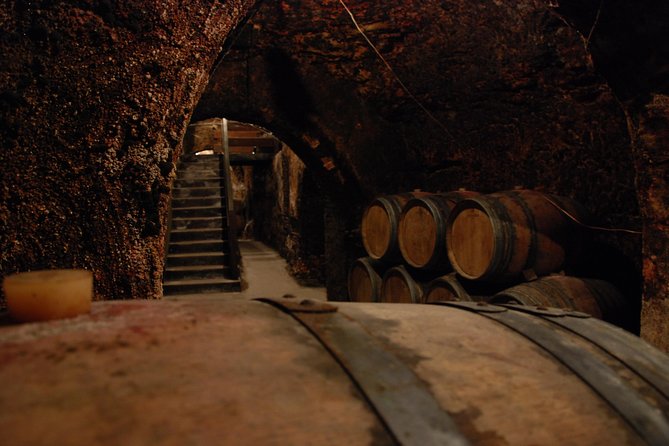
The third stop is Bodegas Jesús Díaz e Hijos in Colmenar de Oreja. It is one of the oldest wineries in the town and operates from an old Franciscan convent. The family has made wine for more than a century.
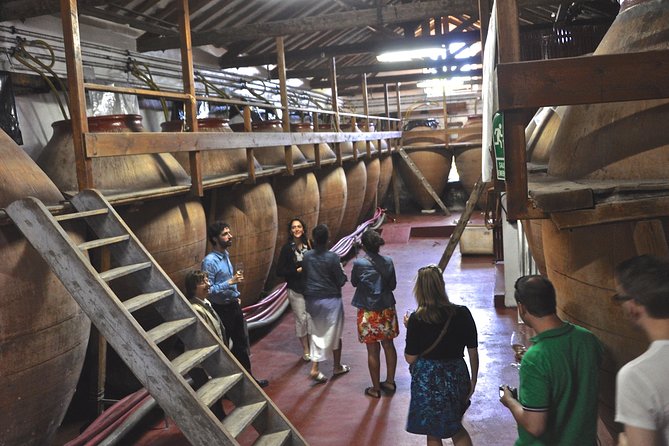
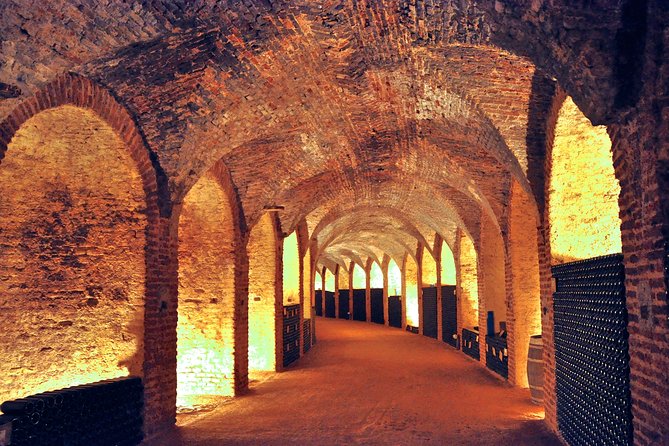
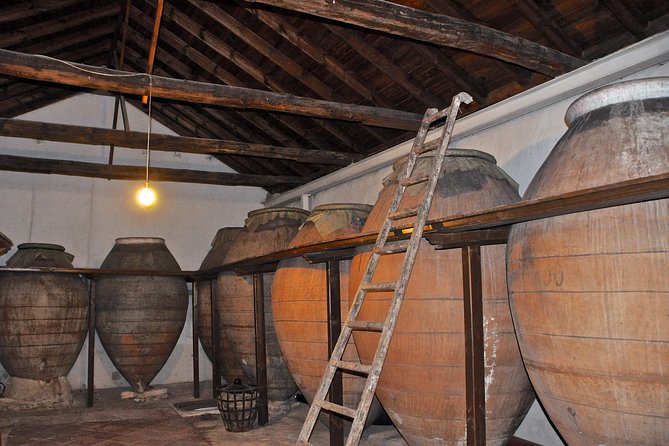
The most memorable feature is the traditional production method. Wine continues to be made in large clay jars, a technique associated with this part of Spain for centuries. You also visit old underground caves where the wine rests.
This stop gives the day a strong sense of time. At the first wineries, you may focus on organic vineyards, current production, and the business of making wine today. Here, you see how a family keeps older methods in daily use rather than treating them as museum pieces.
The caves are cool, so bring a warm layer even in hot weather. That is a small but important practical detail. After spending the morning outdoors and moving between vehicles and tasting rooms, the lower temperature underground can come as a surprise.
This final winery is also a good reminder that traditional does not automatically mean better. The point is to understand a different method and taste the results. Your own preferences will decide which wines you like most.
What you will actually drink and eat
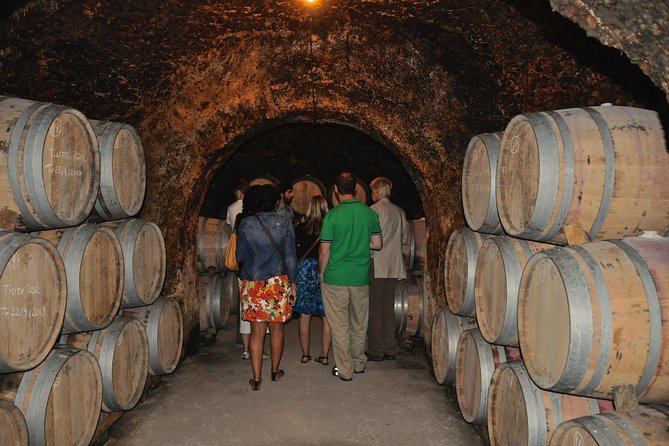
At least nine wines are included, and the full tasting commonly exceeds 10 glasses across the three wineries. Expect a mixture of whites and reds made with local grapes. Malvar, a fruity and tangy white, gives you a taste of a grape strongly associated with Madrid. Tempranillo provides the region’s more substantial reds.
The pours are described as generous rather than token sips. That is good news if you want a real sense of each wine, but it also means the breakfast advice should be taken seriously. Eat before you leave. You should not arrive on an empty stomach expecting the first piece of cheese to solve the problem.
Food comes throughout the day. You may be served cheese, Ibérico ham, other Iberian products, tapas, and regional hot dishes. The food is substantial enough to function as lunch, but there is no separate restaurant lunch included.
That distinction is useful when comparing the price. You are paying for three winery visits, transport, guided tastings, and a series of food pairings rather than a formal sit-down meal. If you want a long restaurant lunch, you will need to arrange that separately after returning to Madrid.
The guides are a major part of the value
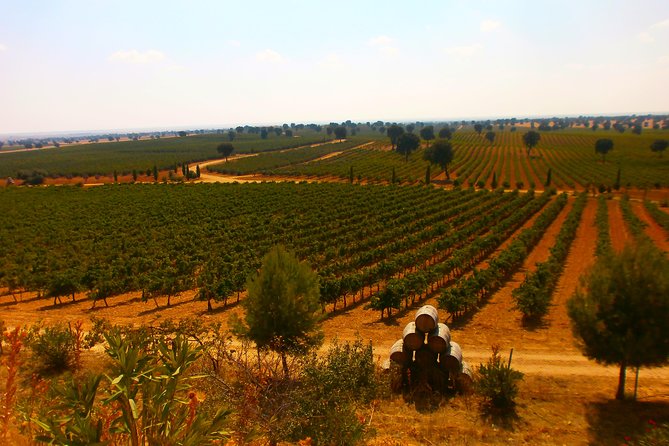
The guide stays with you for the full excursion and operates in English and Spanish. The strongest departures appear to be those led by guides who can balance wine facts with an approachable manner.
Ismael is repeatedly praised for his detailed explanations, personal links with wine-makers, and ability to make each winery feel special. Antonio brings humor and a relaxed style while still covering the wine-making process. Muna is noted for her understanding of the Madrid wine region and her ability to connect the owners’ stories with the production methods. Enrique is also described as clear and well informed about Madrid wines.
Guide assignments can change, so you should not book solely on the promise of a particular person. Still, the consistent focus on guide quality is encouraging. A winery tour can become a dull sequence of technical terms if the person leading it reads from a script. Here, the guide’s role is to connect the wine to the land, the families, and the production choices.
The bilingual format may also mean that some explanations are given in both English and Spanish. That can affect the pace slightly, but it helps make the tour accessible to mixed-language groups.
How the price works out at $175.35
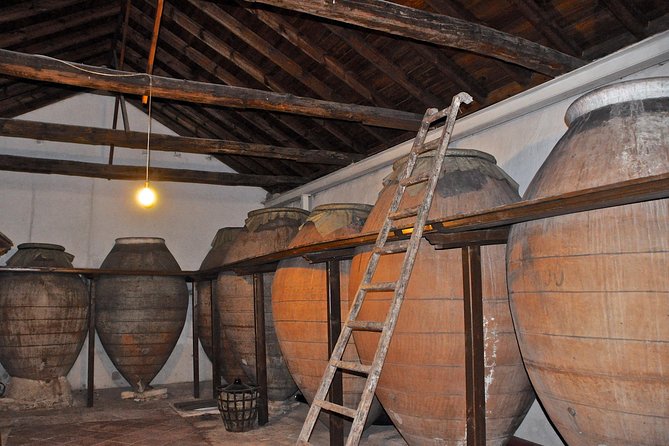
At $175.35 per person, this is not a budget activity. The value depends on how much you want to see and taste in a single outing.
The fee covers round-trip transport from central Madrid, three guided winery visits, more than nine wine samples, food at the wineries, and an expert bilingual guide. You also avoid the problem of arranging a designated driver or trying to reach several rural wineries by public transport.
The strongest value comes from the variety. A private visit to one winery might offer a more focused experience, but this trip gives you three different settings in one morning: an organic boutique producer, another regional winery, and a historic convent cellar using clay jars.
The price is less attractive if you are only interested in a particular famous label or prefer a long, quiet tasting with one producer. This is a broad regional introduction. You may also want to buy bottles along the way. Some people purchase wine at more than one stop, so leave room in your luggage and budget if that sounds appealing.
Group size, transport, and the pace of the day
The tour is advertised for a maximum of 20 people, with an average group of eight. That is a useful range to understand before booking. A small group can make conversations with winery owners easier, while a larger group may feel more like a standard coach excursion.
The timing is fairly full. Each winery receives about 90 minutes, and the drive between Madrid and the rural stops adds to the schedule. You will have enough time to learn and taste, but not enough to wander freely for hours at each property.
The air-conditioned vehicle is important during Madrid’s warmer months. The countryside views and mountain perimeter make the drives part of the experience, though you should not expect a scenic train ride or a dedicated photography tour.
There has been at least one reported vehicle breakdown on a departure, followed by a replacement vehicle and a short stretch on public transport. It appears to have been resolved without losing much time, but any road tour carries this small risk. The operator’s response in that case was to arrange another bus and cover the public transport tickets.
Who should book this wine tour
I would recommend it most strongly to:
- You want a wine day without spending hours reaching a famous region far from Madrid.
- You enjoy meeting small producers and seeing working cellars.
- You like comparing old and new wine-making methods.
- You want food included but do not need a formal restaurant lunch.
- You are happy tasting local grapes rather than only famous international labels.
- You prefer a guided day with transport arranged for you.
It also suits solo visitors. The shared vehicle and tasting format make conversation easy, and the guide keeps the day moving.
I would think twice if you dislike full-bodied tempranillo, prefer very small private tastings, or want to choose every winery yourself. You should also skip it if you are under 18, since the minimum age for wine tasting is 18 and children under 12 cannot join.
Practical details before you book
Wear comfortable clothing and bring a warm layer for the caves. Eat a strong breakfast, drink water, and remember that the food served at the wineries is enough for lunch but is not presented as a separate meal.
The tour requires at least four participants. If that minimum is not reached, the operator can cancel and offer another date or a full refund. Free cancellation is available up to 24 hours before the start time. Cancellations or changes made within 24 hours are not refunded.
The experience is offered with a mobile ticket and returns to Plaza del Conde de Casal. Since the departure is strict, build in extra time and avoid cutting your journey to the meeting point too close.
Should you book the Madrid countryside wineries tour?
Book it if you want a well-organized introduction to a wine region most Madrid visits overlook. The combination of three contrasting wineries, generous tastings, local food, and a short transfer from the city gives you a full picture of Vinos de Madrid in a manageable six-hour outing.
I especially like the clay-j ar cellar at Bodegas Jesús Díaz e Hijos, the organic setting at Señorio de Val Azul, and the chance to meet people connected to the wineries rather than simply tasting bottles in a city shop. The only real cautions are the price, the potentially larger group, and the amount of wine.
For wine fans, food lovers, and curious first-time visitors to Madrid, this is a strong choice. Eat breakfast, arrive early, bring a sweater, and let the guide handle the roads.
FAQ
Where does the Madrid winery tour begin?
It begins at the front door of the cafeteria at Hotel Claridge, Plaza del Conde de Casal, 6, near Conde de Casal metro station on Line 6.
What time does the tour start?
The tour starts at 9:30 a.m. You should arrive early because the vehicle departs on time.
How long does the tour last?
The experience lasts approximately six hours and returns to the original meeting point in Madrid.
How many wineries will I visit?
You will visit three wineries in the Vinos de Madrid region. The exact selection can change based on availability.
How many wines are included?
At least nine wines are included, with tastings commonly reaching more than 10 wines across whites and reds.
Is food included?
Yes. Cheese, Ibérico products, tapas, and regional hot dishes are served at the wineries. The food is considered enough for lunch, but a separate formal lunch is not included.
Can children join the tour?
Children under 12 cannot participate. The minimum age for wine tasting is 18.
More Winery Tours in Spain
- Barcelona: Montserrat, Cogwheel, Black Madonna & Winery Tour
★ 4.8 · 5,633 reviews - Montserrat with Black Madonna & Medieval Winery with Tapas/Lunch
★ 5.0 · 5,209 reviews - Montserrat Full Day Tour with Farmhouse Lunch and Winery Visit
★ 5.0 · 1,068 reviews - Montserrat & Winery Visit Tour with Traditional Farmhouse Lunch
★ 4.5 · 1,035 reviews
More Winery Tours in Madrid
- From Madrid: Toledo Guided Tour & Winery Visit with Tasting
★ 4.8 · 313 reviews
Just added around Madrid
- Madrid: Toledo Day Trip with Winery Visit and Wine Tasting★ 4.4 · 177 reviews
- Personalised Traditional Madrid Night Tapas and Drinks Tour★ 5.0 · 95 reviews
- Madrid: Pub Crawl Madrid Running since 2005 Bar Exploration★ 4.1 · 221 reviews
- Madrid: Tapas & Wine Tour with Visit to a Rooftop★ 4.7 · 256 reviews
- Madrid: Pub Crawl | Free shot & Free Club entry★ 4.5 · 191 reviews
- Madrid: Flamenco Show with Tapas and Wine Tour★ 4.9 · 66 reviews
- Madrid: Paella & Sangria Classes – Seafood, Chicken or Vegan★ 4.9 · 201 reviews
- Madrid: Old Madrid Walking Food and Wine Tour★ 4.9 · 111 reviews
Winery Tours, compared.
Douro Valley with Winery Lunch, Tastings & Cruise
Read our review →
Montserrat with Black Madonna & Medieval Winery with Tapas/Lunch
Read our review →
Wine Tour: Paarl, Franschhoek & Stellenbosch incl 3 wineries
Read our review →
Douro Valley Tour: 2 Vineyard Visits, River Cruise, Winery Lunch
Read our review →
5-Hour Traverse City Wine Tour: 4 Wineries on Old Mission Peninsula
Read our review →
Tastings at 2 Wineries, Chef’s Lunch & Boat Tour
Read our review →
Douro Valley Tour: Visit 2 Wineries, Lunch & River Cruise
Read our review →Browse the lists this tour appears in