
Review · BUDAPEST
Budapest: Essentials of Hungarian Wine Tasting Class
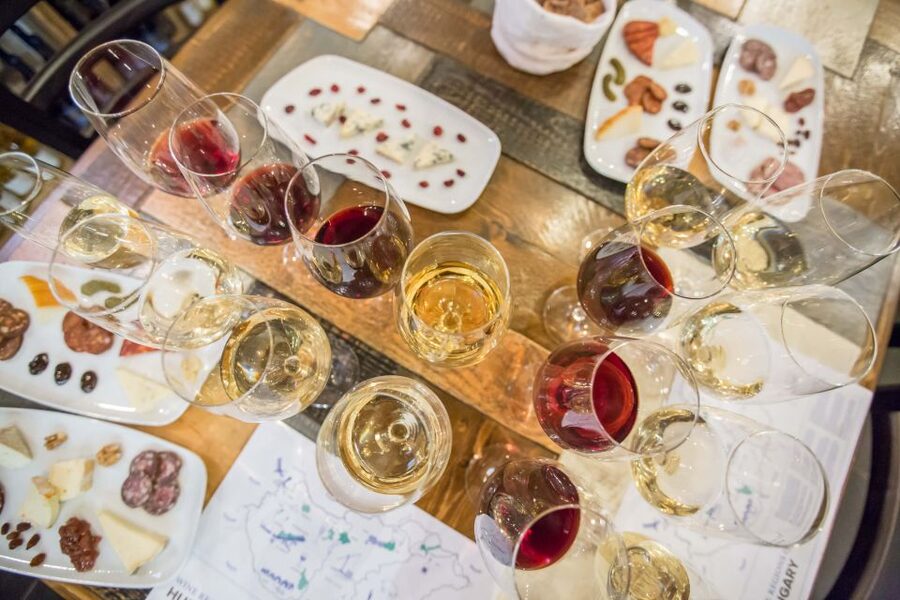
Hungary’s wine story is far more interesting than many visitors expect, and this two-hour class gives you a useful way into it. You taste eight Hungarian wines, moving from an aperitif through whites and reds to a sweet Tokaj aszú, while a sommelier explains what makes each bottle different.
I like the direct link to small producers and the generous food pairings, which make the $65 price feel sensible rather than inflated. I also like the relaxed, social format. The one thing to consider is that the pours can be close to full glasses, so eight wines may leave you quite tipsy, especially if you do not eat much beforehand.
Key points to know before booking
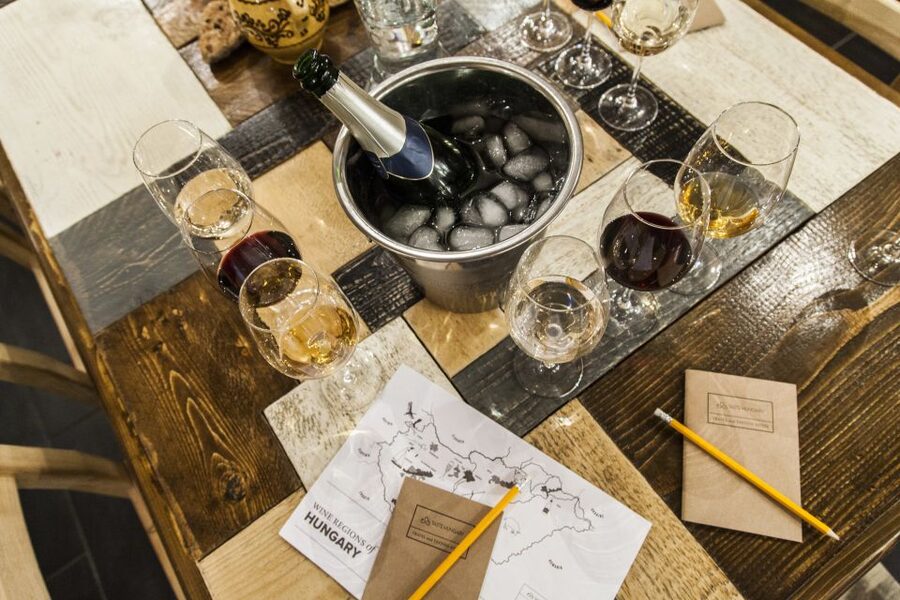
- Eight wines tell the story: Expect sparkling or another aperitif, whites, reds, and a botrytised Tokaj sweet wine.
- Small producers get the spotlight: The wines are bought directly from producers known to the tasting team.
- Food is part of the experience: Hungarian cheeses, meats, bread, and other local flavors accompany the tasting.
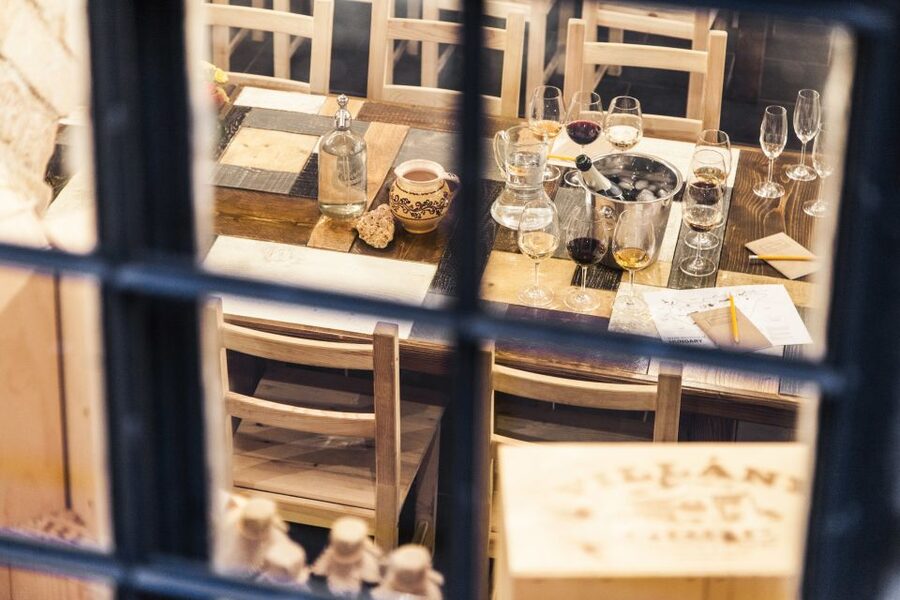
- The cellar setting adds charm: The Tasting Table Budapest is a photogenic shop and tasting room in a brick-arched cellar.
- The teaching style is friendly: Hosts including Tomas, Carlos, John, Christian, Sebastian, and Somali are described as warm, entertaining, and well prepared.
- It can run beyond two hours: Conversations and extra tasting may extend the evening, though this is not guaranteed.
Why Hungarian wine deserves two hours of your Budapest evening
Many visitors know Hungary for Tokaj, but far fewer can name its other grapes or wine regions. That is exactly the gap this class fills. It does not assume you already speak fluent sommelier, and you do not need to know the difference between a dry Furmint and a Cabernet Franc before you arrive.
The class gives you a map of Hungarian wine in a form you can actually remember. You hear about the main regions, the country’s winemaking past, soil and climate, important grapes, current styles, and the small producers trying new things. The point is not to turn you into a wine professional in one sitting. It is to help you recognize what you like and give you enough vocabulary to order Hungarian wine later in your trip.
That matters in Budapest, where a restaurant wine list can otherwise feel like a guessing game. After this session, you will have a better chance of choosing something local instead of defaulting to a familiar French or Italian label.
The class is held in English, and the hosts have different personalities. Tomas is praised for clear explanations of regions, soil, and climate. Carlos is described as engaging and entertaining. John brings personal stories and a strong knowledge of wine areas. Other sessions have been led by Christian, Sebastian, Somali, and Sam. The exact host depends on the evening, but the format remains focused on conversation, tasting, and practical information.
More Wine Tasting Tours in Budapest
- Hungarian Wine Tasting (with Cheese and Charcuterie) in Budapest
★ 5.0 · 531 reviews - Budapest: Hungarian Wine Tasting with 8 Wines and Tapas
★ 4.9 · 446 reviews - 8-Tier Hungarian Wine Tasting in a Cozy Downtown Wine Bar
★ 4.9 · 269 reviews
Arriving at The Tasting Table Budapest
The meeting point is The Tasting Table Budapest at Bródy Sándor utca 9 in District VIII. It is about 150 meters from the National Museum and roughly a five-minute walk from Astoria on metro line M2 or Kálvin tér on metro line M3. Trams 47 and 49 also stop at those areas.
This is a useful location for an evening plan. You can visit the National Museum earlier, walk through the surrounding streets, and reach the tasting without arranging a special taxi. The room is both a wine shop and a tasting space, so the atmosphere is more intimate than a large commercial tour venue.
The brick-arched cellar is part of the appeal. It gives the session a proper wine setting without making you feel that you need a jacket or formal wine manners. The room has also been described as easy to find and photogenic, two small details that matter when you are arriving after a full day of sightseeing.
Most sessions take place from 6:00 PM to 8:00 PM. That timing works well as an evening activity, but remember that a two-hour tasting is not necessarily a light aperitif. With eight pours and food on the table, it can function as dinner and entertainment for some people.
The first pour: an introduction to Hungary in a glass
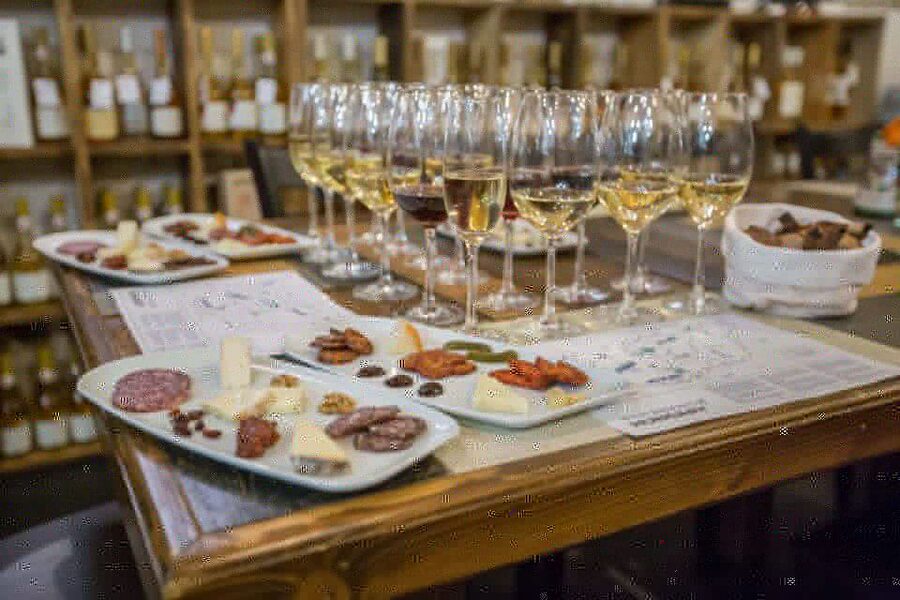
The tasting begins with an aperitif. Depending on the selection, this may be a sparkling wine or another opening style, but the purpose is the same: get everyone comfortable and set up the evening.
Your sommelier then explains how the tasting will work. You receive tasting sheets and a map of Hungarian wine regions, giving you somewhere to record grapes, producers, and personal favorites. That is worth using. After the fourth glass, even serious note takers can become less precise, and one past participant admitted that the notes grew shorter as the wine continued.
The class works best if you think of it as a guided conversation rather than a lecture. The host introduces a wine, gives its background, and explains what to look for. You taste, compare impressions with the table, and have time to eat and chat before moving on.
That rhythm is important. Some hosts keep the information moving and allow plenty of free conversation. Others give a very full account of the grapes and regions. If you are eager to learn, the extra detail is useful. If you prefer a quick tasting with minimal instruction, two hours may feel talk-heavy at times.
White wines, red wines, and the reason the order matters
The middle of the class covers several white wines, followed by reds and possibly a rosé. The selection is intended to show range, not simply offer eight versions of the same style.
You may encounter grapes that are unfamiliar to you, along with more recognizable international varieties grown in Hungarian conditions. The teaching connects the glass to its region, soil, climate, and producer. That link is more useful than a string of tasting notes because it helps explain why two Hungarian wines can taste so different.
The wines come mainly from small producers, and they are purchased directly from the people who make them. That gives the selection a personal angle. The sommelier can explain why a particular bottle has earned its place, rather than presenting a random line-up of labels.
Food arrives alongside the wines. Expect local Hungarian flavors, with cheese and charcuterie appearing often in the tasting. Bread, meats, cheeses, and other accompaniments help soften the alcohol and make the differences between wines easier to notice.
The food is one of the strongest parts of the value. One portion has been substantial enough to replace dinner, while another participant wanted a little more food alongside the wine. That contrast is useful advice: treat the pairings as generous tasting food, but do not assume they will satisfy every appetite. If you normally eat a full evening meal, have a proper lunch and consider a small snack beforehand.
A minor practical criticism is that glasses may not always be changed between white and red wines. For casual wine drinkers, this will not ruin the evening. If you are sensitive to residual flavors or want a more formal tasting standard, it is worth knowing.
More Wine Tasting Tours in Hungary
- Private Wine Tasting in Budapest
★ 5.0 · 107 reviews - Budapest: Food Tour with Wine tasting By Foodapest™ 2025
★ 4.8 · 64 reviews - Food and Wine Tasting in Budapest City Center with Sommelier
★ 5.0 · 57 reviews - Szentendre and Visegrad Private Danube bend Tour With Wine Tasting and Lunch
★ 4.5 · 52 reviews
Tokaj aszú brings the evening to a sweet finish
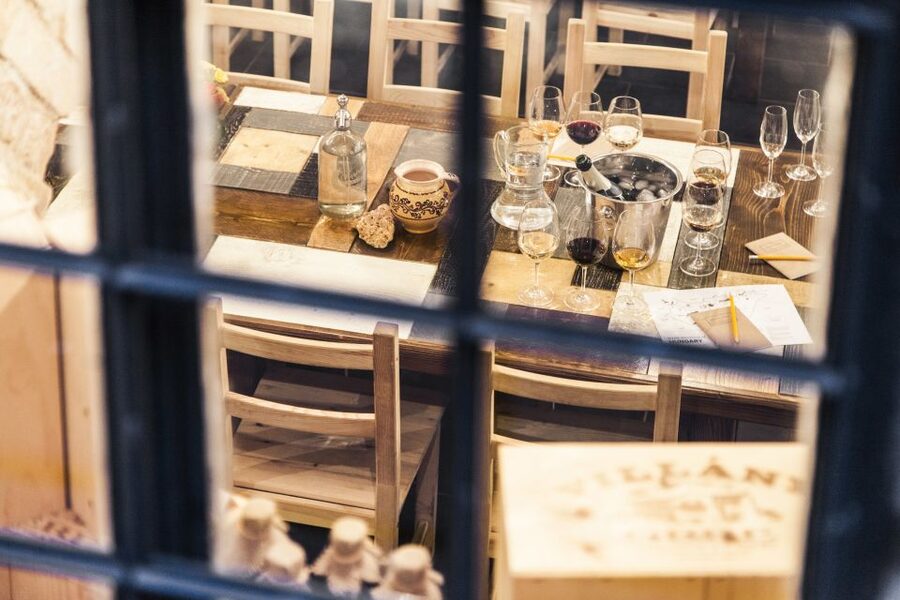
The final wine is a sweet botrytised Tokaj aszú. This is the grand finale for good reason. Tokaj is Hungary’s best-known wine name internationally, and the sweet style offers a clear contrast with the dry whites and reds tasted earlier.
The sommelier places Tokaj in the larger story of Hungarian wine, then lets you consider the balance of sweetness and acidity for yourself. Even if you do not normally order dessert wine, this is a useful final comparison because it shows how broad the country’s wine traditions are.
Ending with a sweet wine also keeps the tasting easy to follow. You move from lighter opening pours into fuller styles, then finish with something that feels distinct rather than simply adding another red to the list. The exact bottles change, so do not book expecting a fixed label-by-label menu.
The hosts make the difference
The strongest part of this experience is the quality of the teaching. The hosts are not simply pouring wine and reading labels. They connect the bottles to Hungarian places, producers, and changing wine styles.
Tomas has been praised for explaining how soil and climate affect flavor. Carlos is known for a lively session that may run longer when the conversation is flowing. John has shared personal stories about how he came to the role, while Sebastian has been noted for making solo participants feel part of the group.
Somali, Christian, Sam, and other hosts have also led sessions. The tone can vary slightly from one evening to another, but the consistent aim is clear: make Hungarian wine approachable without stripping away the detail.
I particularly like that the class can work for two different audiences. If you are new to wine, the map, tasting sheet, and step-by-step structure give you a starting point. If you already know your way around a wine list, the focus on less familiar Hungarian grapes and producers gives you something new to consider.
The group format helps, too. People sit together, compare favorites, and often continue chatting after the formal tasting ends. This is a good pick for a solo visitor who wants an easy social evening, as well as for couples or friends who prefer a shared activity to another guided walk.
There is one trade-off. A passionate host may give you more information than you can retain. That is not necessarily bad, but you should not feel pressure to memorize every region and grape. Write down the wines you like, ask which bottles are available to buy, and let the rest become useful background.
What the $65 price really buys you
At $65 per person, this is not the cheapest way to drink wine in Budapest. You can certainly order Hungarian wine at a bar for less. That comparison misses what is included here, though.
You receive eight wines, mineral water, food pairings, a regional map, tasting notes, and two hours of guided instruction. The wines are selected to create a story, not merely to fill eight glasses. If you bought eight separate glasses in a central Budapest wine bar, the total could approach the class price without giving you the same context.
The food also adds real value. Cheese, charcuterie, bread, and other local tastes turn the evening into more than a technical tasting. Some portions are generous enough to serve as a light dinner, though I would not book this as a guaranteed full meal.
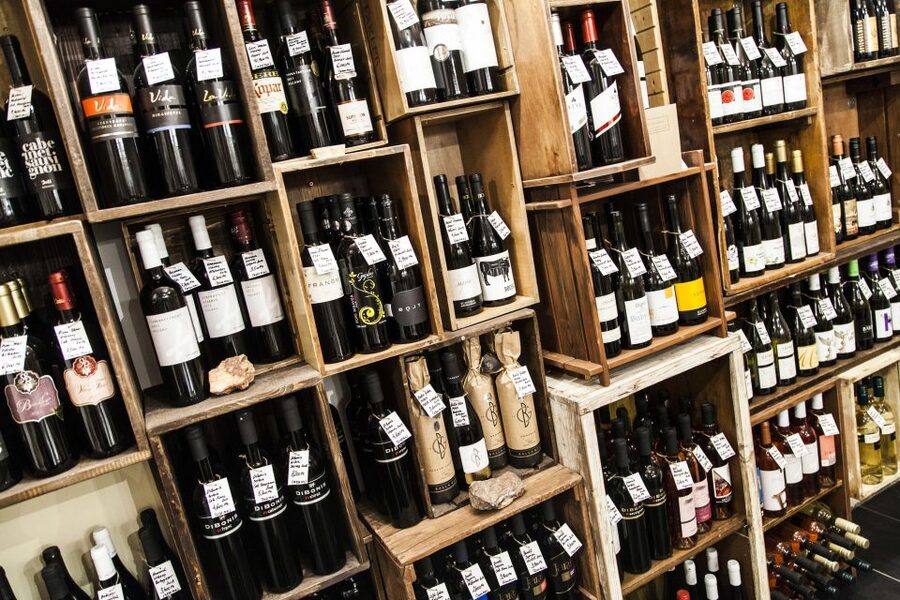
Another advantage is the chance to buy bottles afterward. The tasting room sells Hungarian wines, and the class can help you avoid buying blindly. One participant even returned the next day to purchase wine, while another arranged to send several bottles home. Availability and shipping arrangements can change, so ask the staff directly if you find something you want.
The price makes the most sense if you are curious about Hungarian wine and want a broad introduction in one sitting. It makes less sense if you only want a single glass, dislike group activities, or already have a detailed plan to visit several Hungarian wine regions.
Timing, drinking pace, and practical planning
The advertised duration is two hours, usually from 6:00 PM to 8:00 PM. Some sessions finish later when the group continues talking and tasting. Do not schedule a tightly timed concert or dinner immediately afterward.
Eight pours can add up. The portions have been described as generous, sometimes closer to a normal glass than a tiny sample. Drink water, eat the food, and pace yourself. Hungary’s legal drinking age is 18, and anyone aged 18 or older can take part.
The minimum booking is two people. If too few people book a session, it may be canceled after confirmation, with an alternative or full refund offered. You can cancel up to 24 hours before the activity for a full refund, and the reserve-now-pay-later option helps if your Budapest plans are still shifting.
For the smoothest evening, arrive a few minutes early, bring a phone or small notebook for extra notes, and avoid planning to drive afterward. The central location makes public transport the sensible choice.
Who will get the most from this tasting
I would recommend this to you if you want to understand what you are drinking, not simply sample local alcohol. It suits curious beginners, wine-loving couples, solo visitors, and anyone who has already enjoyed Tokaj and wants to learn what else Hungary produces.
It is also a smart choice early in a Budapest stay. The information can guide later restaurant orders and help you decide if a bottle from a Hungarian region is worth taking home. The class is especially useful for visitors who are not making a separate trip to the wine country.
You may want to skip it if your ideal evening is quiet drinking with no instruction. You should also think twice if you are looking for a formal tasting with separate glasses for every style and very small pours. This session leans friendly, generous, and social rather than strict and ceremonial.
The experience has a 4.9 rating from 174 ratings, and the praise centers on the same practical strengths: engaging hosts, good wine, useful regional explanations, a pleasant cellar, and well-matched cheese and meats. The occasional drawbacks are modest, mainly too much information, not quite enough food for a large appetite, or glass changes that are less formal than some wine drinkers expect.
Should you book it?
Yes, if Hungarian wine is still a blank spot on your map. For $65, you get eight carefully chosen wines, local food, a sommelier, and a clear introduction to a country whose wine traditions deserve more attention.
Book it early in your Budapest visit if you want help choosing bottles later. Choose the 6:00 PM session if you like a full evening activity, and eat lightly beforehand without arriving hungry. Skip it only if you want a quick drink rather than a guided lesson, or if a generous multi-wine tasting does not suit your pace.
FAQ
Where does the Hungarian wine tasting take place?
It takes place at The Tasting Table Budapest, Bródy Sándor utca 9, 1088 Budapest, in District VIII.
How long does the tasting last?
The scheduled duration is two hours, usually from 6:00 PM to 8:00 PM. Some sessions may continue longer if the group keeps talking and tasting.
How many wines are included?
Eight Hungarian wines are included. The selection begins with an aperitif, continues through whites and reds, may include a rosé, and finishes with Tokaj aszú.
Is food included?
Yes. The tasting includes mineral water and food pairings made up of local Hungarian flavors, including cheese, charcuterie, meats, and other accompaniments.
Is the tasting held in English?
Yes. The host or greeter speaks English, and the tasting is conducted in English.
How old must participants be?
The legal drinking age in Hungary is 18, so participants must be at least 18 years old.
Can I cancel the booking?
Yes. You can cancel up to 24 hours in advance for a full refund.
What happens if there are not enough participants?
A minimum of two participants applies. If the session does not reach that number, it may be canceled after confirmation. You will then be offered an alternative or a full refund.
More Workshops in Budapest
- Easy Cooking Class Budapest – with Market Walk (local wine & pálinka included)
★ 5.0 · 62 reviews - Rome: Pasta Making Class with Wine, Limoncello, and Dessert
★ 4.9 · 3,177 reviews - Rome Cooking Class: Make Pasta and 3 Spritz Cocktails
★ 5.0 · 2,937 reviews - Barcelona Paella Cooking Class with Market Visit, Tapas & Sangria
★ 5.0 · 2,531 reviews
More Wine Tastings in Budapest
- From Porto: Douro Valley w/ Boat Tour, Wine Tasting & Lunch
★ 4.7 · 19,061 reviews - Complete Douro Valley Wine Tour with Lunch, Wine Tastings and River Cruise
★ 5.0 · 12,920 reviews - Florence: Chianti Wineries Tour with Wine Tasting
★ 4.5 · 10,071 reviews - From Split: Krka Waterfalls, Food & Wine Tasting Tour
★ 5.0 · 9,326 reviews
Just added around Budapest
- Private Wine Tasting in Budapest★ 5.0 · 107 reviews
- Budapest: Bar Crawl Tour with Drinks and Shots Included★ 5.0 · 194 reviews
- Budapest Party District Bar-Hop with 2hrs Unlimited Drinks★ 4.5 · 90 reviews
- All You Can Drink Pub Crawl Through The Ruin Bars in Budapest★ 5.0 · 68 reviews
- Food and Wine Tasting in Budapest City Center with Sommelier★ 5.0 · 57 reviews
- Budapest Food Tasting Tour with Nelli & her local guides★ 5.0 · 190 reviews
- Szentendre and Visegrad Private Danube bend Tour With Wine Tasting and Lunch★ 4.5 · 52 reviews
- Evening Wine, Cheese, & Charcuterie Tasting in Budapest★ 5.0 · 121 reviews
Wine Tasting Tours, compared.

Douro Valley w/ Boat Tour, Wine Tasting & Lunch
Read our review →
Complete Douro Valley Wine Tour with Lunch, Wine Tastings and River Cruise
Read our review →
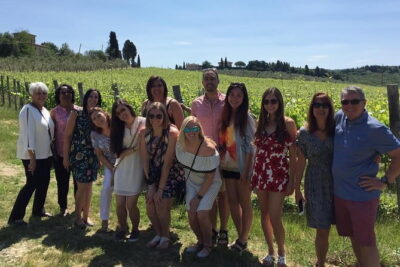
Small-Group Wine Tasting Experience in the Tuscan Countryside
Read our review →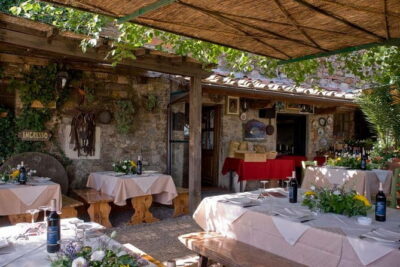
SMALL-GROUP Wine Safaris: Tuscan Wine Tasting Tours from Florence
Read our review →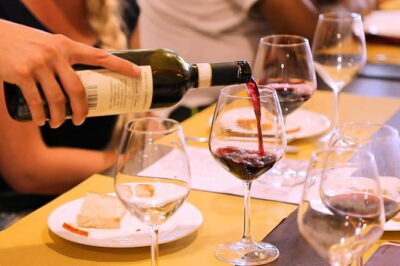
San Gimignano, Siena, Monteriggioni, Chianti Day Trip with Lunch & Wine Tasting
Read our review →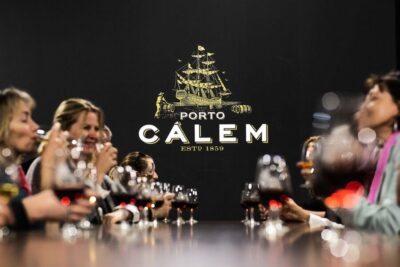
Cálem Cellar Tour, Interactive Museum & Wine Tasting
Read our review →
Browse the lists this tour appears in