
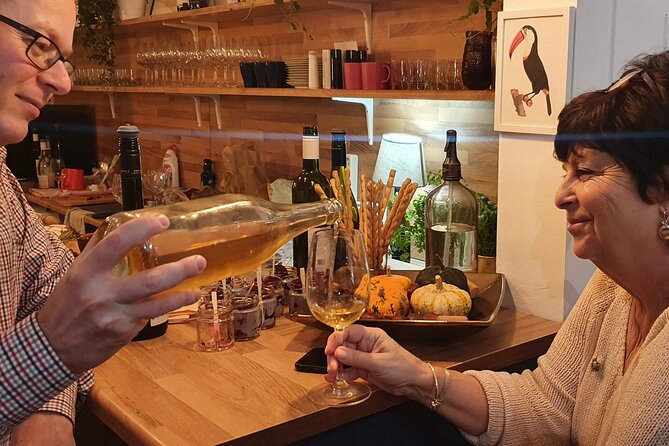
Review · BUDAPEST
Private Wine Tasting in Budapest
Hungarian wine is the star here, not a side note to sightseeing. With Miklós Csizmadia, also called Miki or Mickey, you taste unusual local grapes such as Furmint, Hárslevelű, Cserszegi fűszeres, Kadarka, and Kékfrankos, while hearing how Hungary’s wine regions and producers fit together.
I like two things right away: the tasting is private, so your group gets direct attention, and the food is more than a bowl of crackers. Ham, sausage, cheese, olives, bread, and Hungarian specialties give the wine a proper partner. The main consideration is that this is a talkative, information-heavy evening, so it suits curious wine drinkers more than anyone seeking a quick sip-and-go stop.
Key points at a glance
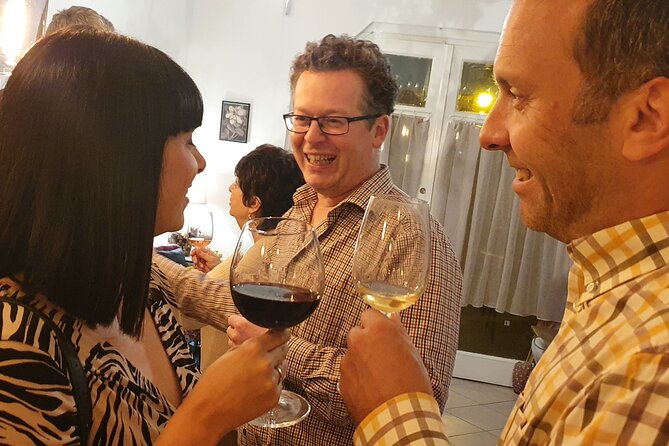
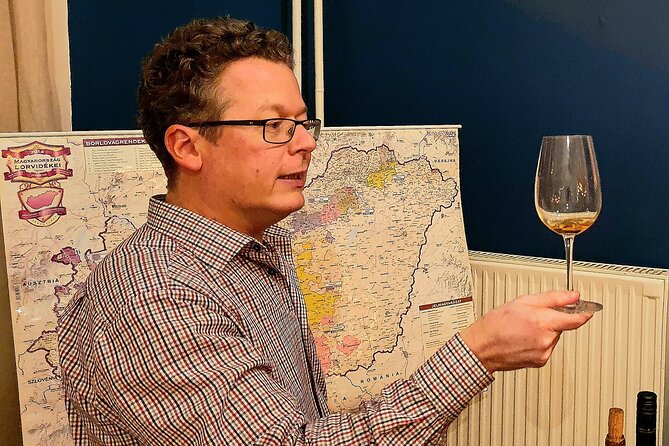
- Miklós Csizmadia leads the tasting: He is a wine journalist and judge with personal connections to Hungarian winemakers.
- The grapes are distinctly Hungarian: Expect wines made from Furmint, Hárslevelű, Cserszegi fűszeres, Kékfrankos, and Kadarka.
- Tokaj gets special attention: Furmint is the base grape of Tokaji Aszú, Hungary’s best-known sweet wine.
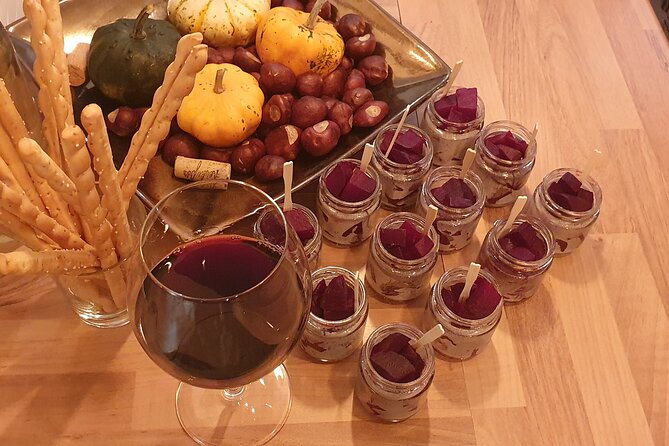
- The snacks are substantial: Tapas-style plates include ham, sausages, cheeses, olives, bread, and local spreads.
- The setting is local and convenient: Wine the Gap is at Tompa u. 26 in Budapest’s District IX, near public transportation.
- The format is intimate: Your private group is the only group taking part in the activity.
A Hungarian wine lesson in a Budapest bar
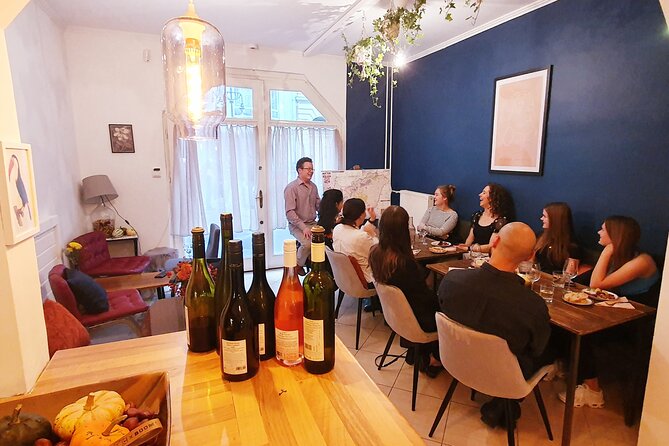
This tasting gives you a useful correction to the usual Budapest drinking script. Hungary is often thought of through pálinka, beer, or the sweet wines of Tokaj, but wine is a major part of the country’s food culture. The evening places that culture in front of you, glass by glass.
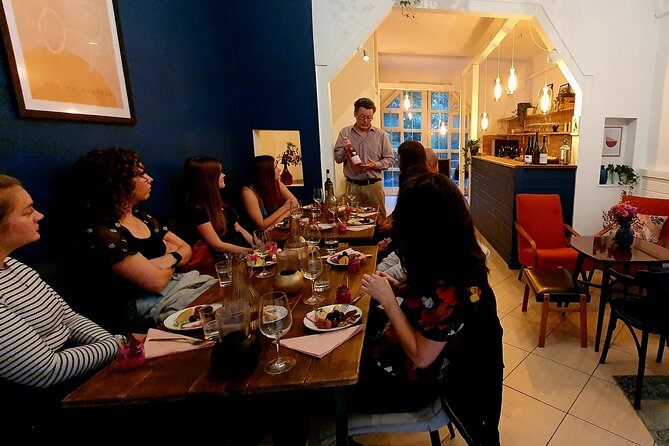
You meet at Wine the Gap Borbár és Rendezvénytér on Tompa utca. The tasting lasts about two hours, though the exact pace depends on the questions your group asks and how much Miki has to share. He is clearly passionate about the subject, and his style is lively rather than stiff. He mixes facts about grapes and regions with stories about winemakers and the bottles being poured.
That personal approach matters. A basic wine tasting tells you what is in the glass. This one aims to explain why Hungarian wine tastes the way it does, where it comes from, and why some bottles are difficult to find outside top Budapest restaurants and Michelin-starred dining rooms.
The private format helps here. You are not standing in a large room trying to hear a guide over several unrelated groups. You can ask about a grape you have never heard of, request another explanation of a region, or admit that you prefer white wine. Beginners are welcome, and experienced drinkers have room to ask more technical questions.
More Wine Tasting Tours in Budapest
- Hungarian Wine Tasting (with Cheese and Charcuterie) in Budapest
★ 5.0 · 531 reviews - Budapest: Hungarian Wine Tasting with 8 Wines and Tapas
★ 4.9 · 446 reviews - 8-Tier Hungarian Wine Tasting in a Cozy Downtown Wine Bar
★ 4.9 · 269 reviews
Six or more wines, with room for surprises
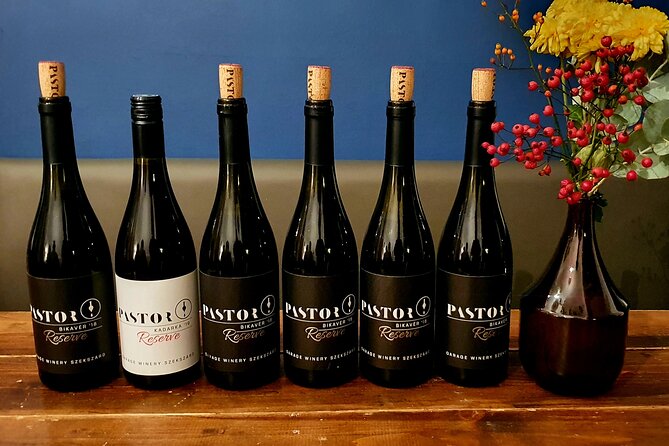
The central feature is a flight of Hungarian wines. The description highlights six plus one indigenous Hungarian white wines, along with red wines. The exact number and mix can vary. Some tasting experiences described by visitors included six wines, while others included seven or eight, with a strong focus on whites and at least one rosé.
That variation is worth understanding before you book. This is not a rigid printed menu where every group receives precisely the same sequence. Miki selects bottles to show the range of Hungarian wine, and the tasting may include white, rosé, red, and a sweet wine. If you have a strong preference, such as an interest in dry whites or lighter reds, mention it during the booking process or at the start.
You may begin with a fresh, aromatic white such as Cserszegi fűszeres. The name is famously difficult for English speakers, and part of the fun is learning to say it. Hárslevelű offers another look at Hungarian white wine, while Furmint provides a direct connection to Tokaj.
Furmint is especially important. It is the main grape used in Tokaji Aszú, Hungary’s famous sweet wine, but it also makes dry wines with a very different character. That contrast gives you something useful to watch for. The grape is not limited to one style, and a good explanation can change how you approach the bottle list at a Budapest restaurant.
The reds introduce another side of the country. Kékfrankos and Kadarka are important names to remember, especially if you want to order Hungarian wine later in your trip. Bull’s Blood, or Egri Bikavér, is another likely topic. The name sounds dramatic, but the useful point is that it refers to a blended red wine associated with the Eger region.
A rosé may appear in the lineup, and the tasting can finish with a dessert wine. One particularly appealing sequence described by the experience is a progression from white to rosé to red and finally a delicate sweet wine. That kind of ending gives the evening a clear shape rather than leaving you with a random collection of pours.
What Miki adds beyond the bottle
Miki’s role is the strongest reason to choose this tasting instead of simply ordering Hungarian wine at dinner. He is a wine journalist and judge, and he knows producers personally. That allows him to discuss the people behind the labels, not just grape names and tasting notes.
His stories also keep the two-hour session from becoming a classroom lecture. He brings in anecdotes about winemakers and the wines being served, along with details about how Hungarian wine developed over time. The tone is friendly and humorous, but the content remains substantial.
You will likely hear about Hungarian wine regions, production methods, local grapes, and the way certain wines reach the market. You may also learn about fröccs, Hungary’s wine spritzer, which Miki has prepared during some tastings. That is a small but useful cultural detail. Wine in Hungary is not only a formal restaurant drink. It also has a casual, everyday side.
The strongest praise for the host centers on his energy and passion. He is described as attentive, entertaining, and able to make beginners feel at ease. That is important because wine tastings can become uncomfortable when the guide assumes everyone already knows the difference between acidity, tannin, body, and sweetness.
Miki appears to explain rather than show off. You do not need a developed wine vocabulary to enjoy this. At the same time, you will pick up enough context to make your next Hungarian wine order less of a guess.
Local food makes the tasting feel like dinner
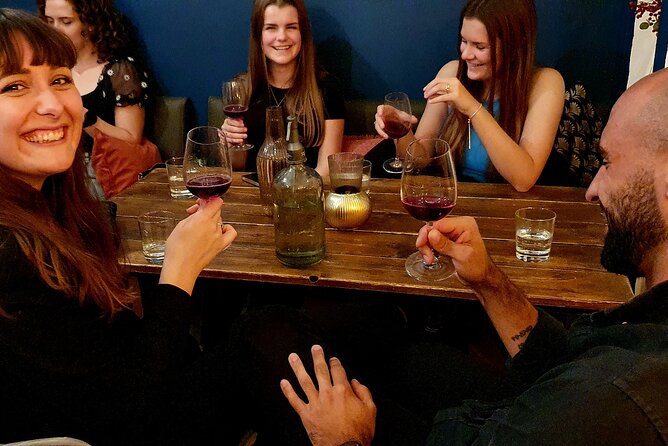
The food is a real part of the experience, not a decorative extra. The standard offering is a tapas-style spread of ham, sausages, cheese, olives, and bread. Descriptions of the tasting also refer to Hungarian salami, local delicacies, and a particularly memorable spread made with Mangalica.
Mangalica is a Hungarian pig breed known for its rich, fatty meat. If it is included in your tasting, it gives you another distinctly local flavor to pair with the wines. One participant also bought a jar of the spread and a bottle of a favorite wine afterward, though bringing purchases home depends on your luggage and travel plans.
The food matters for practical reasons. Six or more pours over two hours are easier to handle with a proper snack plate. The salty meats and cheeses also show how wine works with Hungarian food, and they give you a break from tasting one glass after another.
If you have an allergy, say so clearly. Miki accommodated a nut allergy during one tasting, but you should still communicate your needs before the food is served. The supplied details do not promise a specific allergy-free menu, so do not assume every substitution will be possible.
This is not a full restaurant dinner. You receive substantial nibbles, but you should not book it as your only evening meal if you expect a large entrée. Think of it as a generous wine-bar spread that can carry you through the tasting and perhaps start your night.
More Wine Tasting Tours in Hungary
- Budapest: Essentials of Hungarian Wine Tasting Class
★ 4.9 · 174 reviews - Budapest: Food Tour with Wine tasting By Foodapest™ 2025
★ 4.8 · 64 reviews - Food and Wine Tasting in Budapest City Center with Sommelier
★ 5.0 · 57 reviews - Szentendre and Visegrad Private Danube bend Tour With Wine Tasting and Lunch
★ 4.5 · 52 reviews
A good location for an evening in District IX
Wine the Gap is at Tompa u. 26 in Budapest’s ninth district. The area is described as lively in the evening, with other nightlife nearby. It is a little outside the most concentrated central sightseeing zone, but it is near public transportation and gives you a reason to spend time in a part of Budapest beyond the usual postcard stops.
The activity starts and ends at the same wine bar. That makes the logistics simple. You do not need to follow a guide from one tasting room to another, and you can plan a later meal or a walk from the same neighborhood.
Allow enough time to reach Tompa utca without rushing. The tasting is built around conversation, so arriving late can mean missing the introduction to the wines and the history of Hungarian production. A mobile ticket is accepted, and confirmation is provided when you book.
Because the activity is private, the group size is limited to your own party. The supplied information does not give a maximum number, so you should check the booking details if you are arranging a larger group. For couples and small groups, the setup should feel personal and relaxed.
Is $60 a fair price?
At $60 per person, this costs more than simply ordering a few glasses at a Budapest wine bar. The value comes from the breadth of the tasting, the food, and Miki’s guidance. You are paying for access to bottles that may be found mainly in high-end Budapest restaurants, plus the explanation that makes them easier to understand.
The price looks strongest if you are interested in wine beyond casual drinking. You will taste several styles and local varieties in one sitting, rather than spending several evenings trying to identify Hungarian labels on your own. The session also gives you ideas for bottles to seek out later.
For a wine novice, the value depends on your patience. Miki has a lot to say, and the tasting can feel like a serious lesson. That is a benefit if you want context, but it may feel long if you mainly want a social drink with a few quick facts.
The private setting also changes the calculation. A shared tasting can sometimes offer a lower price, but it may give you less time to ask questions. Here, your group controls the conversation more directly. If you have only one evening in Budapest and want to understand the country’s wine culture, two hours is a sensible use of time.
Who should book this tasting?
I would recommend it first to people who want to learn what makes Hungarian wine different. It is especially useful for anyone who normally sticks to familiar international grapes and wants a guided introduction to local varieties.
It also suits wine drinkers who prefer white wine. Furmint, Hárslevelű, and Cserszegi fűszeres give the white-wine portion real depth, and some tastings have included a strong run of whites. Red-wine drinkers are not left out, with Kékfrankos, Kadarka, and Bull’s Blood among the styles discussed.
Beginners should feel comfortable here. Miki’s warmth and humor help take the pressure off, and you can learn without pretending to recognize every aroma in the glass. The experience also works well for a private celebration or a couple looking for a food-and-drink evening with a local focus.
I would think twice if you want a quiet tasting with minimal explanation. Miki is enthusiastic, and the format is built around stories, questions, and background. You should also avoid treating the tasting as a full dinner, since the food is a snack spread rather than a complete meal.
Free cancellation is available up to 24 hours before the start time for a full refund. Cancellations or changes made within 24 hours are not refunded or accepted. Service animals are allowed, and most people can participate.
My verdict on the Hungarian wine experience
I like this tasting because it gives you something you are unlikely to get from a standard Budapest food tour: a clear introduction to the country’s own wine vocabulary. Furmint, Kadarka, and Kékfrankos stop being mysterious label words and become part of a larger story about regions, producers, and local habits.
Book it if you want a private, talkative session with good snacks and wines selected to show variety. It is particularly worthwhile early in your Budapest stay, since the information can guide your later restaurant choices. Skip it only if you dislike guided tastings or want a quick, casual drink without much conversation.
For curious drinkers, $60 buys more than seven pours. It buys a useful way into Hungarian food and drink, led by someone who clearly cares about the subject.
FAQ
Where does the private wine tasting take place?
The tasting begins and ends at Wine the Gap Borbár és Rendezvénytér, Budapest, Tompa u. 26, 1094 Hungary.
How long does the experience last?
The tasting lasts approximately two hours.
Which wines might be included?
The experience includes a selection of Hungarian white and red wines. Possible indigenous grapes include Cserszegi fűszeres, Hárslevelű, Furmint, Kékfrankos, and Kadarka. A rosé or dessert wine may also be included.
Who leads the tasting?
Miklós Csizmadia leads the experience. He is a wine journalist and wine judge, and is also referred to as Miki or Mickey.
Is food provided?
Yes. Tapas-style snacks are provided, including ham, sausages, cheese, olives, and bread. Local spreads and other Hungarian delicacies may also be included.
Can I cancel for a full refund?
Yes. You can cancel at least 24 hours before the local start time for a full refund. Cancellations or changes made less than 24 hours before the start time are not accepted, and the amount paid is not refunded.
More Wine Tastings in Budapest
- From Porto: Douro Valley w/ Boat Tour, Wine Tasting & Lunch
★ 4.7 · 19,061 reviews - Complete Douro Valley Wine Tour with Lunch, Wine Tastings and River Cruise
★ 5.0 · 12,920 reviews - Florence: Chianti Wineries Tour with Wine Tasting
★ 4.5 · 10,071 reviews - From Split: Krka Waterfalls, Food & Wine Tasting Tour
★ 5.0 · 9,326 reviews
Just added around Budapest
- Budapest: Bar Crawl Tour with Drinks and Shots Included★ 5.0 · 194 reviews
- Budapest Party District Bar-Hop with 2hrs Unlimited Drinks★ 4.5 · 90 reviews
- Food and Wine Tasting in Budapest City Center with Sommelier★ 5.0 · 57 reviews
- Budapest Food Tasting Tour with Nelli & her local guides★ 5.0 · 190 reviews
- All You Can Drink Pub Crawl Through The Ruin Bars in Budapest★ 5.0 · 68 reviews
- Szentendre and Visegrad Private Danube bend Tour With Wine Tasting and Lunch★ 4.5 · 52 reviews
- Evening Wine, Cheese, & Charcuterie Tasting in Budapest★ 5.0 · 121 reviews
- Cocktail Cruise and City Views on the Danube in Budapest★ 4.0 · 236 reviews
Wine Tasting Tours, compared.

Douro Valley w/ Boat Tour, Wine Tasting & Lunch
Read our review →
Complete Douro Valley Wine Tour with Lunch, Wine Tastings and River Cruise
Read our review →
Small-Group Wine Tasting Experience in the Tuscan Countryside
Read our review →
SMALL-GROUP Wine Safaris: Tuscan Wine Tasting Tours from Florence
Read our review →
San Gimignano, Siena, Monteriggioni, Chianti Day Trip with Lunch & Wine Tasting
Read our review →
Cálem Cellar Tour, Interactive Museum & Wine Tasting
Read our review →
Browse the lists this tour appears in