Review · DRINKS TASTINGS
Alsace wine tour and medieval villages. Small group guided tour
Alsace is at its best when you combine its wines with its storybook villages, and this tour does exactly that. From Basel, you ride into France with guide Colin Bell, stopping at small wineries and exploring places such as Riquewihr and Eguisheim rather than spending the day in a large tasting room.
I like the tiny group size, limited to two to six people, and the chance to discuss your wine tastes with Colin before the tastings begin. I also like the practical door-to-door approach, including pickup from a hotel or Airbnb. The main consideration is price: at about $365.53 per person, this is a serious splurge for a roughly six-hour outing, especially since lunch is extra.
Key points to know before booking
- Private groups of 2 to 6: You are not joining a large coach group, so the day can focus on your interests.
- Colin Bell leads the tour: He provides wine, geography, vineyard, and Alsace history commentary throughout the drive.
- Three wineries are typical, with four possible: Past tours have included three or four family-run producers, depending on the plan.
- Four Alsace villages are built into the route: Eguisheim, Riquewihr, Ribeauville, and Kientzheim each offer a different setting.
- Pickup is available from Basel or Colmar: The operator can also collect you from an Airbnb.
- Food is not included: Tastings are covered, but lunch and other drinks cost extra.
Why this Basel to Alsace tour works
The best feature here is the combination of wine and place. You are not simply driven to a tasting room, handed a glass, and sent back to Basel. The route takes you through old wine villages, vineyards, and communities that help explain why Alsace wines taste the way they do.
Alsace sits close to the German border, and its culture reflects that position. The villages have half-timbered houses, painted facades, narrow lanes, and an orderly charm that feels different from much of France. The wines also have a clear regional identity, with Riesling, Gewürztraminer, Pinot Gris, and other varieties commonly associated with the area. The tour uses the villages and vineyards together, which makes the tasting more meaningful.
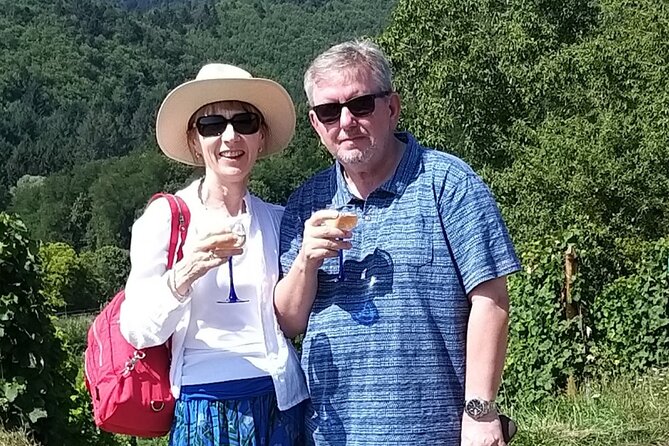
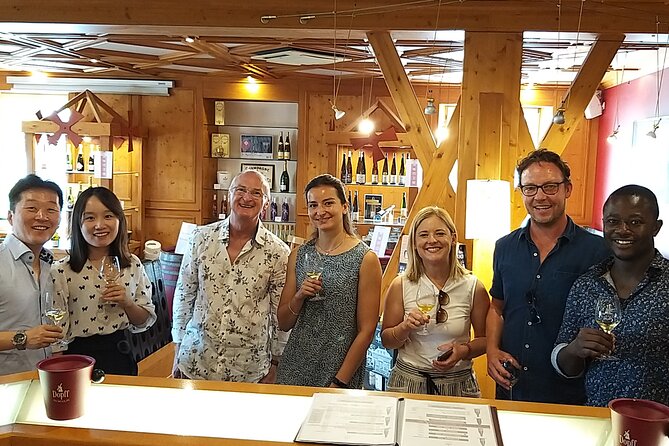
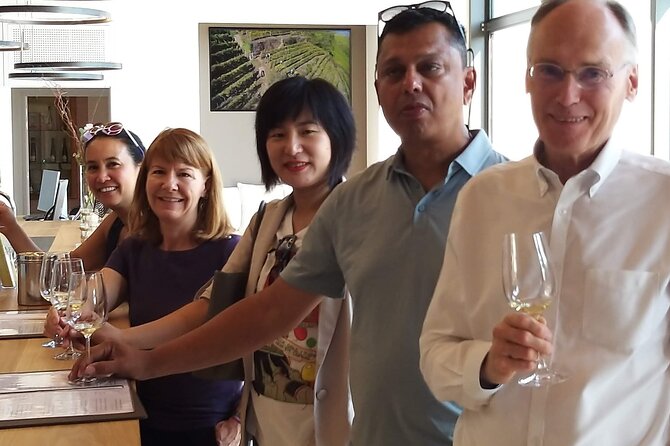
The small group format matters. With two to six people, you can tell Colin what you enjoy, ask questions without holding up a busload of people, and spend more time on wines that fit your taste. The experience is described as private, meaning only your group participates. That gives the day a personal feel without requiring you to arrange every winery appointment yourself.
There is one important point to clarify before you book. The advertised experience is approximately six hours and lists a 9:00 a.m. start, but the description also offers half-day and full-day options. The exact number of wineries and the amount of free village time can vary. If four wineries and a leisurely lunch are priorities, confirm the version available on your date.
A few more tastings around the world worth a look
- Bruges: Guided Tour & Boat Ride with Optional Beer Tasting
★ 4.4 · 3,894 reviews - Dublin Irish Whiskey Museum and Gallery Guided Tour with Tasting
★ 5.0 · 3,078 reviews - Dublin Jameson Distillery and Guinness Storehouse Guided Tour
★ 4.5 · 2,608 reviews
Leaving Basel for France at 9:00 a.m.
Pickup is offered from Basel, Colmar, a hotel, or an Airbnb, according to the details provided. Starting at 9:00 a.m. gives you a full morning in the vineyards and avoids trying to connect several regional buses and winery appointments on your own.
This is one of the tour’s strongest practical advantages. Alsace wine villages are spread along the route, and winery visits are much easier when someone else handles the driving and timing. You can taste without worrying about getting back across the border or finding parking in the old villages.
Colin Bell is the guide and driver. His role is more than transportation. He explains the region, grape growing, wine production, and the geography between stops. Past guests have singled out his commentary in the vehicle, as well as his warm relationships with the wineries. That kind of local familiarity can make a difference at small producers, where the visit may feel more like a conversation than a standard commercial tasting.
The vehicle is described as clean, and the group is kept small. Still, remember that this is a road-based tour with several stops, not a slow village walk or a long sit-down seminar. If you want extended time in each town, ask how the six-hour schedule is divided.
Eguisheim and the first taste of Alsace
Eguisheim is the first listed stop. It is one of the region’s best-known wine villages, and its appeal comes from the close link between the old town and the vineyards around it.
The tour allows about an hour here. That is enough for a taste of the village and an introduction to the local wine culture, though it is not a long, unhurried visit. You might find the compact streets, old buildings, and vineyard setting more memorable than any single tasting note.
The winery visits focus on small, family-run producers. That is a real advantage if you want to understand how Alsace wine is made on a human scale. Instead of treating the area as a brand, the tour introduces you to individual growers and the character of their wines.
Colin can tailor the tastings to your preferences. If you already know you like dry Riesling, aromatic whites, or fuller Pinot Gris, tell him early. If you are still figuring out your taste, his explanations can help you compare grapes, soils, and styles without requiring a technical wine background.
Riquewihr under the Schonenbourg vineyard
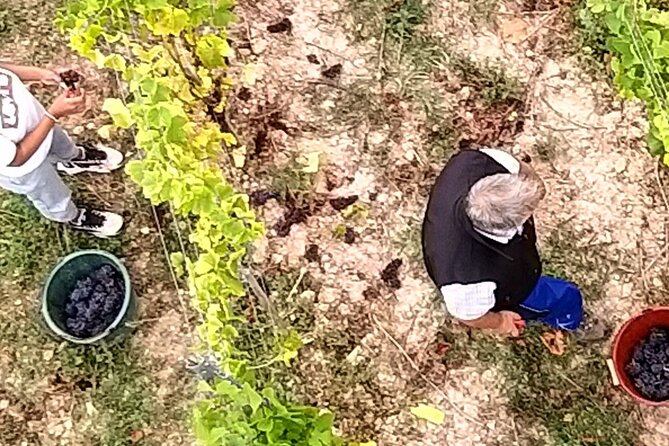
Riquewihr is the most visually striking village on the route. Its medieval center is lined with brightly painted historic buildings, and the town sits beneath the Schonenbourg Grand Cru vineyard, an important site for Riesling.
The one-hour stop is well suited to a first visit. You can walk through the old center, see the architecture, and connect the village to the vineyards above it. Riquewihr can feel polished and popular, so this is not the place to expect solitude. Its charm is obvious, and the narrow streets can be busy at times.
The wine setting gives the visit more substance than a quick photo stop. You are seeing where some of the region’s most respected wines originate, then tasting wines from nearby producers. The link between soil, slope, grape, and finished wine is one of the tour’s most useful teaching points.
Lunch may take place in Riquewihr on some full-day versions. It is not included in the price, but the operator can make a reservation. That can save time in a popular village, though you should budget separately for the meal and check what format applies to your booking.
Same town, a different glass:
- Budapest: Unlimited Prosecco, Beer and Aperol Spritz Cruise
★ 4.8 · 37,304 reviews - Amsterdam: Evening Cruise with Optional Wine and Snacks
★ 4.4 · 22,178 reviews - Tuscany Day Trip from Florence: Siena, San Gimignano, Pisa and Lunch at a Winery
★ 5.0 · 21,634 reviews - From Porto: Douro Valley w/ Boat Tour, Wine Tasting & Lunch
★ 4.7 · 19,061 reviews
Ribeauville, castles, and old village streets
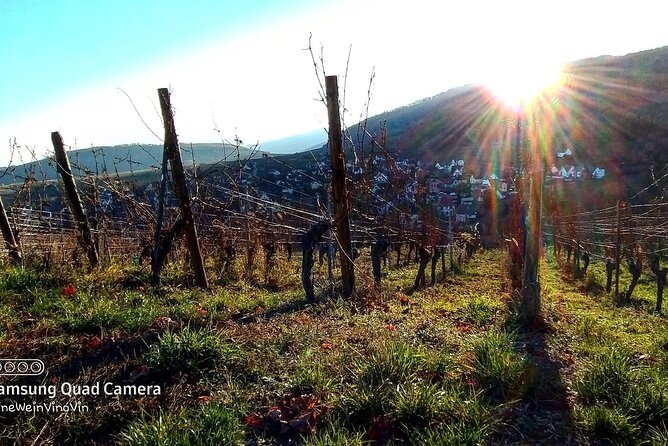
Ribeauville gives the day another dose of medieval Alsace. The town is associated with old fortifications, historic streets, and castles rising above the surrounding area. The setting helps explain the region’s long connection between fortified towns, vineyards, and trade routes.
The listed visit is about an hour. That makes Ribeauville a good contrast with Riquewihr. Riquewihr is compact and highly polished, while Ribeauville offers a broader sense of a working historic town with a longer route through its streets.
You will not have time to explore every lane or hike to every castle during a short wine tour. That is the tradeoff. The reward is variety: you see several of the most attractive villages in one day without giving up the winery appointments that brought you across the border.
Colin’s regional commentary is particularly useful between stops. The drive becomes part of the tour rather than dead time. He explains the area’s history, geography, vines, and production methods while taking you from one village to the next.
Kientzheim and the family winery experience
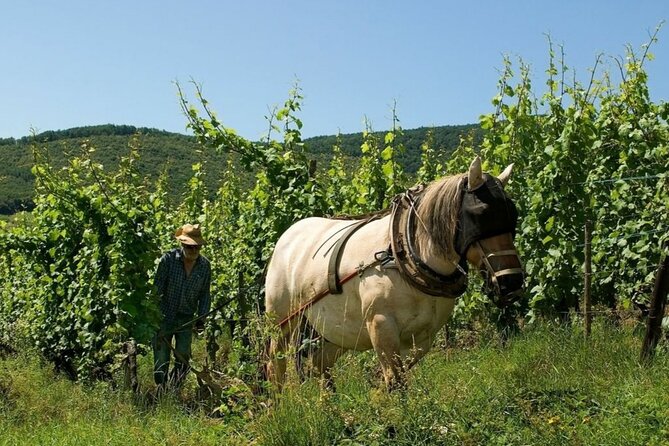
Kientzheim is a smaller village and fits the tour’s focus on boutique producers. It is a good setting for seeing a less famous side of Alsace, away from the best-known village names.
The experience places emphasis on small, family-run wineries that can be difficult to locate and visit independently. These producers may not offer the same visitor infrastructure as a large commercial winery, but that is part of the appeal. You get closer to the people and decisions behind the bottle.
The tour description refers to standing among the vines of a Grand Cru while tasting wine from that site. The exact vineyard experience can depend on the day, weather, and winery schedule, so treat it as a feature to confirm rather than a guaranteed stop at every departure.
Kientzheim also helps break up the sightseeing. Four picturesque villages in a row could become repetitive, but a smaller wine community and another producer give the day a different rhythm. You see, taste, and listen rather than simply rush from one famous street to another.
What the winery visits are really like
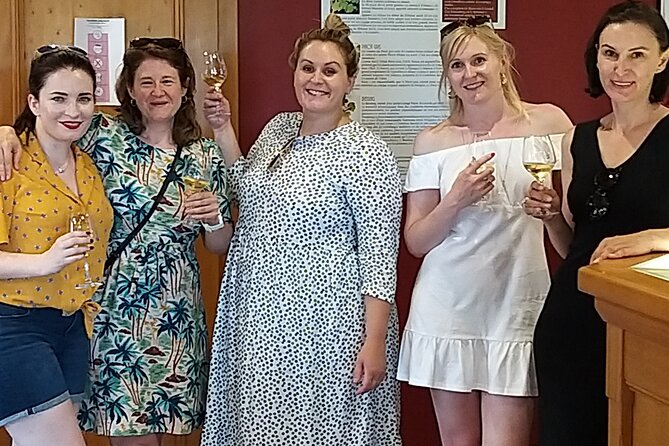
The tour has included three outstanding wineries on some days and four on others. Specific producers named in past outings include Emile Breyer, Hegel, and Bott Geyl. The exact wineries are not promised, but these examples show the kind of small producers the operator uses.
Expect several tastings rather than one symbolic sample. The tastings are included, and the focus is on understanding the wines, not merely checking off a few labels. You can ask about grape varieties, soil, vineyard position, growing methods, and production.
This is especially useful if you are an enthusiast. Colin has been described as a sommelier and as an expert on vine agriculture and wine production. His strength is not just naming the wine. He explains why a wine tastes the way it does and how the region’s different sites affect the bottle.
You can also buy wine at the wineries. If you are continuing on a cruise or traveling with limited luggage, plan ahead. Bottles add weight, and the operator does not specify shipping arrangements or luggage storage. That is a small but practical point for anyone tempted by a large purchase.
Price, timing, and what is included
The listed price is about $365.53 per person. That is high for a six-hour excursion, but the comparison is not quite fair if you measure it against a large group bus tour. The price covers a private experience for two to six people, winery access, tastings, a dedicated guide and driver, and pickup options from Basel or Colmar.
For a couple, the cost buys privacy and flexibility. It can also be good value if you would otherwise need to arrange a rental car, designate a driver, book winery appointments, and coordinate several villages in one day. For a solo visitor, the price is harder to justify unless joining a small group reduces the per-person cost.
Admission and wine tasting are included. Food is not. Other alcoholic and non-alcoholic drinks are also excluded, so plan for lunch and any extra beverages. Personal injury insurance is not included either.
The tour is offered in English. Confirmation is sent within 48 hours of booking, subject to availability. Free cancellation is available up to 24 hours before the start time. Poor weather or failure to meet the minimum number of participants can lead to a rescheduled experience or full refund.
Who should book this Alsace wine tour?
I would choose this tour if you want wine education, attractive villages, and easy transportation in one day. It suits couples, families, and small groups who value a private guide and do not want to manage the driving.
It is also a strong match for people who already know they like wine and want more than a quick tasting. Colin can adjust the conversation and tasting focus to your interests, and the family-run wineries offer more character than a generic retail tasting room.
You may want a different plan if your main goal is extensive time in one village, a long meal, or a low-cost excursion. The schedule covers several stops, so each village receives roughly an hour. That creates variety, but it limits slow wandering.
The tour is also less suitable if you do not drink wine. The villages are attractive on their own, but wine tasting is the central purpose, not a side activity. Most participants can take part, and service animals are allowed, but the provided information does not detail vehicle accessibility or child-specific arrangements.
Should you book it?
Book this experience if you want a private, wine-focused day with real village time and a guide who can explain the region as you drive. The strongest reasons are the two-to-six-person format, pickup from Basel or Colmar, access to small wineries, and Colin Bell’s ability to connect the wine with Alsace’s vineyards and past.
Before paying, confirm whether your departure is the half-day or full-day format, how many wineries are planned, and if lunch in Riquewihr is part of the schedule. If you accept the price and the fairly brisk pace, this is a well-rounded way to see Alsace without driving yourself.
FAQ
Where does the Alsace wine tour start?
The tour can start from Basel or Colmar. Pickup is offered, including collection from an Airbnb, and the activity ends back at the meeting point.
What time does the tour begin?
The listed start time is 9:00 a.m.
How many people can join the tour?
This is a private activity for a group of two to six people.
Which villages are included?
The listed route includes Eguisheim, Riquewihr, Ribeauville, and Kientzheim. Each stop is planned for about one hour.
Are wine tastings included?
Yes. Admission and wine tasting are included in the tour price. Food and other alcoholic or non-alcoholic drinks are not included.
Can I cancel for a full refund?
You can cancel for a full refund up to 24 hours before the experience starts. Changes or cancellations made less than 24 hours before the start time are not accepted for a refund.
Just added around the world
- Catamaran Sunset Champagne Cruise Cape Town★ 4.5 · 85 reviews
- Luxury Sunset Cruise with Prosecco★ 4.5 · 71 reviews
- Private Tour of Top 5 Stellenbosch Wineries From Cape Town★ 4.0 · 56 reviews
- Private Stellenbosch, Franschhoek Paarl Wine Tour from Cape Town★ 5.0 · 89 reviews
- Full-Day Stellenbosch, Franschhoek and Paarl Wine Tasting Tour from Cape Town★ 4.0 · 98 reviews
- From CapeTown: Stellenbosch Half Day Wine Tour★ 4.5 · 287 reviews
- Private Full Day Stellenbosch Wine Tour with Pick Up and Drop Off★ 5.0 · 425 reviews
- Full Day Small Group Wine Tour Cape Town and Stellenbosch★ 5.0 · 79 reviews
Drinks Tours, compared.
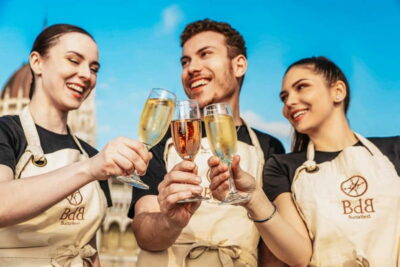
Unlimited Prosecco, Beer and Aperol Spritz Cruise
Read our review →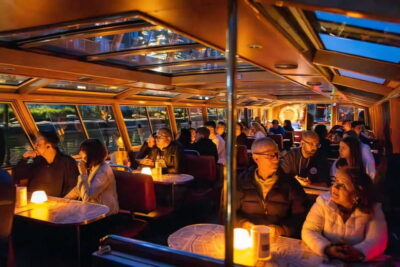
Evening Cruise with Optional Wine and Snacks
Read our review →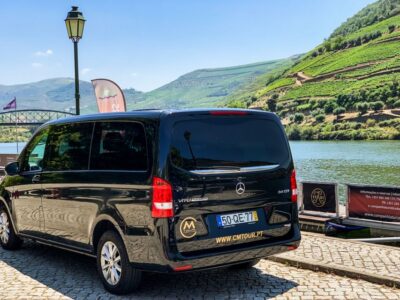
Douro Valley w/ Boat Tour, Wine Tasting & Lunch
Read our review →
Chichen Itza, Cenote & Valladolid Tour with Tequila and Lunch
Read our review →
Complete Douro Valley Wine Tour with Lunch, Wine Tastings and River Cruise
Read our review →
Small-Group Wine Tasting Experience in the Tuscan Countryside
Read our review →