
Review · BARCELONA
Best of Barcelona: Sagrada Família, Gaudí & Candy Tasting Tour!
Barcelona’s architectural show begins before you enter any building. This small-group walk links the outside of the Sagrada Família with Gaudí’s houses on Passeig de Gràcia, then adds work by Puig i Cadafalch, Domènech i Montaner, Codina, and Sagnier. Along the way, you get chocolate, nougat, and Spanish sweets instead of only a stream of dates and names.
I like the maximum group size of 10, which gives you a fair chance to ask questions. I also like the route’s range: Francisco and Anastasiia are praised for explaining Gaudí clearly, but the walk does not stop with Gaudí. You see how several architects shaped Barcelona’s Modernisme.
The main catch is simple and important: you do not go inside the Sagrada Família, and no attraction admission is included. If you book expecting a basilica interior visit, you will be disappointed. Treat this as an architecture walk with tastings, then arrange your own entry ticket separately.
Key points to know before booking
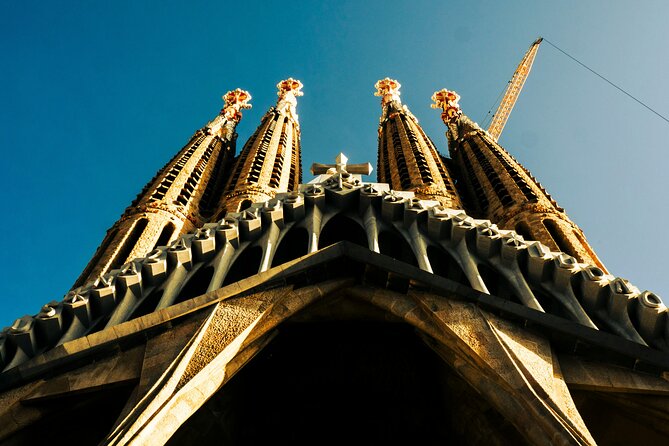
- The Sagrada Família is an exterior stop only: You learn about Gaudí’s ideas, symbols, and construction from outside.
- Passeig de Gràcia supplies the architectural parade: La Pedrera, Casa Batlló, Casa Amatller, and other Modernist façades fill the middle of the route.
- The group is capped at 10 people: That makes questions and guide interaction easier than on a large coach tour.
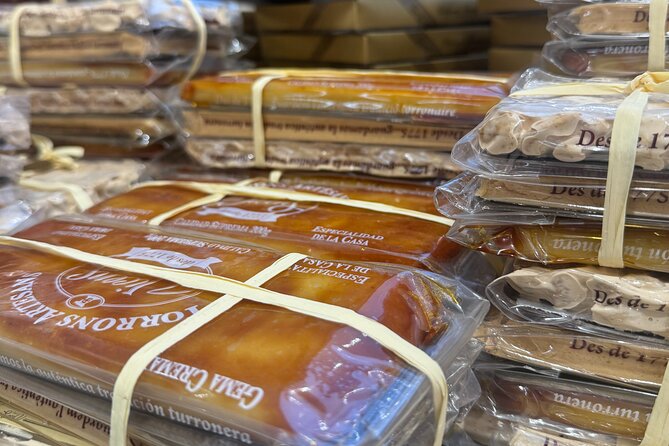
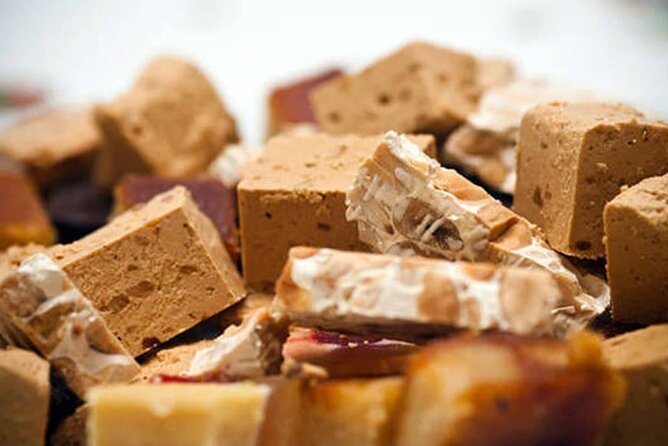
- Chocolate and Spanish sweets break up the walking: Expect Catalan chocolate, local candies, and traditional nougat or turrón.
- The route ends at Plaça de Catalunya: This is handy for continuing into the Gothic Quarter, taking public transport, or heading toward other central sights.
- The price is low because tickets are excluded: At $23.63, you are paying for the guide, walking route, and tastings, not basilica admission.
Starting beside the Sagrada Família
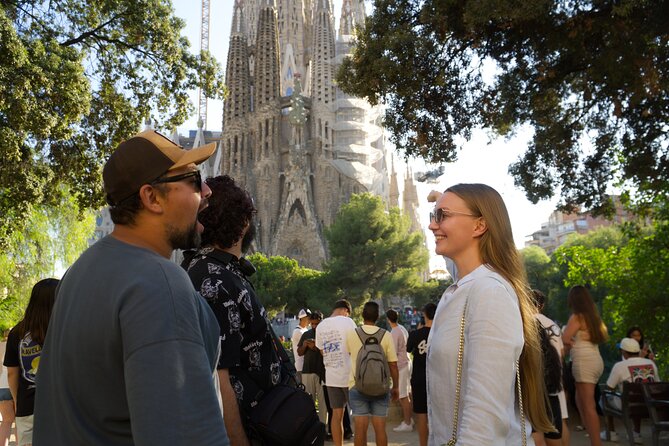
The tour begins at Av. de Gaudí, 1, in the Eixample, near the Sagrada Família. Check the map carefully before setting out. The meeting point is not simply the basilica entrance, and one missed connection happened when a taxi delivered a couple to the church instead of the stated starting point.
That practical warning matters in Barcelona. Show the driver the exact address and map pin, and allow a little time to find the group. The experience is offered in English, with morning and afternoon choices. It runs about two and a half hours, though one outing was described as closer to three hours.
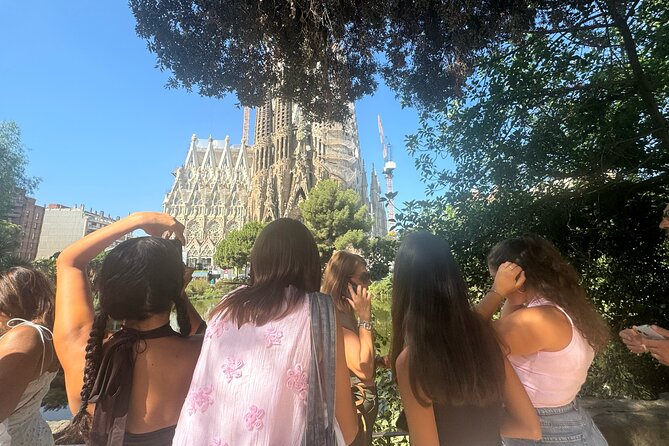
Your guide starts with the exterior of the Sagrada Família. This is the right place to explain Gaudí’s vision, the religious symbols in the façades, and the long process of construction. You can study the building at street level while the guide points out details you might otherwise miss.
The limitation is just as clear. An exterior explanation cannot replace the interior, with its forest-like columns, colored light, and museum displays. If that is the main reason you are coming, purchase a separate Sagrada Família ticket and plan it for another time or before the walk. The tour price does not cover admission.
A few more tastings around Barcelona worth a look
- Montserrat & Cogwheel Train, Gourmet Wine Tasting & Tapas/Lunch
★ 5.0 · 6,290 reviews - Barcelona: Montserrat, Cogwheel, Black Madonna & Winery Tour
★ 4.8 · 5,633 reviews - Montserrat with Black Madonna & Medieval Winery with Tapas/Lunch
★ 5.0 · 5,209 reviews
Reading Gaudí’s ideas from the pavement
The Sagrada Família section lasts about 40 minutes, making it the longest single stop. That gives the guide time to discuss more than the building’s famous towers. You should expect attention to symbolism, design choices, and the fact that this is an unfinished work still being built.
Francisco has earned especially strong praise for explaining architectural details and answering questions patiently. Anastasiia is also described as helpful with general Barcelona advice, including when and how to book major sights. If you are visiting the basilica later, use this opening section to ask what to watch for inside.
This part works well for first-time visitors because it puts the church into a wider city context. It also suits teenagers and families, since a guide can turn a large, complicated façade into a series of smaller stories. The pace is a walk with stops, not a race to photograph the next landmark.
Passeig de Gràcia and La Pedrera
From the Sagrada Família, the route moves toward Passeig de Gràcia, one of Barcelona’s grand central avenues. The walk takes you from Gaudí’s great religious project to the city’s residential and commercial Modernisme, where façades compete for attention.
La Pedrera, also called Casa Milà, is viewed from outside for about 20 minutes. Its uneven stone façade, twisting balconies, and sculptural roofline make it one of Gaudí’s easiest buildings to recognize. From the pavement, the guide can explain how the design challenged ordinary ideas about apartment blocks.
You will not enter La Pedrera. That keeps the tour affordable, but it also means you miss the roof sculptures, interior courtyards, and exhibition spaces. If you want to explore inside, budget for a separate ticket and more time than this walk provides.
This stop also includes local candies at a shop. The tasting element is modest rather than a full food tour. You might receive a small sample, so think of it as a sweet pause that adds local flavor, not lunch.
Casa Batlló and the block of architectural rivalry
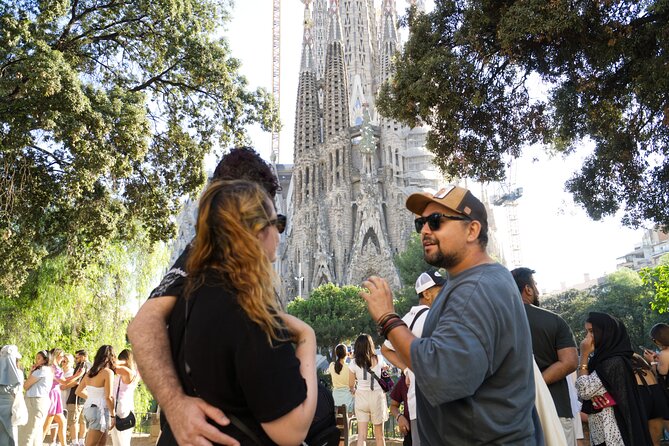
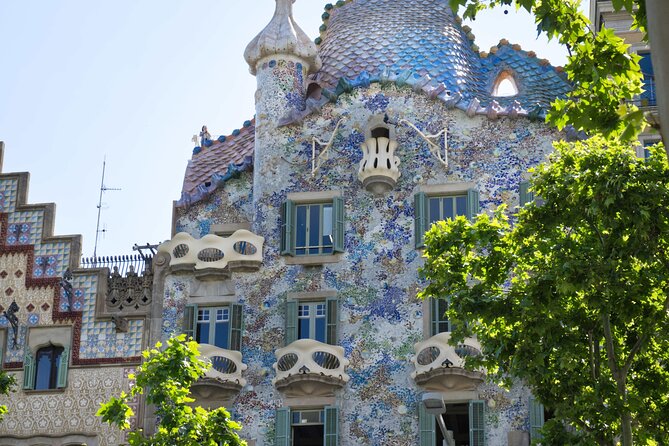
Casa Batlló receives about 20 minutes from the outside. Its bone-like balconies, curved forms, and colorful surface make it one of Gaudí’s most playful façades. A guide helps you read its details instead of reducing the stop to a quick photograph.
Again, no interior admission is included. Casa Batlló inside is a separate experience, with rooms and design features that cannot be seen from the pavement. The exterior explanation still has value, especially if you are trying to understand why Gaudí’s work feels so different from standard nineteenth-century architecture.
The next stop is Casa Amatller, a Modernist house designed by Josep Puig i Cadafalch. It is often overshadowed by Casa Batlló next door, which is precisely why it deserves attention. Its stepped roof, ornate stonework, and distinctive façade show that Barcelona’s architectural story did not belong to Gaudí alone.
Casa Amatller is also where the chocolate tasting takes place. You can expect Catalan chocolate made with traditional methods and a connection to a brand more than two centuries old. The tasting gives this portion of the walk a pleasant change of rhythm: look up at the façade, then pause for something edible.
The amount of chocolate may feel small if you are expecting a dessert spread. One account described the sweet sample as just one piece, although another tasting was offered during the stop. Keep your expectations modest, especially if you are hungry.
Same town, a different glass:
- Barcelona Paella Cooking Class with Market Visit, Tapas & Sangria
★ 5.0 · 2,531 reviews - From Barcelona: Montserrat Half-Day Wine and Tapas Trip
★ 4.8 · 1,918 reviews - Barcelona: Coastline Boat Trip with Snacks and Cava
★ 4.9 · 1,905 reviews - Barcelona Gothic Quarter Tapas & Taverns Food & Wine Tour
★ 5.0 · 1,470 reviews
La Mansana de la Discordia and Barcelona’s Modernisme
La Mansana de la Discordia means the Block of Discord, a nickname for the stretch of Passeig de Gràcia where several striking Modernist houses sit close together. The name suits the visual competition: each architect used a different style, and the façades seem to argue for attention.
The tour gives this area about 10 minutes. That is enough for a focused explanation, but not enough for a leisurely study of every building. The featured work by Lluís Domènech i Montaner brings ornate details, mosaics, and stained glass into the discussion.
This is one of the route’s best ideas. A Barcelona architecture tour that mentions only Gaudí leaves out the creative rivalry that made this avenue so special. Here you begin to see the city as a place where several architects were developing their own versions of Catalan Modernisme at the same time.
Casa Malagrida, Casa Rocamora, and Casas Pascual i Pons
The later stops continue along Passeig de Gràcia and widen the architectural picture. Casa Malagrida is given about 15 minutes, with attention to its graceful curves and decorative details. It may be less famous than Gaudí’s houses, but that is part of its appeal. You get a better sense of the street as a collection of ambitious buildings, not a two-house checklist.
Casa Rocamora receives another 15 minutes. The ornate exterior reflects Barcelona’s early twentieth-century taste for elaborate façades and carefully finished details. The guide can help you notice the building’s character, even though you remain outside.
The final architectural stop, Casas Pascual i Pons, also takes about 15 minutes. Its design adds another example of creativity and experimentation along the avenue. These lesser-known stops are useful for anyone who wants more than the standard Gaudí circuit.
There is a tradeoff. The names can blur together if you are not interested in architecture, especially late in a walking tour. A good guide is important here. Francisco is praised for making art history understandable, while Anastasiia is praised for answering practical questions and keeping the experience approachable. If your guide explains the differences clearly, these extra buildings turn the walk into a fuller picture of Barcelona. If you only want Gaudí, they may feel like detours.
A small group makes the explanations better
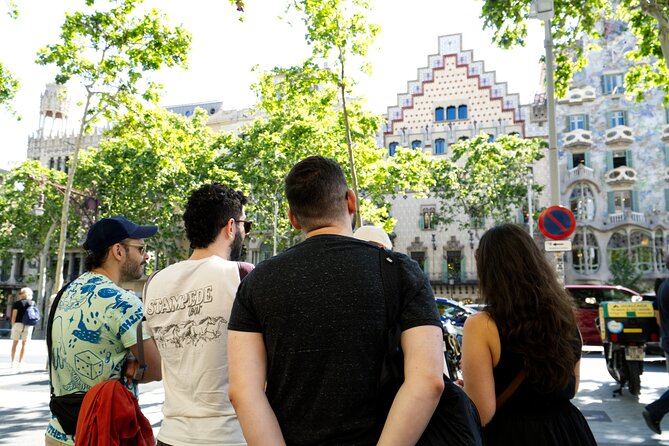
With no more than 10 people, the guide can stop for questions without holding up a crowd. That matters on a city street, where traffic noise and foot traffic can make a large-group explanation hard to follow.
The best part of this format is the chance to ask for help beyond architecture. Anastasiia has helped visitors with public transport choices, places to eat, family-friendly ideas, and booking advice for the Sagrada Família. Francisco is praised for giving broader cultural and historical context rather than reciting dates.
You should still expect a walking tour, not a private lesson. The exact quality depends on the guide assigned that day. Francisco, Anastasiia, Nanna, Alfonso, and Transit are among the guides praised for friendly, clear, and engaging tours. The descriptions point to a relaxed pace with breaks, but comfortable shoes remain wise.
Public transport is not included. The route is primarily on foot, and you may need the metro or a taxi to reach the meeting point or continue afterward. One past experience included useful metro guidance, but do not assume your fare is covered.
Is $23.63 a good value?
At $23.63 per person, the price is attractive for roughly two and a half hours with a local guide, several major façades, and two types of tasting. You are paying far less than the combined cost of a guided interior visit to the Sagrada Família and other paid attractions because no attraction tickets are part of the deal.
The value is strongest if you want orientation on your first day. You can see the main Modernist buildings, learn which ones deserve a return visit, and finish at Plaça de Catalunya with a better sense of how the central districts connect.
The price is less impressive if you expected entry to the basilica. The wording can be easy to skim, especially for first-time visitors comparing many Barcelona tours. Read the details carefully: Sagrada Família is exterior only, La Pedrera and Casa Batlló are also viewed from outside, and admission is not included.
The sweets add interest, but they should not determine your booking decision. You get chocolate and Spanish sweets, including the chance to try local candy or turrón, yet this is not a dedicated food tour with a large tasting menu.
Where the tour ends at Plaça de Catalunya
The walk ends at Plaça de Catalunya, Barcelona’s central meeting point. This is a useful finish because you can continue toward the Gothic Quarter, Las Ramblas, the waterfront, or nearby shops without retracing the route.
Ending here also makes the tour easy to pair with a larger day. Choose the morning if you want to visit another attraction afterward. Choose the afternoon if you prefer to start with a slower morning and use the walk as your introduction to the Eixample.
The tour is best booked around 10 days ahead on average. That is not a hard rule, but a small English-language group can fill more quickly than a large city walk. Confirmation arrives at booking, and free cancellation is available up to 24 hours before the start time. Poor weather or failure to reach the minimum group size can lead to a different date or a full refund.
Who should book this Barcelona walk?
I would choose this tour for a first visit, especially if you want an easy introduction to Gaudí before deciding which interiors deserve your money. It suits couples, families, and curious adults who enjoy architecture but do not want a formal lecture.
It is also a good fit if you want practical city help. The guides have provided tips on restaurants, metro tickets, major reservations, and what to see next. That advice can save time during a short Barcelona stay.
I would skip it if your top goal is entering the Sagrada Família. Buy an official interior ticket and select a tour that clearly includes admission instead. I would also skip it if you want a serious chocolate tour or a long sit-down tasting. The sweets are a welcome extra, not the central event.
Should you book it?
Book this walk if you want good-value architectural orientation, a small group, and a guide who can connect Gaudí with Barcelona’s wider Modernist scene. Francisco and Anastasiia have received especially strong praise for clear explanations, patience, and useful city advice.
Do not book it on the assumption that the Sagrada Família ticket is included. Confirm the meeting point at Av. de Gaudí, 1, bring comfortable shoes, and treat the chocolate as a bonus. With those expectations set correctly, the tour offers a pleasant, informative route from the city’s most famous church to Plaça de Catalunya.
FAQ
Does the tour go inside the Sagrada Família?
No. The Sagrada Família is an exterior stop, and the inside ticket is not included.
Are tickets to La Pedrera or Casa Batlló included?
No. These buildings are visited from the outside, and admission tickets are not included.
How long does the tour last?
The advertised duration is approximately 2 hours and 30 minutes. One experience was described as lasting about three hours.
What is included in the price?
The price includes an expert local guide, chocolate tasting, and Spanish sweets tasting.
What language is the tour offered in?
The tour is offered in English.
How large is the group?
The group has a maximum of 10 travelers.
Where does the tour start and finish?
It starts at Av. de Gaudí, 1, in Barcelona’s Eixample, and ends at Plaça de Catalunya. Metro tickets are not included.
Just added around Barcelona
- Wine Tasting Experience in Barcelona★ 5.0 · 172 reviews
- Bohemian Barcelona Neighborhood Evening Tapas & Wine Tour★ 5.0 · 419 reviews
- Barcelona: Guided Rooftop Wine Tasting – Enjoy 6 Spanish Wines★ 4.5 · 61 reviews
- Barcelona: Wine Tasting and 5 Course Tapas Pairing Dinner★ 4.5 · 129 reviews
- 2 Wineries Small Group Tour with Free Hotel PickUp from Sitges★ 5.0 · 83 reviews
- Barcelona speakeasy tapas pub crawl with hidden bars★ 4.0 · 109 reviews
- Barcelona Gothic Quarter VIP Tapas & Wine Tour★ 5.0 · 276 reviews
- Barcelona Wine and Gourmet Tapas Tour★ 5.0 · 188 reviews
Drinks Tours, compared.

Unlimited Prosecco, Beer and Aperol Spritz Cruise
Read our review →
Evening Cruise with Optional Wine and Snacks
Read our review →
Douro Valley w/ Boat Tour, Wine Tasting & Lunch
Read our review →
Chichen Itza, Cenote & Valladolid Tour with Tequila and Lunch
Read our review →
Complete Douro Valley Wine Tour with Lunch, Wine Tastings and River Cruise
Read our review →
Small-Group Wine Tasting Experience in the Tuscan Countryside
Read our review →
Douro Valley with Winery Lunch, Tastings & Cruise
Read our review →Browse the lists this tour appears in