Review · DRINKS TASTINGS
Belgrade: Street Food and Drinks Tour with 20+Tastings
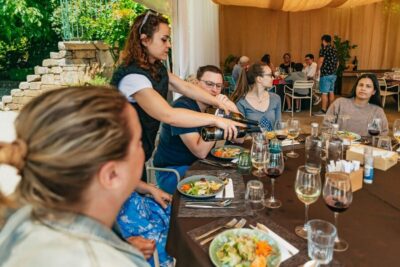
Belgrade’s best introduction may come on a plate. This 3.5-hour food walk moves through bakeries, food stands, markets, and local eateries, with more than 20 tastings ranging from burek and cured meat to village cheese, goulash, sweets, and rakia. Guides including Yair and Davor add the food’s Balkan, Turkish, Austrian, Hungarian, and Bulgarian connections.
I like the small group of up to 10, which makes it easier to ask questions and keep up at each stop. I also like the generous range of samples: this is not just a pastry crawl, but a broad look at Serbian eating habits, regional products, fruit spirits, and dishes that can surprise you, such as goulash with kidneys and plenty of kajmak.
The main consideration is quantity. You should arrive hungry, and anyone with a long list of food dislikes may find the tasting plan challenging, although alternatives have been offered for allergies and certain dislikes. The tour is also conducted in English only.
What makes this Belgrade food tour worth your time
- More than 20 tastings: Try pastries, meats, cheeses, fish, fruit, sweets, honey products, rakia, and more.
- Food with a story: Guides connect Serbian dishes to Austrian, Turkish, Hungarian, Bulgarian, and wider Balkan traditions.
- A small walking group: With no more than 10 participants, the tour feels easier to manage than a large food outing.
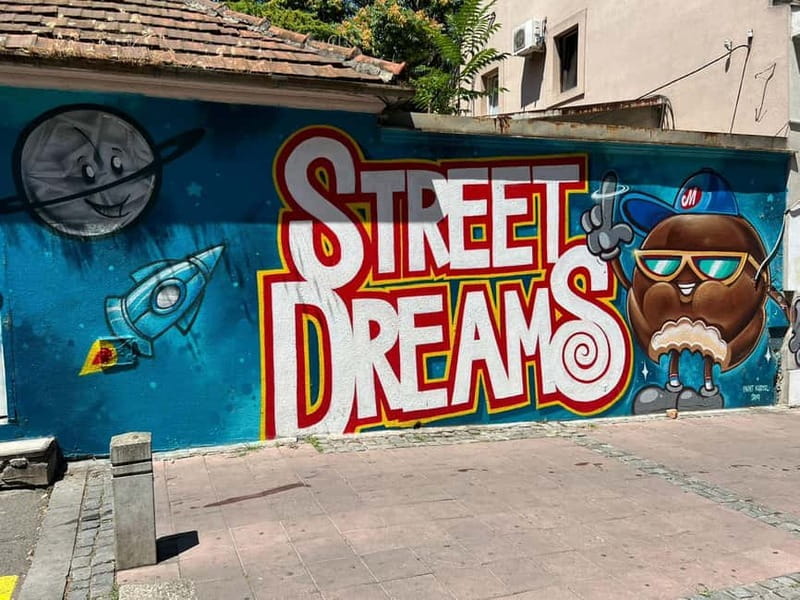
- Offbeat city corners: Follow your guide through markets, bakeries, local food spots, and areas decorated with street art.
- A useful first-day activity: The tour ends near Belgrade’s pedestrian zone and comes with a handpicked restaurant list for later meals.
- Flexible booking: You can cancel up to 24 hours before the tour for a full refund and reserve without paying at once.
Starting at Hotel Moskva in central Belgrade
The meeting point is the entrance of Hotel Moskva, a practical place to begin in the center of town. From there, your guide leads you into Belgrade’s food scene rather than keeping you inside a single restaurant.
That matters because Serbian food is best understood through movement. A bakery shows you the importance of fresh pastry. A market gives you a look at everyday ingredients. A small local stop can explain how people actually eat, rather than presenting a polished restaurant version designed only for visitors.
The group size is limited to 10 people. I see this as a real advantage for a food tour. You can hear the guide’s explanations, ask about unfamiliar ingredients, and get help with choices without waiting behind a large crowd.
The tour lasts three and a half hours, so it takes up a meaningful part of your day. I would book it early in your stay, preferably on your first or second day in Belgrade. You get a broad taste of the city, then receive restaurant suggestions for meals after the tour.
A few more tastings around the world worth a look
- From Split: Krka Waterfalls, Food & Wine Tasting Tour
★ 5.0 · 9,326 reviews - From Split: Krka Waterfalls, Food & Wine Tasting Tour
★ 4.9 · 6,598 reviews - Winner 2025 Undiscovered Lisbon Food & Wine Tour by Eating Europe
★ 5.0 · 6,390 reviews
Burek, pastries, and the Serbian bakery tradition
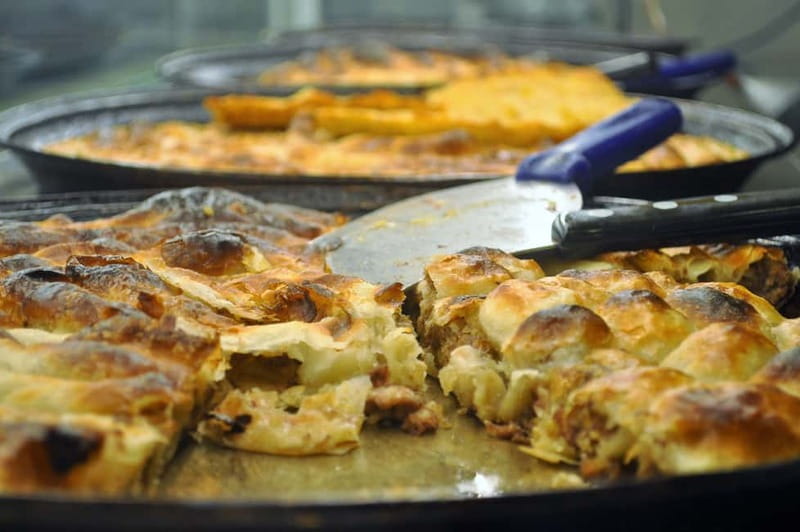
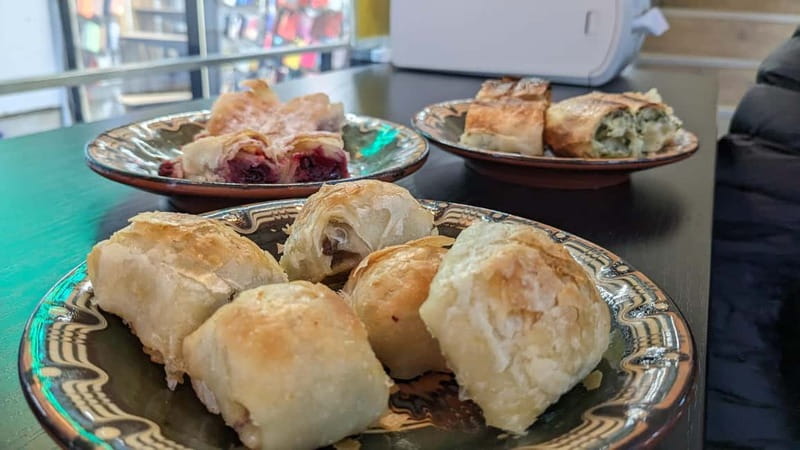
Pastries are likely to form one of the early anchors of the route. Serbian and Balkan baking is built around thin layers, rich fillings, and food that works as breakfast, a snack, or a quick meal.
Burek is the essential example. You may find savory versions filled with meat or cheese, along with less expected variations such as cherry burek. The cherry version has been a particular highlight for some people on the tour, and it gives you a useful reminder that Balkan pastry is not limited to salty fillings.
You may also try yogurt alongside pastry. In this part of Europe, yogurt is a familiar partner for baked foods, and the combination helps explain how a bakery stop can feel like an everyday Serbian meal rather than a staged tasting.
The benefit of trying these foods with a guide is context. You are not just sampling a triangle of pastry and moving on. You learn how it fits into local food habits and how neighboring cuisines have influenced what appears in Belgrade bakeries.
A possible drawback is that pastry can fill you quickly. The tasting list is long, so do not treat the first bakery stop as a full breakfast. Arrive with an appetite and pace yourself.
Cured meats, village cheese, and the serious business of snacks
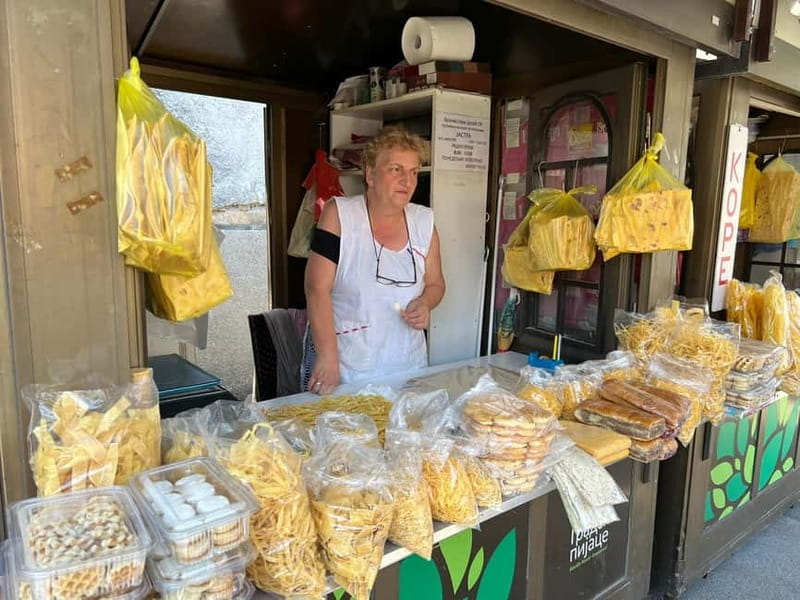
The tour also brings you into Serbia’s preserved-food tradition. Expect samples of cured meats, sausages, village cheeses, pork rind known as čvarci, and kajmak, a creamy dairy product that appears often in Serbian meals.
These foods give the tour more substance than a standard city snack walk. You get a sense of how rural products and home-style flavors remain part of urban eating. A platter of meat and cheese can also help you compare textures and levels of salt, smoke, fat, and spice across several products at once.
Čvarci may be the most challenging item for some people. These crisp pork pieces are not a gentle introduction if you avoid rich or fatty foods, but they are exactly the sort of local specialty worth trying in a small portion. You can decide for yourself instead of judging the dish from its description.
Kajmak is another food to watch for. It adds a creamy, savory note to dishes and helps explain why Serbian food can feel hearty even when the portion in front of you looks modest. The tour has included generous amounts of kajmak, so it may appear more than once in different combinations.
If you have food allergies, tell the guide before tasting. Alternatives have been provided for some allergies and dislikes, but you should not assume every item can be replaced.
Rakia and the role of fruit brandy
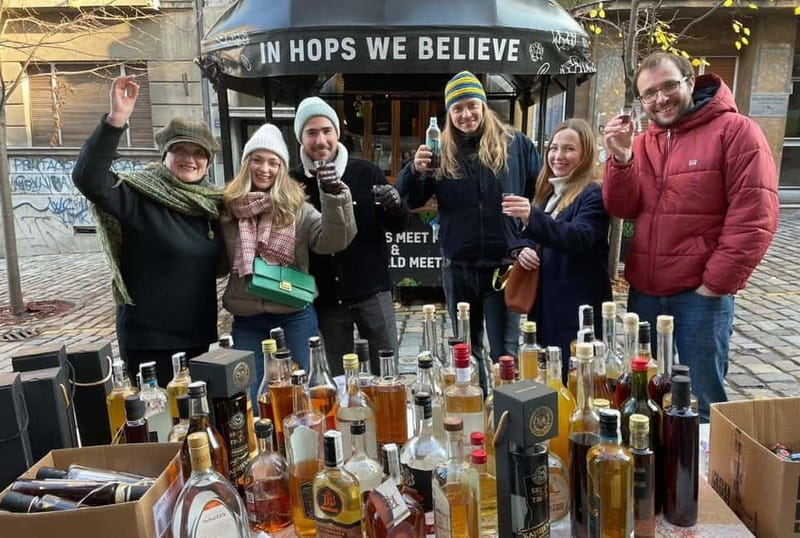
Rakia is one of the tour’s signature drinks. This fruit brandy is closely tied to Serbian hospitality and may be made from fruits such as plum, although the supplied tour details do not promise a specific style or fruit at the tasting.
The point is not simply to drink a shot. Rakia helps you understand how a drink can carry social meaning. It is associated with welcoming people, marking occasions, and offering something homemade or local. Your guide can explain the place of fruit spirits in Serbian life while you taste.
Go slowly. Rakia can be stronger than visitors expect, and it arrives alongside a large amount of food. If you are not used to spirits, one tasting may be enough. Food is included in the price, but responsible drinking still matters.
The tour also includes other drinks and food pairings, though the exact selection can vary. Since more than 20 tastings are advertised, you should expect variety rather than a fixed restaurant-style menu.
Same town, a different glass:
- Budapest: Unlimited Prosecco, Beer and Aperol Spritz Cruise
★ 4.8 · 37,304 reviews - Amsterdam: Evening Cruise with Optional Wine and Snacks
★ 4.4 · 22,178 reviews - Tuscany Day Trip from Florence: Siena, San Gimignano, Pisa and Lunch at a Winery
★ 5.0 · 21,634 reviews - From Porto: Douro Valley w/ Boat Tour, Wine Tasting & Lunch
★ 4.7 · 19,061 reviews
Goulash, fish, truffles, and the less predictable bites
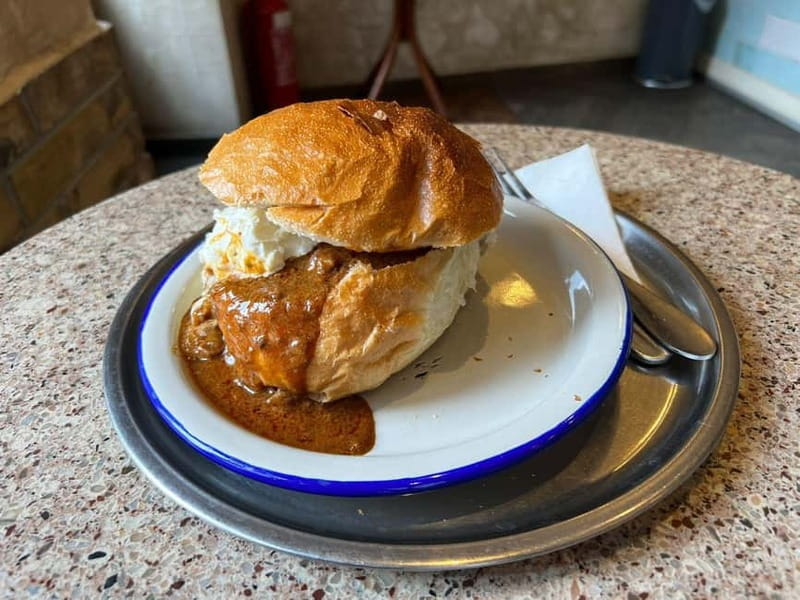
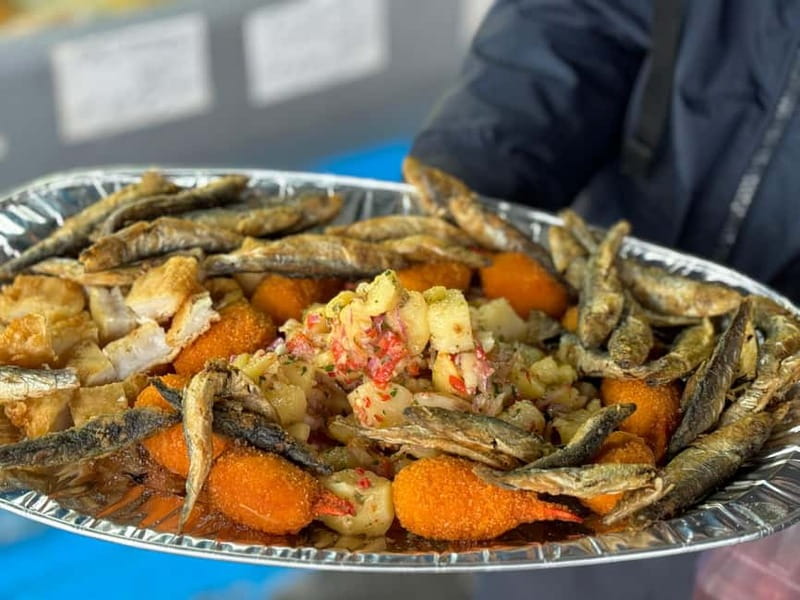
The tasting list moves well beyond the obvious Serbian staples. You may encounter goulash with a twist, including a version prepared with kidneys, as well as fish, truffle spread, honey products, fresh fruit, and sweets.
This range is one of the strongest parts of the experience. A narrow food tour can leave you knowing one dish but little about the wider cuisine. Here, you move between meat, dairy, pastry, preserved foods, seafood, produce, spirits, and dessert.
The goulash is a good example of the region’s mixed influences. The dish has Central European associations, but local cooks adapt it to their own ingredients and habits. The same applies to many foods in Belgrade, where Ottoman, Austro-Hungarian, Balkan, and neighboring culinary traditions overlap.
Truffle spread may feel less traditional than čvarci or burek, but it adds another layer to the tasting. Honey products and fruit bring some sweetness and freshness after the heavier foods. Fish shows that Serbian food is not only about meat and pastry.
You should keep an open mind, but you do not need to force yourself to eat something unsafe or genuinely unpleasant to you. The tour is designed around sampling, so even a small taste gives you enough information to decide what you want to seek out later.
Street art, markets, and Belgrade beyond the main route
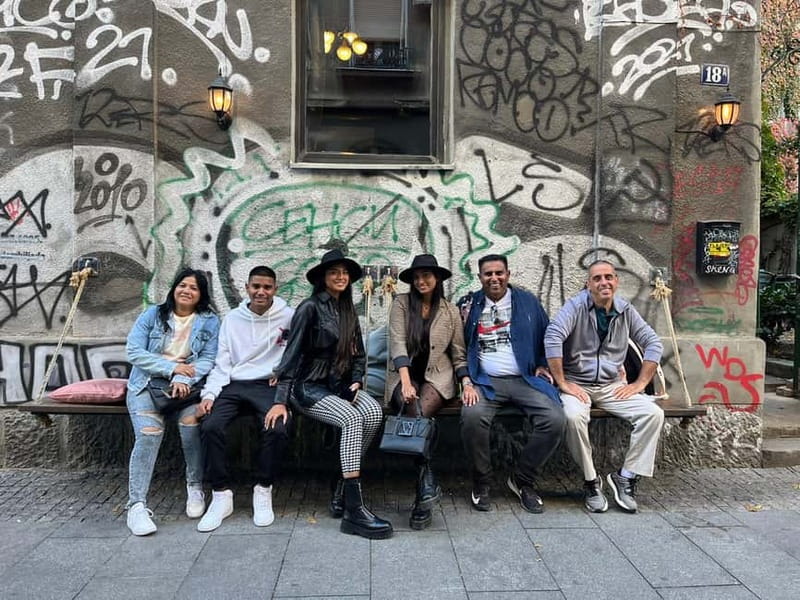
Food is the focus, but the walking route also gives you a look at parts of central Belgrade that you might otherwise pass by. The tour includes local markets, food stands, bakeries, traditional restaurants, shops, and areas decorated with street art.
This is a useful balance. You are not spending three and a half hours seated at one table, and you are not rushing from attraction to attraction without time to eat. The route connects food with ordinary city life.
The tour ends in Belgrade Old Town, close to the pedestrian zone. That location is convenient for continuing your afternoon or evening on foot. You can visit nearby sights, shop, or use the restaurant list provided at the end.
Do keep in mind that this is a walking food tour, not a sightseeing tour with major monuments as the main goal. The city views and street art are supporting parts of the route. Book it for food, local context, and orientation rather than for a formal tour of Belgrade’s landmarks.
Guides Yair and Davor bring different strengths
The guide can shape this experience, and the named guides associated with the tour bring different touches. Yair is described as warm, accommodating, and good at explaining the food while adding personal anecdotes. Davor brings a strong interest in history and connects dishes with the countries and regions that shaped the Balkans.
That difference is useful. Yair’s approach appears especially suited to people who want a relaxed, social introduction with help around allergies or dislikes. Davor’s historical approach may appeal to you if you want to understand why Serbian food has so many outside influences.
You may not be able to choose your guide when booking, so expect the style to vary. The common thread is an English-speaking guide, a small group, and explanations about the food and city.
The guides also help turn unfamiliar names into manageable choices. If you have never tried čvarci, kajmak, rakia, or a Serbian-style sausage, a short explanation makes the tasting less intimidating.
Is $69 good value for three and a half hours?
At $69 per person, this is not the cheapest way to grab lunch in Belgrade. It is also not comparable to buying one pastry and a drink at a bakery. The price includes the guide, food, and drinks, with more than 20 tastings spread across a three-and-a-half-hour route.
I think the value is strongest if you would otherwise pay for several meals while trying to find good local places on your own. You get food, orientation, cultural context, and a list of restaurants for later. The small group also adds value because you are not being moved through a large crowd.
The price is less attractive if you eat very little, avoid most meat and dairy, or prefer to choose every meal yourself. The tour includes a wide mix of products, but Serbian food often relies on pastry, pork, cheese, and rich sauces. Ask about alternatives if you have dietary restrictions.
The 4.9 rating from 208 reviews suggests a very consistent experience, and the strongest praise centers on the food quantity, guide quality, range of neighborhoods, and personal attention. I would still judge the price by your appetite and interest in local cuisine, not by the number alone.
Who should book this food walk?
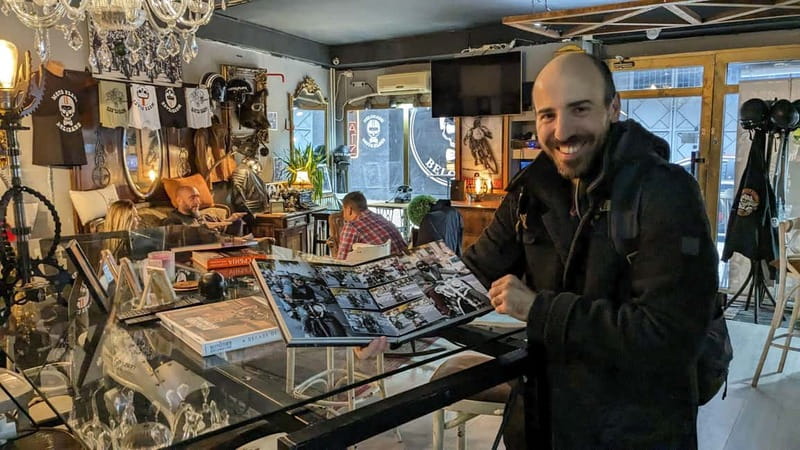
I would recommend it to first-time visitors who want a fast introduction to Belgrade’s food culture. It also suits people who like trying unfamiliar dishes but want a guide to explain what they are eating.
Families and mixed-age groups can work well here. The tour has been enjoyed by parents traveling with adult children, and the small group format can feel more personal than a large bus or formal city tour.
It is a good match for food-focused couples, solo visitors, and anyone who wants restaurant ideas before spending several nights in the city. The final restaurant list is especially useful if you want to continue eating locally after the tour.
You may want to skip it if you dislike walking, want a fixed sit-down meal, or have severe dietary restrictions that make shared tastings difficult. English is the only listed tour language, so you should be comfortable following explanations and asking questions in English.
Booking early in your visit is my strongest tip. That way, you can use the guide’s suggestions for the rest of your stay instead of learning about them on your final evening.
Should you book the Belgrade Street Food and Drinks Tour?
Book it if you want a generous, social introduction to Serbian food rather than a single restaurant meal. The combination of 20-plus tastings, rakia, bakeries, markets, street art, local stories, and a small group gives you a useful first look at Belgrade.
Go hungry, pace yourself, and tell the guide about allergies before the food starts. At $69, the tour makes the most sense for curious eaters who value guidance and variety. If that sounds like you, it is a strong way to get your bearings and find the dishes and restaurants worth returning to.
FAQ
Where does the Belgrade food tour meet?
The meeting point is at the entrance of Hotel Moskva in Belgrade.
How long does the tour last?
The tour lasts 3.5 hours.
How many tastings are included?
The experience includes more than 20 food and drink tastings.
What types of food are served?
Possible tastings include savory pastries, cured meats, čvarci, sausages, village cheeses, truffle spread, goulash, honey products, fresh fruit, fish, and sweets.
Is rakia included?
Yes. Rakia, a Serbian fruit brandy, is included among the food and drink tastings.
What language is the tour conducted in?
The live tour guide speaks English, and English is the listed tour language.
How large is the group?
The tour is limited to 10 participants.
Can I cancel the booking?
You can cancel up to 24 hours in advance for a full refund. You can also reserve now and pay later.
Just added around the world
- Catamaran Sunset Champagne Cruise Cape Town★ 4.5 · 85 reviews
- Luxury Sunset Cruise with Prosecco★ 4.5 · 71 reviews
- Private Tour of Top 5 Stellenbosch Wineries From Cape Town★ 4.0 · 56 reviews
- Private Stellenbosch, Franschhoek Paarl Wine Tour from Cape Town★ 5.0 · 89 reviews
- Full-Day Stellenbosch, Franschhoek and Paarl Wine Tasting Tour from Cape Town★ 4.0 · 98 reviews
- From CapeTown: Stellenbosch Half Day Wine Tour★ 4.5 · 287 reviews
- Private Full Day Stellenbosch Wine Tour with Pick Up and Drop Off★ 5.0 · 425 reviews
- Full Day Small Group Wine Tour Cape Town and Stellenbosch★ 5.0 · 79 reviews
Drinks Tours, compared.

Unlimited Prosecco, Beer and Aperol Spritz Cruise
Read our review →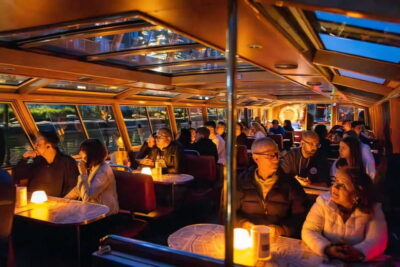
Evening Cruise with Optional Wine and Snacks
Read our review →
Douro Valley w/ Boat Tour, Wine Tasting & Lunch
Read our review →
Chichen Itza, Cenote & Valladolid Tour with Tequila and Lunch
Read our review →
Complete Douro Valley Wine Tour with Lunch, Wine Tastings and River Cruise
Read our review →
Small-Group Wine Tasting Experience in the Tuscan Countryside
Read our review →