
Review · PARIS
Paris: French Wine and Cheese Guided Tasting
Paris: French Wine and Cheese Guided Tasting
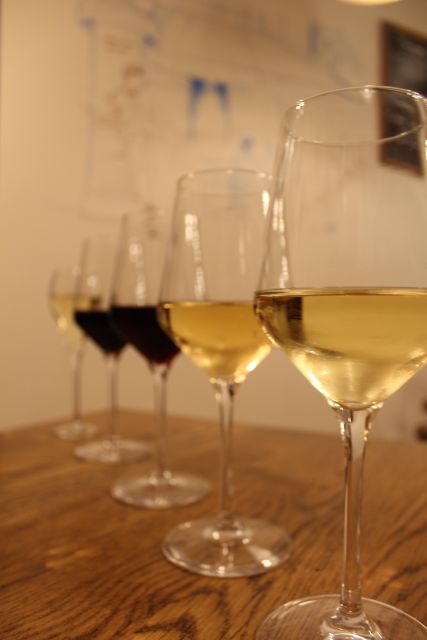
France’s wine culture can feel like a code, but Simon breaks it into useful, everyday ideas. At L’Oeno’Vice, you taste two whites, two reds, and a Champagne, then match each glass with a different French cheese. The tasting is not just a parade of samples. You learn why a wine tastes the way it does and how food can change it.
I like the small maximum group of eight, which leaves room for questions and conversation. I also like the perfume exercise: you compare wine aromas with familiar scents, a clever way to train your nose without needing fancy wine vocabulary. The main consideration is that five alcoholic samples in two hours is a serious amount for some people, and the experience is not suitable for children under 18 or pregnant women.
Key points to know before booking
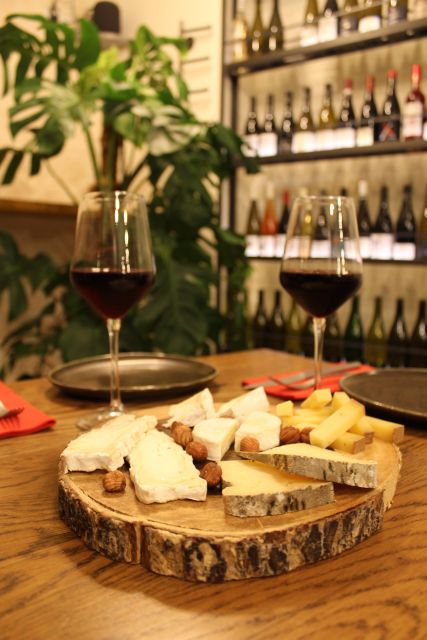
- Simon leads the tasting: The owner of L’Oeno’Vice guides you through wine regions, grapes, climate, history, and food pairing.
- Five wines are served: The sequence includes two whites, two reds, and one Champagne, with a cheese matched to each.
- A family Champagne adds a personal touch: You may taste Champagne from Simon’s family.
- Perfume samples sharpen your senses: You use familiar scents to help identify aromas in the wine.
- Small groups make it interactive: The experience is limited to eight people and takes place in English or French.
- The $70 price includes the full tasting: Wine, five cheeses, and the wine-expert guide are included, while anything else is extra.
Starting at L’Oeno’Vice with Simon

You meet Simon at L’Oeno’Vice, a Paris wine bar, and begin with a short introduction to wine. The setting matters here. This is not a large coach-group presentation or a rushed stop at a shop. The bar gives the session a relaxed, social feel, and the small group helps Simon adjust his explanations to the people in front of him.
That flexibility is useful if you know very little about wine. It also works if you have taken tastings before and want to ask more detailed questions. A number of people with little wine experience found the material easy to follow, while even long-time wine tasters picked up new ideas about grape varieties, regional differences, and pairing.
Simon’s style is a large part of the experience. He explains the subject with humor and patience rather than assuming you already know terms such as tannin, acidity, or body. You are encouraged to comment, guess, and ask questions, so this feels more like a conversation than a lecture.
The group size can vary up to eight people. That is small enough for direct attention without making the session feel like a private class. If you enjoy meeting other people over food and drink, the shared table setup adds to the pleasure. If you prefer a quiet, formal tasting, the interactive format may feel more lively than expected.
More Wine and Cheese Tastings in France
- Paris: Wine and Cheese Lunch
★ 4.9 · 596 reviews - French Wine, Champagne And Cheese Tasting Paris SECRET WINE DOOR
★ 5.0 · 464 reviews - Paris Art of Pairing Cheese and Wine Tasting in a Cheese Cellar
★ 5.0 · 386 reviews
Learning how French wine changes from place to place
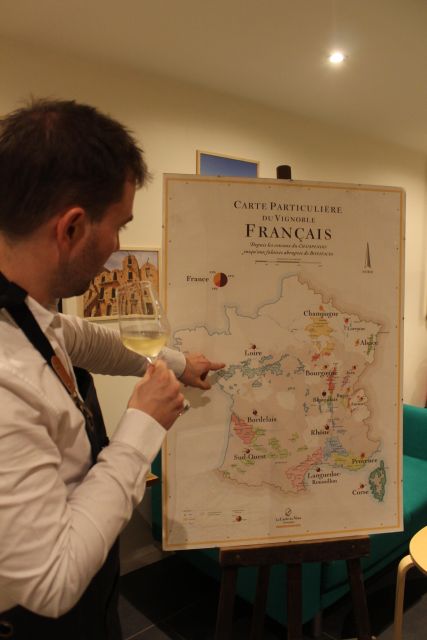
Before the glasses arrive, Simon explains how climate, grape type, and location affect wine. He uses maps and visual material to explain French regions, giving you a basic framework for understanding why a bottle from one part of France may taste very different from one made from a similar grape elsewhere.
This is one of the most useful parts for a visitor in Paris. French wine labels often emphasize the place more than the grape. Once you understand the link between region, growing conditions, and style, a wine list becomes less intimidating. You may not leave able to pronounce every appellation, but you should have a better idea of what to expect from different French bottles.
The history section adds context without turning the event into a formal class. You learn how wine developed as part of French food and daily life, along with the reasons certain regions became associated with particular styles. Simon also connects the subject to wine beyond France, which helps you compare French bottles with wines you may already know from home.
I find this background worthwhile because it gives the tasting a clear purpose. You are not simply deciding which glass you like best. You are learning to connect flavor with place and production. That is the kind of knowledge you can use later in a restaurant, wine shop, or supermarket.
The five-glass tasting sequence
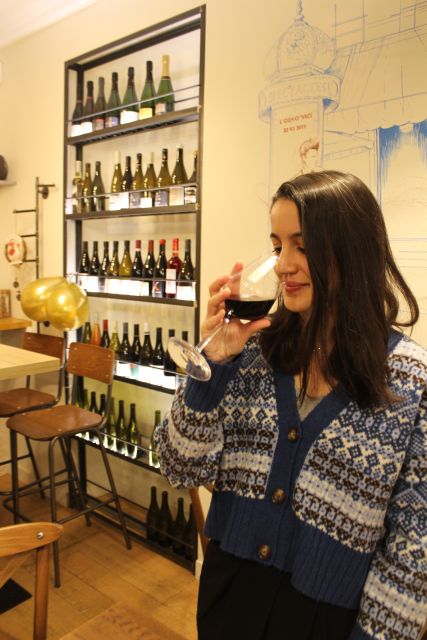
The tasting includes five glasses in total: two white wines, two reds, and Champagne at the end. Each wine comes with a different cheese, so the session teaches you through comparison rather than isolated sips.
The tasting method follows a simple order. First, you look at the wine and consider its color. Next, you smell it. Only then do you taste. This may sound basic, but the sequence slows you down and gives you a practical way to notice details that disappear when you simply drink.
Simon encourages you to describe what you sense, even if you do not know the standard wine terms. That takes pressure off beginners. You do not need to announce a perfect list of aromas. You are learning to notice whether a wine smells fresh, fruity, floral, earthy, or different from the glass before it.
The two whites let you compare lighter characteristics and see how white wine can work with cheese. The two reds provide another contrast, including the role of structure and strength when food is involved. The Champagne comes last, and the special opportunity to taste Simon’s family Champagne gives the final glass a personal connection to his background in wine.
The exact labels and vintages are not specified, so you should not book this expecting a fixed bottle list. That is normal for a tasting, since selections can change. The lasting value is the method and the pairing logic rather than taking home a promised list of particular wines.
Five French cheeses and why the pairings matter
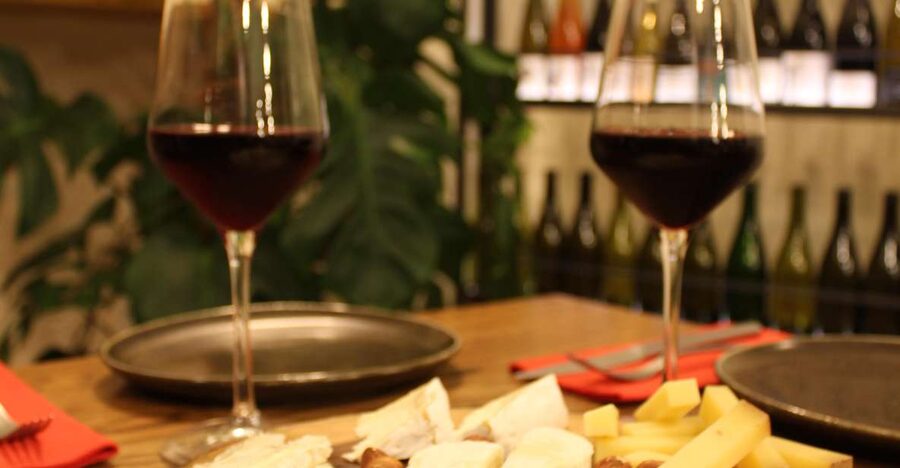
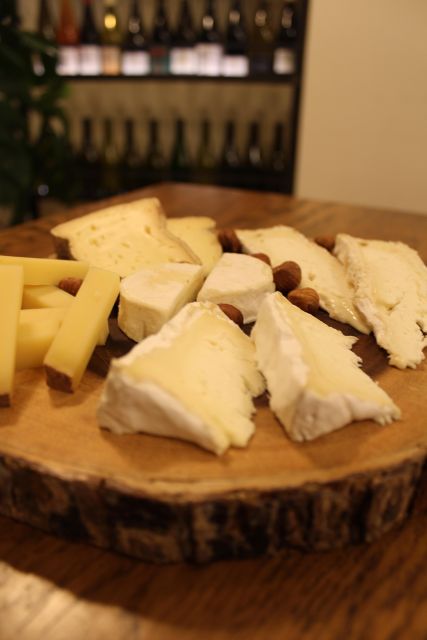
Each of the five wines is matched with a different cheese. You taste the wine, try the cheese, and then taste them together. This lets you notice how salt, creaminess, strength, and texture can alter the wine in your mouth.
That is especially helpful if you are not a regular wine drinker. A wine that seems sharp or plain by itself can become softer with food. A rich cheese can make a wine seem lighter, while a delicate cheese may be overwhelmed by a powerful red. You learn to judge the combination rather than searching for one perfect wine in isolation.
Bread and water have also been provided during the tasting, according to the practical experience of past sessions. Still, the listed inclusion is the wine, cheese, and guide, so do not treat this as a full meal. The portions are intended for proper tasting, and some people found them generous enough to taste carefully, but you should plan another meal if you arrive hungry.
The pairing lesson continues after you leave. Simon explains how to choose wine for meals and how to think about the balance between a dish and a bottle. That makes the activity useful beyond a single Paris afternoon or evening. You can apply the same ideas when ordering at a French restaurant, shopping for a picnic, or choosing a bottle for dinner at home.
More Wine and Cheese Tastings in Paris
- Paris: Wine and Cheese Tasting with a Chef Sommelier
★ 4.7 · 277 reviews - Paris: Wine and Cheese Tasting
★ 4.6 · 91 reviews - Paris: Cheese and Wine Class in a 17th Century Cellar
★ 4.8 · 91 reviews
The perfume exercise for your nose
One of the more unusual features is the use of perfume samples. Simon presents different scents and asks you to compare them with the aromas in the wines. It turns the smell portion into a small quiz and gives you a familiar reference point when wine language feels vague.
This is a smart teaching tool. Most people can recognize a scent more easily than they can name an aroma in a glass. The exercise helps you understand that tasting is not only about the tongue. Smell does much of the work, and practicing with recognizable scents can make wine seem less mysterious.
You are not expected to get every answer right. The point is to pay attention and become more confident describing what you notice. The guessing also adds humor and energy, keeping the two-hour session from becoming too serious.
A relaxed class for beginners and serious wine fans
You do not need prior wine knowledge. Several people who began as reluctant wine drinkers found the experience changed how they viewed wine, largely because the pairing showed them how food affects flavor. That makes this a good choice if one person in your group loves wine and another is only attending to be polite.
It also suits people who have already done tastings elsewhere. Simon covers the basics, but he goes into history, regions, serving ideas, and pairing questions in enough detail to keep more experienced drinkers involved. His approach adapts to the group, so the quality of the session depends less on your starting point than on your willingness to taste and ask questions.
The atmosphere is friendly and informal. Simon is described as funny, patient, and passionate about his subject, which is important in a two-hour educational activity. A dry lecture could make five glasses feel like homework. Here, the quizzes, discussion, and cheese comparisons keep the pace moving.
One possible drawback is that the experience may not satisfy someone looking for a full meal, a cellar visit, or a tour through French vineyards. You remain at the wine bar for the session, and the focus is teaching and tasting. It is best understood as a practical Paris wine class with food, not a countryside vineyard excursion.
Is $70 a fair price?
At $70 per person, the cost is reasonable if you value instruction as well as the drinks. You receive five wine samples, five cheeses, two hours with the owner and guide, and a small-group setting. Comparable value is difficult to judge without knowing the exact bottle sizes, but the education is a real part of what you are paying for.
The price works best for someone who wants to understand French wine rather than simply consume it. Simon explains how to taste, how to pair, and how to choose a bottle later. Those skills can save you from ordering blindly or buying an expensive bottle based only on a familiar name.
The value is less clear if you mainly want a large quantity of wine or a substantial dinner. Food and drinks not listed are extra, and the session is structured around measured tasting portions. You may leave satisfied, but you should not replace a meal with this booking.
The family Champagne is another reason the price feels more personal than a standard tasting flight. You are not promised a tour of the family vineyard, but you do get a link to Simon’s own wine background through that special pour.
Timing, language, and practical details
The activity lasts two hours, and you should check the available starting time when booking. English and French are offered, which makes it accessible to a broad range of visitors. The meeting point is L’Oeno’Vice.
The venue is wheelchair accessible. The small group is limited to eight people, a useful detail if you want to hear the explanations clearly and have a chance to speak. The format is not suitable for anyone under 18 or for pregnant women because wine is central to the activity.
You can cancel up to 24 hours before the experience for a full refund. A reserve-now, pay-later option is also available, which helps if you are still arranging a Paris schedule. These policies are helpful, but the main practical decision is simpler: allow two hours, arrive ready to taste slowly, and do not plan this as your only food of the day.
Who should book this Paris tasting?
I would choose this experience for:
- First-time wine drinkers who want clear explanations without a formal atmosphere
- Couples or friends looking for a social indoor activity
- Food lovers who want to understand French cheese and wine together
- Experienced wine drinkers who enjoy regional history and detailed pairing advice
- Visitors who want a useful activity during wet or cold Paris weather
- Anyone hoping to order French wine with more confidence during the rest of the trip
I would look elsewhere if you want a vineyard day trip, a full meal, or a nonalcoholic food experience. The tasting is also not appropriate for children, pregnant women, or anyone who does not want five alcoholic servings in one sitting.
Should you book the French Wine and Cheese Guided Tasting?
Book it if you want more than a pleasant glass of wine. Simon’s strength is teaching you how to taste, compare, and pair, while the perfume samples and small group make the lessons easy to remember. The family Champagne gives the final part a personal touch, and the bar setting keeps the mood relaxed.
At $70, it is a solid pick for a two-hour Paris activity, especially if you are curious about French wine but do not know where to begin. Just arrive with realistic expectations: this is a tasting and lesson, not dinner or a visit to a vineyard. If that suits your plans, L’Oeno’Vice offers an enjoyable way to leave Paris with better wine instincts and a sharper idea of what to order next.
FAQ
Where does the French wine and cheese tasting take place?
The experience takes place at L’Oeno’Vice in Paris.
How long does the tasting last?
The tasting lasts two hours.
How many wines are included?
Five wines are included: two white wines, two red wines, and one Champagne.
How many cheeses are included?
Five kinds of cheese are included, with one different cheese paired with each wine.
Is Champagne included?
Yes. The tasting finishes with one glass of Champagne, and you have the opportunity to taste Champagne from Simon’s family.
Who leads the experience?
Simon, the owner of the wine bar, leads the tasting and explains the wine, regions, history, tasting method, and pairings.
Is the activity available in English?
Yes. The live guide can lead the experience in English or French.
How large is the group?
The group is limited to eight participants.
Is the venue wheelchair accessible?
Yes, the activity is wheelchair accessible.
Can children join the tasting?
No. The activity is not suitable for children under 18. It is also not suitable for pregnant women.
What is included in the $70 price?
The price includes the wine tasting, five cheeses, and the wine-expert guide. Food and drinks not mentioned are not included.
Can I cancel for a full refund?
Yes. You can cancel up to 24 hours in advance for a full refund.
More Cheese Tastings in Paris
- Cheese & Wine Tasting in Montmartre with Local Cheesemonger
★ 5.0 · 470 reviews - Paris: Walking Food Tour with Cheese, Wine and Delicacies
★ 4.7 · 323 reviews - Paris: Wine Tasting Experience with 6 Wines and Cheese Board
★ 4.9 · 80 reviews - Paris: Tasting of 3 Wine and 3 Cheese
★ 5.0 · 74 reviews
Just added around Paris
- Top Private Cruises in Paris with Champagne + more surprises★ 5.0 · 309 reviews
- Paris: Walking Food Tour with Cheese, Wine and Delicacies★ 4.7 · 323 reviews
- Private tour of Paris by Night with Champagne★ 4.7 · 323 reviews
- Paris: Wine and Cheese Tasting★ 4.6 · 91 reviews
- Paris: Wine Tasting Experience with 6 Wines and Cheese Board★ 4.9 · 80 reviews
- Paris: Seine River Champagne Dinner Cruise with Live Music★ 4.4 · 287 reviews
- Paris : Scenic Cruise on the Seine River with Champagne★ 4.0 · 81 reviews
- Paris: Tasting of 3 Wine and 3 Cheese★ 5.0 · 74 reviews
Wine & Cheese Tastings, compared.
Premium Henri Willig Cheese Tasting Experience
Read our review →
Vila Nova de Gaia: Port Wine Tasting with Cheese Pairing
Read our review →
Zaanse Schans and Cheese Tasting Guided Tour from Amsterdam
Read our review →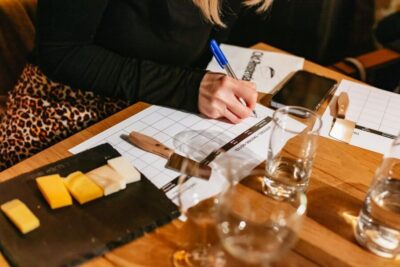
Browse the lists this tour appears in