
Review · ITALY
Orvieto: Pozzo della Cava Entry Ticket
Orvieto’s Pozzo della Cava is more than a hole in the ground. Beneath the medieval Cava district, nine underground caverns reveal how people used the rock below their homes across 28 centuries, from Etruscan times through the Middle Ages and Renaissance. You follow the route at your own pace, using signs in Italian, English, and French.
I like the low $5 price and the freedom of a self-guided visit. I also like that the caves offer a cool break on a hot day and contain real archaeological remains, not just reconstructed displays. The main drawback is scale: the visit is often finished in about 30 minutes, and it may feel modest if you are expecting Orvieto’s larger underground tour.
Key points
- Nine caverns beneath the Cava district: Walk through spaces cut below one of Orvieto’s oldest neighborhoods.
- An Etruscan water system: See the oldest section, including a cistern lined with cocciopesto plaster.
- Twenty-eight centuries in one route: The caves show changes from Etruscan beginnings to medieval and Renaissance use.
- Self-guided and flexible: Read the signs, pause where you wish, and finish in roughly 30 minutes to an hour.
- Useful for families: Multilingual explanations and a special children’s itinerary help younger visitors follow the story.
- A small, good-value stop: At $5 per person, it is easy to add to a walking day in Orvieto, though it is not a full-length guided tour.
What Pozzo della Cava reveals beneath Orvieto
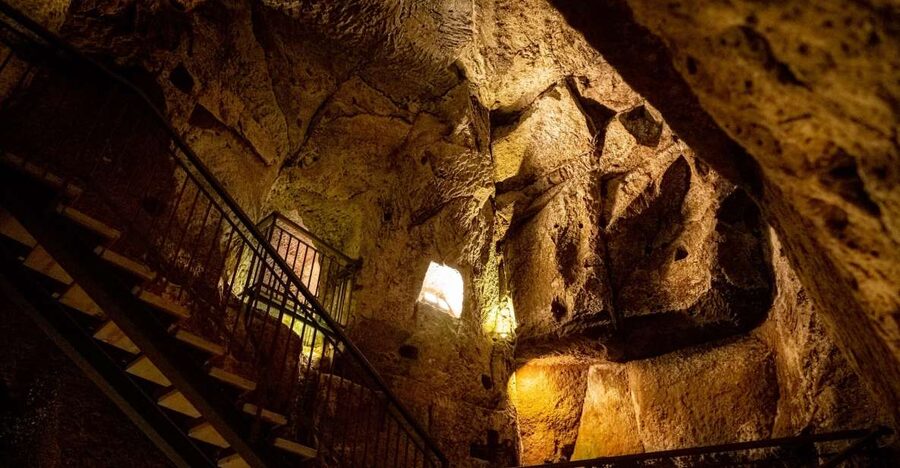
Orvieto is famous for its hilltop setting and grand cathedral, but the rock below the streets tells a quieter story. At Pozzo della Cava, you enter the underground spaces connected with the Cava neighborhood, the oldest district of the city.
The route is not one enormous cavern. It is a linked group of nine excavated spaces, each showing a different piece of life below the streets. Some areas relate to water and early settlement. Others show how medieval homes extended several levels underground. The final rooms reflect later work from the Renaissance.
That sequence gives the visit its value. You are not simply looking at a well. You are watching the city change above and below ground. Water, storage, burial practices, household work, and later excavation all appear in the same compact route.
I find this kind of sight especially useful early in a visit to Orvieto. It gives you a physical sense of the soft volcanic rock and explains why underground spaces became such an important part of daily life. Afterward, the narrow lanes and old buildings above you make more sense.
More Sparkling Wine Tours in Italy:
- Barcelona: Coastline Boat Trip with Snacks and Cava
★ 4.9 · 1,905 reviews - From Barcelona: Penedés Vineyards Tour by 4WD w/Wine & Cava
★ 4.8 · 808 reviews - Barcelona Small Group Sailing with Snacks and Cava
★ 5.0 · 758 reviews
Beginning with the Etruscan water well
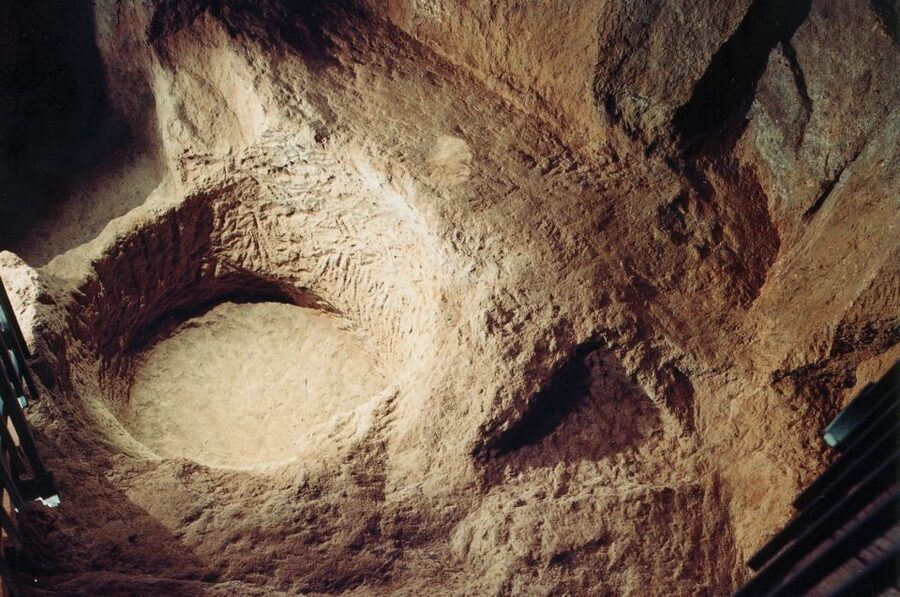
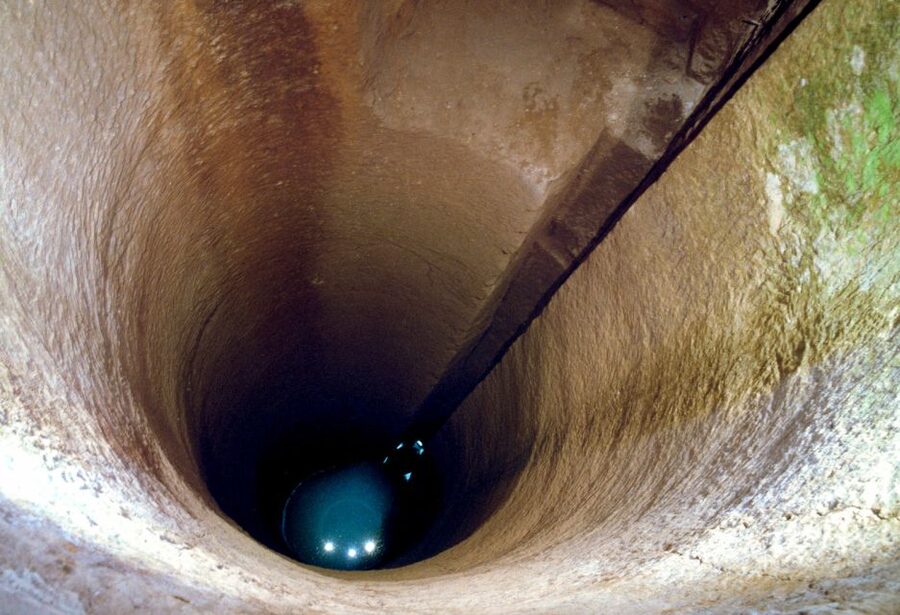
The oldest part of Pozzo della Cava is the natural place to begin. Here, you see the cistern lined with cocciopesto plaster, a waterproof material used in ancient construction. The well is associated with Orvieto’s first spring water supply.
This is where the Etruscan engineering story comes into focus. The appeal is not only the age of the structure. It is the practical problem it solved. A settlement on a high plateau needed dependable water, and the underground system shows how carefully ancient builders adapted the rock beneath the city.
The route also includes ancient Etruscan burial remains and other artifacts. These objects help connect the engineering to the people who lived in the area. You are looking at evidence of a working community, not just an isolated monument.
The interpretation is presented through written panels rather than a live guide. English explanations are available, along with Italian and French. That makes the opening section easy to follow, although you should expect to read at your own pace instead of listening to a detailed spoken presentation.
Walking through three-level medieval house basements
From the earliest section, the path leads into the underground maze linked with Urbs Vetus, the medieval name for Orvieto. The most interesting feature here is the way homes used three-story basements below the streets.
This changes your idea of a medieval house. The underground levels were not simply empty rock. They formed part of the living and working space connected to the buildings above. As you move through the rooms, look for how the excavated areas fit together and how the city’s narrow streets continued downward beneath the houses.
The route is compact, but it rewards a slow pace. I would not rush through the signs, even if you plan to spend only half an hour inside. A quick walk gives you the broad story. A more careful visit helps you see how each period reused or altered the spaces left by earlier inhabitants.
There is no guided commentary or app included. For this site, that is not necessarily a serious problem. The route is well signposted, and the panels provide the basic context in several languages. Still, visitors who prefer a guide explaining every wall and artifact may find the experience a little spare.
Seeing artifacts preserved below the streets
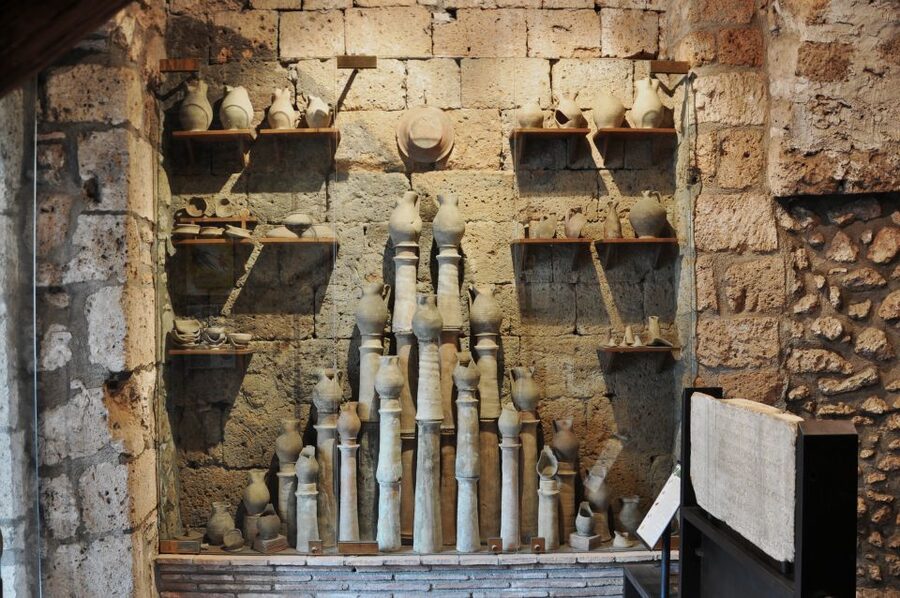
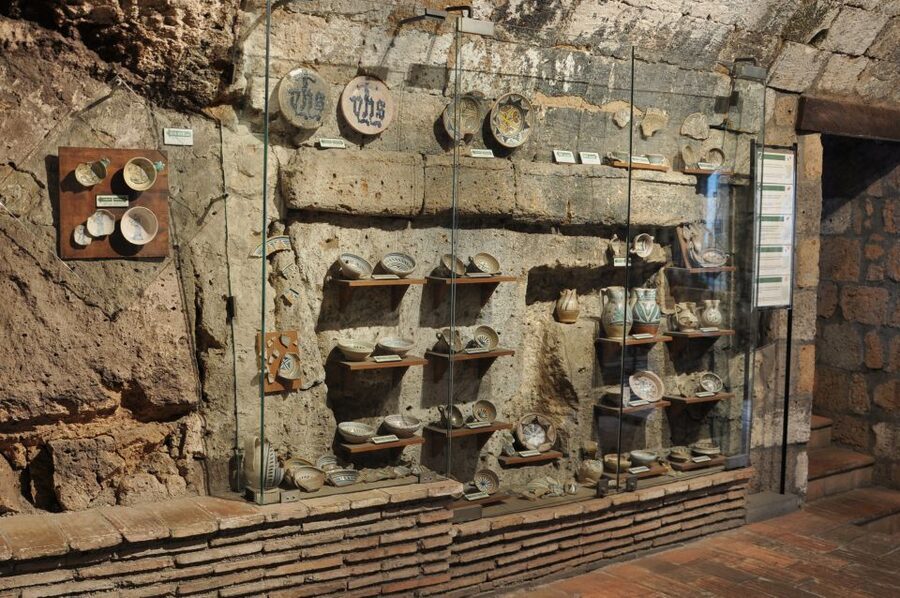
The underground setting protects more than architecture. Along the route, you encounter Etruscan, medieval, and Renaissance artifacts preserved in the cave complex. These remains give the visit texture and make the historical sequence easier to grasp.
The displays are not arranged like a large museum collection. Instead, the objects appear within the spaces where the story happened. That arrangement is one of the site’s strengths. You can connect an artifact with the cave, cistern, or basement around it rather than viewing it in a separate glass case with no sense of place.
The signs also explain ways of life in the different periods. You can follow the city from its Etruscan roots through medieval use and into the Renaissance changes. The material is particularly helpful if you have not studied Orvieto’s earlier history and want more than a quick photo stop.
Because the route is self-guided, you control the amount of attention each display receives. Families can keep moving when children lose interest. History-minded visitors can pause and read. That flexibility is a real advantage in a busy sightseeing day.
A few more tastings around Italy worth a look
- Pompeii Ticket + Tour with Optional Tasting Experience at Pompeii
★ 5.0 · 663 reviews - Pisa: Cathedral Guided Tour and Tower tickets & wine tasting
★ 4.8 · 78 reviews - NYC: Empire State Building Tickets – Observatory & Museum
★ 4.7 · 25,757 reviews - Paris: Moulin Rouge Cabaret Show Ticket with Champagne
★ 4.7 · 16,088 reviews
Finishing with Renaissance excavations
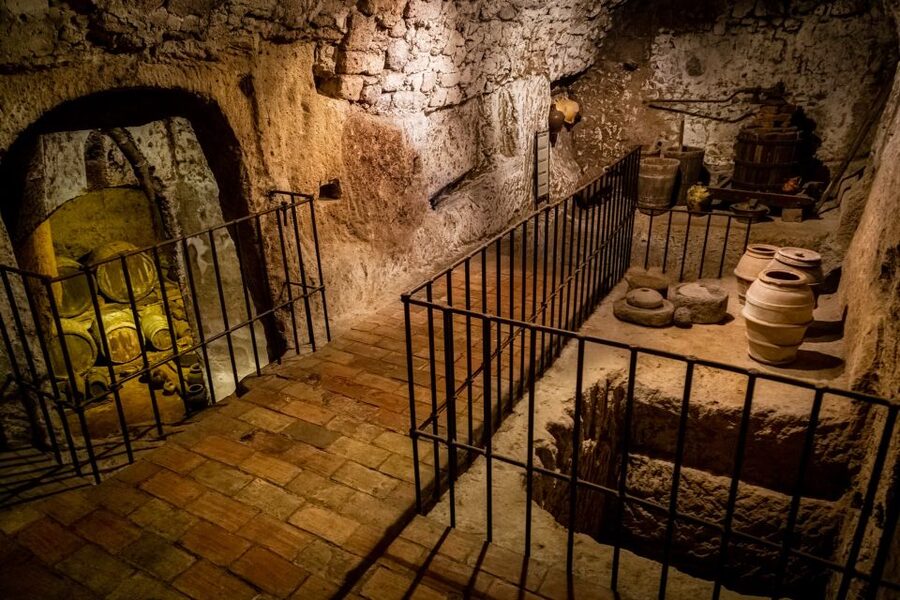
The last section shows the most recent work carried out in the complex. These Renaissance excavations form the final chapter of a process that continued across 28 centuries.
The ending helps prevent a common misunderstanding: underground Orvieto was not created all at once. Different generations cut into, reused, and changed the spaces beneath the city. The final cave preserves traces of those alterations, so you can see the site as a layered record rather than a single ancient ruin.
This is also where the visit feels most like an archaeological walk. The focus shifts from the original water system to the long afterlife of the underground spaces. Etruscan, medieval, and Renaissance activity sits within the same small network.
Do not expect every area to be spectacular in the way Orvieto Cathedral is spectacular. Pozzo della Cava works through close observation. Its interest comes from construction details, surviving remains, and the sense that the caves once served ordinary needs beneath the streets.
How long the visit takes
Plan on about 30 minutes for a brisk visit and up to an hour if you read the panels carefully. Several people have found that half an hour is enough, while others allow longer to study the explanations and artifacts.
The one-day ticket gives you flexibility, but the experience itself is not a full-day activity. Think of it as a focused stop that fits neatly between other sights in Orvieto. You can visit first thing in the morning, use it as a break during a walking day, or step underground during the hottest part of the afternoon.
The cool interior is a practical benefit in summer. A visit in July or August can provide welcome relief from the heat, though you should still treat the caves as a historical site rather than simply an air-conditioned break.
The route is self-paced, with no fixed departure time described. Check availability when booking, since the ticket information lists starting times. The host or greeter can assist in Italian, English, or French, but the main experience remains independent.
Comparing it with Orvieto’s other underground tour
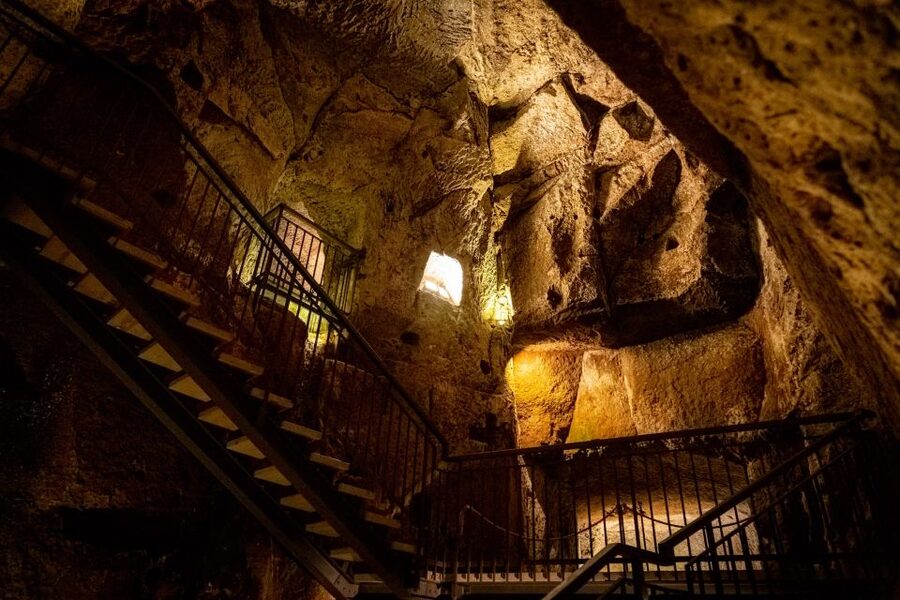
This point matters because Orvieto has more than one underground attraction. Pozzo della Cava is in the Cava district, on the far side of the city from the cathedral area. It is still close enough to reach on foot, but you should check your map so you do not arrive at the wrong entrance.
The other underground tour near the Duomo is a separate experience. Pozzo della Cava is smaller and more intimate, with nine caverns and a strong focus on the history of this particular well and neighborhood.
I would choose Pozzo della Cava if you want a short, inexpensive visit with clear signs and the freedom to explore alone. If you have time for both underground sites, visiting both can be worthwhile because they show different areas beneath Orvieto.
If your schedule is tight and you can see only one underground attraction, compare the listed descriptions before booking. This site is not the broadest underground tour, and its compact size may disappoint someone expecting a large maze or a long guided walk.
Is the $5 ticket good value?
At $5 per person, the cost is easy to justify for most visitors interested in history, archaeology, or unusual city sights. Even a 30-minute visit gives you an Etruscan water structure, medieval basements, preserved artifacts, and Renaissance excavations.
The value is strongest when you judge the ticket as part of a full day in Orvieto. You are not paying for a long performance or a guide. You are paying for access to a genuine underground complex with enough written information to make sense of what you see.
The value is weaker if you want a major attraction that fills several hours. The site is small, and the lack of a guided tour means you must get the most from the panels yourself. At this price, that is a fair trade, but it is worth knowing before you go.
Booking ahead may not be essential at quieter times. One Saturday morning visit around 10:30 had no crowd and no line, and another early visit was also quick to enter. Busy periods can vary, so the skip-the-ticket-line feature may still be useful if it fits your plans.
Who will enjoy this underground stop?
I would recommend Pozzo della Cava to several types of visitors:
- History fans who want to see Etruscan, medieval, and Renaissance remains in one place.
- Families who need a short attraction with a children’s route and readable explanations.
- Independent sightseers who prefer to set their own pace rather than join a group.
- Summer visitors looking for a cool indoor stop during a hot afternoon.
- Repeat visitors to Orvieto who want to explore a different district and look below the familiar streets.
- Budget-minded visitors who want a worthwhile extra sight for $5.
I would be more cautious if you dislike underground spaces, want a live guide, or have very little time in Orvieto. The caves are interesting, but they should not replace the city’s major landmarks if this is your first and only visit.
The self-guided format also suits people who dislike being hurried. You can stop at the panels, look closely at the construction, and move on when ready. For children, the shorter length can be an advantage, though younger visitors may need help connecting the archaeological details into one story.
Practical advice for making the most of it
Read the route in chronological order. Start with the Etruscan cistern and water system, then pay attention to the medieval house levels, and finish with the Renaissance excavations. That order makes the changes beneath Orvieto easier to understand.
Allow extra time if you enjoy written interpretation. The signs are available in English, Italian, and French, and the explanations are detailed enough to give a useful sense of life in each period. If you are moving quickly, focus on the transition between the three main eras.
Wear normal comfortable walking shoes. The supplied information does not give detailed accessibility guidance, so you should ask the site directly if you have specific mobility needs or concerns about underground surfaces.
Take your time with the final cave. It brings together the long sequence of modifications and helps you see why the site matters. The ending is less about one dramatic object and more about recognizing how many generations shaped the same space.
Free cancellation is available up to 24 hours before the visit for a full refund, and the reserve-now-pay-later option lets you hold a place without paying immediately. Those terms are useful if your Orvieto plans depend on weather or a changing itinerary.
Should you book Pozzo della Cava?
Book it if you want an affordable, authentic-feeling archaeological stop that takes about half an hour to an hour. The Etruscan well, the medieval basements, and the multilingual signs give you plenty to see for the price, and the cool underground rooms are welcome in summer.
Skip it if you are looking for a large guided cave tour or need to spend your limited time at Orvieto’s biggest sights. Pozzo della Cava is a small attraction, but it is a thoughtful one. I would add it to a walking day, especially if you enjoy seeing how ordinary city life continued below the grand buildings above.
FAQ
How much does entry to Pozzo della Cava cost?
The entry ticket costs $5 per person.
How long does the visit take?
A quick visit takes about 30 minutes. If you read the information panels carefully and pause at the artifacts, you may spend closer to an hour.
Is Pozzo della Cava a guided tour?
No. The visit is self-guided. Multilingual written explanations are provided, and no guided tour is included.
What languages are available?
Explanations are available in Italian, English, and French. The host or greeter can also assist in Italian, English, or French.
How many underground areas can I visit?
The complex includes nine underground caverns.
Is there a route for children?
Yes. A special itinerary for children is included.
Can I cancel the booking?
Yes. You can cancel up to 24 hours in advance for a full refund. A reserve-now-pay-later option is also available.
Just added around Italy
- Catamaran tour stops bathing and snorkeling toast with prosecco★ 5.0 · 214 reviews
- Cagliari Boat Tour by Maxi Rib – Wine and Snorkeling★ 5.0 · 128 reviews
- Small-Group Food and Wine Tour from Cagliari★ 5.0 · 237 reviews
- Cagliari Boat Tour with Sardatrips; Swim, Snorkeling, Sip & Snack★ 5.0 · 106 reviews
- Cagliari 3 Hours Luxury Motorboat Tour – Wine and Snorkeling★ 5.0 · 118 reviews
- Wine Experience: vineyard, wines and food★ 5.0 · 155 reviews
- Dinner in the vineyard with wine tasting and walk★ 5.0 · 58 reviews
- Wine Tour and Tasting of Lugana Wines in Desenzano★ 5.0 · 58 reviews
Cava & Sparkling Wine Tours, compared.


Barcelona Small Group Sailing with Snacks and Cava
Read our review →
River Thames Evening Cruise with Sparkling wine and Canapés
Read our review →
Barcelona Old Town Tapas Night: Hidden Bars, Cava & Vermut
Read our review →
Penedes Wine & Cava Tasting & 4WD Vineyards Tour from Barcelona
Read our review →
High-End Vineyard Escape: Cava, Tapas & Wine | Private Tour
Read our review →
Cava tour to 3 family wineries with hotel pick-up
Read our review →Browse the lists this tour appears in