
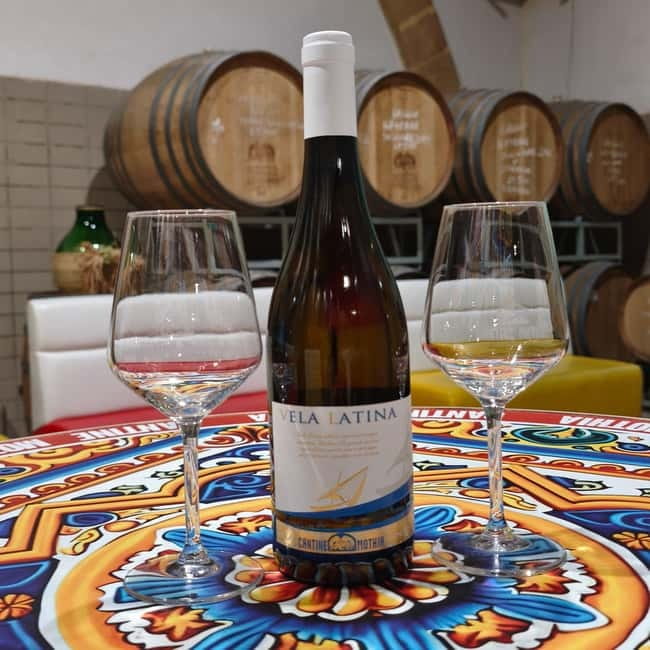
Review · ITALY
Marsala: Historic winery tour with wine tasting
Marsala wine gets far more interesting when you see it in the place where its story is still being told. At Cantine Mothia, you enter a 19th-century baglio, cross a courtyard marked by old wagon tracks, and follow a family owner through the rooms where white, red, sweet, fortified, and Marsala wines are made or aged.
I like the family-led guiding, especially when Marialena is leading in fluent English, and I like the tasting’s local touch: olives, sun-dried tomatoes, pizza rianata, and sesame cookies rather than generic crackers. The main consideration is sound. Work taking place in the background has made it harder to hear on at least one visit, and the advertised one-hour tour can run closer to 90 minutes.
Key points
- A working family winery: The Bonomo family founded Cantine Mothia in 1997 and still leads the visit.
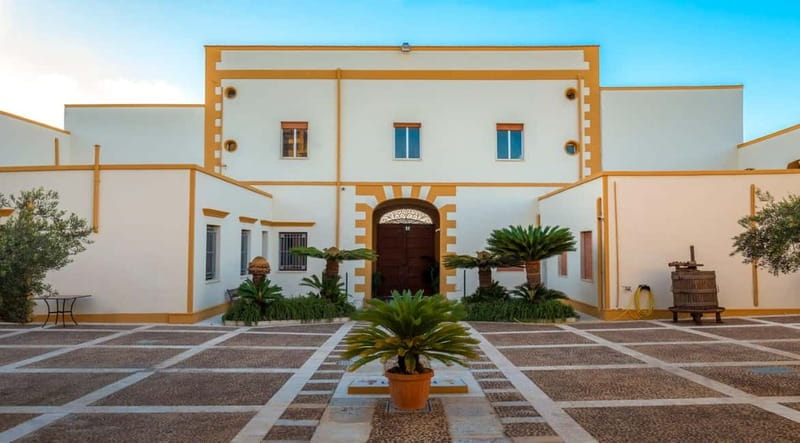
- A restored 19th-century baglio: See the central doorway, inner courtyard, tuff details, and old marble paving marked by carts.
- Marsala beyond the bottle: The barrel cellar gives you useful context about how Marsala developed and how it is aged.
- Four wines included: Taste a white, red, sweet wine, and Marsala, with occasional tastings extending to five wines.
- Sicilian pairings: Local olives, sun-dried tomatoes, pizza rianata, and sesame biscuits accompany the pours.
- Good location for a salt-pan outing: The winery sits between central Marsala and the salt pans, near the road to Mozia.
A family winery between Marsala and the salt pans
Cantine Mothia is well placed for a day in the Marsala area. It sits near the salt pans and the island of Mozia, while remaining within reach of the historic center. That makes it an easy add-on after seeing Marsala’s old town or before heading toward the coastal salt works.
The winery was founded in 1997 by Francesco Bonomo. The Bonomo family bought the old baglio that same year and began restoring it, keeping its traditional Sicilian character while adding modern winemaking equipment.
A baglio is a rural Sicilian complex built around a central courtyard. Here, the courtyard is not just a pretty entrance. It helps explain the building’s original working life, when farmers and wagons moved through the property with loads of grapes.
The winery’s central wooden doorway is topped by a detailed wrought-iron grille. Inside, you can see tuff-stone decoration and old marble paving. The marble still carries marks from the wheels of the carts once used to bring grapes inside.
I like this opening because it gives you a sense of place before anyone starts talking about wine. You are not simply walking into a modern tasting room with a few old barrels placed for decoration. The building itself was part of the agricultural work that shaped this part of Sicily.
More Wine Tasting Tours in Italy
- Florence: Chianti Wineries Tour with Wine Tasting
★ 4.5 · 10,071 reviews - Small-Group Wine Tasting Experience in the Tuscan Countryside
★ 5.0 · 7,392 reviews - Rome: Tuscany & Montepulciano Day Trip with Lunch & Wine Tasting
★ 4.5 · 5,232 reviews
The courtyard sets the tone
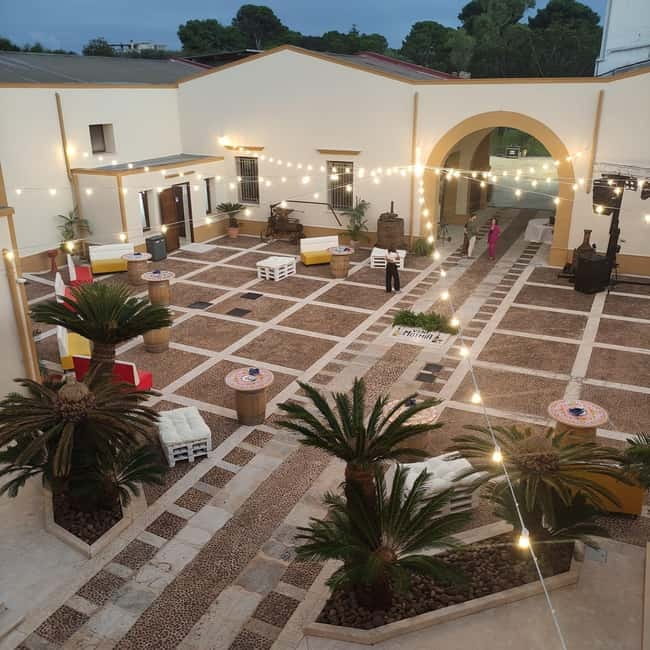
The tour begins in the inner courtyard, where your guide usually explains the Bonomo family, the founding of Cantine Mothia, and the restoration of the property. The pace is relaxed, and the setting gives you time to look up at the architecture instead of rushing straight to the tasting table.
This is also where the tour feels most personal. One of the owners or family members leads the visit, rather than a guide giving a standard speech detached from the business. Marialena has guided English-language visits and is described as switching comfortably between Italian and English.
That matters if you want to ask questions. You can ask about the winery’s beginnings, the building, production methods, or the wines you are about to taste. The guide takes time to answer, and small groups can sometimes receive very direct attention. One couple had the entire tour to themselves, while other visits included Italian and English speakers together.
The language is Italian or English, but some material may remain in its original language. If you need every detail in English, it is sensible to confirm the language arrangement when booking.
Steel tanks and oak show two sides of production
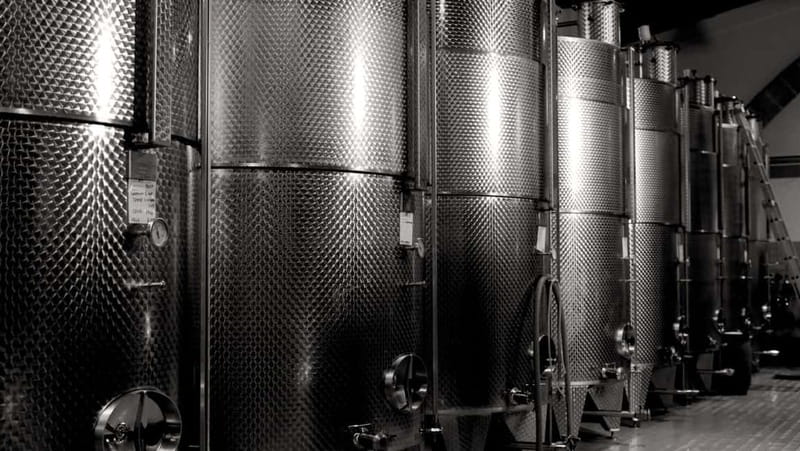
From the courtyard, the tour moves into the winemaking and aging areas. You will see stainless steel tanks and oak barrels, with an explanation of how the winery handles different styles of wine.
This part is useful because it connects the taste in your glass with the equipment in front of you. Stainless steel is associated with controlled, clean handling, while oak contributes a different set of effects during aging. The guide explains the process rather than leaving you to guess why both materials are used.
The winery works with native Sicilian grape varieties, and its production is not sold through large-scale distribution. That gives the tasting a local focus. You are sampling bottles that are tied to this producer and this part of western Sicily, rather than choosing from a range designed for supermarkets around the world.
The tour covers white and red wine production, as well as sweet and fortified wines. One particularly useful detail is the advice about storing and serving Marsala. If you have only thought of Marsala as a cooking wine, this is the point where the category starts to make more sense.
The production rooms are practical rather than theatrical. You will not be walking through a grand museum display. You are seeing the working technical side of a small winery, and that suits the family-business character of the visit.
The old cooperage explains Marsala wine
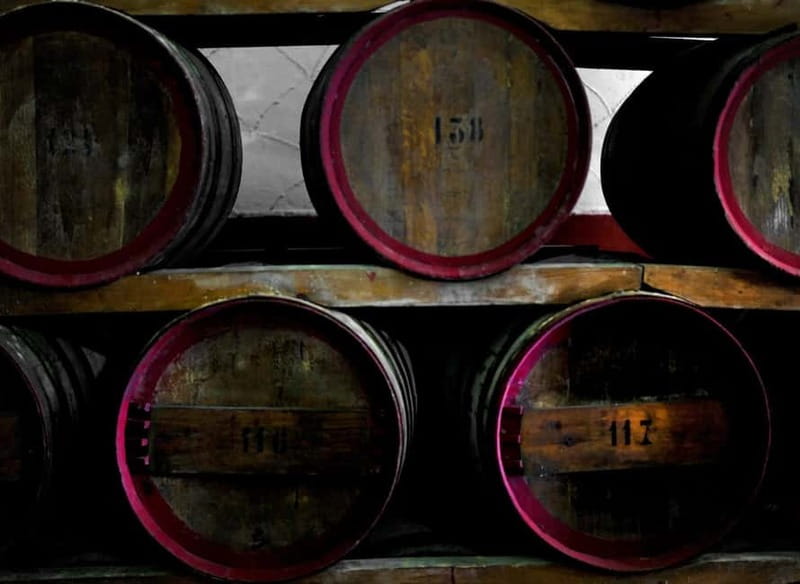
The ancient cooperage is the tour’s best history stop. It contains fine oak barrels and provides the setting for the story of Marsala wine.
Marsala is a fortified wine, and its identity is tied to local production, aging, and the trading history of the port town. At Cantine Mothia, the explanation takes place beside the barrels rather than in an abstract classroom. You can look at the wood while hearing how the wine is made and aged.
This is where the visit becomes more than a short tasting. You learn why Marsala belongs beside other classic European fortified wines, and you can compare the idea of Marsala with the sweet and dry examples poured later.
The winery produces both sweet and dry styles, and one tasting included an award-winning dry Marsala. The exact wines can vary, so you should not assume that every visit will include the same label. Still, you can expect Marsala to be a central part of the presentation.
If you want a full technical seminar on alcohol levels, aging classifications, or regional regulations, this one-hour format may feel brief. For most people, though, the barrel room gives enough background to make the tasting more meaningful without turning the visit into a lecture.
More Winery Tours in Italy
- Tuscany Day Trip from Florence: Siena, San Gimignano, Pisa and Lunch at a Winery
★ 5.0 · 21,634 reviews - From Florence: Siena, San Gimignano, Pisa & Lunch at Winery
★ 4.8 · 4,538 reviews - Tuscany Wine Tour: 2 Wineries & San Gimignano from Florence
★ 5.0 · 1,007 reviews - Chianti Wineries Tour with Tuscan Lunch and San Gimignano
★ 5.0 · 793 reviews
Four wines, with a chance of a fifth
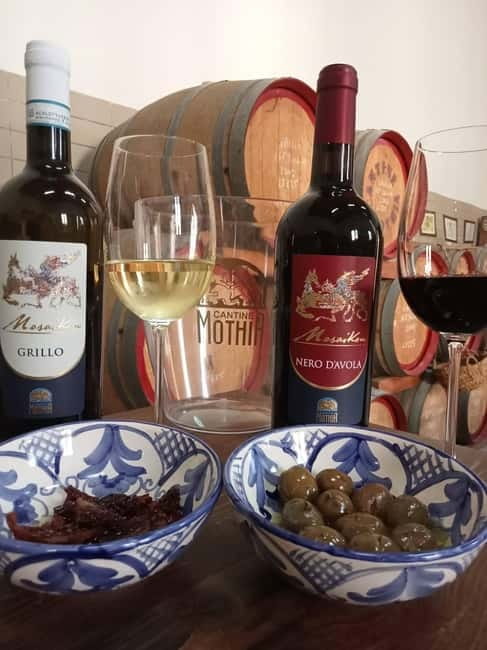
The advertised tasting includes four wines:
- A white wine
- A red wine
- A sweet wine
- A Marsala wine
Some tastings have included five wines, which is a pleasant extra but not something to count on when comparing the price. The wines are served in proper individual glasses, and the tasting room allows you to consider differences in style, sweetness, body, and finish.
The sequence is helpful for anyone who does not know Sicilian wine well. You start with more familiar table-wine categories, then move toward sweet and fortified styles. That progression gives Marsala a point of comparison.
You are not simply handed four glasses and left alone. The guide explains the production and suggests how the accompanying food works with each wine. The discussion can also cover serving and storage, which is especially useful if you plan to buy a bottle.
The tasting is generous enough to make the $29 price feel fair. You are paying for the building, the guided visit, the background about Marsala, the wines, and the food, not just for four small pours. At the same time, this is still a short experience. If you want a long vineyard lunch or a half-day wine route, you will need something else.
Sicilian snacks make the tasting feel local
The food pairing is simple and effective. You can expect small servings of seasoned olives, sun-dried tomatoes, pizza rianata, and sesame cookies.
Pizza rianata is a Sicilian-style savory bread or pizza preparation, and it gives the tasting more regional character than a plate of plain breadsticks. The olives and tomatoes bring salt and acidity, while the sesame cookies suit the sweeter wines.
The pairings are not designed as a full meal. If you arrive hungry, do not treat this as lunch. Think of the food as a set of small bites that helps show how the wines behave with different flavors.
Vegetarian pairings have been provided, and the food has been described as homemade in character. That makes the tasting more useful for anyone interested in everyday Sicilian ingredients, not just wine production.
You can also buy bottles after the tasting. The winery’s limited distribution means the shop is one of the better places to find these particular wines. Several people have taken bottles home, including Marsala Secco and red wine.
How long the visit really takes
The stated duration is one hour, which makes this easy to fit into a busy Marsala day. In practice, allow up to 90 minutes if the guide is answering questions and the tasting is taken at a relaxed pace.
That extra time is not a problem for most people. In fact, it is part of the appeal. The guide does not have to rush through the courtyard, production rooms, cooperage, and tasting room in exactly 60 minutes.
Still, check your schedule if you have a fixed departure for the salt pans, Mozia, or another activity. The distance between the winery and those sights makes the combination practical, but you should leave a little breathing room.
The meeting point is at 22 Giovanni Falcone Magistrate Street. Coming from downtown, follow the signs and continue just after the traffic circle. Convenient parking beside the winery has been noted, which is helpful if you are exploring western Sicily by car.
The property is wheelchair accessible. The tour is offered in Italian and English, with some material presented in its original language.
The main drawback is occasional background noise
The setting is attractive, but this is a working winery, not a silent museum. Background work has made it difficult to hear the guide on one visit.
That issue may depend on the day and the activity taking place at the property. Still, it is worth keeping in mind if you have hearing difficulties or want every word of the explanation. You can position yourself close to the guide and ask for repetition when needed.
Another small point is that the tour’s English quality may depend on the person leading it. Marialena has been praised for fluent English, but the experience is family-run, so guiding styles can vary.
The tasting also offers less choice than a large estate with a broad wine program. You receive the winery’s selected lineup, usually four wines, rather than choosing from a long menu. I see that as a strength if you want a focused introduction, but it may feel limited to serious wine collectors.
Who will get the most from Cantine Mothia
I would choose this tour if you want a short, local, family-run experience that fits neatly into a Marsala sightseeing day. It suits first-time wine tasters, couples, small groups, and anyone curious about why Marsala wine matters.
It is also a good match if you prefer architecture and local history alongside your tasting. The baglio, old paving, wooden doorway, and cooperage give you things to see between the pours.
You will get the most from it if you ask questions. Ask how the wines differ, how to serve Marsala, how to store an opened bottle, and which wines are sold only through the winery. The family guides are well placed to answer those practical points.
I would look elsewhere if you want a full meal, a walk through extensive vineyards, or a long formal wine course. The supplied details focus on the restored baglio, production rooms, barrel cellar, and tasting room, so this is a compact winery visit rather than a full countryside estate day.
Is the $29 price good value?
At $29 per person, the cost is reasonable for the amount included. You receive a guided visit led by a family member, access to a historic building, an explanation of production and Marsala’s story, four wine tastings, and several Sicilian snacks.
The value improves if your schedule is tight. One hour gives you a clear introduction without taking half a day away from Marsala, the salt pans, or Mozia. If the visit extends to 90 minutes, you are still getting extra time with the guide rather than simply waiting around.
The price is less compelling if your only goal is to taste wine. You could spend less on a single glass elsewhere, but that would not include the baglio, cooperage, production rooms, and family story.
Should you book Cantine Mothia?
Book it if you want to understand Marsala wine in the place where it is produced, especially if you value a direct family welcome and local snacks. The combination of a 19th-century baglio, native grapes, steel tanks, oak barrels, and a focused tasting gives you a useful picture of western Sicilian wine.
I would book with enough time to allow for a 90-minute visit, and I would not rely on the fifth wine being included. If you are driving, the location and nearby parking make the stop easy to add to a salt-pan or Mozia outing.
Skip it only if you want a large estate, a full lunch, or a long vineyard walk. For a compact, personal introduction to Marsala and Sicilian wine, Cantine Mothia is a sound choice.
FAQ
How much does the Cantine Mothia tour cost?
The tour costs $29 per person. This includes the winery visit, wine tasting, and Sicilian food pairings.
How long does the winery experience last?
The stated duration is one hour. A visit may take about 90 minutes if the guide spends extra time answering questions and the tasting proceeds at a relaxed pace.
Which wines are included in the tasting?
The standard tasting includes four wines: a white, a red, a sweet wine, and a Marsala wine. Some visits have included a fifth wine, but this is not guaranteed.
What food is served with the wine?
The tasting includes small portions of seasoned olives, sun-dried tomatoes, pizza rianata, and sesame cookies.
Is the tour available in English?
Yes. Tours are available in Italian and English. Some content may be presented in its original language.
Is Cantine Mothia wheelchair accessible?
Yes, the activity is listed as wheelchair accessible. The meeting point is at 22 Giovanni Falcone Magistrate Street, just after the traffic circle when coming from downtown.
More Historical Tours in Italy
- Rome: Forbidden History Walking Tour & Pub Crawl with Drinks
★ 4.9 · 688 reviews - Rome: Guided Bar Crawl with Drinks & Dark History
★ 4.9 · 444 reviews - Lake Garda: Historic Castle Cruise with Wine Tasting
★ 4.5 · 241 reviews - Lazise: Historical Center Wine Tasting Tour
★ 4.9 · 110 reviews
More Wine Tastings in Italy
- SMALL-GROUP Wine Safaris: Tuscan Wine Tasting Tours from Florence
★ 5.0 · 5,088 reviews - San Gimignano, Siena, Monteriggioni, Chianti Day Trip with Lunch & Wine Tasting
★ 4.5 · 4,432 reviews - From Florence: Small Group Wine Tasting Tour to Tuscany
★ 4.9 · 3,902 reviews - Florence: S. Gimignano, Siena, Chianti Wine Tasting & Lunch
★ 4.6 · 3,102 reviews
Just added around Italy
- Catamaran tour stops bathing and snorkeling toast with prosecco★ 5.0 · 214 reviews
- Cagliari Boat Tour by Maxi Rib – Wine and Snorkeling★ 5.0 · 128 reviews
- Small-Group Food and Wine Tour from Cagliari★ 5.0 · 237 reviews
- Cagliari Boat Tour with Sardatrips; Swim, Snorkeling, Sip & Snack★ 5.0 · 106 reviews
- Cagliari 3 Hours Luxury Motorboat Tour – Wine and Snorkeling★ 5.0 · 118 reviews
- Wine Experience: vineyard, wines and food★ 5.0 · 155 reviews
- Dinner in the vineyard with wine tasting and walk★ 5.0 · 58 reviews
- Wine Tour and Tasting of Lugana Wines in Desenzano★ 5.0 · 58 reviews
Winery Tours, compared.
Douro Valley with Winery Lunch, Tastings & Cruise
Read our review →
Montserrat with Black Madonna & Medieval Winery with Tapas/Lunch
Read our review →
Wine Tour: Paarl, Franschhoek & Stellenbosch incl 3 wineries
Read our review →
Douro Valley Tour: 2 Vineyard Visits, River Cruise, Winery Lunch
Read our review →
5-Hour Traverse City Wine Tour: 4 Wineries on Old Mission Peninsula
Read our review →
Tastings at 2 Wineries, Chef’s Lunch & Boat Tour
Read our review →
Douro Valley Tour: Visit 2 Wineries, Lunch & River Cruise
Read our review →Browse the lists this tour appears in