
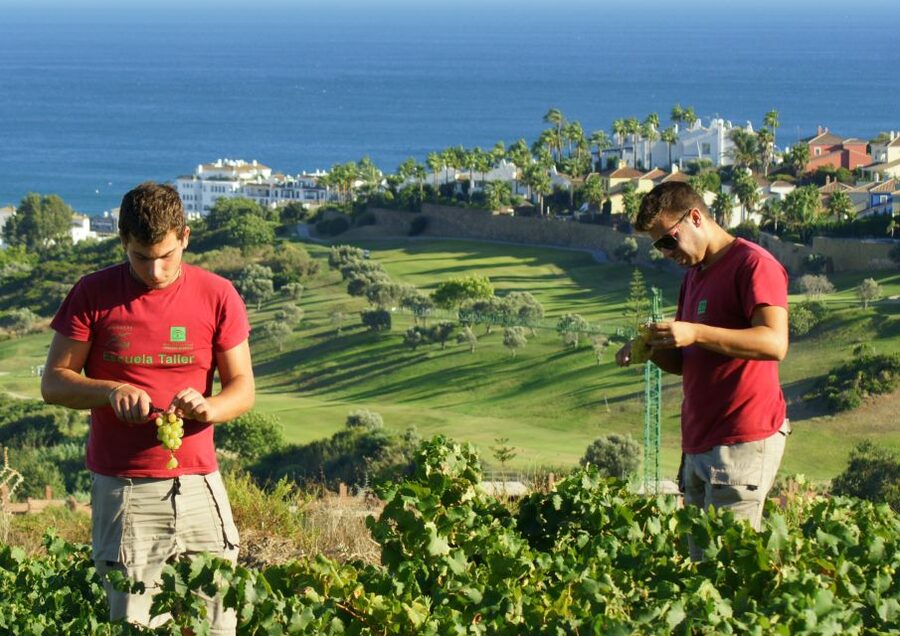
Review · SPAIN
Manilva: Nilva Vineyard, Wine Tasting & Tapas Guided Tour
Manilva’s old Moscatel vineyards sit above the Costa del Sol, facing the Mediterranean and, on a clear day, Africa. This two-hour visit takes you from the small CIVIMA wine museum to Nilva’s artisan winery, then out to an organic vineyard for wine, ham, cheese, and a grand coastal view. Maggie, the guide most often leading the tour, brings plenty of warmth, humor, and hands-on experience.
I like two things right away: the local conservation story gives the tasting a purpose, and the setting at Viña del Peñoncillo is genuinely special. You are not tasting anonymous Spanish wine in a shop. You are sitting beside the vines that produced it, with the sea behind you. The main drawback is practical: you need your own transport, or you must walk from CIVIMA to the vineyard, and the walk can take 15 to 20 minutes.
Key points to know before you go
- Three stops in about two hours: CIVIMA, Nilva’s small winery, and the vineyard tasting.
- Maggie is a major part of the experience: she explains the wine, local traditions, and vineyard work with humor and clear English.
- The tasting includes food: expect three or four Nilva wines with ham, cheese, walnuts, crisps, or similar tapas.
- The vineyard is about 1 kilometer from CIVIMA: drive yourself, arrange a taxi, or allow extra time to walk.
- Your visit supports old vineyards: Nilva’s project aims to keep Manilva’s historic vines in production.
- Weather matters: the vineyard visit can be affected by rain or poor conditions.
Why Manilva’s vineyards matter
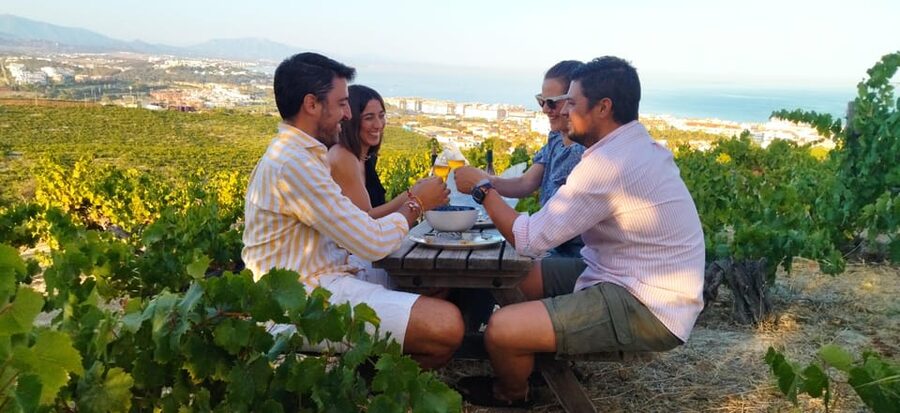
Manilva is easy to overlook. It sits on the Costa del Sol, not far from the coast’s larger resorts, but it still keeps a quieter agricultural identity. Old Moscatel de Alejandría vines grow on slopes facing the Mediterranean, where the views are as much a part of the experience as the wine.
Those vines are under pressure. Urban development has reduced open land, and traditional vineyard work is not always profitable. Nilva’s project, known as Save the Vineyards of Manilva, links small-scale wine production with visits like this one. That means your $35 is not just paying for three pours and a plate of food. It helps make these old vines worth keeping.
I find that context useful. A wine tour can easily become a quick lesson followed by a tasting. Here, you see why the producer is working to protect a local crop and pass the craft to younger winemakers. The project has also received an International Skal award for sustainable tourism, though the real value is easier to see in the fields and the small winery than in any award.
More Vineyard Tours in Spain
- Toledo Tour & Vineyard Walk with Wine Tasting from Madrid
★ 5.0 · 2,546 reviews - From Barcelona: Penedés Vineyards Tour by 4WD w/Wine & Cava
★ 4.8 · 808 reviews - Montserrat,Vineyard, Wine Tasting Small Group Tour & Hotel Pickup
★ 5.0 · 513 reviews
Starting at CIVIMA, Manilva’s wine museum
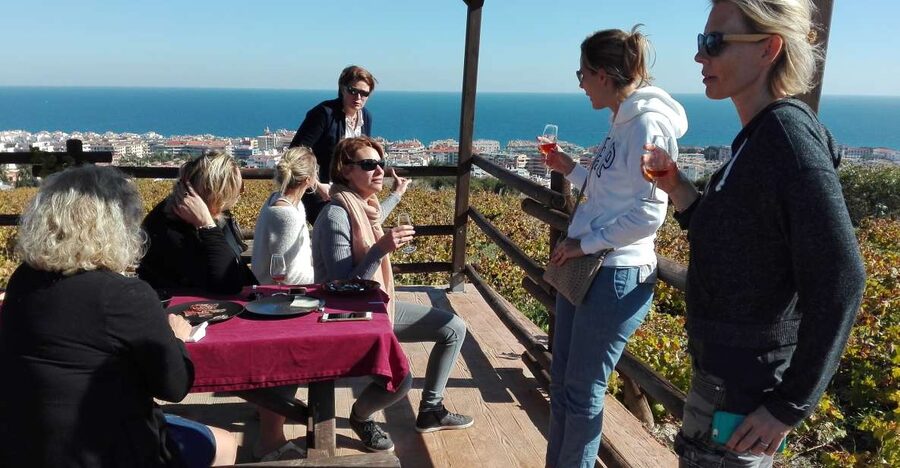
The meeting point is the CIVIMA building, between the fire station and Plaza de la Vendimia. This is not a grand museum. It is a compact interpretation center built around Manilva’s wine traditions, which suits the subject well.
The guided visit lasts about 30 minutes and covers three rooms focused on viticulture, oenology, and the grape harvest. You learn how the vines are grown, how grapes become wine, and how harvesting has shaped local life. The museum gives you the basic vocabulary and local setting before you taste anything.
That order matters. By the time you reach the vineyard, you understand that Moscatel de Alejandría is not just a grape listed on a label. It is part of Manilva’s older farming culture. You also get a clearer sense of what makes a small producer different from a large commercial winery.
Maggie is often the guide here. She explains quickly, with plenty of humor and personal detail from working with the vines herself. If you prefer a slow, formal museum talk, her energetic pace may take some adjustment. Several people found her English clear, but one noted that she spoke fast. Ask her to repeat anything you want to catch.
Inside Nilva’s small artisan winery
After CIVIMA, the tour moves to Nilva’s winery for about 15 minutes. This is a small, hands-on operation rather than a large industrial cellar. The phrase garage wine is used for the style of production, and that tells you what to expect: a modest artisan setup where you can focus on how the wine is made rather than on polished visitor facilities.
You learn about fermentation, production, and bottling. The short stop will not cover every technical detail of winemaking, but it connects the museum displays with a real working business. This is where the tradition meets the present day. You can see how a small producer is trying to make local wine viable without losing its connection to the land.
The visit is especially useful if you enjoy meeting the people behind a product. The owner and his wife have sometimes been part of the experience, and the focus stays firmly on their work, their wines, and the future of Manilva’s vineyards. Nilva is also developing red wine, so returning visitors may find something new as the project grows.
Getting to the vineyard tasting
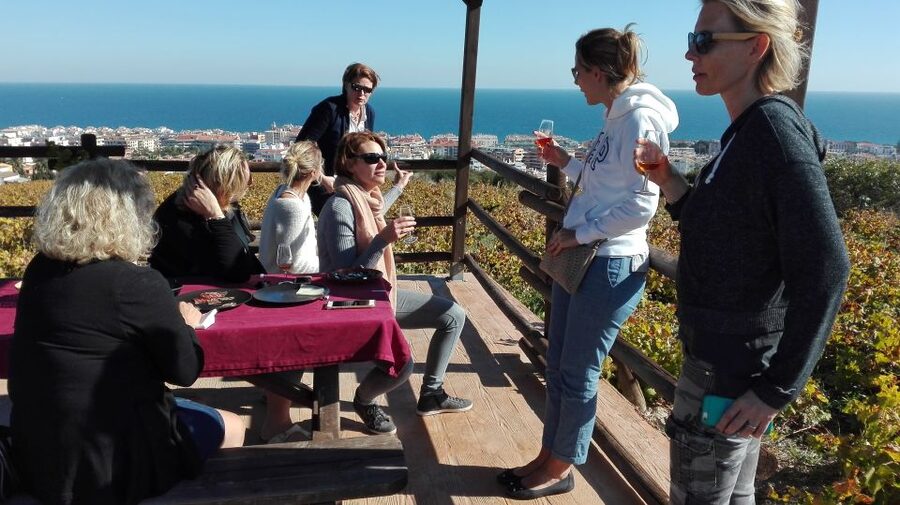
The vineyard is about 1 kilometer from CIVIMA at Diseminado Peñoncillo. The instructions say you need your own vehicle, or you can walk. In practice, allow 15 to 20 minutes on foot rather than assuming it will take only a few minutes. Some people describe the route as closer to 2 kilometers, so the exact time depends on where you start and how directly you walk.
This is the one detail I would sort out before booking. If you are driving, the transition is simple. If you arrive without a car, ask in advance about a taxi or plan the walk. One person reached the starting point by taxi from Duquesa, and another found it easy to walk back toward Sabinillas after the vineyard visit.
The walk can be pleasant, with views and photo opportunities, but it is still a transfer between parts of the tour. It is not hotel pickup, and transport is not included. If you have mobility concerns, CIVIMA itself is listed as wheelchair accessible, but the outdoor route and vineyard should be checked directly before you book.
More Wine Tasting Tours in Spain
- Montserrat & Cogwheel Train, Gourmet Wine Tasting & Tapas/Lunch
★ 5.0 · 6,290 reviews - Madrid Tapas & Wine Tasting Walking Tour – Small Group Local Bars
★ 5.0 · 3,644 reviews - Madrid: Tapas & Wine Tasting Tour with Local Guide
★ 4.8 · 2,171 reviews - Paella Cooking Class, Wine Tasting & Central Market in Valencia
★ 5.0 · 1,150 reviews
Wine and tapas above the Mediterranean
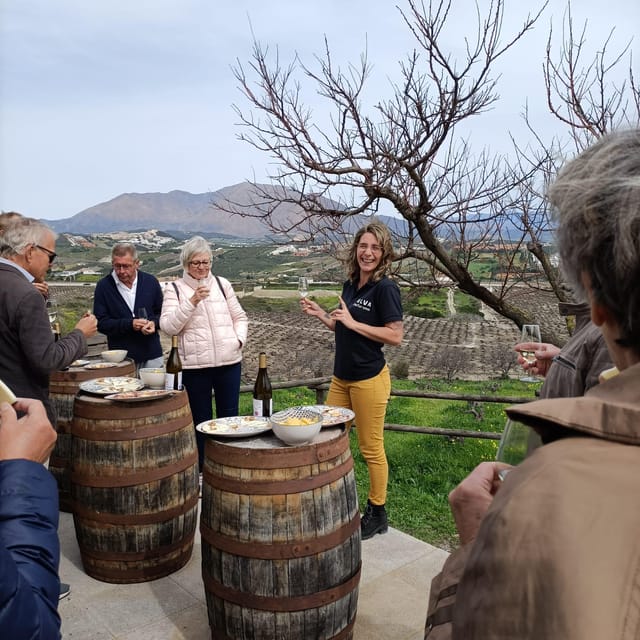
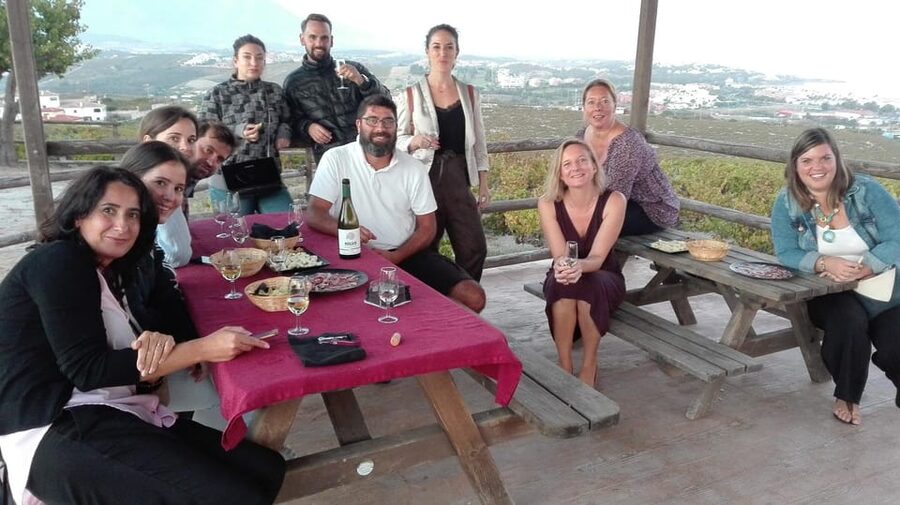
The final stop is the reward. Viña del Peñoncillo is certified for organic agriculture, and the tasting takes place among the vines with views over the Mediterranean. On a clear day, you can look toward Africa. The mountains and coastline make this feel far removed from the busier resort strips below.
The advertised tasting includes three wines, while several people tasted four. That may reflect the day’s selection, so I would expect at least three rather than count on a fixed number. The wines are served with tapas such as ham, cheese, walnuts, and crisps. It is enough food to make the tasting comfortable, but this is not a full lunch or dinner.
Maggie explains how to approach each glass and links the flavors to the production process. You get a chance to compare the wines rather than simply drink a sample and move on. The pace is relaxed, and the setting gives you time to look around, take pictures, and enjoy the view.
One memorable detail is the chance, on some visits, to help with simple vineyard work such as pruning. That should not be treated as a guaranteed part of the tour, but it shows how close the experience can feel to the actual work. You are seeing an active small farm, not a stage set built only for visitors.
What the $35 price gets you
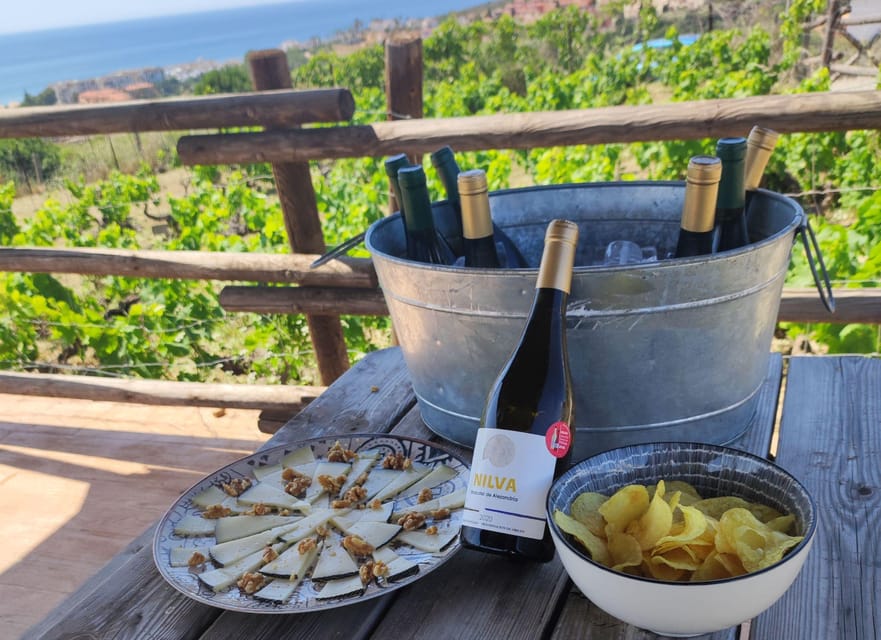
At $35 per person, this is a strong value for a two-hour activity. The fee covers entry to CIVIMA, access to the Nilva winery and vineyard, the guided explanations, the wine tasting, and tapas. You also get a setting that would be hard to reproduce with a standard tasting room.
The value is strongest if you care about place. You are paying for local context, a small producer, and time at the vineyard, not just for the liquid in the glasses. The conservation message adds meaning without replacing the pleasure of the tasting.
There are limits. Transport is extra, and you need to make your own way between CIVIMA and the vineyard. If bad weather cancels the vineyard portion, the experience loses its best setting. A visit in poor conditions may still include the museum and winery, but you should not book this solely for the coastal photographs without checking the forecast.
The tasting is also best for people who enjoy a relaxed, personal visit. If you want a large winery with extensive cellars, a formal meal, or a long list of wines, this is not that. Nilva is small, direct, and closely tied to one local project.
The guide can shape the whole visit
Maggie receives the strongest praise for good reason. She explains Manilva’s wine history, the Moscatel grape, vineyard work, and the conservation effort in a way that keeps the visit lively. Her humor helps the information stick, and her connection to the land gives the tour more authority than a memorized script.
Her style is friendly and energetic. She may speak quickly, especially when explaining a complicated part of the process, so do not hesitate to ask her to slow down. The tour is offered in English, and the experience is designed for an international audience.
You may see her as more than a guide. She is also closely involved with the vineyard project and its future. That makes the visit feel personal, though it also means the tone is supportive of Nilva’s work. You should enjoy the wines on their own terms, but you will clearly hear the case for protecting Manilva’s vineyards.
Weather, timing, and who will enjoy it
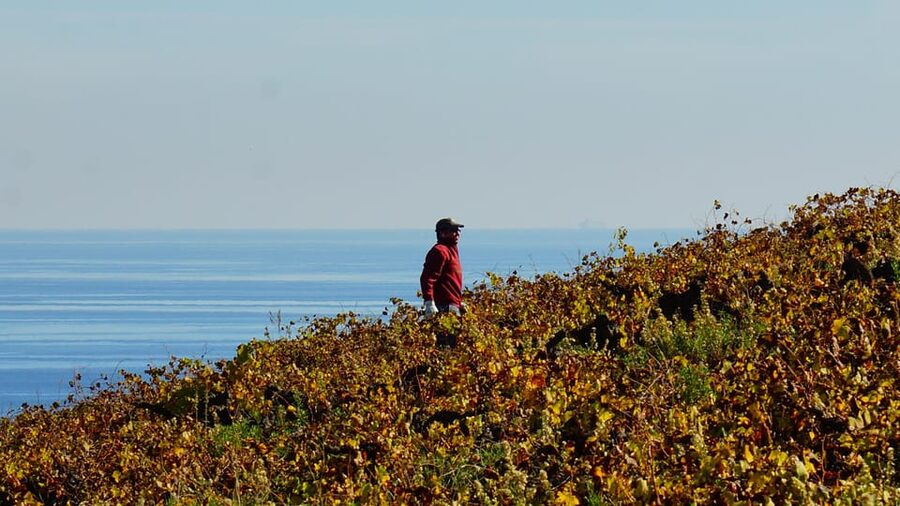
The vineyard portion depends on good weather. Sun and clear air make the views especially rewarding, but the experience can still be worthwhile on a less perfect day if the museum and winery remain open. In bad weather, you may miss the outdoor tasting, so keep your expectations flexible.
The two-hour duration works well in a Costa del Sol itinerary. It is long enough to learn something and enjoy a proper tasting, but short enough to fit around other plans. Starting times vary, so check availability when booking.
I would recommend it most to:
- Wine drinkers who want to understand a small local producer.
- Couples or friends looking for a scenic afternoon or sunset activity.
- Visitors staying around Manilva, Duquesa, or Sabinillas who can arrange transport.
- People interested in food, farming, and sustainable tourism.
- Anyone who likes a personal guide more than a polished commercial attraction.
You do not need to be a wine expert. One person enjoyed the tour even without liking wine, which makes sense because the museum, local story, and view carry much of the experience. You should, however, be comfortable with a short walk or arrange a vehicle.
Should you book the Nilva vineyard tour?
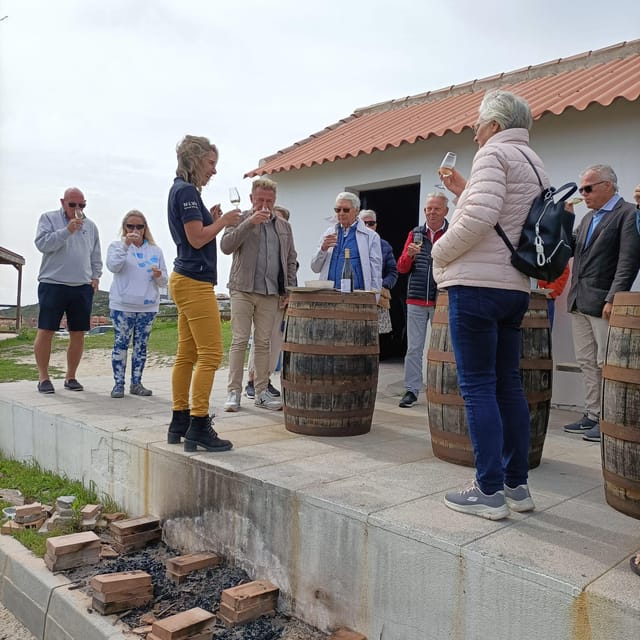
I would book it if you want a small, local experience with a real connection to Manilva. The best parts are specific and memorable: CIVIMA’s introduction to the area, Nilva’s modest working winery, Maggie’s lively explanations, and wine and tapas beside old vines above the sea.
Before paying, confirm how you will get from CIVIMA to the vineyard and check the weather. Those are the only practical issues that can seriously affect the day. If the vineyard is open and the skies are kind, $35 buys an unusually personal Costa del Sol experience, with good food, local wine, and a useful reason to care about the countryside behind the resorts.
FAQ
How long does the Manilva wine tour last?
The experience lasts about two hours, including the visit to CIVIMA, the Nilva winery, and the vineyard tasting.
Where does the tour begin?
The meeting point is the CIVIMA building in Manilva, located between the fire station and Plaza de la Vendimia.
Is transport to the vineyard included?
No. The vineyard is about 1 kilometer from CIVIMA, and you need your own vehicle or must walk there. Allow roughly 15 to 20 minutes for the walk.
How many wines are included?
The experience includes at least three wines. Some tastings include four different wines, depending on the day and selection.
What food is served with the wine?
Tapas are included, such as ham, cheese, walnuts, and crisps. The exact selection can vary.
Can I visit the vineyard in bad weather?
The vineyard visit is subject to good weather conditions. Poor weather may prevent the outdoor portion, so check conditions before you go.
More Wine Tastings in Spain
- Bilbao: Basque Food Tour and Wine Tasting with Guide
★ 4.9 · 772 reviews - Madrid Countryside Wineries Guided Tour with Wine Tasting
★ 5.0 · 740 reviews - Barcelona E-Bike Small Group Tour with Tapas & Wine Tasting
★ 5.0 · 638 reviews - Jerez: Guided Winery Tour with Wine Tasting
★ 4.4 · 636 reviews
Just added around Spain
- Visit a winery of the 19th century and its draft★ 5.0 · 62 reviews
- Ribera del Duero Underground Cellar & Wine Tasting Experience★ 4.5 · 49 reviews
- Visit and Wine Tasting at the Territorio Luthier Winery★ 5.0 · 89 reviews
- Semi-Private Rioja Tour of 3 Premium Wineries from Bilbao★ 5.0 · 128 reviews
- Paella and Burnt Basque Cheesecake Cooking Class (in Bilbao)★ 5.0 · 46 reviews
- La Rioja Boutique Wine Tour & Charming Lunch (From Bilbao)★ 5.0 · 62 reviews
- Basque Best Bites – #1 Food & Wine tour of Bilbao★ 5.0 · 268 reviews
- Rioja Wine Tour: 2 Wineries From Bilbao★ 5.0 · 111 reviews
Vineyard Tours, compared.
Douro Valley Tour: 2 Vineyard Visits, River Cruise, Winery Lunch
Read our review →
Toledo Tour & Vineyard Walk with Wine Tasting from Madrid
Read our review →
Half day Chianti Vineyard Escape from Florence with Wine Tastings
Read our review →
Douro Valley Wine Tour: 3 Vineyard Visits, Wine Tastings, Lunch
Read our review →
#1 Best 3hr Martha’s Vineyard shared Island Tour from Oak Bluffs
Read our review →
Private Self-Guided E-Bike Ride in Tuscany with Vineyard Visit
Read our review →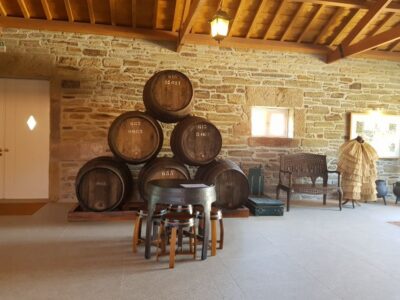
Browse the lists this tour appears in