
Review · MALAGA
Málaga: Spanish Cooking Workshop with Paella and Sangria
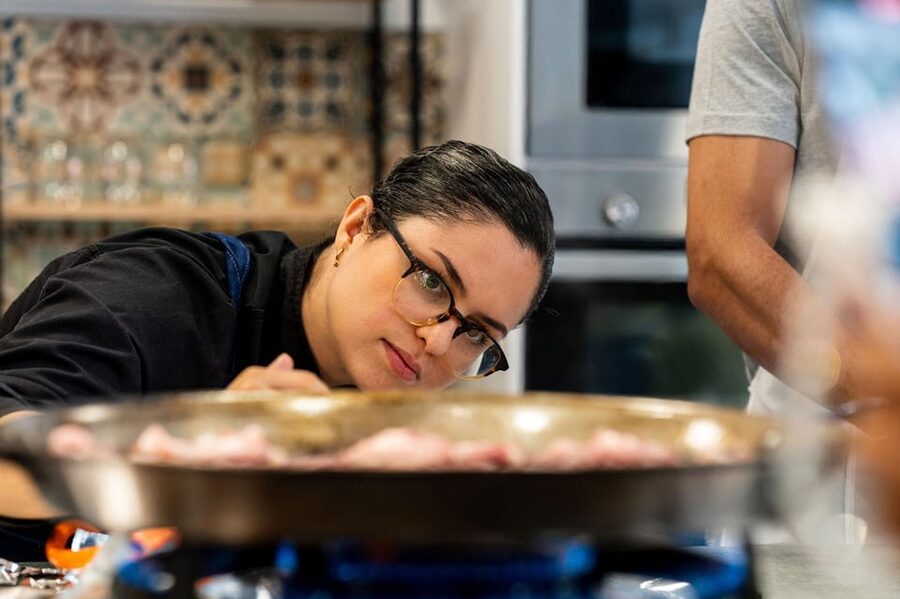
Paella is only part of the meal here. In three hours, you help prepare ajoblanco, remojón malagueño, paella, dessert, and sangria, while chefs Laura and Diego explain the local food traditions behind each dish. I like the strong local focus and the fact that this is a genuinely hands-on class, not a cooking demonstration where you watch someone else do all the work.
I also like the central location, just five minutes from Atarazanas Market, and the comfortable high stools with backs, a useful detail if standing for two hours sounds tiring. The main consideration is that the class needs at least four participants, and the social format may suit you less if you want a private, quiet lesson.
Key points at a glance
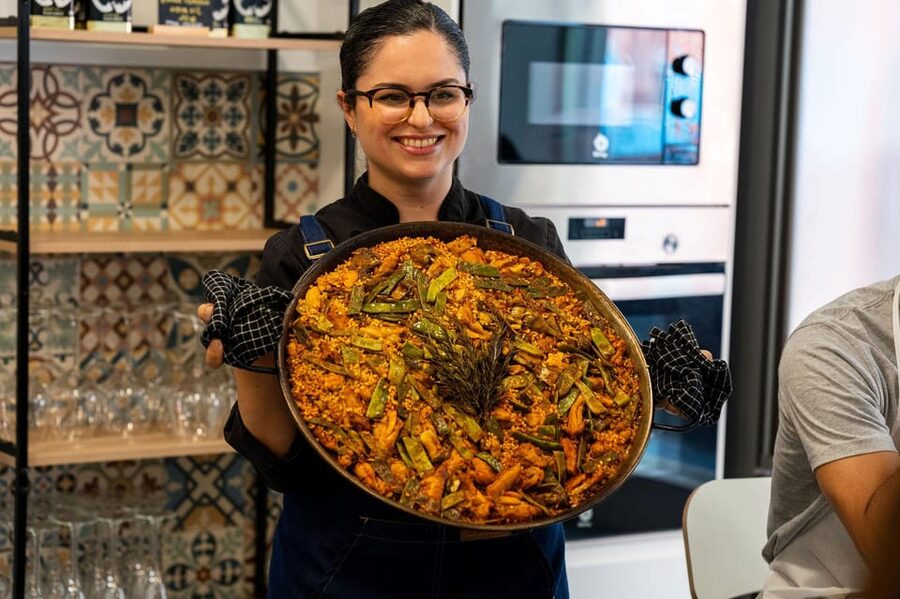
- Four dishes plus dessert: Prepare ajoblanco, paella, remojón malagueño, and a surprise dessert before eating together.
- Two very different teachers: Laura brings Le Cordon Bleu and Michelin-starred restaurant experience, while Diego focuses on Málaga and Andalusian cooking.
- Real participation: You chop, mix, season, and cook rather than simply watch a chef work.
- Excellent central address: The kitchen is in Málaga’s historic center, about five minutes from Atarazanas Market.
- Useful local advice: The chefs share tips about markets, ingredients, restaurants, bars, and places to visit.
- Good value at $78: Three hours of instruction, a full meal, sangria, recipes, and local guidance make this more than a standard cooking lesson.
A Málaga food class built around more than paella
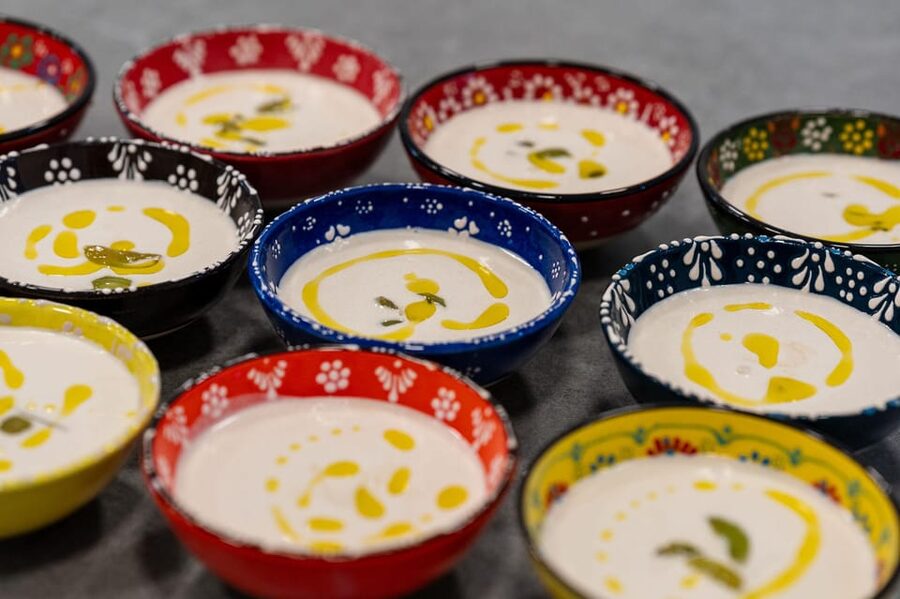
Many cooking classes in Spain use paella as the headline and give you little else. This one takes a broader view of Málaga’s table. You learn the famous rice dish, but you also prepare ajoblanco, a chilled almond and garlic soup, and remojón malagueño, a local salad.
That mix matters. Paella connects you with Valencia and the wider Spanish food world, while ajoblanco and remojón bring the lesson back to Andalusia. You leave with a better sense of how regional cooking changes from one part of Spain to another.
The class takes place in a modern, comfortable kitchen in central Málaga. You can reach it easily on foot from the old center, and Atarazanas Market is only about five minutes away. I would pair this experience with a morning market visit, even though the market trip is not part of the class. Seeing the produce, fish, citrus, almonds, and spices beforehand gives the cooking lesson more meaning.
The class is taught in English. It is designed as a social event, with everyone taking part and eating together at the end. That makes it a good choice for solo visitors who want an easy way to meet people, as well as couples, families, and small groups.
More Cooking Classes in Spain:
- Barcelona Paella Cooking Class with Market Visit, Tapas & Sangria
★ 5.0 · 2,531 reviews - Spanish Cooking Class Paella Tapas and Sangria in Madrid
★ 5.0 · 1,340 reviews - Paella Cooking Class, Wine Tasting & Central Market in Valencia
★ 5.0 · 1,150 reviews
Meeting Laura and Diego
Your teacher may be Laura or Diego, and each brings a different point of view.
Laura studied at Le Cordon Bleu in London and has worked in Michelin-starred restaurants. She was trained by a Valencian chef who specializes in paella, so her approach combines formal technique with the practical details needed to make the dish work in a home kitchen.
Her teaching goes beyond measurements. She explains ingredients, cooking habits, Spanish customs, and the background of the dishes. She also gives advice on markets, shops, restaurants, and places to visit in Málaga. Several class experiences have included one-on-one help, which is valuable if you are unsure about knife work, seasoning, or the timing of the rice.
Diego grew up and trained in Málaga after beginning his culinary path at age nine. His work has taken him from traditional Andalusian kitchens to more exclusive restaurants in the city. He focuses especially on Málaga-style cooking, Andalusian food, and desserts.
His strength is a relaxed, entertaining teaching style. Expect stories, jokes, questions, and plenty of practical advice. He explains how to make paella and sangria while also discussing the history of the dishes and the food culture of Andalusia. If you want a class that feels like a lesson and a friendly dinner party at once, Diego’s style should suit you.
The teaching team can also include Nahuel, who has helped with sangria and class hosting. The exact instructor depends on the session, so book this for the food and format rather than for one guaranteed individual teacher.
What you actually cook in three hours
The three-hour schedule is full, but it is not just a race to produce paella.
Ajoblanco
Ajoblanco is a cold almond soup associated with Andalusia. It is made from simple ingredients, but its flavor depends on balance: almonds, garlic, bread, olive oil, vinegar, and water must come together without one element taking over.
This is an excellent first dish because it shows how Spanish cooking can turn pantry ingredients into something distinctive. It also gives you a taste of Málaga beyond the familiar tapas menu. If you have only tried gazpacho, ajoblanco offers a nuttier and more substantial alternative.
The soup has been one of the most praised dishes in the class. You should not expect a long technical lecture, but you will get useful guidance on texture and seasoning.
A few more tastings around Spain worth a look
- Madrid: Paella and Sangria Workshop in the City Center
★ 4.9 · 1,264 reviews - Barcelona: Cocktail Master Class by Mixologist with Tapas
★ 4.7 · 959 reviews - Paella Workshop with Bottomless Sangria in Central Madrid
★ 5.0 · 763 reviews - Barcelona: Cocktail Making Class with Tapas
★ 4.7 · 310 reviews
Remojón malagueño
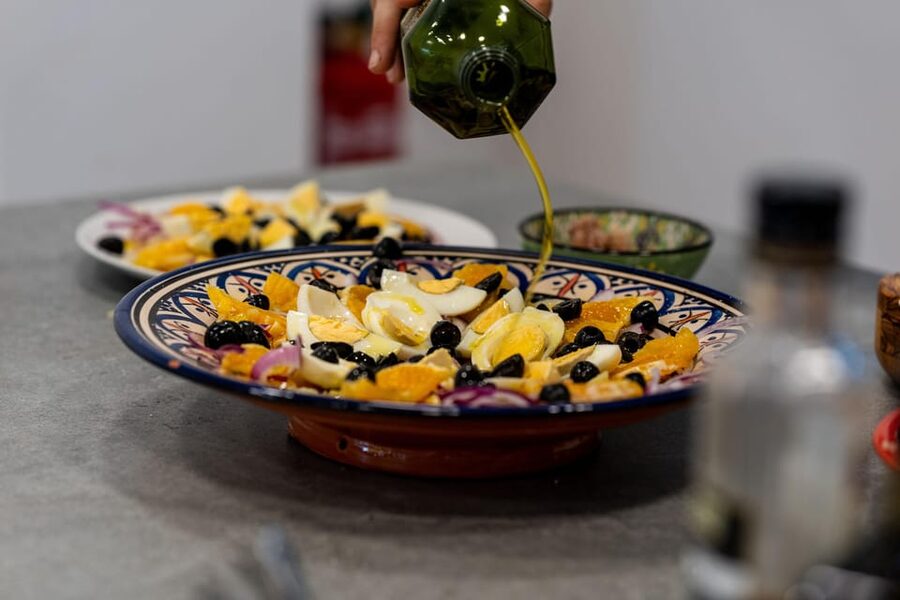
Remojón malagueño is a traditional Málaga salad. The class uses it to show how Andalusian food balances fresh ingredients with bold seasoning.
Preparing a salad might sound less exciting than making paella, but it gives the meal contrast. You are not eating one heavy rice dish on its own. The salad brings freshness and demonstrates how a few local ingredients can become a proper part of a regional meal.
The important point is that you do not just eat these dishes after the chef prepares them. You help make them, season them, and understand how they fit together.
Paella
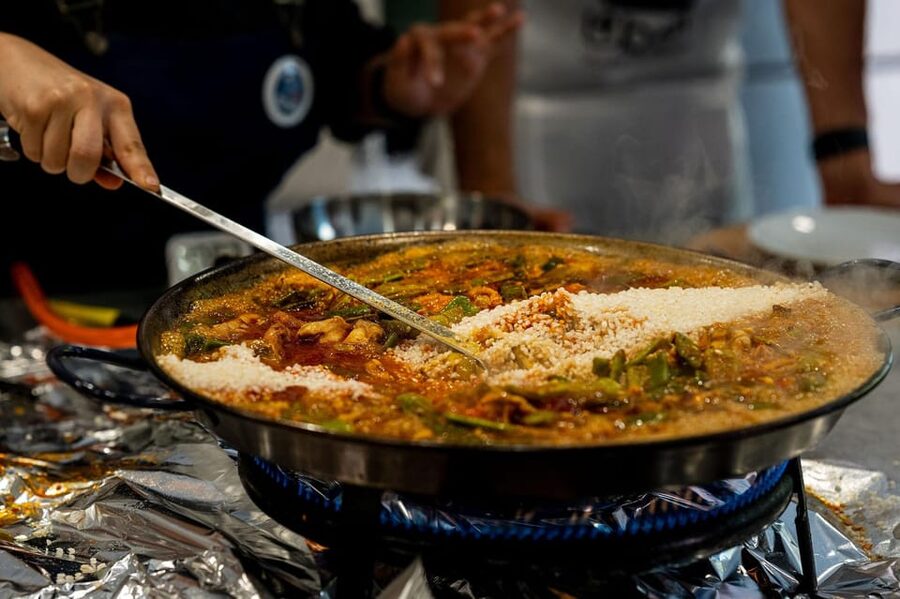
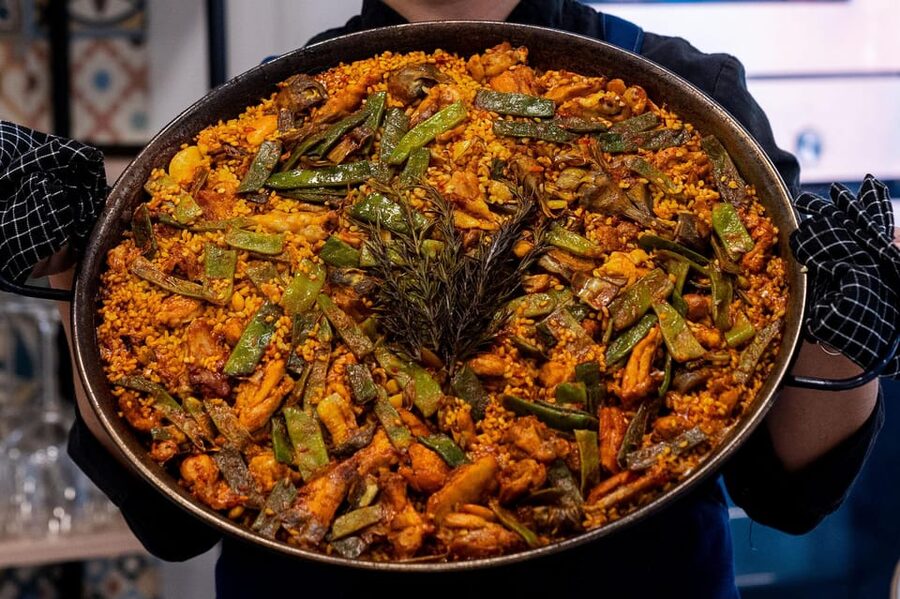
Paella receives the main attention, and rightly so. The lesson covers the method, the ingredients, and the small decisions that affect the finished rice.
You learn how to build flavor, when to add the rice, and how to manage the cooking process. The teachers also explain the origins of paella and the difference between following a recipe and understanding the technique. That distinction is useful because paella often fails at home when the cook treats it like an ordinary rice dish.
The class will not turn you into a Valencian chef in one afternoon. It can, however, help you avoid common mistakes and give you enough confidence to try again at home. Participants have especially valued advice on getting the rice right, and that is the skill I would pay closest attention to.
Because this is a participatory class, you may not each produce a completely separate paella. The structure is about shared preparation and shared eating. If you want private control over every pan, ask about the exact class format before booking.
Sangria and dessert
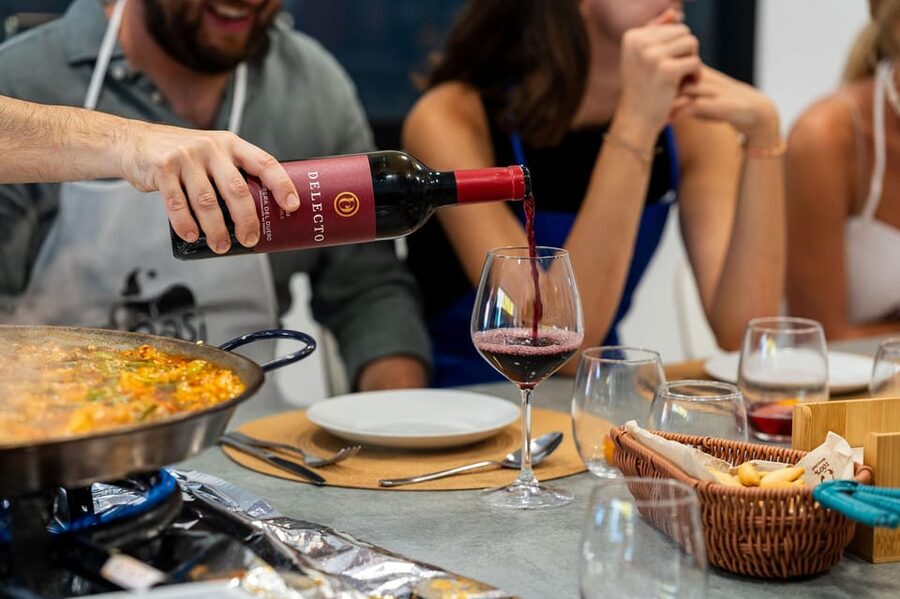
Sangria is part of the social side of the experience. You learn how it is made and enjoy it during the meal, with additional sangria or drinks included according to the class arrangement.
The drink is not treated as a gimmick. It gives the teachers another way to explain Spanish habits and the difference between a balanced drink and an overly sweet one. Alcohol is included, so this is not the right activity if you avoid drinking or prefer a completely alcohol-free class.
Dessert is a surprise, so you will not know the exact recipe in advance. Diego’s particular interest in Andalusian sweets adds a useful regional angle to this final course. The surprise format is fun, though you should tell the organizers about allergies or dietary restrictions before attending.
Why the hands-on format matters
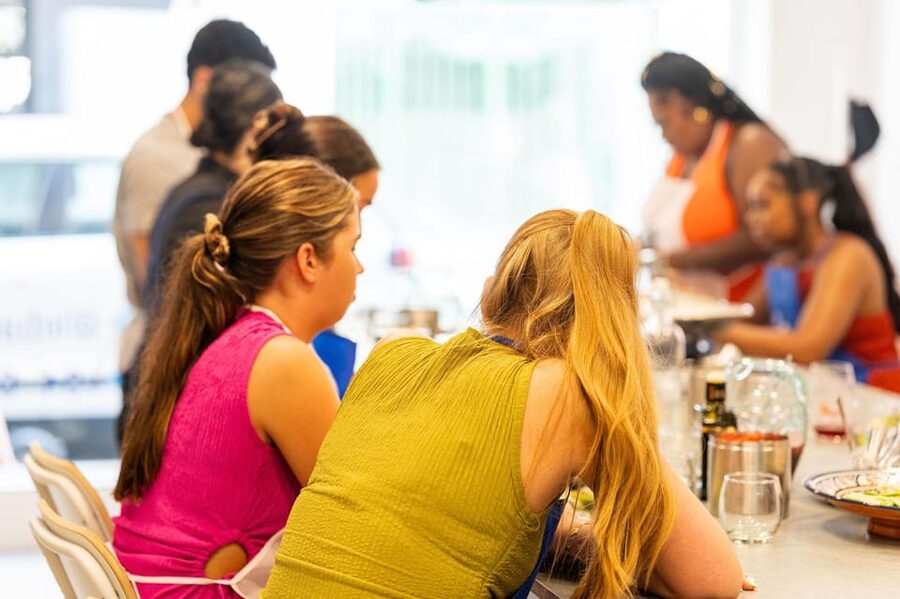
The best part of this experience is the amount of work handed to you. You prepare ingredients, take part in the cooking, ask questions, and sit down to eat what the group has made.
That makes the class more useful than a chef demonstration. You pay attention to heat, texture, timing, and seasoning because your meal depends on those choices. The lesson also becomes easier to remember when you have physically done the work.
The atmosphere is deliberately friendly. Groups have included around nine or ten people, with participants from several countries. That is small enough for individual help but large enough to create conversation around the table.
This social setup is a plus for most people. It may be less appealing if you are looking for a private date activity or a quiet technical lesson. The class is described as fun and participatory, and the teachers use humor often. Expect conversation and a fair amount of group energy.
Comfortable for older visitors and mixed abilities
Cooking classes can be tiring when you stand at a counter for several hours. Here, high stools with backs are available, which makes a real difference for older visitors or anyone with limited stamina.
The class is wheelchair accessible. You should still provide any mobility or dietary details in advance so the team can prepare properly.
You do not need professional cooking experience. The teachers break down the steps and offer individual help. Families can take part, and the format works for beginners because the point is to learn traditional techniques rather than prove your skill.
For children, the useful question is not only age but attention span. A three-hour food lesson with alcohol and a shared meal may suit older children better than very young ones. The provided information does not set a minimum age, so ask before booking for a young child.
What you get for $78
At $78 per person, this is not the cheapest way to eat in Málaga. You could buy several tapas meals for less. The value comes from what is bundled into the price.
You receive about three hours of teaching, hands-on cooking, several dishes, dessert, sangria, and a shared meal. You also get practical instruction you can use later, plus local recommendations from chefs who live and work in Málaga.
Recipes are sent afterward in at least some class arrangements. That is important. Without recipes, a cooking class can become a pleasant memory with no chance of repetition. With them, you can attempt ajoblanco, remojón, or paella at home while the methods are still fresh in your mind.
The price is especially fair if you treat the class as both lunch or dinner and a cultural activity. It is less compelling if you mainly want to eat and have no interest in cooking. In that case, Málaga’s restaurants offer better value for your particular purpose.
The booking terms also reduce risk. You can cancel up to 24 hours ahead for a full refund, and you can reserve now and pay later. The minimum of four participants is the main planning point.
Dietary needs and practical limits
Food allergies and intolerances can be accommodated with advance notice. Vegetarian and vegan versions are also available if arranged beforehand.
Do not wait until you arrive to explain your needs. The class includes several shared dishes, so the kitchen needs time to adjust ingredients and plan separate preparation where needed.
Alcohol and drugs are not allowed beyond the included sangria experience, and the activity is not suitable for anyone who wants a fully alcohol-free setting unless the provider confirms an alternative drink.
The class lasts three hours, and starting times vary by date. Check availability before building it into a tight sightseeing schedule. A central location helps, but you still need enough time to arrive, settle in, cook, and eat without rushing.
Who should book this Málaga cooking class
I would recommend it most strongly to you if you:
- Want a hands-on introduction to Spanish and Andalusian food
- Enjoy meeting other people during a trip
- Need an indoor plan for a hot or rainy day
- Want to learn paella instead of only ordering it
- Like receiving local restaurant and market suggestions
- Are traveling with family or a small group
- Prefer a full meal to a short tasting
It is also a good fit for solo visitors. The class gives you a built-in group without requiring you to join a large sightseeing tour.
I would hesitate if you dislike group activities, do not drink alcohol, or want a private lesson with complete control over the menu. You should also confirm dietary arrangements in advance if your requirements are complex.
Final verdict: book it for the skills, not just the meal
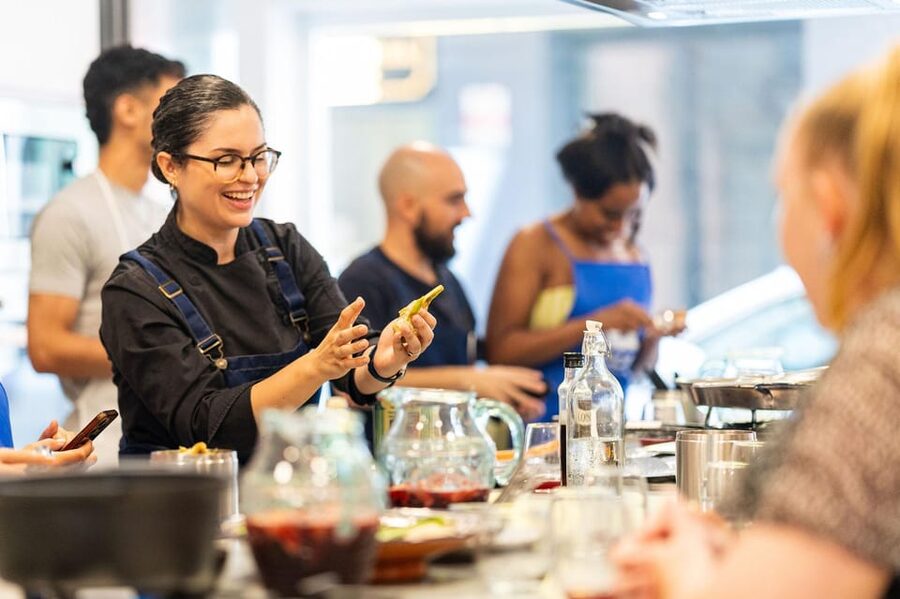
This is a strong-value Málaga activity because it connects food, local culture, and useful cooking skills in one sitting. The paella gets the attention, but ajoblanco and remojón malagueño make the class feel more rooted in Andalusia than a standard paella-and-sangria session.
I especially like the balance between instruction and social time. Laura brings polished culinary training and careful explanations, while Diego offers Málaga experience, humor, and a natural way with groups. The central location, supportive teaching, backed stools, recipes, and full meal add practical value.
Book it if you want to leave Málaga able to try Spanish cooking at home, with a few local food tips in your notebook. Skip it only if you would rather spend three hours in a restaurant than at a kitchen counter.
FAQ
How long does the Málaga cooking workshop last?
The workshop lasts three hours.
What dishes will I prepare?
You will prepare ajoblanco, paella, and remojón malagueño, a typical Málaga salad. The class also includes a surprise dessert.
Is sangria included?
Yes. Sangria is included during the meal, and the activity information also notes additional sangria or drinks according to the participant’s choice.
Who teaches the class?
The class is led by Laura or Diego. Laura trained at Le Cordon Bleu in London and has worked in Michelin-starred restaurants. Diego was raised and trained in Málaga and specializes in Málaga-style and Andalusian cuisine.
Is the class taught in English?
Yes. English is the listed language for the live tour guide.
Where does the class take place?
It takes place in central Málaga, in the historic center, about five minutes from Atarazanas Market.
Do I need cooking experience?
No. The class is designed to be fully participatory, with instructions and help from the chefs.
Can the menu accommodate dietary restrictions?
Yes. Food allergies and intolerances can be accommodated, and vegan and vegetarian options are available with advance notice.
Is the cooking workshop wheelchair accessible?
Yes. The activity is listed as wheelchair accessible.
Just added around Spain
- Visit a winery of the 19th century and its draft★ 5.0 · 62 reviews
- Ribera del Duero Underground Cellar & Wine Tasting Experience★ 4.5 · 49 reviews
- Visit and Wine Tasting at the Territorio Luthier Winery★ 5.0 · 89 reviews
- Semi-Private Rioja Tour of 3 Premium Wineries from Bilbao★ 5.0 · 128 reviews
- Paella and Burnt Basque Cheesecake Cooking Class (in Bilbao)★ 5.0 · 46 reviews
- La Rioja Boutique Wine Tour & Charming Lunch (From Bilbao)★ 5.0 · 62 reviews
- Basque Best Bites – #1 Food & Wine tour of Bilbao★ 5.0 · 268 reviews
- Rioja Wine Tour: 2 Wineries From Bilbao★ 5.0 · 111 reviews
Drinks Tours, compared.

Unlimited Prosecco, Beer and Aperol Spritz Cruise
Read our review →
Evening Cruise with Optional Wine and Snacks
Read our review →
Douro Valley w/ Boat Tour, Wine Tasting & Lunch
Read our review →
Chichen Itza, Cenote & Valladolid Tour with Tequila and Lunch
Read our review →
Complete Douro Valley Wine Tour with Lunch, Wine Tastings and River Cruise
Read our review →
Small-Group Wine Tasting Experience in the Tuscan Countryside
Read our review →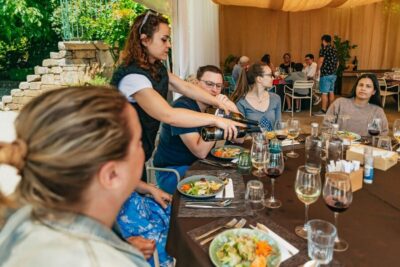
Douro Valley with Winery Lunch, Tastings & Cruise
Read our review →Browse the lists this tour appears in