
Review · ITALY
Apulia: Guided Wine Tasting with Local Appetizers
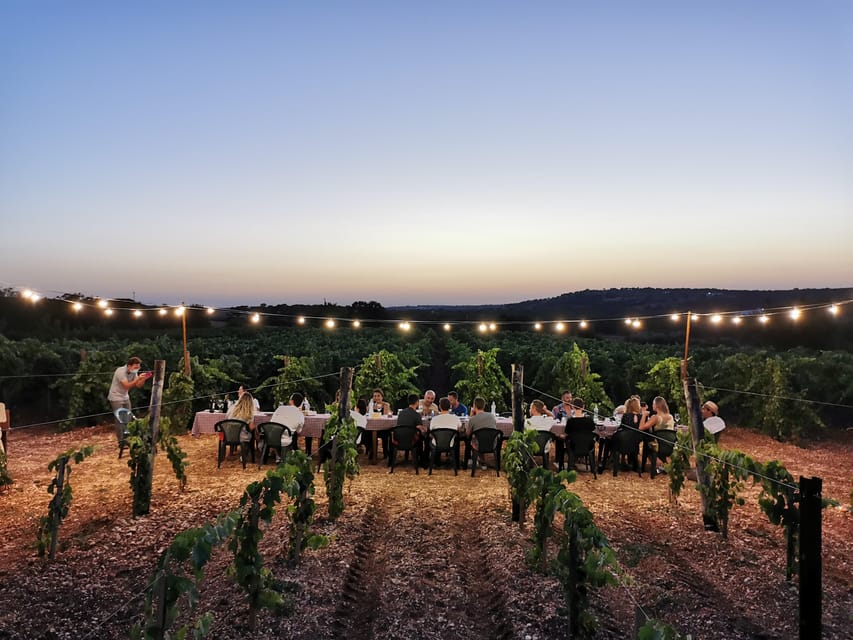
The best part of this Apulia wine tasting is its setting: you sip local wine among the vines of the Itria Valley, not in a polished city tasting room. I like the four indigenous wines and the way each comes with a homemade appetizer. I also like the family-run feel, which makes the farm and its food traditions part of the visit.
The main consideration is that the exact wines can change with availability, and the experience does not include transport in the stated price. If you are staying far from the farm, plan your ride before booking. At $37 per person for two hours, this is a good-value stop for anyone interested in Apulian food and wine.
Key points before you book
- Four local grape varieties: Taste Verdeca, Moscato, and Nero di Troia in white, rosé, and red styles.
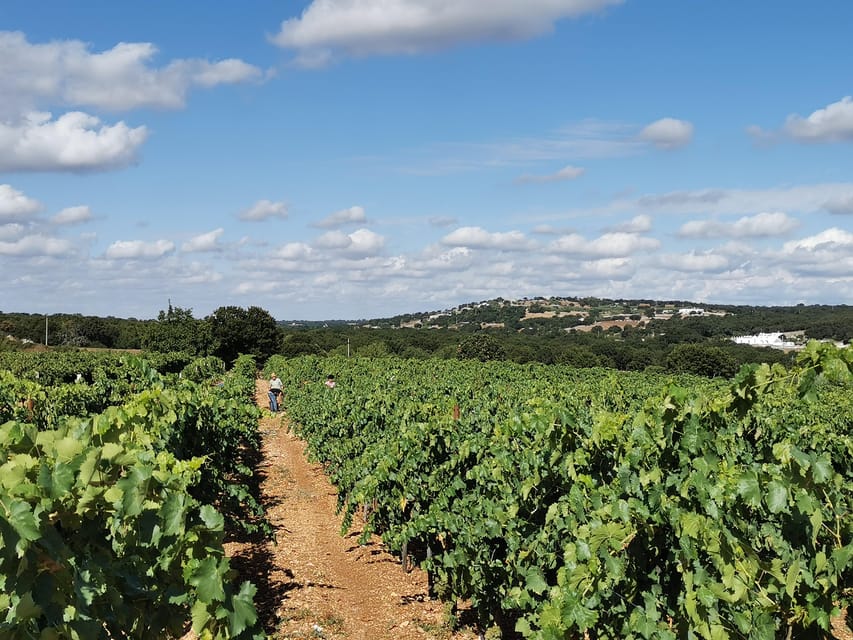
- A short vineyard walk: Start outdoors among the vines before moving into the tasting.
- One appetizer per wine: Four typical Apulian snacks are matched with the four glasses.
- Family-run atmosphere: The setting feels personal and agricultural rather than formal or corporate.
- English and Italian guides: The tour is offered in both languages, with Vincenzo named as a particularly helpful host.
- Flexible booking: You can cancel up to 24 hours ahead for a full refund and reserve without paying immediately.
A vineyard setting in the Itria Valley
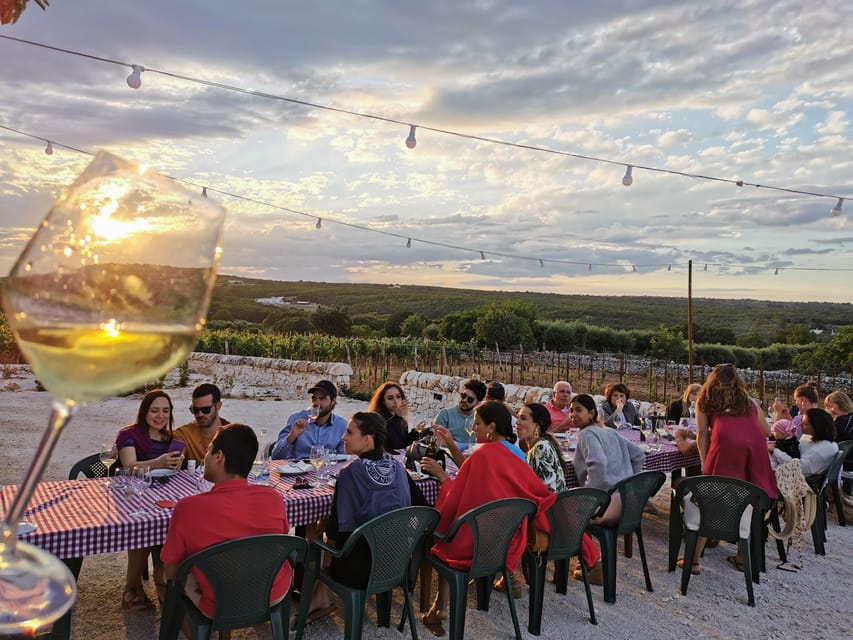
This is a small-scale Apulian wine visit built around place. The farm is associated with Puglia dei Trulli and Vigna il Castagno, and the tasting takes place among the rows of vines in the Itria Valley.
You begin with a walk through the vineyard. It is not a long hiking tour, but it gives the tasting a useful sense of place. You can look at the vines, hear about local farming, and connect the glass in front of you with the soil and crops around you. That simple link is easy to miss in a standard wine bar.
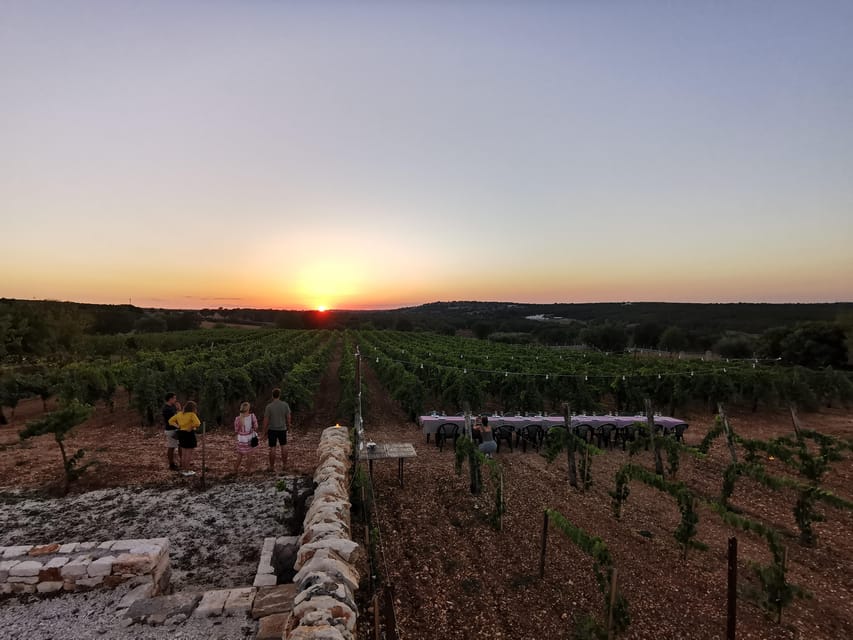
The setting has received especially strong praise. It is described as beautiful, peaceful, and well suited to an evening tasting, with some visits taking place around sunset. The farm atmosphere also matters if you want something more personal than a large commercial winery.
The setting is agricultural, not dressed up for mass tourism. You should expect a genuine farm visit with a friendly atmosphere, not a grand cellar tour or an elaborate wine museum. That is part of the appeal, but it also means the experience focuses on conversation, tasting, and scenery rather than a large number of exhibits or production rooms.
More Wine Tasting Tours in Italy
- Florence: Chianti Wineries Tour with Wine Tasting
★ 4.5 · 10,071 reviews - Small-Group Wine Tasting Experience in the Tuscan Countryside
★ 5.0 · 7,392 reviews - Rome: Tuscany & Montepulciano Day Trip with Lunch & Wine Tasting
★ 4.5 · 5,232 reviews
How the two-hour tasting unfolds
The exact order can vary, but the basic rhythm is clear. You walk through the vineyard, settle in for the tasting, and work through four wines, each paired with a typical Apulian appetizer.
The guide explains the grapes and the wines as you go. One useful part of the presentation is the comparison between grape varieties and wine styles. Nero di Troia appears as both rosé and red, so you can notice how the same grape can produce wines with different character. Verdeca and Moscato add two different white wine styles to the lineup.
Each glass is served with food rather than in isolation. This makes the tasting easier for casual wine drinkers, since you can judge how the wine works with a savory bite instead of trying to analyze it on an empty stomach. The four snacks are homemade and locally inspired, though the individual dishes are not specified in advance.
Allow the full two hours. This is not a quick flight of four pours followed by a sales pitch. The pace gives you time to hear about the farm, ask questions, taste the food, and enjoy the surroundings. Several people have found the explanations clear and engaging, which makes the format suitable even if you do not know much about wine.
Pietra Viva and the taste of Verdeca
The first listed wine is Pietra Viva IGP Valle d’Itria, a still white made entirely from Verdeca grapes. It has an alcohol level of 12 percent.
Verdeca is an indigenous grape of southern Italy, so this is a chance to try something you are less likely to find on a general international wine list. The point is not simply to collect another glass. You are tasting a grape tied to the local growing area, then eating an appetizer selected to fit it.
A white wine is also a sensible opening for a mixed group. It gives you a fresh starting point before the richer red, while the food keeps the tasting relaxed. If you normally prefer white wine, pay close attention here, since this may be the bottle you most want to take home.
The designation IGP Valle d’Itria connects the wine to the local production area. You do not need to memorize Italian wine classifications to enjoy it, but the guide can help explain how the grape, location, and wine style fit together.
1929 Moscato, a dry white with local character
The second listed wine is 1929 Moscato IGP Puglia, made entirely from Moscato, with an alcohol level of 12.5 percent. It is described as a dry white wine with a natural color, made from Moscato di Trani.
This is a useful reminder that Moscato is not always a sweet dessert wine. Here, the dry style gives the grape a different role at the table. The accompanying appetizer lets you compare the wine’s character with a savory local snack rather than assuming Moscato belongs only with sweets.
For me, this is the kind of detail that makes a regional tasting worthwhile. You are not just sampling familiar categories such as white, rosé, and red. You are seeing how Apulian producers use local grapes in ways that may challenge your expectations.
The name 1929 is part of the wine label, but the important practical point is the style: dry, white, and made from Moscato di Trani. If you usually avoid Moscato because you expect sweetness, this is the glass to approach with an open mind.
More Wine Tastings in Italy:
- SMALL-GROUP Wine Safaris: Tuscan Wine Tasting Tours from Florence
★ 5.0 · 5,088 reviews - San Gimignano, Siena, Monteriggioni, Chianti Day Trip with Lunch & Wine Tasting
★ 4.5 · 4,432 reviews - From Florence: Small Group Wine Tasting Tour to Tuscany
★ 4.9 · 3,902 reviews - Florence: S. Gimignano, Siena, Chianti Wine Tasting & Lunch
★ 4.6 · 3,102 reviews
Nero di Troia in rosé form
Next comes 1° Luglio IGP Nero di Troia, a still rosé made entirely from Nero di Troia. It has an alcohol level of 12.5 percent.
This wine gives you a direct comparison with the red Nero di Troia served later. Since both wines use the same grape, you can focus on how color and production style affect what you taste. That comparison is one of the most educational parts of the lineup.
Rosé also suits a warm Apulian evening and pairs naturally with small savory dishes. The exact appetizer is not stated, so you should not expect a fixed menu. Instead, the food is selected to support the wine and provide four different bites across the tasting.
If you prefer lighter wines, this may be your favorite pour. If you usually choose red, it is still worth taking seriously because it shows a different side of a grape that many visitors may not know.
Terra Viva and the red side of Nero di Troia
The final listed wine is Terra Viva IGP Puglia, a still red made from Nero di Troia, at 13 percent alcohol.
Serving Nero di Troia as both rosé and red makes the tasting feel planned rather than random. You can compare the two versions while the information about harvesting and farming is still fresh. The guide may also discuss how the grapes are grown and how the farm has moved toward organic farming practices.
The red is likely to be the most substantial wine of the four, though the provided information does not give detailed tasting notes. The best way to approach it is as the closing glass, paired with a fuller local bite. You do not need advanced wine vocabulary. Notice what changes from the rosé, then decide which style suits your table.
The four wines are produced under the Vigna il Castagno name. Wine, olive oil, and spices are available for purchase at the farm, so leave room in your luggage if you are tempted by a bottle or pantry products. Buying is optional, but it can be a useful way to continue the meal at home.
Why the food pairings matter
The four appetizers are more than a snack to keep you from feeling the alcohol. They show how wine fits into Apulian eating habits, where simple local foods often do the work of a full introduction to the region.
You receive one typical appetizer with each wine. The individual dishes are not listed, so anyone with allergies or strict dietary needs should ask the provider in advance rather than assume the menu will fit.
I like this format because it gives the food equal billing with the wine. A tasting can become technical and distant when every glass is treated like a laboratory sample. Here, the homemade bites bring you back to the table and help explain why each wine belongs in the local kitchen.
The portions are described as generous enough to make the tasting satisfying. Still, I would treat this as a substantial tasting with four appetizers, not a guaranteed replacement for dinner. If you need a full evening meal, check your plans for afterward.
The guide and the tone of the visit
The tour is offered in English and Italian. Vincenzo is specifically associated with a warm, helpful welcome, including arranging pick-up and drop-off for one person who needed assistance attending. That does not mean transport is included for everyone, so confirm your own arrangements before you go.
The guide’s role is central. You can expect explanations about how each grape produces different wines, how the grapes are harvested, and how the farm has become an organic producer. The visit is designed to work for both casual wine drinkers and people with more tasting experience.
I would choose this tour if you want conversation and clear explanations rather than a formal lecture. The atmosphere is friendly, and the small farm setting allows the guide to respond to questions. At the same time, serious wine students should keep expectations reasonable. This is a short regional tasting, not an advanced certification class or a technical cellar course.
Is $37 a fair price?
At $37 per person, the price covers a two-hour visit, a vineyard walk, four glasses of wine, and four local appetizers. That is solid value, especially in a scenic setting where you are paying for the guide, the food, and the chance to taste several indigenous grapes.
The value improves if you would otherwise pay separately for a meal and a glass of wine. Four pours with homemade food can easily become an expensive evening in a tourist center, while this visit gives you direct contact with the producer and the farming setting.
The price is less attractive if you are only interested in one specific wine or need transportation from another town. Transport is not listed as included, and the wines may change based on availability. Plan for the tasting as a fixed two-hour appointment, not a flexible stop you can easily fit between unrelated sights.
You can reserve now and pay later, and cancellation is free up to 24 hours before the start time. Those terms help if your Apulia schedule is still moving around, but they do not solve the practical question of getting to the farm.
Who will enjoy this wine tasting most?
I would recommend it to couples, small groups, and families with adults who want a calm evening activity. It suits a mixed group particularly well because the tour is not built only for experts. The guide explains the basics, while the grape comparisons give more experienced drinkers something to consider.
It is also a good choice if you are staying near the Itria Valley and want to connect the area’s countryside with its food traditions. The vineyard walk, local appetizers, and wines made from regional grapes make the visit feel tied to Apulia rather than interchangeable with a tasting anywhere in Italy.
You should think twice if you dislike wine, want a large historic winery, or need a precise food menu in advance. The experience is small, local, and flexible in its wine selection. That is a strength for many people, but it may feel too informal if you want a highly structured production tour.
The farm also sells its olive oil, wine, and spices. I would not book the tasting solely as a shopping trip, but those products add a useful final stop if you want something practical to take home.
Practical advice for your visit
Book the English-language option if you want detailed explanations and do not speak Italian. Starting times vary, so check the available schedule and plan enough time to reach the farm without rushing.
An evening booking can be especially appealing because the vineyard setting is often enjoyed around sunset. The tour itself lasts two hours, so it works best as a planned part of your day rather than a quick add-on.
Wear comfortable shoes for walking among the vines. The supplied details do not specify the walking surface, so sensible footwear is safer than delicate sandals or formal shoes.
If you have food allergies, dietary restrictions, or questions about the appetizers, contact the provider before booking. The four snacks are typical Apulian preparations, but the exact ingredients are not given.
Finally, arrange your return ride if you are not driving. The experience provider may help in some cases, as Vincenzo did for one attendee, but transport should not be assumed as a standard inclusion.
Should you book Vigna il Castagno?
Book it if you want a friendly, local introduction to Apulian wine, especially if you value scenery and food as much as tasting notes. The combination of a vineyard walk, four indigenous wines, four homemade appetizers, and clear explanations gives you a lot for $37.
I would choose it over a generic wine bar tasting because the farm setting explains where the wine comes from. The strongest reasons to go are the family-run tone, the chance to compare Nero di Troia in rosé and red form, and the simple connection between each glass and a local bite.
Skip it if you need transport included, a guaranteed wine list, or a full dinner. For everyone else, this is an easygoing and well-priced way to spend two hours in the Itria Valley.
FAQ
How long does the Apulia wine tasting last?
The experience lasts two hours, including the vineyard walk, wine tasting, food pairings, and guide’s explanations.
How many wines are included?
You receive four glasses of Vigna il Castagno wines made from indigenous grapes. The listed wines are a Verdeca white, a Moscato white, a Nero di Troia rosé, and a Nero di Troia red.
What food is served?
Four typical Apulian appetizers are included, with one appetizer paired with each wine. The exact dishes are not specified and may depend on availability.
Is the tour offered in English?
Yes. The live tour guide is available in English and Italian.
Does the price include transportation?
Transportation is not listed as an included feature. Pick-up and drop-off may sometimes be arranged separately, so ask the provider before booking if you need it.
Can I cancel the booking?
Yes. You can cancel up to 24 hours in advance for a full refund. You can also reserve now and pay later.
Just added around Italy
- Winery tour & wine tasting in Montalcino★ 4.5 · 41 reviews
- Tour and Tasting at an Organic Winery in the Heart of Chianti Classico Area★ 5.0 · 132 reviews
- Greve in Chianti Wine Tasting and Winery Tour★ 4.5 · 119 reviews
- 2 Hours Visit and Wine Tasting with tastings in Val D’Orcia★ 5.0 · 48 reviews
- Livorno Shore Excursion: Chianti and Tuscany Countryside Private Wine Tour★ 5.0 · 56 reviews
- Etna Tour and Lunch in a Winery with Wine Tasting★ 5.0 · 97 reviews
- Private tour of Etna and Winery Visit with Food and Wine Tasting from Taormina★ 5.0 · 221 reviews
- Mt Etna and Wine tasting tour from Catania★ 5.0 · 282 reviews
Wine Tasting Tours, compared.

Douro Valley w/ Boat Tour, Wine Tasting & Lunch
Read our review →
Complete Douro Valley Wine Tour with Lunch, Wine Tastings and River Cruise
Read our review →
Small-Group Wine Tasting Experience in the Tuscan Countryside
Read our review →
SMALL-GROUP Wine Safaris: Tuscan Wine Tasting Tours from Florence
Read our review →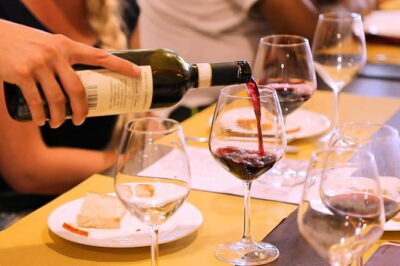
San Gimignano, Siena, Monteriggioni, Chianti Day Trip with Lunch & Wine Tasting
Read our review →
Cálem Cellar Tour, Interactive Museum & Wine Tasting
Read our review →
Browse the lists this tour appears in