
Review · SPAIN
Jerez: Bodegas Álvaro Domecq Guided Tour with Wine Tasting
The best part of this Jerez tour is that it connects the wine in your glass with the dark wooden barrels and working cellars that produced it. At Bodegas Álvaro Domecq, you’ll learn how sherry, brandy, vermouth, and vinegar are made, then taste several local specialties in a comfortable setting.
I like the tour’s small independent-winery feel and the way guides such as Cristina and Laura explain the process without drowning you in technical terms. I also like the chance to taste beyond basic sherry, including brandy and, on some tasting options, very old V.O.R.S. wines.
The main consideration is the language balance. English and Spanish tours are offered, but large mixed groups can mean more waiting for translation. The visit lasts 90 minutes, so it gives you a clear introduction rather than a slow, all-day study of Jerez wine.
Key points to know before you book
- An 18th-century winery in central Jerez: You visit an established bodega with a long connection to the Domecq family and the city’s wine trade.
- The solera system made understandable: The tour shows how sherry moves through rows of barrels as younger wine is blended with older wine.
- More than sherry: You learn about brandy, vermouth, and Jerez vinegar, including the vinegar cellar.
- Four representative wines are commonly offered: Tastings can include Fino La Janda, Oloroso Alburejo, Aranda Cream, and Pedro Ximénez Viña 98.
- Optional premium tasting: The V.O.R.S. selection features wines aged for more than 30 years, including Amontillado 1730, Palo Cortado 1730, and Oloroso 1730.
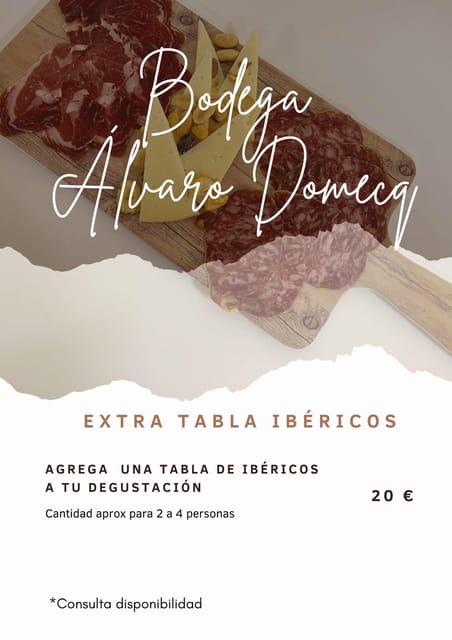
- Plan for an extra food charge: Iberian products can be added as a serving for roughly two to four people.
Entering Álvaro Domecq in central Jerez
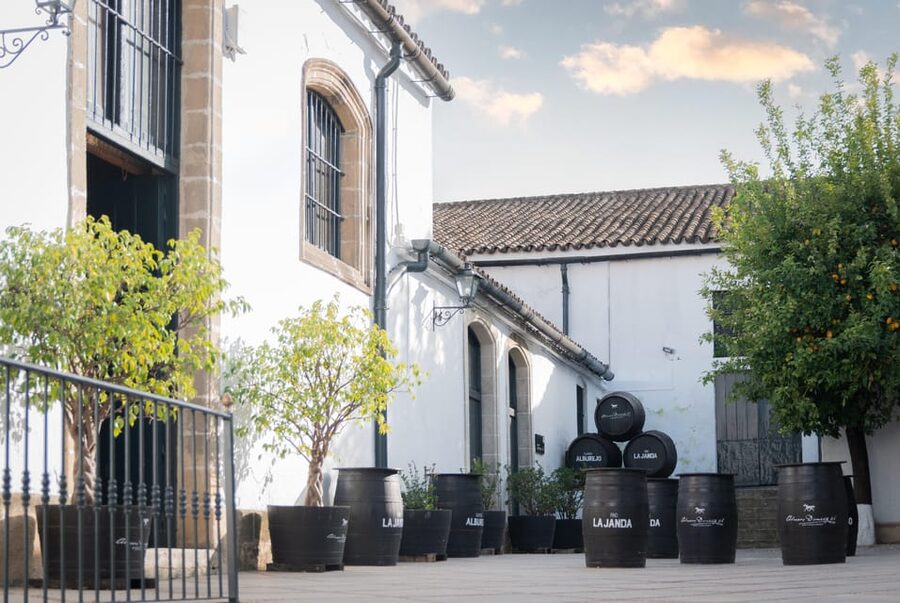
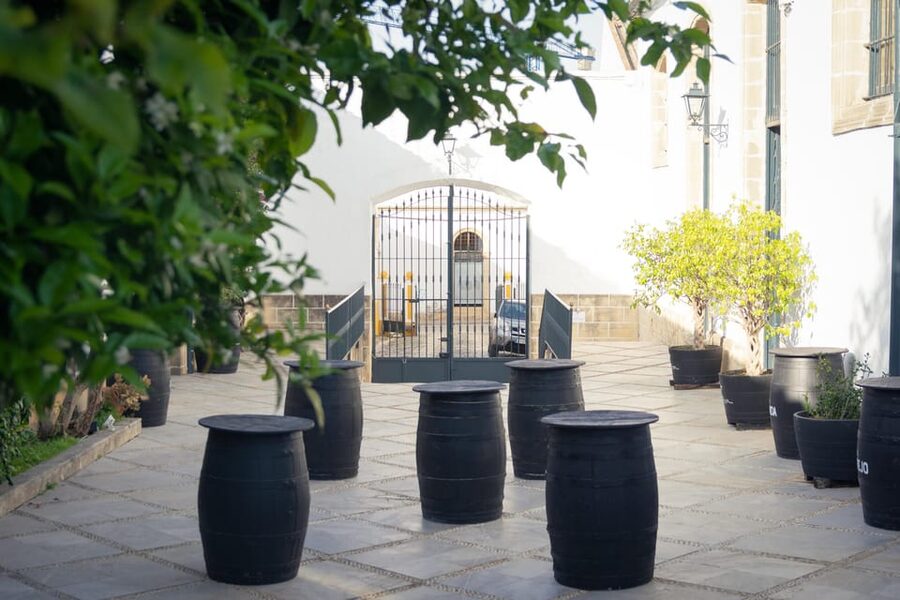
The meeting point is on Calle San Luis, in a small lane off Calle Madre de Dios, beside the Puro Arte flamenco tablao. You’ll need to ring the bell. That detail matters, since this is not the sort of large, obvious visitor center where you simply follow a stream of tour groups through the front door.
The bodega is in the town center, making it a sensible stop during a walking day in Jerez. Several people have found it easy to reach from the railway station, though you should still allow time to locate the lane and the bell before the scheduled start.
The setting gives the visit a useful sense of place. Jerez is not merely a city that sells sherry to tourists. Its bodegas are part of the city’s identity, and Álvaro Domecq lets you see that wine production inside a working historic environment rather than only in a modern tasting room.
The winery is linked to the Álvaro Domecq family. The tour also touches on Mr. Álvaro Domecq’s public life as a horseback bullfighter, adding a local family story to the wine lesson. That background is worth hearing, but the main focus remains the cellar and its products.
More Wine Tasting Tours in Spain
- Montserrat & Cogwheel Train, Gourmet Wine Tasting & Tapas/Lunch
★ 5.0 · 6,290 reviews - Madrid Tapas & Wine Tasting Walking Tour – Small Group Local Bars
★ 5.0 · 3,644 reviews - Toledo Tour & Vineyard Walk with Wine Tasting from Madrid
★ 5.0 · 2,546 reviews
What you learn about sherry production
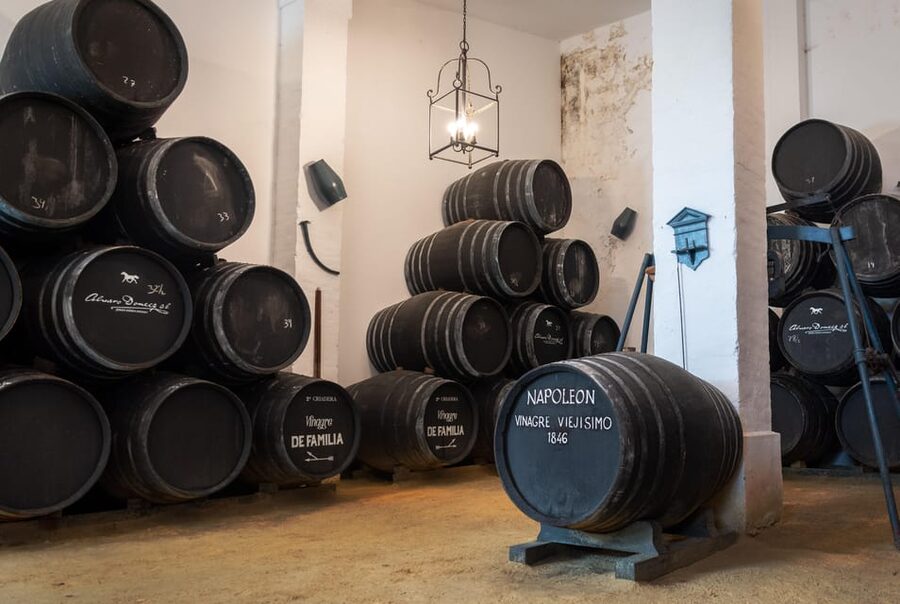
The tour’s central lesson is the solera and criaderas system. If those words mean nothing to you now, don’t worry. The guide explains them with the barrels in front of you, which is far easier to understand than reading a short description on a wine label.
In simple terms, wine is held in several levels of aging. Older wine is drawn from the lowest level for bottling, and younger wine from the rows above is moved down to replace it. This keeps the character of the wine consistent while allowing age and time to shape it.
The barrels are made from American oak, and the tour shows how the cellar environment affects the wine. You’ll see why a Fino, an Oloroso, and a Pedro Ximénez do not taste alike, even though all are part of the Jerez tradition.
The explanation is useful for beginners and still worthwhile for people who already know a little about sherry. Guides including Cristina, Laura, and Lucia have been praised for giving enough detail without piling on jargon. That balance is important in a 90-minute visit.
You also learn about the grapes and local growing areas that help define Jerez wines. The Fino Wines Cellar is especially useful here because it links the final taste to the land and the grape varieties used to make the wine.
From brandy barrels to the Oloroso cellar
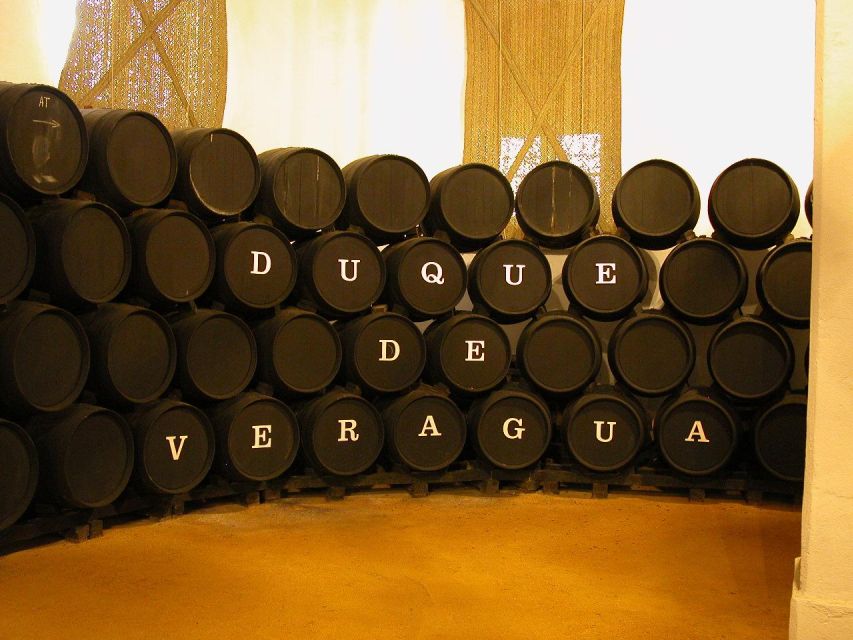
The tour moves through several cellar areas, each with a slightly different purpose. The brandy section explains how distillation and aging shape the spirit. The program includes products such as Solera Gran Reserva Duque de Veragua and Solera Reserva Veragua.
Do not expect every stage of production to be operating in front of you. One English-speaking visitor specifically noted that the visit did not include bottling or distillation in action. You do, however, learn how the products are made and aged, which is the more useful part for most first-time visitors.
The Oloroso cellar includes an audiovisual presentation. Sit near the front if you need to read English subtitles, since the print may be hard to see from farther back. This is a small but practical point that can make the difference between following the film and missing part of it.
The Duque de Veragua Cellar returns to the solera system and gives you another chance to see how the barrels are arranged. The cellar atmosphere is part of the appeal: this is a place where the wine is stored in rows and layers, not simply displayed behind glass.
A short flamenco performance may also be available around the visit or afterward. It is not the core of the winery tour, and you should not book this experience solely for flamenco, but the connection makes sense in Jerez. Some visitors have also stayed for lunch and a flamenco show at the adjoining or nearby venue, so ask about current arrangements if that interests you.
The vinegar cellar is an unexpected highlight
Many wine tours stop with sherry and brandy. Álvaro Domecq adds a vinegar cellar, which gives the visit a wider view of how local products are aged and used.
The bodega produces Jerez vinegars including Vinagre Reserva de Familia and Vinagre Gran Reserva 1730. The tour explains that Jerez vinegar has its own Designation of Origin, a detail that helps show why this is not simply leftover wine turned sour.
This part is especially good for people who cook. You get a better sense of why aged vinegar can have the same kind of complexity and concentration that you look for in an old wine. It also breaks up the tasting sequence with something different.
Vermouth is part of the broader product range as well. Several visitors have particularly enjoyed sampling it, so ask if it is available during your tasting. It may not be part of every standard selection, but it is worth requesting in the tasting room.
More Wine Tastings in Spain:
- Madrid: Tapas & Wine Tasting Tour with Local Guide
★ 4.8 · 2,171 reviews - Paella Cooking Class, Wine Tasting & Central Market in Valencia
★ 5.0 · 1,150 reviews - Bilbao: Basque Food Tour and Wine Tasting with Guide
★ 4.9 · 772 reviews - Madrid Countryside Wineries Guided Tour with Wine Tasting
★ 5.0 · 740 reviews
Tasting four sherries, or going older
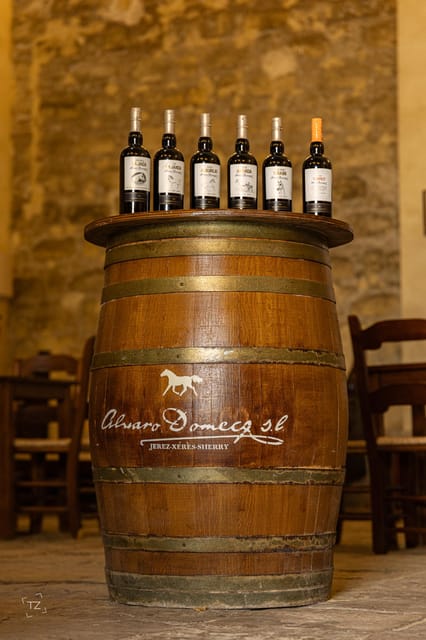
The tasting is the payoff, but it works best because the cellar visit gives you a framework. Instead of trying four anonymous pours, you can connect each glass to a style, an aging method, and a part of the bodega.
A standard tasting may include:
- Fino La Janda, generally the lighter and drier style in the selection
- Oloroso Alburejo, with a fuller profile
- Aranda Cream, a sweeter style
- Pedro Ximénez Viña 98, known for its intense sweetness
The tasting has been described as generous and leisurely, with enough time to consider each wine. That matters because sherry is not always a quick sip-and-move-on drink. The differences become clearer when you pause between pours.
If you already enjoy sherry, check the booking options for the five-wine or V.O.R.S. tasting. The V.O.R.S. wines have more than 30 years of aging and include Amontillado 1730, Palo Cortado 1730, and Oloroso 1730. The higher-priced option has been considered worthwhile by people who wanted to taste the older styles.
I would not automatically pay extra if you are completely new to sherry. Start with the standard selection and use the guide’s explanations to work out what you like. If you already know that you prefer dry, nutty, or very old wines, the premium tasting makes more sense.
Brandy may also be included, and the Solera Gran Reserva Duque de Veragua is one of the named products. This is a useful addition for anyone who thinks a winery visit must be only about wine. The brandy shows how the same aging culture extends into another drink.
The guides make the difference
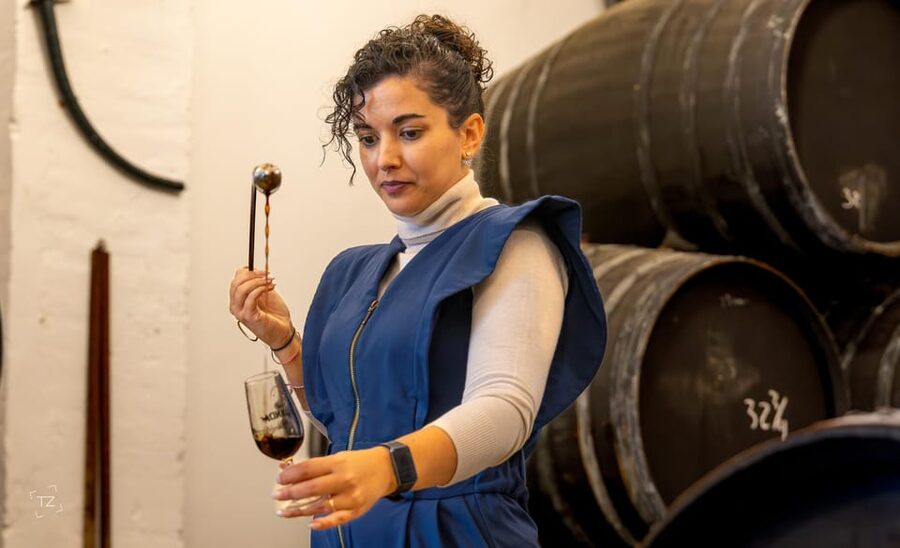
The strongest part of this experience is the guiding. Cristina is frequently praised for her friendly presentation and clear explanations. Laura is known for making the family story and production process interesting, while Lucia has also led tours for English-speaking visitors.
The guides speak English and Spanish, and the tour can shift between both languages. That is helpful for mixed groups, but it can affect the pace. One English-speaking group found that too much translation made the visit less direct, while another group received extra English help when only two English speakers were present.
If you book an English tour, confirm the language at the start and position yourself where you can hear and see the guide. The issue is not the guides’ effort. It is simply that a bilingual tour with a large group takes longer to explain each point.
The best guides here do not treat sherry as a test you must pass. They explain the basics, answer questions, and let the tasting bring the lesson together. That makes the tour suitable for someone who normally drinks table wine and knows little about fortified wines.
Is $26 a fair price?
At about $26 per person, the basic experience is good value for a central Jerez activity. You receive a 90-minute guided visit and a wine tasting in a historic bodega, with access to several cellar areas and explanations of sherry, brandy, and vinegar.
The price becomes particularly reasonable if you appreciate the difference between a quick tasting and a proper introduction to production. You are paying for the guide, the cellars, the family background, and the chance to taste several styles in context.
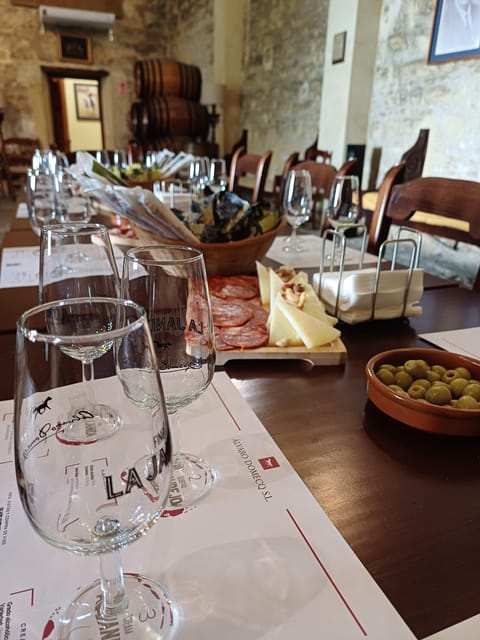
Food is not included. You can add Iberian products in a quantity intended for about two to four people, so check the final price if you want a snack with the wine. The food option makes the visit feel more like an afternoon stop, but it is not essential to understand the tour.
The shop at the end sells Álvaro Domecq wines, spirits, vinegars, and other local items. You may find yourself wanting to take home a bottle, particularly after tasting a style that is hard to locate elsewhere. Pack carefully, and remember that the best purchase is the bottle you actually enjoyed, not simply the oldest label.
Who will enjoy this Jerez bodega visit?
I would recommend this for first-time visitors who want to understand what makes Jerez wine different from ordinary white wine. It is also a good choice for anyone who wants a manageable activity between sightseeing stops, since 90 minutes is long enough to feel substantial but short enough to fit into a busy day.
Sherry drinkers should consider the V.O.R.S. option if available. The old Amontillado, Palo Cortado, and Oloroso give the visit extra appeal for people who already know their preferred styles.
This may be less satisfying if you want to watch every production stage in operation. Bottling and distillation are not guaranteed to be part of the visit, and the tour focuses more on explanation, cellar aging, and tasting.
It is also not ideal if your group dislikes bilingual tours or needs a very quiet, private format. Group size and language mix can change the rhythm. Still, the guides generally make a strong effort to keep explanations clear.
The activity offers free cancellation up to 24 hours before the start, and you can reserve while paying later. Starting times vary, so check availability for your date. Tours are offered in English and Spanish.
My verdict: book it for the cellar lesson
Book this Álvaro Domecq visit if you want a practical introduction to Jerez sherry with a tasting at the end, especially if you value a smaller winery over a large commercial operation. The family story, oak barrels, solera system, vinegar cellar, and generous tasting give the 90 minutes a clear purpose.
Choose the regular tasting for a first visit. Add the Iberian food if you want to linger, or choose the V.O.R.S. wines if old sherry is the main reason you are coming. Just allow for possible bilingual explanations, arrive early enough to find the bell, and sit near the front for the audiovisual presentation.
FAQ
Where does the Álvaro Domecq tour begin?
The meeting point is in a lane on Calle Madre de Dios, beside the Puro Arte flamenco tablao. The instructions identify the location as Calle San Luis, and you need to ring the bell.
How long does the tour last?
The guided winery visit and tasting last about 1.5 hours.
What languages are available?
The tour is offered in English and Spanish. Mixed-language groups may receive explanations in both languages.
What drinks can I taste?
The named sherry selection includes Fino La Janda, Oloroso Alburejo, Aranda Cream, and Pedro Ximénez Viña 98. Depending on the selected option, you may also taste vermouth, brandy, or V.O.R.S. sherries.
Is food included?
Food is not included in the standard activity. Iberian products can be added separately, with a quantity intended for about two to four people.
Can I cancel the booking?
You can cancel up to 24 hours in advance for a full refund. The activity also offers a reserve-now, pay-later option.
Just added around Spain
- Visit a winery of the 19th century and its draft★ 5.0 · 62 reviews
- Ribera del Duero Underground Cellar & Wine Tasting Experience★ 4.5 · 49 reviews
- Visit and Wine Tasting at the Territorio Luthier Winery★ 5.0 · 89 reviews
- Semi-Private Rioja Tour of 3 Premium Wineries from Bilbao★ 5.0 · 128 reviews
- Paella and Burnt Basque Cheesecake Cooking Class (in Bilbao)★ 5.0 · 46 reviews
- La Rioja Boutique Wine Tour & Charming Lunch (From Bilbao)★ 5.0 · 62 reviews
- Basque Best Bites – #1 Food & Wine tour of Bilbao★ 5.0 · 268 reviews
- Rioja Wine Tour: 2 Wineries From Bilbao★ 5.0 · 111 reviews
Wine Tasting Tours, compared.

Douro Valley w/ Boat Tour, Wine Tasting & Lunch
Read our review →
Complete Douro Valley Wine Tour with Lunch, Wine Tastings and River Cruise
Read our review →
Small-Group Wine Tasting Experience in the Tuscan Countryside
Read our review →
SMALL-GROUP Wine Safaris: Tuscan Wine Tasting Tours from Florence
Read our review →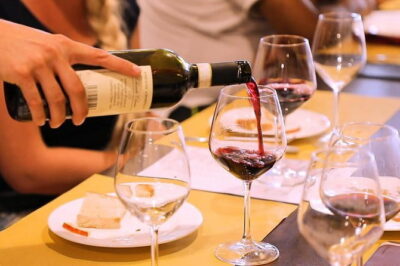
San Gimignano, Siena, Monteriggioni, Chianti Day Trip with Lunch & Wine Tasting
Read our review →
Cálem Cellar Tour, Interactive Museum & Wine Tasting
Read our review →
Browse the lists this tour appears in